

|
Site Categories |
|
Featured Items |

Poodle, Spaghetti Trim, Ucagco


|
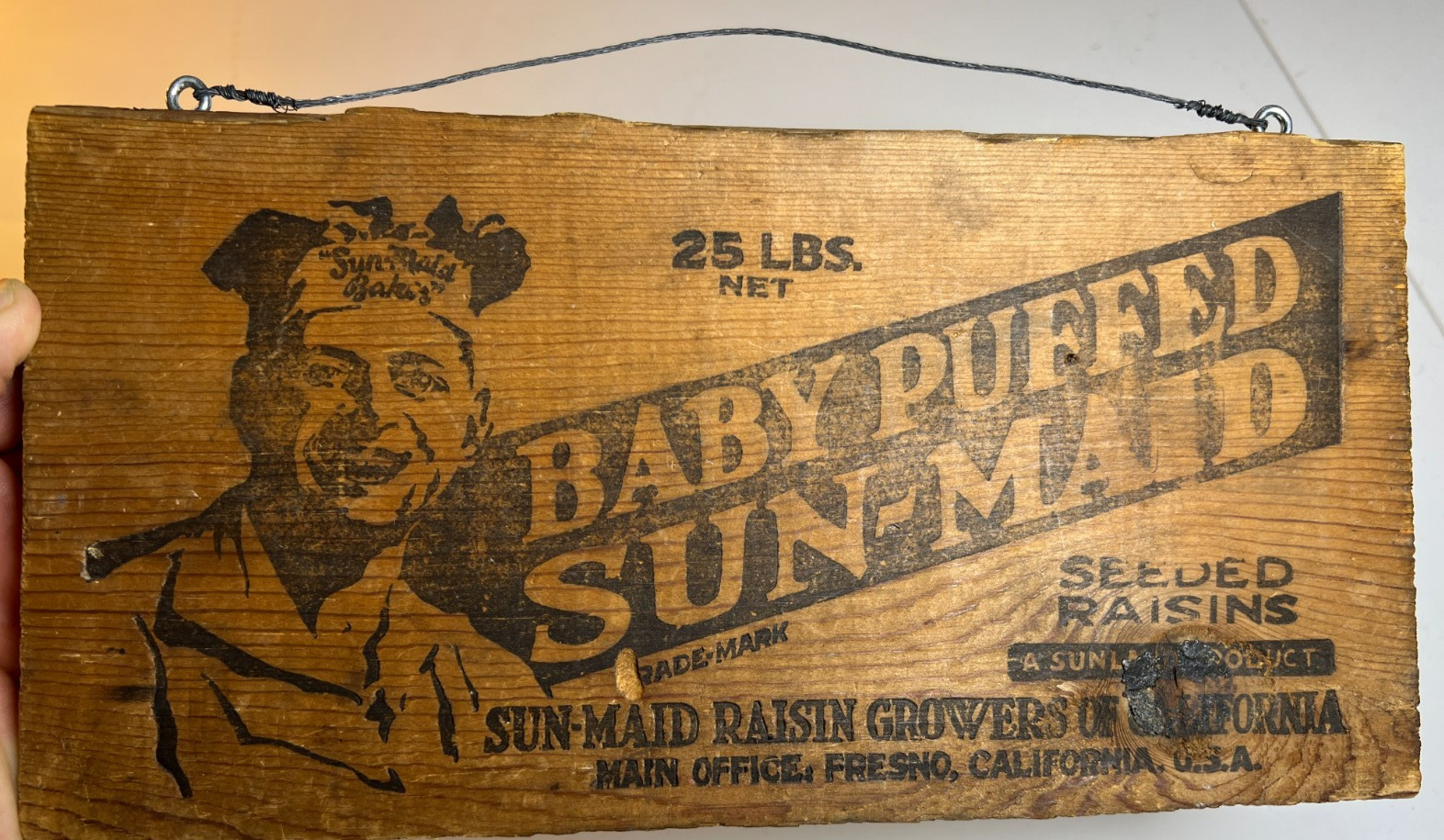
Antique Sun-Maid Baby Puffed Raisins Wooden Crate Sign Plaque Fresno California For Sale

When you click on links to various merchants on this site and make a purchase, this can result in this site earning a commission. Affiliate programs and affiliations include, but are not limited to, the eBay Partner Network.

Antique Sun-Maid Baby Puffed Raisins Wooden Crate Sign Plaque Fresno California:
$108.49
Brand: Sun-Maid Raisins Product: Baby Puffed Sunmaid Seeded Raisins Weight: 25 lbs. net Producer: Sun-Maid Raisin Growers of California Location: Fresno, California, U.S.A. Seal: \"Sun-Maid Raisin Growers\" cooperative mark Image: The iconic Sun-Maid Girl holding grapes, with rays from the sun behind her. Size: 11\" W x 5 5/8\" T
Context & History Sun-Maid Growers of California is one of the most recognized names in dried fruits, especially raisins. They began in 1912 and formalized under the Sun-Maid brand in 1915. This wooden panel was originally part of a wooden crate used for bulk shipping to grocery stores and wholesalers before modern packaging took over. The “Baby Puffed” raisin variant was processed to soften the texture—popular in the early-to-mid 1900s. Seeded raisins were more common before widespread seedless grape varieties took over.
Based on the design, typography, and branding style, this Sun-Maid Baby Puffed Raisins wooden crate end panel dates to the 1930s or 1940s. \"Baby Puffed\" Raisins were marketed primarily in the early 20th century and phased out as packaging modernized. The Sun-Maid girl with the red bonnet was introduced in 1915 but saw widespread use on wooden crates through the 1930s–40s before the transition to cardboard boxes and tins. The burned/stamped ink lettering and use of “25 LBS. NET” were common in commercial produce shipping prior to WWII.
So while it could date as early as the late 1920s, the best estimate is 1930s–1940s.
Sun-Maid Raisin Growers of California – Company History Founded: 1912 (as the California Associated Raisin Company)
Rebranded: 1922 as Sun-Maid Raisin Growers of California
Headquarters: Fresno, California Key Milestones: 1912 – California raisin growers formed a cooperative to stabilize prices and improve marketing, initially called the California Associated Raisin Company. 1915 – At the Panama-Pacific International Exposition in San Francisco, a young woman named Lorraine Collett was spotted drying her hair in the sun while wearing a red bonnet. Her image became the Sun-Maid Girl, an enduring advertising icon. 1922 – The company officially adopted the name Sun-Maid Raisin Growers of California and began using her image in national marketing campaigns. 1920s–1940s – Sun-Maid dominated the dried fruit market and used wooden shipping crates like yours for bulk raisin distribution to stores and institutions. Post-WWII – As packaging modernized, Sun-Maid transitioned to paperboard boxes, tins, and plastic packaging, and the use of wood crates was phased out.
Sun-Maid remains a grower-owned cooperative and a global brand today, known for raisins and other dried fruits. Why This Crate Matters The crate represents a golden era in California agriculture when fruit cooperatives like Sun-Maid helped put American produce on the world stage. The imagery and product branding reflect a time when mass marketing, female iconography, and bulk wooden shipping merged into an enduring symbol of Americana.
Global History of RaisinsOrigins: Ancient Civilizations (circa 2000 BCE and earlier) Raisins are among the oldest known preserved foods, dating back at least 4,000 years. Likely discovered by accident when grapes dried naturally on the vine or ground. Ancient Egyptians, Greeks, and Romans prized raisins for their sweetness, portability, and long shelf life. Used in sacrifices, medicines, and decorations. Frequently served as prizes in athletic contests (e.g. Roman games). Valued more highly than fresh grapes in some to Renaissance Periods Raisins remained an important trade item across Europe, the Middle East, and North Africa. In medieval England, \"raisins of the sun\" (from the Old French raisin sec) were a luxury good. Used in sweet and savory dishes alike, including stews and pies.
The Rise of Commercial Raisins in the Modern EraSpain and Islamic InfluenceDuring the Islamic Golden Age (8th–13th century), raisin production and vineyard knowledge spread across Spain. Spanish missionaries eventually carried viticulture—including grape drying—to the New World.
Raisins in America: California\'s RoleIntroduction to CaliforniaGrapevines brought to the Americas by Spanish missionaries in the 1700s. Commercial raisin production began in Fresno, California, in the 1870s, almost by accident: A heatwave in 1873 dried grapes on the vine, sparking the idea of intentional raisin data-start=\"1707\" data-end=\"1914\"> By the early 20th century, the San Joaquin Valley became the world\'s leading raisin-producing region. Grower cooperatives like Sun-Maid (est. 1912) standardized quality, marketing, and packaging.
Modern Use and Cultural Significance
|
|
Related Items:
Antique Sun-Maid Baby Puffed Raisins Wooden Crate Sign Plaque Fresno California $108.49
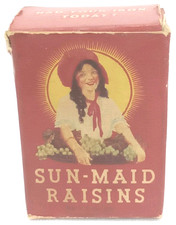
Antique 1920s Advertising Sun-Maid Raisins Carton Fresno California New Arrival $34.99
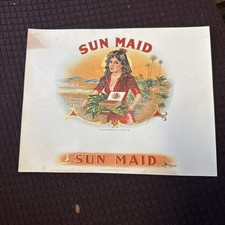
Antique Sun Maid Cigar Box Label 9x7 W C Frutiger Gold Embossed Lithograph $24.99
|
|
|
Shopping Cart  |

|
Recently Viewed |
|
Latest Items |
|
Facebook |
Secure Websites

|
