When you click on links to various merchants on this site and make a purchase, this can result in this site earning a commission. Affiliate programs and affiliations include, but are not limited to, the eBay Partner Network.
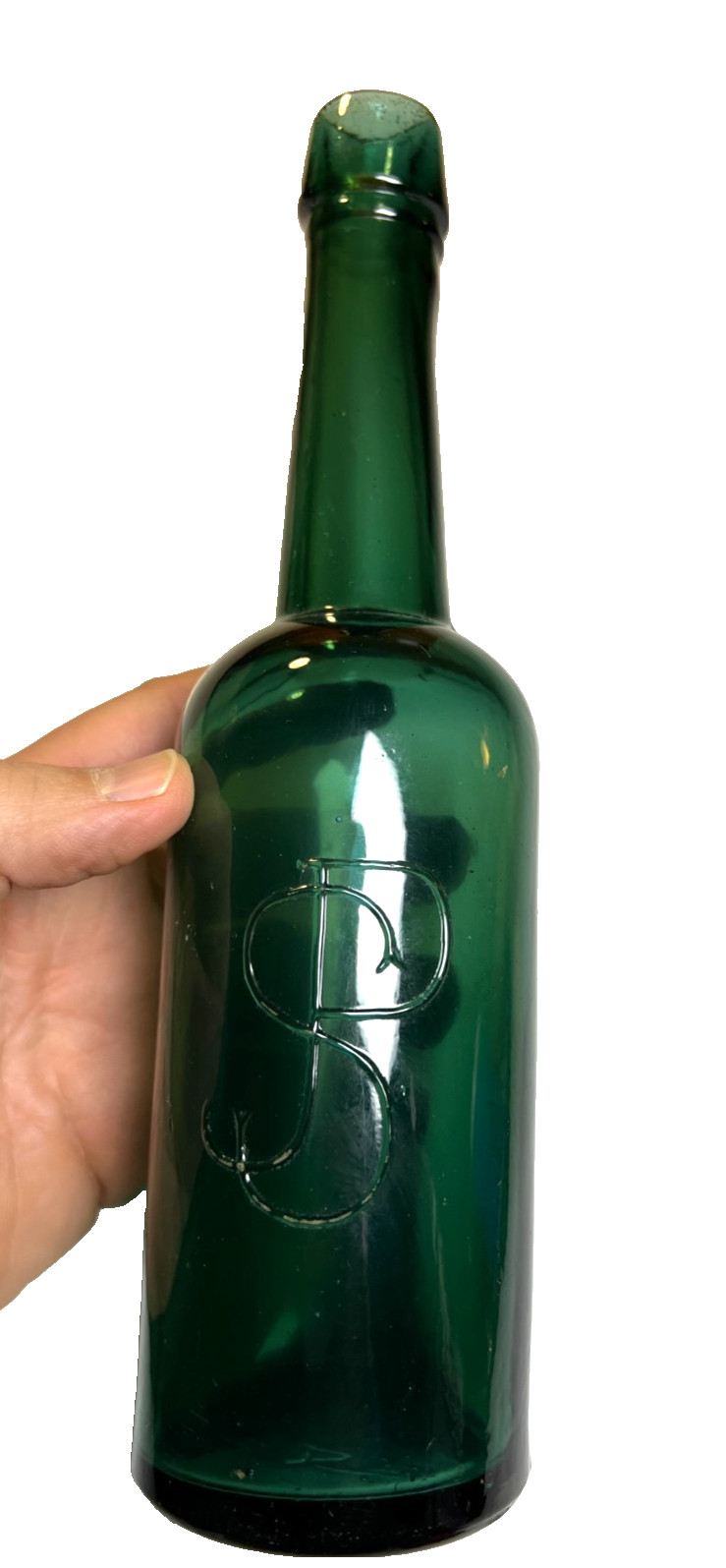
J.S.P. Medicinal Malt Bottle – Emerald Green – c.1895–1910
Monogram Embossed • Applied Medallion • Early Tool-Finished Lip**
A striking turn-of-the-century medicinal malt bottle in rich emerald green, embossed with the elegant J.S.P. monogram on the face. These proprietary “malt tonic” bottles were sold as high-calorie, alcohol-fortified health restoratives during the golden age of patent medicine, and monogram-only examples are far less common than the full-name variants used by bigger firms.
The deep green glass, the crisp applied monogram embossing, and the tall, graceful profile make this a showpiece example of the medicinal malt category.
Condition
• Height: approx. 9⅜ inches
• Lip: Machine-made lip with hand-finished tooling — a classic transitional feature from the 1895–1910 period. Top of lip has a manufacturing imperfect (looks like a hair got into the mold) - its not damage.
• Embossing: Strong hand appliedJ.S.P. monogram
• Glass: Rich, deep, emerald green
• Interior: Clean
• Wear:Two small scuff-transfers on the rear, lower, edge of the bottom.
• Overall: Displays beautifully — an uncommon color and a desirable monogram malt bottle.
About J.S.P. Medicinal Malt
“Medicinal malt” was marketed as a nutritive tonic, a digestive remedy, and a strength-builder for convalescents. Doctors prescribed it freely, especially for:
• loss of appetite
• “nervous exhaustion”
• anemia
• recovery from illness
• late-winter malnutrition
• general weakness
Most formulas contained 5–12% alcohol and were gently sweet from malt extract. J.S.P. positioned its product as a wholesome, pleasant supplement for adults, women, and even children — a common practice in pre-regulation America.
Because many smaller companies did not emboss full names (to avoid the cost of complex molds), a monogram like J.S.P. served as both branding and a trademark.
Historical Context – Set the Scene (c.1900)
Imagine the world when this bottle was in active use:
A doctor arrives by horse-drawn buggy, carrying a leather bag filled with paper-wrapped powders, opiate tinctures, and bottled “restoratives.” In a kitchen lit by oil lamp, the family keeps a few trusted tonics on the high shelf — malt extract, cod-liver oil, beef wine, and this very J.S.P. Malt.
The house is heated by a cast-iron stove. The diet is heavy and seasonal, short on winter vitamins. Tonic culture is at its peak: people genuinely believe that malt extract rebuilds strength, calms the nerves, restores digestion, and fattens up the sick.
In this era — between McKinley’s presidency and Teddy Roosevelt’s progressive reforms — patent medicines enjoy total freedom. No FDA, no required ingredient list. The label simply promises: “Builds vitality. Recommended by physicians.”
This green bottle sat on a table or nightstand, spooned out to patients with care — part health food, part tonic wine, part comfort ritual.
Rarity
Medicinal malt bottles are collectible, but monogram-only emerald examples are noticeably scarcer. Most survivors are aqua or amber with molded text. This color + monogram combination places it in the uncommon-to-scarce bracket.
New York was the national center of medicinal-malt production
The biggest and most influential malt-tonic and malt-extract manufacturers in America were in:
Brooklyn
Rochester
Syracuse
Utica
Albany
Buffalo
New York produced far more proprietary malt tonics than any other state — dozens of small operations in addition to giants like Maltine Manufacturing Co. (Brooklyn), Würzburger Malt, and Malt Extract Wine makers. The odds heavily favor a New York origin.
2. Applied glass seals were a New York glasshouse signature
Emerald and dark-green bottles with hand-applied monogram seals show up most commonly from:
This applied-glass technique fits perfectly with NY’s late-19th-century boutique medicine and tonic industry.
3. The color is classic New York medicinal-glass
That deep emerald green shows up most consistently in:
NY malt tonics
NY bitters
NY mineral waters
NY proprietary tonics
Midwestern examples tended to be amber or aqua.
New England leaned cobalt or amber.
New York loved green.
4. Private-label monogram tonics were especially common in NY
New York had a huge number of:
small malt-extract makers
rebranded or contract-made tonics
druggists who contracted bottles with initials only
regional proprietary health tonics sold in druggists’ supply houses
A monogram like J.S.P. fits perfectly into New York’s “house-brand” medicinal market.
5. Bottle form + tooling fits NY ca. 1895–1910
The details match:
That is textbook New York production.
**Final Answer:
This J.S.P. Medicinal Malt bottle was almost certainly made in…**
→ NEW YORK STATE ←