When you click on links to various merchants on this site and make a purchase, this can result in this site earning a commission. Affiliate programs and affiliations include, but are not limited to, the eBay Partner Network.
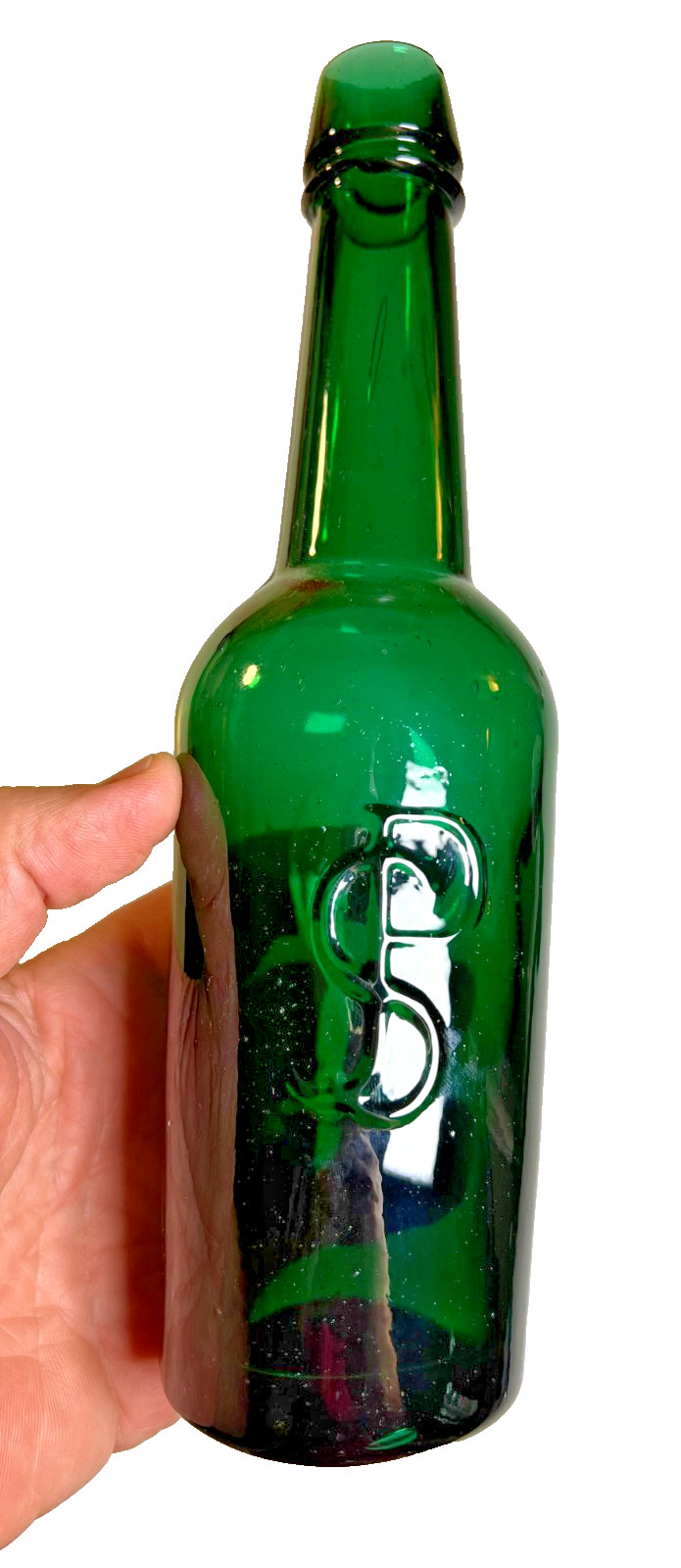
J.S.P. Medicinal Malt Bottle – Deep Emerald Green – Double Applied Collar – Professionally Tumbled – c.1895–1910
A beautiful turn-of-the-century medicinal malt bottle in a rich, dark, emerald green — one of the most desirable colors in the category. Unlike the earlier hand-applied monohtsm variants, this example has a has a embossed “J.S.P.” giving it a refined, understated, almost apothecary-grade presence.
This bottle has been professionally tumbled, bringing the glass back to a bright, glossy, near-mint appearance. The double applied collar lip is a classic late-19th-century feature, and the bottle is loaded with charming character: seed bubbles, thickness variations, and that deep New York–style emerald tone.
It’s an excellent display example with presence and color you simply don’t see often.
Condition
Height: approx. 9⅜ inches
Lip: Double applied collar with tooling marks; tiny lip chip that is smooth to the touch and extremely unobtrusive
Surface: Professionally tumbled to a bright, glossy finish
Color: Thick, rich, deep emerald green
Glass: Loaded with seed bubbles
Wear: Very minimal; faint scuffs consistent with age
Overall: Strong, clean, and highly displayable — a premium example in a premium color
About J.S.P. Medicinal Malt
Medicinal malt was marketed between the 1880s and early 1910s as a nourishing, alcohol-fortified health restorative. High in malt sugars and typically 5–12% alcohol, it was prescribed for:
Low appetite
Nervous exhaustion
Anemia
Recovery after illness
Digestive trouble
General debility
Malt tonics were hugely popular among doctors and families, often advertised as safe for women and even children. Before federal regulation, companies leaned heavily on wholesome words like malt, extract, and tonic to market what were, in effect, lightly sweetened health wines.
Because many small manufacturers avoided the cost of full-text molds, monogram bottles like J.S.P. were used as private-label or contract-made tonics, sold regionally to druggists.
Historical Context – Setting the Scene (1895–1910)
Picture a kitchen around the turn of the century:
A cast-iron stove clanks with heat. The winter pantry is sparse — root vegetables, canned peaches, molasses, maybe a tin of crackers. Doctors arrive by horse or early automobile, carrying leather satchels filled with quinine, powders, and tonics.
On the kitchen shelf sit a handful of “strength-building” remedies: cod-liver oil, beef wine, malt extract — and this very green J.S.P. bottle.
Families would spoon out a dose after supper, believing it rebuilt vitality and settled the nerves. The bottle’s color and weight conveyed trust. This was the golden age of patent medicine: before the FDA existed, before labels listed ingredients, before “tonics” became regulated beverages.
This emerald bottle was part of everyday American healthcare — half-food, half-medicinal, and fully believed in.
Rarity & Production Origin
All signs point to a New York State origin — and here’s why:
Color: Deep emerald green is strongly associated with NY malt-tonic and proprietary medicine production.
Style: The double applied collar + transitional era tooling is textbook NY c.1895–1910.
Market: NY was the epicenter of malt-tonic manufacturing, both branded and private-label.
Bottle Form: The tall, heavy, bubble-rich construction matches output from Brooklyn, Saratoga, and Hudson Valley glasshouses.
Emerald green medicinal malt bottles are much scarcer than aqua or amber examples, and monogram-only versions from this region fall into the uncommon category.