When you click on links to various merchants on this site and make a purchase, this can result in this site earning a commission. Affiliate programs and affiliations include, but are not limited to, the eBay Partner Network.
* The Blueprint School: Founded in 1879 by Lieutenant Richard Henry Pratt, the Carlisle Indian Industrial Schoolin Carlisle, Pennsylvania, was the first federally funded, off-reservation boarding school for Native Americans. It served as the experimental model for 24 similar institutions across the United States. [1, 2, 3]
* Forced Assimilation: Pratt's governing philosophy was summarized by his infamous quote: "Kill the Indian in him, and save the man." Students were stripped of their traditional clothing, forced to cut their hair, forofferden to speak their native languages, and given English names to completely sever ties with their indigenous cultures. [1, 4]
* Scope: Between 1879 and its closure in 1918, over 10,000 children from more than 140 different indigenous nations passed through the school. [2, 4]
Vocational Training & The Bakery
* Industrial Education: In alignment with its mission to turn Native students into Euro-American style laborers, half of the school day was dedicated to academic classes, while the other half was strictly focused on industrial and domestic trades.
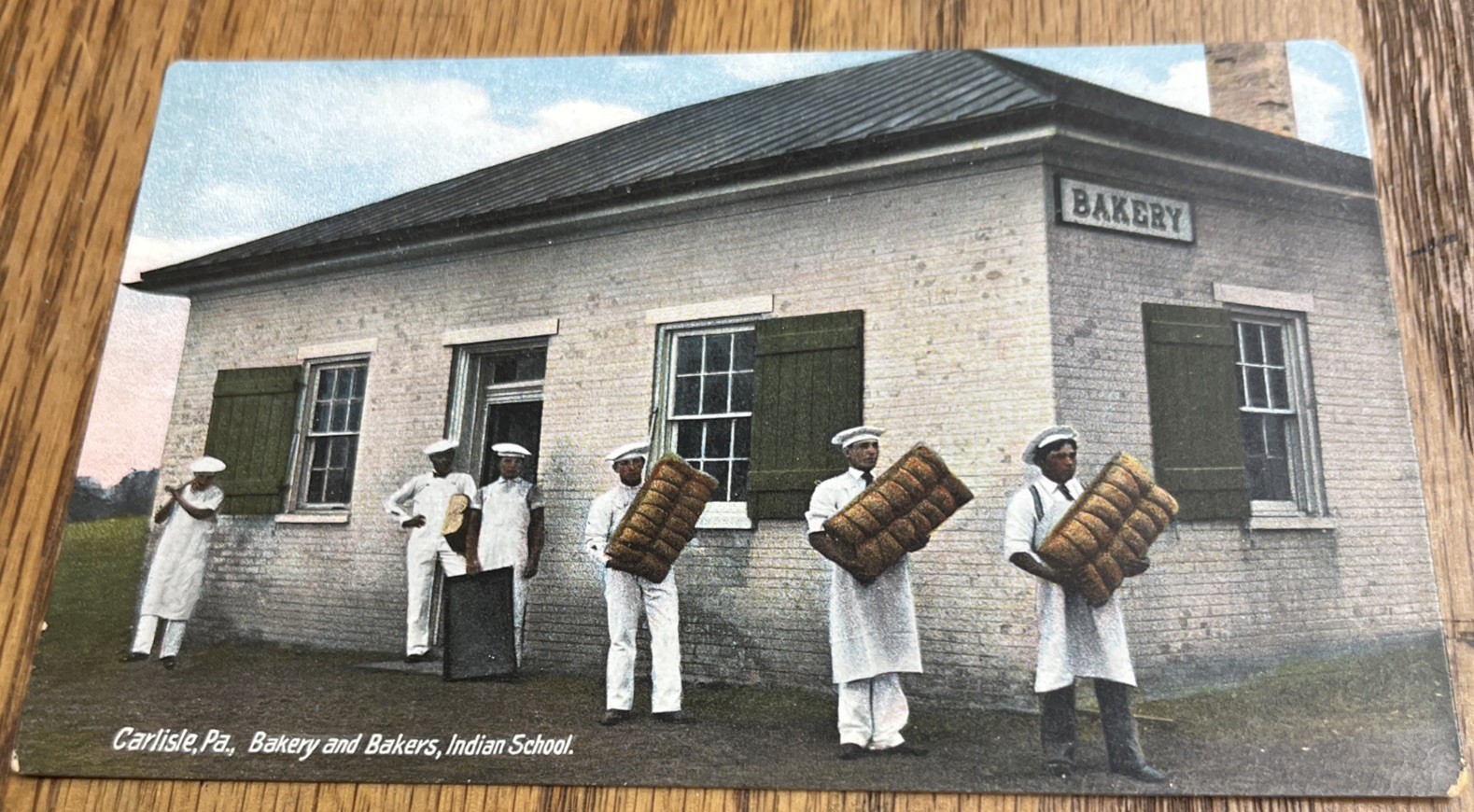
* The Campus Bakery: The school operated an on-site bakery where young male students were taught large-scale industrial baking. Trainees produced hundreds of loaves of bread daily to sustain the high population of the campus dining hall. [5, 6]
* The "Outing" System: Advanced students were frequently placed in local white households and businesses during summers to supply cheap labor and accelerate cultural assimilation. [5]
The Propaganda of Postcards
* Curated Photographic Record: This specific postcard was not a casual snapshot; it was part of a highly organized public relations effort. The school hired official photographers to capture tidy, industrious, and westernized depictions of the students. [7]
* Fundraising and Brand Building: These postcards were sold commercially and distributed nationwide to demonstrate the "success" of the assimilation program, helping secure both federal funding and private donations.[7]