When you click on links to various merchants on this site and make a purchase, this can result in this site earning a commission. Affiliate programs and affiliations include, but are not limited to, the eBay Partner Network.
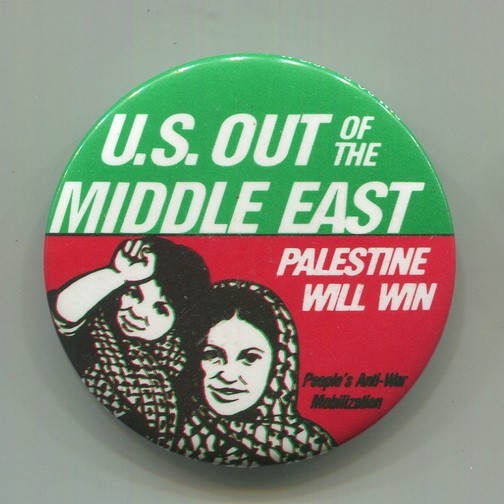
OFFERED FOR SALE IS THIS 21/4 INCHPINBACK BUTTON IN WHAT I BELIEVE TO BE REALLY GREAT SHAPE. HOWEVER, THAT IS JUST MY OPINION. SEE PHOTOS FOR CONDITION, AND YOU BE THE JUDGE. I AM GLAD TO ANSWER ANY QUESTIONS YOU MAY HAVE. PLEASE CONTACT ME BEFORE offerDING OR BUYING.
RETURNS ARE NOT ACCEPTED UNLESS THE ITEM IS NOT AS DESCRIBED OR SHOWN IN THE PHOTOS OR HAS SIGNIFICANT DAMAGE OR DEFECTS NOT VISIBLE IN THE PHOTOS OR OTHERWISE DESCRIBED.
GUARANTEED AUTHENTIC AND ORIGINAL AS DESCRIBED.
I COMBINE SHIPPING CHARGES ON MULTIPLE ITEMS. PLEASE WAIT FOR OR REQUEST AN INVOICE WITH REDUCED SHIPPING BEFORE PAYING.
This pin was issued and sold circa 1981 by the People\'s Anti-War Mobilization (PAM) to raise funds and support for the Palestinian independence movement and removal of U.S. from the Middle East in connection with a massive march on May 3, 1981, in the U.S. led by PAM.
The People’s Anti-War Mobilization(PAM) was a prominent U.S.-based anti-imperialist and progressive coalitionfounded in the late 1970s that famously linked international solidarityefforts—including Palestinian autonomy—with domestic civil rights issues.
The organization is most notable for coordinating ahistoric mass demonstration on May 3, 1981, where over 100,000 peoplemarched on the Pentagon. While the primary focus was opposing U.S.intervention in El Salvador and Ronald Reagan\'s domestic budget cuts, PAMintentionally built a \"rainbow coalition\" that integrated globalanti-colonial struggles.
The 1981 march was historic for being one of thevery first massive American anti-war mobilizations to officially includePalestinian solidarity groups and feature a Palestinian speaker on itsprimary platform. PAM’s promotional materials, including archived artifacts atthe Smithsonian Institution, explicitly protested U.S. intervention andforeign policy in Palestine, El Salvador, and southern Africa, alongsidedemands for LGBTQ+ rights, an end to the draft, and an end to racial violence.
This item relates to the Hippie or Hippy Counterculture psychedelic Movement which included such topics as peace, protest, civil rights, radical, socialist, communist, anarchist, union labor strikes, drugs, marijuana, pot, weed, lsd, acid, sds, iww, anti draft, anti war, anti rotc, welfare rights, poverty, equal rights, integration, gay, women\'s rights, black panthers, black power, left wing, liberal, progressive political movement
Thanks for taking a look.