When you click on links to various merchants on this site and make a purchase, this can result in this site earning a commission. Affiliate programs and affiliations include, but are not limited to, the eBay Partner Network.
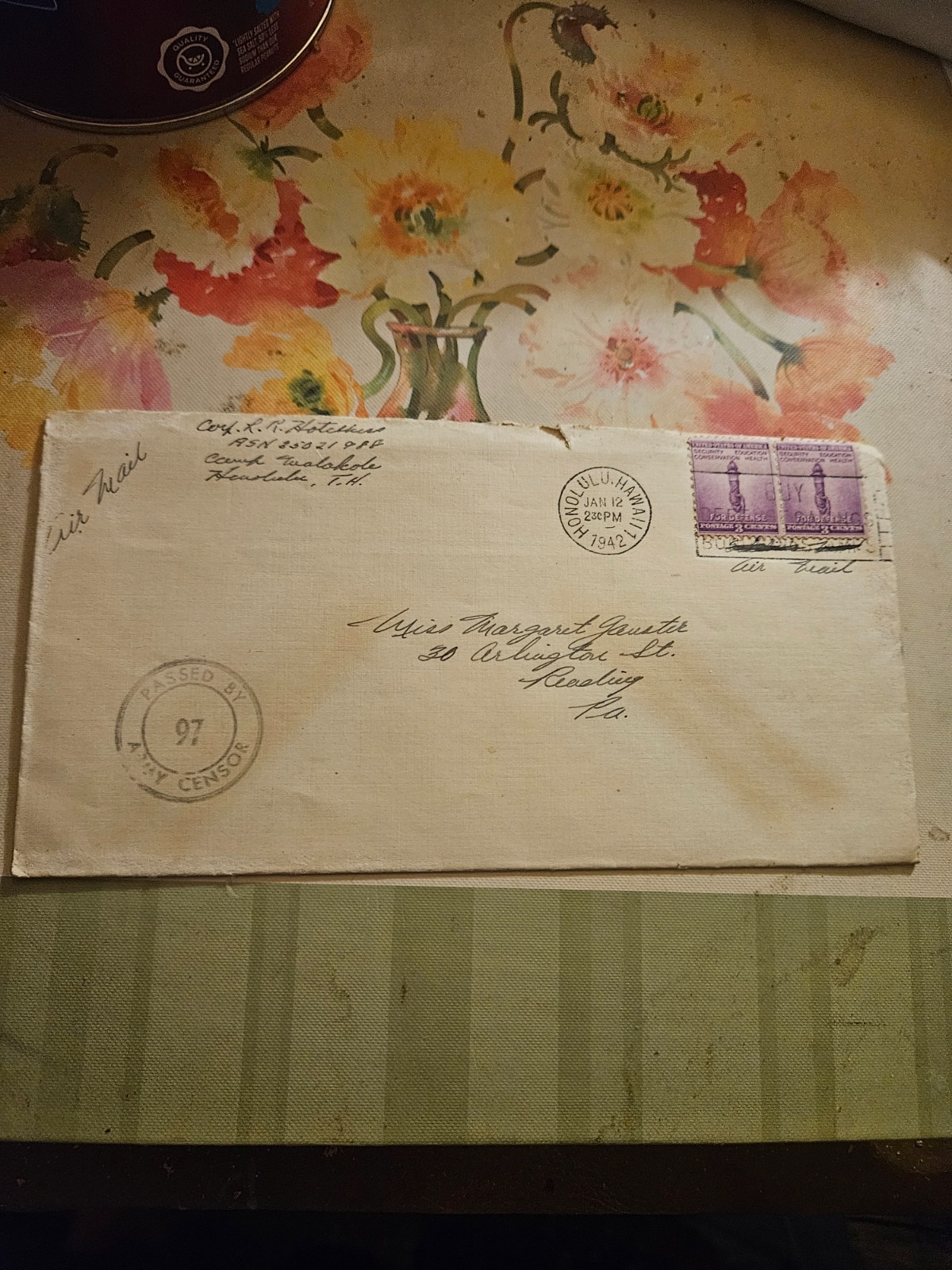
Authentic WWII Letter Archive
Five historic letters written
by Cpl. Lewis R.
Hotchkiss between December 1941
and January 1942. Sent
from Camp Malakole, Territory
of Hawaii, to Margaret
Ganter in Reading, Pennsylvania.The Ocean Convoy Diary
The standout piece is
a raw, multi-page sea
voyage diary written at
sea between December 20,
1941 and January 7,
1942. It describes traveling
in a massive 25-ship
military convoy protected by
a cruiser and two
destroyers immediately after the
attack on Pearl Harbor.
He details tight sleeping
quarters, rough stormy waters,
and mandatory life preservers.Camp Malakole Blackouts
The correspondence details life
on Oahu under strict
martial law. Lew describes
total nightly blackout restrictions,
the extreme heat, eating
fresh Hawaiian pineapples, and
building barracks furniture. He
also notes his frustration
with unit censorship clerks.Unique Postal Markings
The envelopes showcase exceptional
postal history. They include
the classic \"Passed By
Army Censor 97\" stamp,
the scarce \"Released by
I.C.B. 81\" (Information Control
Branch) mark, and an
Air Mail Special Delivery
cover processed at Rincon
Annex in San Francisco.Wartime Censorship Cutouts
Two letters feature small,
neat cutouts where the
inner unit address was
physically snipped out to
comply with strict military
security and censorship regulations.Distinguished New England Lineage
The soldier, Lewis R.
Hotchkiss, was a direct
descendant of Samuel Hotchkiss,
the notable New England
Immigrant who arrived in
America in 1638. Samuel
Hotchkiss was celebrated as
one of the original
founders of the historic
Colony of New Haven,
Connecticut, adding exceptional genealogical
value to this archive. Excellent Collectible State. The collection is in
very good vintage condition.
The cursive ink remains
dark and highly legible throughout.
Envelopes exhibit normal edge
wear, age toning, and
handling marks from their
historic trans-Pacific wartime journey.