When you click on links to various merchants on this site and make a purchase, this can result in this site earning a commission. Affiliate programs and affiliations include, but are not limited to, the eBay Partner Network.
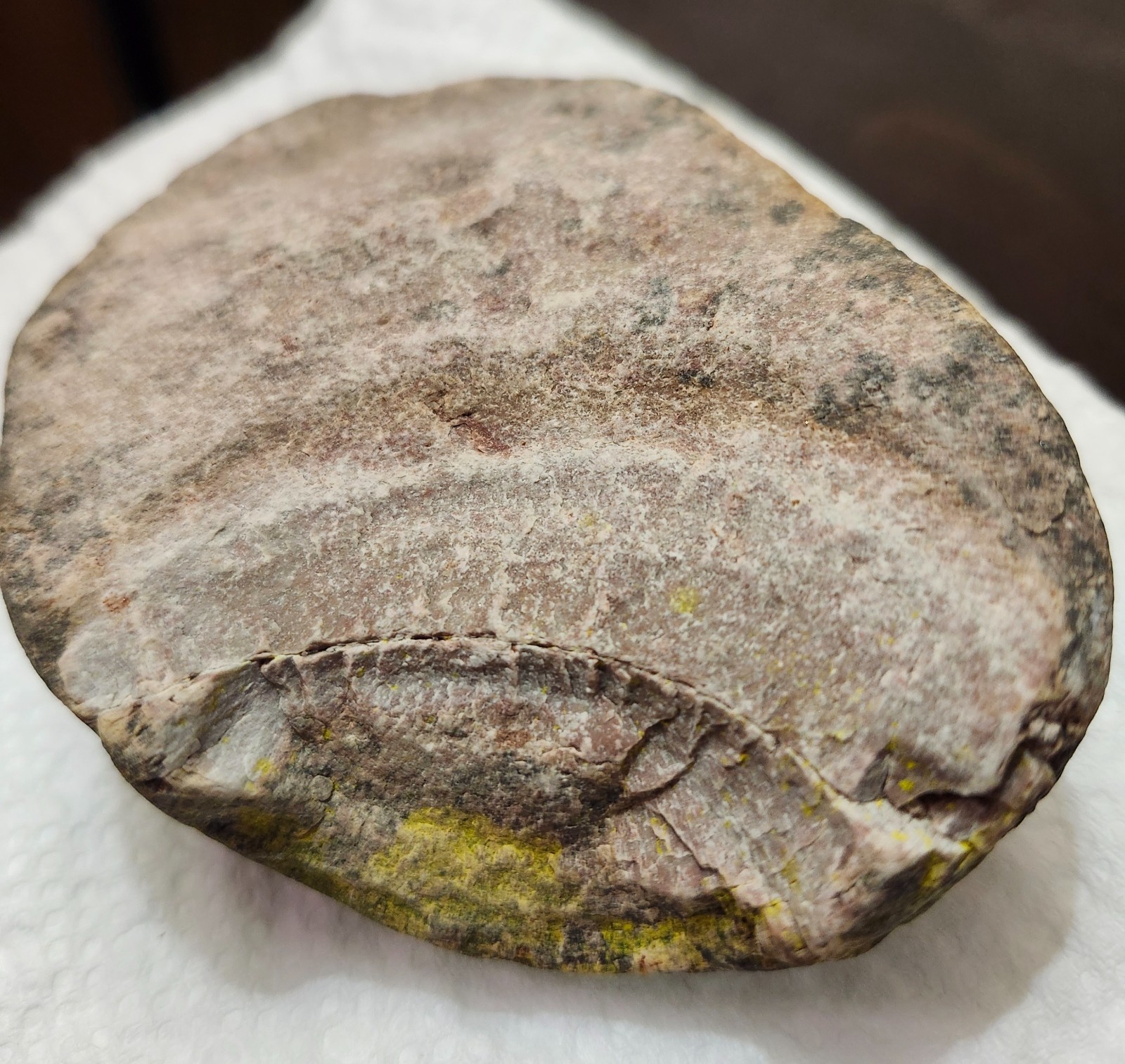
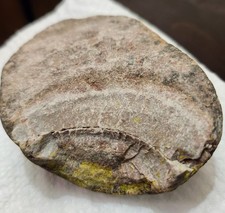
9.3 oz or 264 gram Specimen appears to be a brachiopod fossil—specifically a ribbed, curved shell imprint typical of Paleozoic marine fossils found around the Great Lakes region.
Across all three photos, the key diagnostic feature is the curved, ribbed (striated) structure embedded in the rock. This pattern is strongly characteristic of brachiopods, a group of ancient marine animals that lived on the seafloor and are in Paleozoic sedimentary rocks across the Midwest.
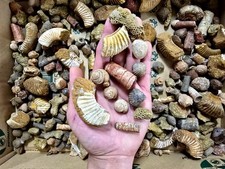
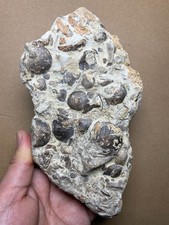
Although Lake Superior’s shoreline is dominated by igneous and metamorphic rocks, fossil-bearing sedimentary rocks do occur in glacial deposits, meaning fossils like brachiopods can be transported far from their original bedrock source. The ribbed arc in your specimen matches the typical form of orthid or spirifer brachiopods, which have fan‑like ridges radiating from a curved hinge line.
- Ribbed shell pattern: Brachiopods commonly show evenly spaced ribs (costae) that curve across the shell.- Symmetry: The curvature suggests bilateral symmetry across the shell’s midline—another brachiopod trait.- Sedimentary matrix: Your rock shows layering and weathering consistent with sedimentary origin, even if found in a region dominated by transported glacial material.- Common regional fossil: Fossils such as trilobites and brachiopods are noted as typical finds in Lake Superior–associated sedimentary rocks.
Free USA Shipping. Will Ship Worldwide. Please Visit My store For Other Interesting Items