When you click on links to various merchants on this site and make a purchase, this can result in this site earning a commission. Affiliate programs and affiliations include, but are not limited to, the eBay Partner Network.
For Sale: An Opportunity for the Advanced Collector & Historian
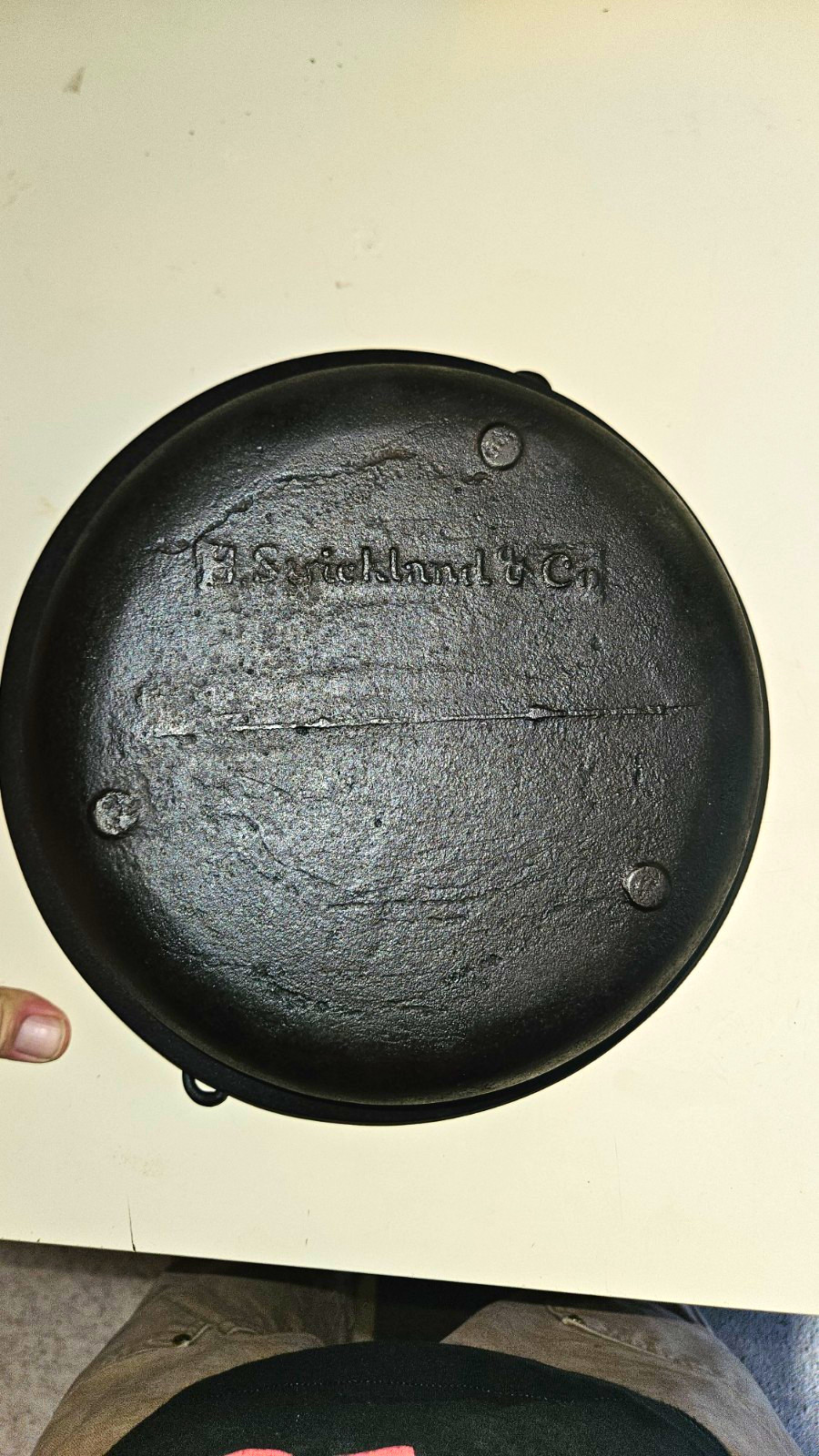
Offered for your consideration is an extraordinarily rare, mid-19th-century cast-iron Scotch pot (bulged pot) bearing the crisp, relief-cast maker’s mark: H. Strickland & Co. from Bradford, Vermont.
Beyond its extreme regional rarity, this particular vessel tells a deeply personal domestic story, capturing a hands-on historical transition in American household life: the shift from open-hearth fireplace cooking to wood-burning cookstoves.
Historical Significance: A Family Hearth-to-Stove Modification
During the 1830s through the 1850s, American kitchens underwent a massive technological transformation. For generations, cooking was done directly over an open fire, requiring kettle legs long enough to clear hot coals on the hearth floor. When families eventually acquired modern cast-iron cookstoves, those long hearth legs were no longer practical for flat stove tops or inset burner eyes.
Rather than discarding their quality cookware, families adapted what they had right at home:
Home-Ground Legs: Originally cast with longer legs designed for traditional hearth cooking, this pot was later modified by its owners at home. When the household transitioned to a wood-burning cookstove, they hand-ground the legs shorter so the pot would nestle stable and flat directly onto the stove—a tangible, grassroots artifact of domestic ingenuity.
The Bottom Gate Mark: Cast using early pre-1890 single-mold hand-pouring techniques, leaving the classic bottom gate mark across the base.
Vermont Ironwork: Produced by ironmaster Horace Strickland in Bradford, VT—an inventor who held patents for stove draft systems—this piece represents the finest traditions of small-town New England foundry work.
Extreme Rarity & Collector Value
While mass-produced hollowware from major hubs turns up regularly, marked examples from early Vermont foundries are practically nonexistent on the open market. Most surviving Strickland pieces are held in private collections or regional historical holdings. Finding a marked Vermont piece with this kind of authentic domestic history is a rare event for hollowware collectors and material culture historians alike.
Condition & Professional Restoration Report
This pot has been preserved in outstanding condition for a piece approximately 160 to 185 years old:
Structural Integrity: Guaranteed solid with NO cracks, chips, hairline fractures, or weld repairs.
Maker\'s Mark: The relief bottom stamp reading \"H. Strickland & Co.\" remains clear and legible.
Flatness & Stability: Because the legs were carefully ground down during its working life to fit the stove, the pot sits flat and stable.
Restoration Process: Professionally restored to bare metal using gentle electrolysis (no grinding, sandblasting, or harsh chemicals) and freshly seasoned with multiple coats of organic canola oil for a smooth, deep protective finish.
Bail & Rim: The heavy original wire bail handle swings freely within its cast ears, and the rim remains crisp.
Surface Character: Light, authentic period texture, casting variations, and the manual modification of the legs reflect its genuine working history and age.