When you click on links to various merchants on this site and make a purchase, this can result in this site earning a commission. Affiliate programs and affiliations include, but are not limited to, the eBay Partner Network.
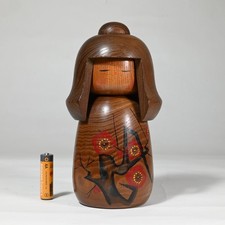
Master Daisuke Takeda 竹田大介 sosaku kokeshi composition Aka Ume,Japan, the 1980s.
This elegant kokeshi doll wasmade bythe iconic sōsakukokeshi artist Daisuke Takeda in the 1970s or 1980s. It is titledAka Ume(赤梅), orred plum blossoms, which in Japanese culture symbolizeresilience, longevity, and the vibrantarrival of early spring. Blooming in February whilesnow may still be on the ground, these fragrant, deep-pink to red flowerssignify strength against adversity and are considered auspicious, oftenrepresentinggraceful beauty and good fortune.
Umeblossoms appear before the famousSakura(cherry blossoms), marking the true transition from winter to spring.In contrast to the short-lived cherry sakura -- which are often seen as the symbol of thefleeting nature oflife -- theumesymbolizes a more enduring, long-lasting beauty.Because aka ume bloom in the cold, red plums represent endurance, inner strength, and the ability to thrive despite hardship.
Ume also has the spiritual meaning of protection and good fortune. Red and white plums are often planted in the northeast corner of temple gardens to ward off evil andare considered a traditional, lucky pairing, often used in New Year celebrations.Red plum motifs are frequently featured in traditional kimono patterns, art, and haiku poetry.
This doll\'s kimono depictsaka umebranches in bloom.In this work, Takeda-san masterfully highlights the wood’snatural grain, using subtle staining and waxing techniques to enhance warmthand visual depth.
Height: 7\" / 17.4 cm
Head diameter: 4\" / 10 cm
Bottom diameter: 3.2\" / 8 cm
Weight:1.25 lbs / 567 g
Takeda Daisuke (竹田大介)
AsōsakuKokeshi artisan whose moderninterpretations of traditional forms evoke elegance and natural beauty.Takeda-san\'s work frequently features plum tree blossomsrendered in delicate brushwork, accompanied by sleepy eyes and stylized hairthat lend his Kokeshi a serene presence. The kimono designs often showcasefloral branches in bloom, sometimes incorporating cherry blossoms ortraditional motifs such asshō-chiku-bai(pine, bamboo, plum),symbolizing perseverance and good fortune. He masterfully highlights the wood’snatural grain, using subtle staining and waxing techniques to enhance warmthand visual depth.
His creations vary in size and style but are consistentlynotable for their substantial weight and balanced proportions, hallmarks of hisattention to tactile and visual harmony.
Although public records do not confirm his birth year orcity, Takeda-san appears to have been active during the early 1970s. This placeshim within the second wave ofsōsakuartisans who favoredpersonal expression over rigid regional traditions. Biographical details remainscarce, yet his Kokeshi enjoy a loyal collector following, especially amongthose who appreciate understated beauty, earthy palettes, and minimalisthand-painted details.
K1052 B