When you click on links to various merchants on this site and make a purchase, this can result in this site earning a commission. Affiliate programs and affiliations include, but are not limited to, the eBay Partner Network.
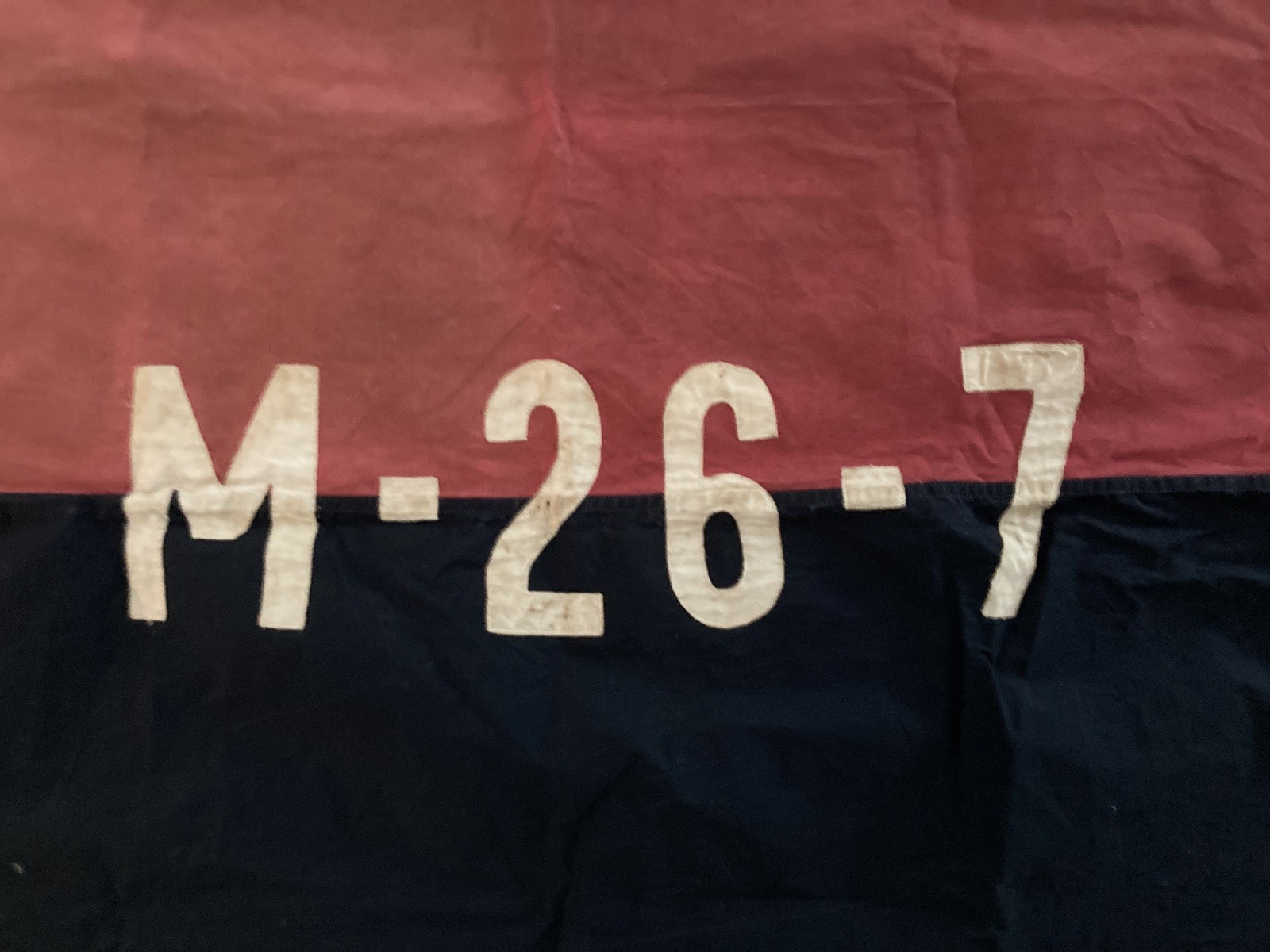
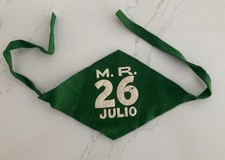
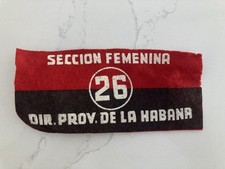
Flag belonging to the brigade of commander Victor Mora ! 1959 revolutionary Original and in great condition , this is not a replica or reproduction. Victor Mora Pérez (also referred to as Víctor Mora) was a Cuban revolutionary commander in the 1950s who played a notable role in the final phases of the Cuban Revolution against Fulgencio Batista’s regime, particularly in opening and leading the Camagüey front. adelante.cu
Role in the 1958–1959 Revolution
• He commanded Columna 13 “Ignacio Agramonte” (or Column No. 13), which arrived from the Sierra Maestra in November 1958 to strengthen guerrilla operations in Camagüey province. adelante.cu
• On November 13, 1958, his troops entered the territory, establishing their command in San Miguel del Junco on November 18. This helped form the Frente Camagüey (Camagüey Front), unifying rebel forces in the region under his initial leadership as designated by Fidel Castro. adelante.cu
• His column conducted combat actions, ambushes, and operations to disrupt Batista’s forces, support supply networks, and coordinate with other rebel groups. This was part of the broader strategy to open a new front in Camagüey during the final offensive. cubadebate.cu
• Rebel forces under the Camagüey Front contributed to controlling key sites like the Regimiento Agramonte (military regiment) as Batista’s regime collapsed in late December 1958–early January 1959. autentico.org
Mora was described as a peasant-origin fighter (“campesino rudimentario”) who rose through combat experience and valor rather than formal education or professional background. Fidel Castro later publicly contrasted him with more educated or later-joining figures, noting Mora’s longer service and greater number of combats while explaining leadership appointments in Camagüey. cuba.cu
Post-Revolution
After the revolutionary victory on January 1, 1959, Mora held military roles, including as the first chief of the Regimiento Agramonte in Camagüey. elvigiadecuba.com He remained loyal initially but later became disillusioned with the direction of the revolution under Castro.
Accounts indicate he was involved in or accused of anti-Castro activities, leading to imprisonment (a 10-year sentence in some reports). He eventually went into exile, reportedly reaching the United States via the Mariel boatlift, and lived in Little Havana, Miami, where he died. govinfo.gov