When you click on links to various merchants on this site and make a purchase, this can result in this site earning a commission. Affiliate programs and affiliations include, but are not limited to, the eBay Partner Network.
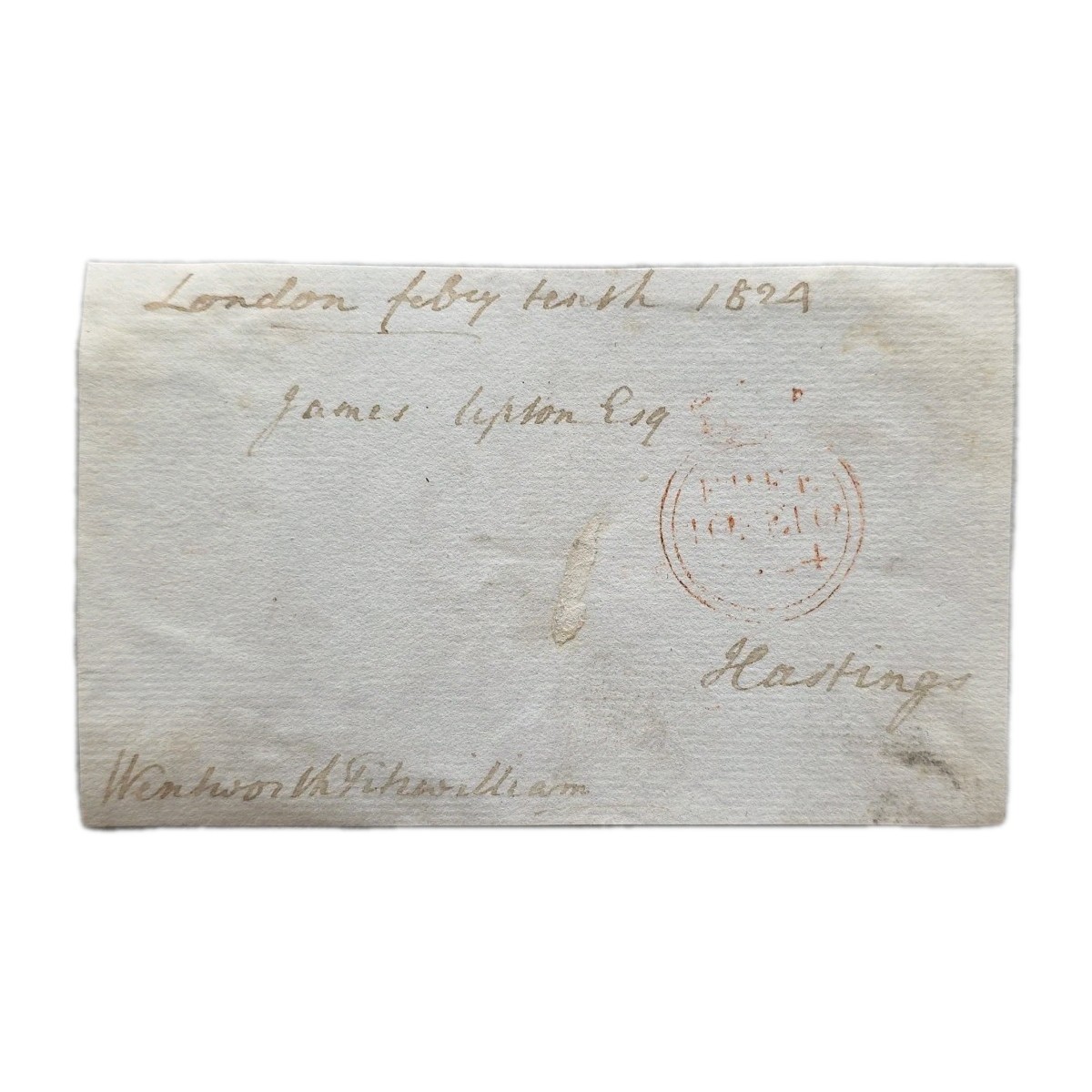
For your consideration is an original late Georgian parliamentary free-franked postal fragment written and signed by William Wentworth-Fitzwilliam (17481833), 4th Earl Fitzwilliam, one of the most prominent Whig statesmen and aristocratic landowners of the late eighteenth and early nineteenth centuries. Measuring approximately 5 by 3 inches, the fragment survives as the addressed portion of an originally folded letter transmitted through the British postal system under parliamentary franking privilege.
The recto bears the manuscript address in a fluent contemporary hand together with Fitzwilliams autograph franking signature, positioned in the customary manner authorizing postage-free carriage. A partially struck red circular postal handstamp remains visible, confirming contemporary postal handling within the pre-Penny Post system. The format preserves the essential elements of an authentic parliamentary free front associated with a hereditary peer of exceptional political standing.
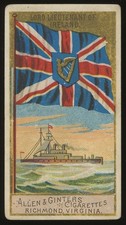
William Wentworth-Fitzwilliam succeeded as 4th Earl Fitzwilliam and, following the death of his maternal uncle Charles Watson-Wentworth, 2nd Marquess of Rockingham, inherited the vast Wentworth Woodhouse estates in 1782, becoming one of the wealthiest landowners in Britain. A leading figure within the Whig aristocracy, he served as Lord President of the Council and, most notably, as Lord Lieutenant of Ireland in 17941795. His brief Irish administration became an important episode in the politics preceding the Act of Union and reflected the ideological divisions surrounding Catholic relief, parliamentary reform, and British government policy in Ireland.
The verso is blank and exhibits light age toning, minor surface soiling, handling wear, and evidence of historical trimming or separation from the original correspondence. Despite its reduced format, the piece retains Fitzwilliams original autograph authorization and contemporary postal evidence, constituting a well-attributed artifact of Georgian parliamentary and postal history directly associated with the 4th Earl Fitzwilliam, Lord Lieutenant of Ireland, and one of the principal aristocratic figures of the British Whig establishment.