When you click on links to various merchants on this site and make a purchase, this can result in this site earning a commission. Affiliate programs and affiliations include, but are not limited to, the eBay Partner Network.
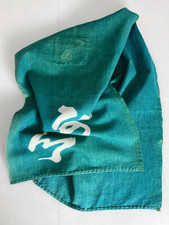
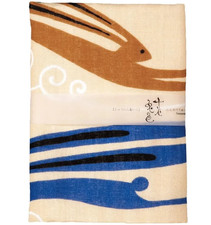
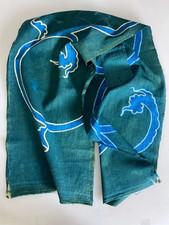
This listing is for 1 Piece of Japanese Cotton Tenugui Headband Hand Towel Bento ClothUtagawa Hiroshige Moon & DuckDesign
Tenugui hand towel can also be used for various purposes such as towel, greetings, wrap, bandana, cover, wipe, spread, or interior decor.This towel measures approx. 35 x 13.5 inches (90cm x 35cm)
High Quality
Made in Japan
\"Hiroshige Ukiyo-e Soft Double-Gauze Tenugui\"
This tenugui features \"Moon and Geese\" by the famous ukiyo-e artist Utagawa Hiroshige, who flourished during the Edo period. Made with soft, double-layered gauze fabric for excellent absorbency and a gentle touch. Proudly made in Japan.
About Utagawa Hiroshige
Hiroshige is one of the most renowned ukiyo-e artists of the Edo period, alongside Katsushika Hokusai, and is famous worldwide. His landscape series \"The Fifty-Three Stations of the Tokaido\" is especially well-known.
\"Moon and Geese\" by Hiroshige
This masterpiece by Hiroshige captures three geese descending from the layered, expansive sky, presented in a tanzaku (vertical poem card) format. The work is so iconic that it was featured on a postage stamp in 1949.
The serene autumn sky seems to echo the melancholy cries of the geese, evoking a sense of profound tranquility.
Hiroshige\'s Haiku: \"Moon and Geese\" (Upper Left)
\"Komu na yo ka, mata mo arou ka, tsuki ni kari\"
Literal meaning:
\"The sight of three geese gliding past the full moon is so breathtaking. Will such a night ever come again? Surely not...\"
The Hidden Secrets of the Stamps: \"Deer\" and \"Horse\" (Lower Center)
Hiroshige\'s signature cleverly incorporates hidden meanings:
- The \"deer\" (鹿) represents \"fortune\" (福).
- The \"horse\" (馬, shown from behind) symbolizes \"longevity\" (寿).
Together, they form a playful double meaning: \"baka\" (\"fool\") and \"fukuju\" (\"fortune and longevity\").
This tenugui beautifully captures the essence of Hiroshige’s artistic spirit and Edo-period wit.