When you click on links to various merchants on this site and make a purchase, this can result in this site earning a commission. Affiliate programs and affiliations include, but are not limited to, the eBay Partner Network.
Brand/Publisher: The JEATH War Museum; Kanchanaburi, Thailand.
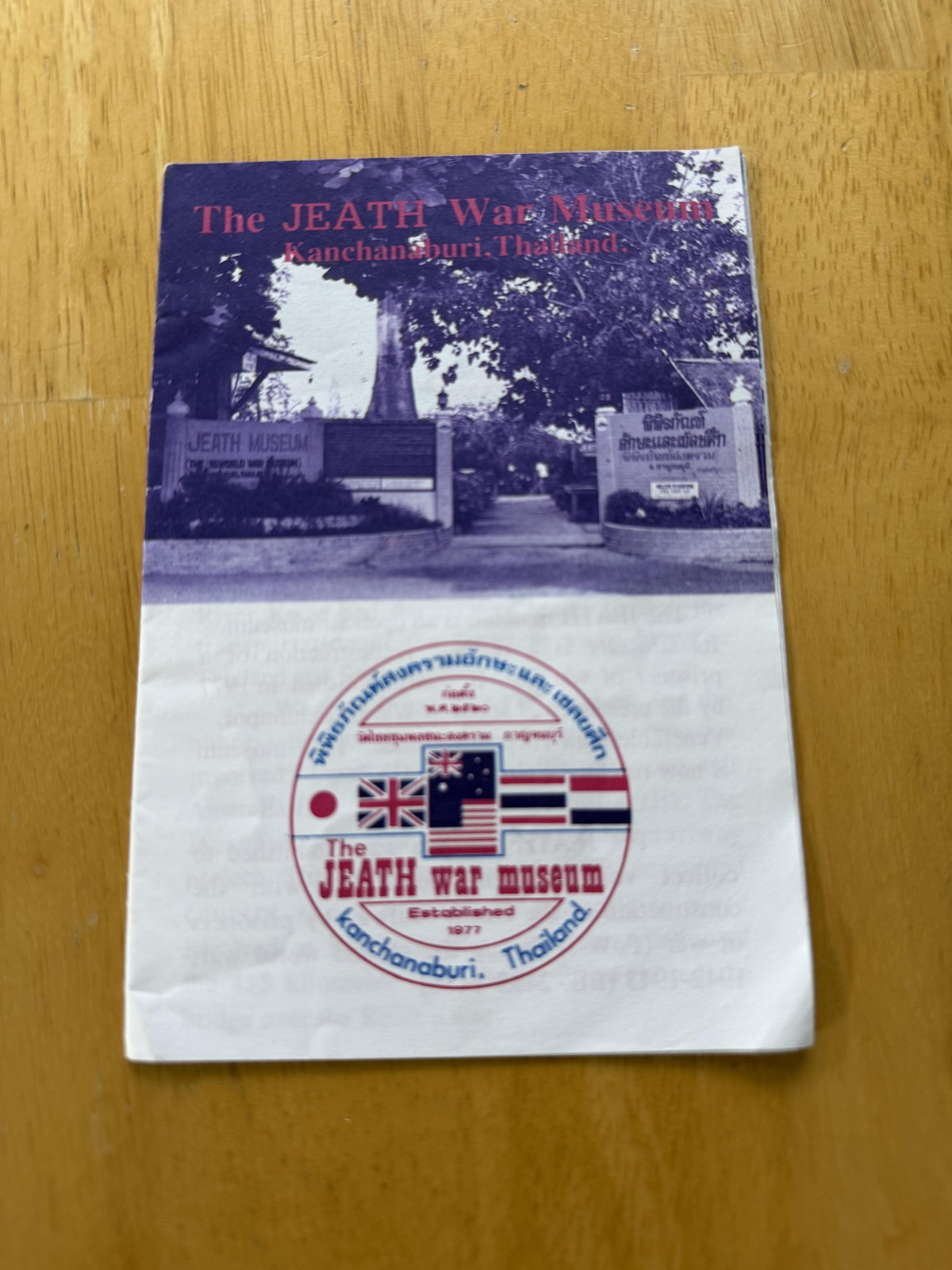
Item: Original tourist information brochure for The JEATH War Museum, an open-air museum interpreting the World War II Death Railway and prisoner-of-war history in Kanchanaburi, Thailand.
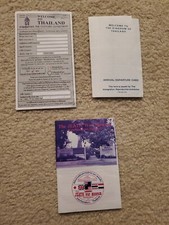
Front cover design presents a purple-tinted photograph of the JEATH Museum entrance with Thai and English signage beneath the red title The JEATH War Museum Kanchanaburi, Thailand, above a circular red and blue emblem that incorporates multiple national flags and the inscription The JEATH war museum Established 1977 Kanchanaburi, Thailand.
The reverse panel features a simplified street map showing routes through Kanchanaburi town to the museum, with a numbered legend identifying local landmarks such as the post office, old city gate, city spiritual shrine, police station, and bus station, and a boxed schedule stating OPEN DAILY From 8:30 A.M. - 4:30 P.M. with a note that special openings may be arranged for overseas visitors by contacting the curator.
Opening interior panel titled The JEATH War Museum and History explains that the museum is constructed as a realistic reconstruction of a prisoner-of-war bamboo hut, founded in 1977 by the chief abbot of Wat Chaichumpol to collect artifacts and materials related to the building of the Death Railway between 1942 and 1943.
Subsequent interior sections describe the first exhibit hut containing a large collection of photographs and displays recreating the living quarters of prisoners, followed by additional panels that highlight photographs taken by Thai people and prisoners of war, textual narratives from former prisoners and relatives, and displays that document their experiences.
Further text discusses museum exhibits such as tools, weapons, utensils, and other items associated with the construction of the railway and daily life in the camps, while also explaining that the JEATH name evokes the nationalities involved and the broader international scope of the conflict.
Another interior panel answers What is the Death Railway and the River Kwae Bridge? by outlining the strategic 415-kilometre railway between Thailand and Burma, its role in wartime logistics, and the involvement of prisoners of war and forced laborers during construction.
A concluding message addresses Dear visitors and emphasizes that the museum has been built not to maintain hatred but to remind present and future generations how terrible war is, ending with the prominent pacifist slogan MAY PEACE ALWAYS CONQUER VIOLENCE and brief contact details for the temple-based museum.
Format and appearance: multi-panel fold-out brochure printed in red, blue, and black on white paper, combining English and Thai text, monochrome documentary photographs, historical narratives, and a small location map intended for visitors to The JEATH War Museum and the nearby Death Railway and River Kwai areas.
Notes: Suitable for collectors of Southeast Asia tourism ephemera, Kanchanaburi and River Kwai history, World War II prisoner-of-war sites, and informational brochures from Thai museums.