

|
Site Categories |
|
Featured Items |

Poodle, Spaghetti Trim, Ucagco


|
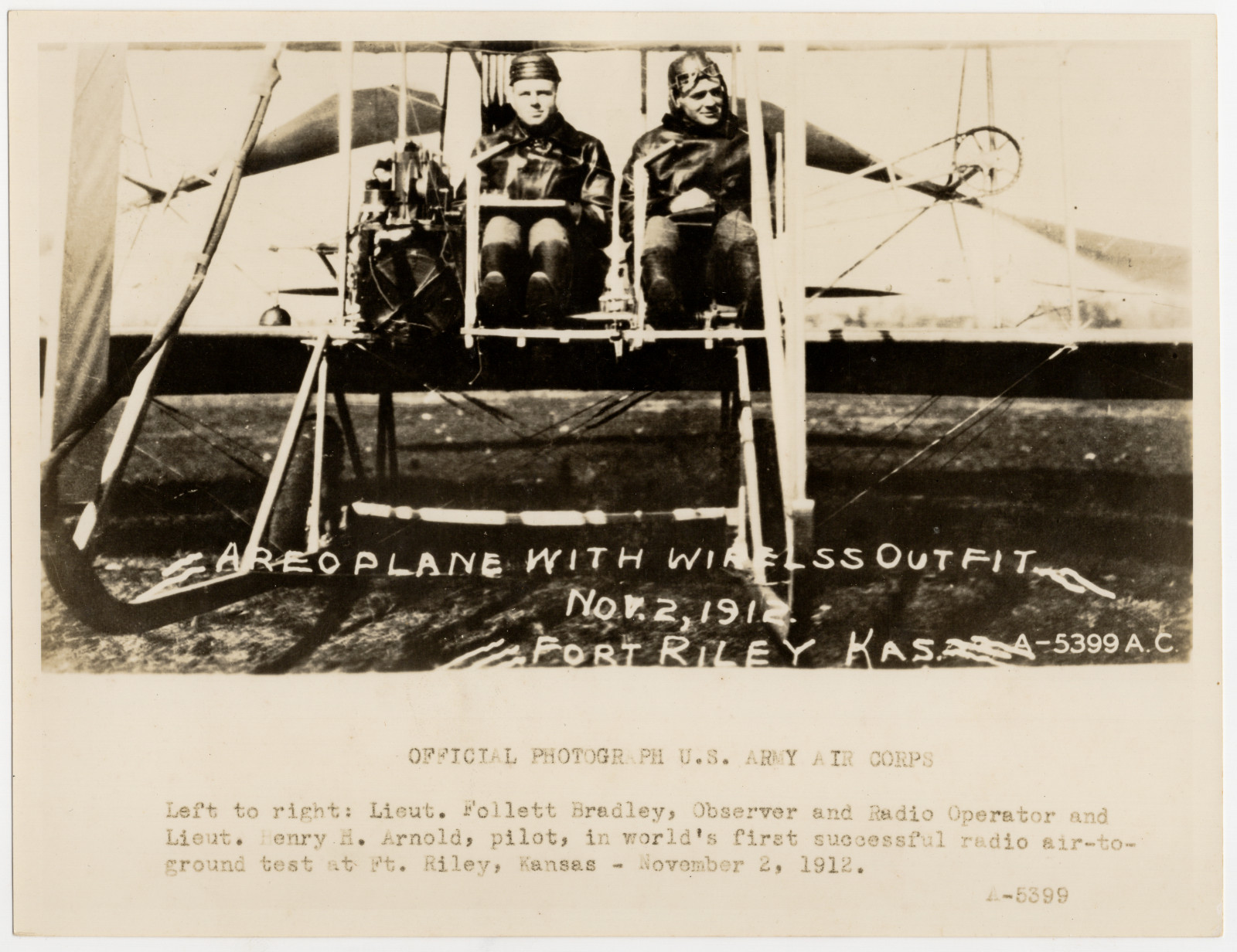
Hap Arnold 1912 Fort Riley Wireless Radio Test Wright Plane Air Corps 8x10 Photo For Sale

When you click on links to various merchants on this site and make a purchase, this can result in this site earning a commission. Affiliate programs and affiliations include, but are not limited to, the eBay Partner Network.

Hap Arnold 1912 Fort Riley Wireless Radio Test Wright Plane Air Corps 8x10 Photo:
$249.00
Hap Arnold 1912 Fort Riley Wireless Radio Test Wright Plane Air Corps 8x10 Photo Official Air Corps Print, Early Military Radio FlightDESCRIPTIONOriginal official U.S. Army Air Corps photograph of a Wright biplane fitted with a wireless set for the radio air-to-ground test at Fort Riley, Kansas, on November 2, 1912. Two aviators sit side by side on the open front of the machine in leather coats, boots, and flying helmets, with the engine mounted beside them and the wing struts rising overhead. White lettering on the image reads AREOPLANE WITH WIRELSS OUTFIT, Nov. 2, 1912, Fort Riley Kas., with the file number A-5399 A.C. The typed caption below, headed Official Photograph U.S. Army Air Corps, names Lieut. Follett Bradley, observer and radio operator, on the left and Lieut. Henry H. Arnold, pilot, on the right, and describes the flight as the world\'s first successful radio air-to-ground test. The reverse carries the Official Photograph, 5th Photo Section, Air Corps stamp with its credit line. This is an Air Corps era print of the 1912 image, made years after the event, and it measures 8 x 10 inches. Scanned at 600dpi.That day at Fort Riley, Arnold piloted a Wright pusher biplane while Bradley, a field artillery lieutenant, tapped out a Morse code message on a key strapped to his leg. Air Force historical publications identify the machine as a Wright Type C, Signal Corps No. 10. Bradley later recalled that they had no seat belts or parachutes and sat with two propellers buzzing at their necks. Lt. Joseph Mauborgne of the Signal Corps, who had installed the radio set, received the signal at the ground station, and later accounts put the distance at about six miles. The flight came at the start of the Fort Riley experiments in which, for the first time, Army fliers used aircraft to adjust artillery fire, signaling the ground with radiotelegraphy, dropped message cards, and smoke signals, an early look at the aerial spotting that became routine in World War I. Radio had been sent from airplanes before, by civilian aviators in 1910 and by Army Lt. Paul Beck in January 1911, but Fort Riley put it to work on the artillery problem, and Air Force histories credit Arnold as the first military aviator to use radio to correct artillery fire.The three lieutenants went on to notable careers. About three days after the radio flight, Arnold was spotting artillery at Fort Riley when his Wright stalled and nose-dived from roughly 400 feet. He recovered near 80 feet and landed safely, but he grounded himself and did not overcome his fear of flying until late 1916. He went on to command the Army Air Forces in World War II and in 1949 became the only General of the Air Force. Bradley, a Naval Academy graduate who switched to the Army field artillery in 1912, retired as a major general. Mauborgne served as the Army\'s Chief Signal Officer from 1937 to 1941 and played a key role in developing the one-time pad cipher system. Arnold returned to Fort Riley in 1926 as commander of the 16th Observation Squadron.Every effort is made to verify facts and provenance, including background research through news and historical archives. If any part of this listing is incorrect in any way and you are unsatisfied with the item, please contact me and I will make it right. Orders placed before Noon CDT ship the same day via USPS Ground Advantage with tracking, so you know exactly when it will arrive. Returns are accepted on all items over $25. Every item ships in rigid, professional packaging, sealed and protected with acid free protectors. Shipping is free and already built into the price, so the BIN price is exactly what you pay, no surprise shipping costs at checkout.CONDITIONThe photograph is clear and well defined for its age, with a contrasty, slightly soft tonal range and fine visible grain typical of prints of early images. The white lettering and file number are bold and fully legible, and both faces are easy to read. A scattering of tiny light dust specks appears across the dark ground in the lower half of the image. The cream borders are clean, and the corners and edges appear intact with no creases, tears, or paper loss visible. The typed caption is lightly struck in places, with the first letter of Henry and parts of the heading faint but readable. The reverse is clean and free of writing, tape, or adhesive residue. The gray Air Corps photo section stamp is clear through most of its text, though the right ends of several lines are faint or partly cut off, and a few tiny brown specks and faint spots appear on the paper.
|
|
Related Items: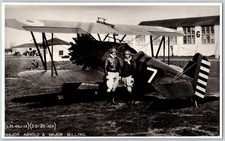
1930 Photo Hap Arnold & Thomas Milling US Army Air Corps Biplane Large 9.75x6 $59.00
Hap Arnold 1912 Fort Riley Wireless Radio Test Wright Plane Air Corps 8x10 Photo $249.00
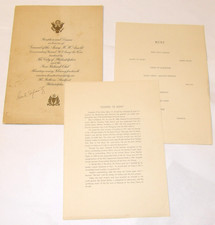
WWII GENERAL HAP ARNOLD RETIREMENT DINNER INVITATION SIGNED BY GEN CARL SPAATZ $346.99
|
|
|
Shopping Cart  |

|
Recently Viewed |
|
Latest Items |
|
Facebook |
Secure Websites

|
