When you click on links to various merchants on this site and make a purchase, this can result in this site earning a commission. Affiliate programs and affiliations include, but are not limited to, the eBay Partner Network.
Canvas Wall Art - Matte Finish with Hanging Hardware
High-quality canvas wall art with a matte finish. Each canvas includes back hanging hardware for convenient display. The frame is made from radiata pine sourced from renewable forests.
- Materials: Cotton and polyester composite (canvas), pine wood (frame)
- Finish: Matte coating designed for detailed, vibrant images
- Printing: Latex inks that are non-hazardous, non-toxic, and non-flammable
- Backing: Includes pre-installed hanging hardware
- Support: Soft rubber dots on bottom back corners for stability
- Frame: Radiata pine wood sourced from FSC-certified renewable forests
- Tolerance: Slight size deviations possible within ± 1/8 in (3.2 mm)
Care Instructions
- If dust collects, gently wipe with a clean, damp cloth
- Avoid using harsh cleaners or scrubbing the surface
Shipping & Handling
Each canvas print is securely packaged with protective materials to help prevent damage in transit. Tracking is included with all orders.
International buyers: please check local import regulations for canvas art before purchase.
Keywords: canvas wall art, matte canvas print, framed canvas, pine wood frame, wall decor, hanging canvas art, durable canvas print
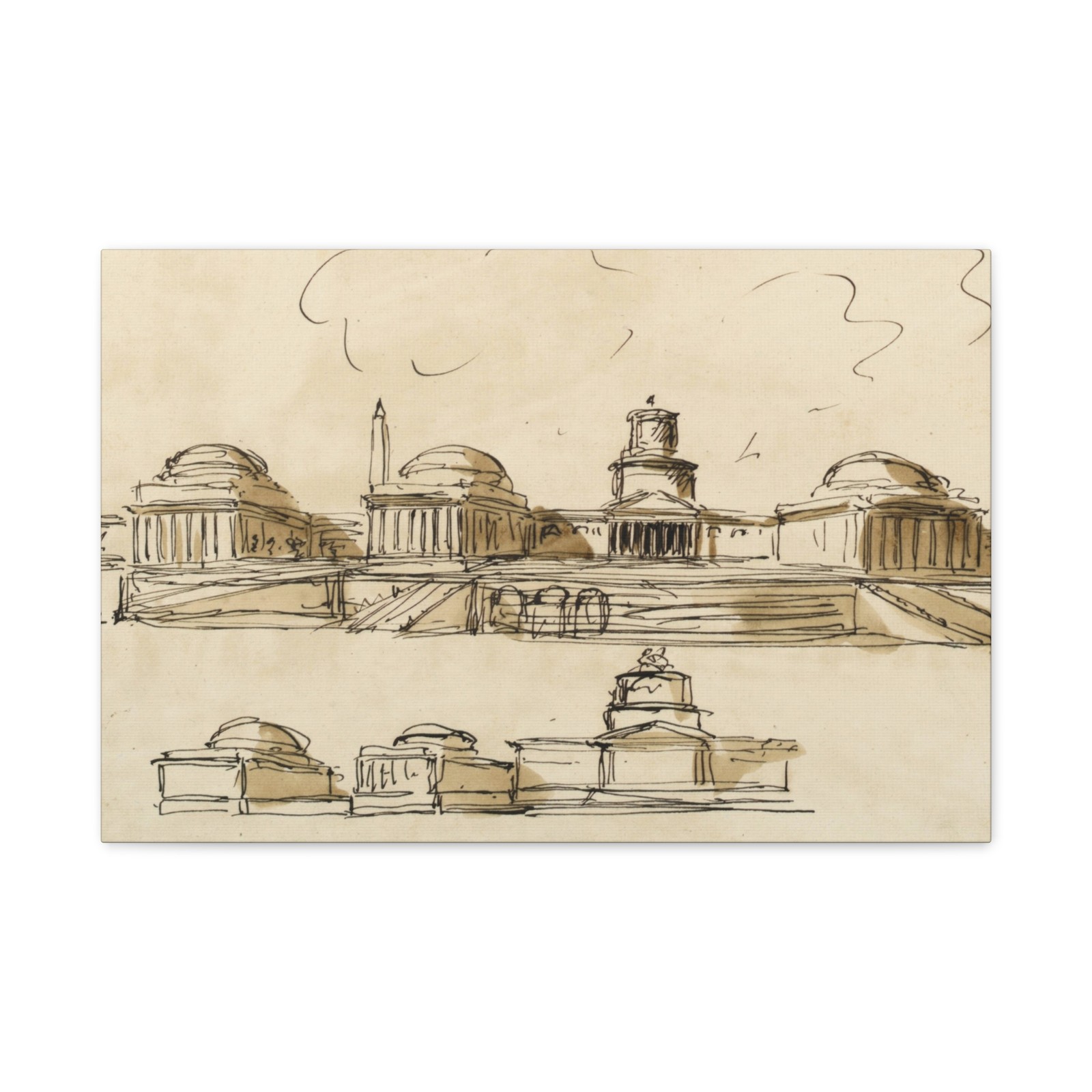
Giuseppe Barberi, Italian, 1746–1809 - Two Elevations of a Palace - 1792-1795 - Canvas Wall Art
This architectural design presents two distinct elevations of a grand palace, showcasing the meticulous planning and structural articulation typical of late eighteenth-century monumental design. Architectural elevations of this nature served as precise blueprints and visionary proposals for ambitious building projects.
Such drawings reflect the period\'s fascination with classical proportion, grand civic architecture, and the projection of power through monumental facades. Palace elevations functioned not only as practical construction guides but also as theoretical statements about spatial hierarchy, urban decorum, and the enduring legacy of classical forms in European design.
Giuseppe Barberi was a prolific Italian draftsman and architect whose extensive surviving graphic works offer invaluable insight into neoclassical design methodologies. This piece exemplifies his rigorous approach to architectural draftsmanship, holding a significant place within his vast corpus of studies created during the late eighteenth century.