When you click on links to various merchants on this site and make a purchase, this can result in this site earning a commission. Affiliate programs and affiliations include, but are not limited to, the eBay Partner Network.
Canvas Wall Art - Matte Finish with Hanging Hardware
High-quality canvas wall art with a matte finish. Each canvas includes back hanging hardware for convenient display. The frame is made from radiata pine sourced from renewable forests.
- Materials: Cotton and polyester composite (canvas), pine wood (frame)
- Finish: Matte coating designed for detailed, vibrant images
- Printing: Latex inks that are non-hazardous, non-toxic, and non-flammable
- Backing: Includes pre-installed hanging hardware
- Support: Soft rubber dots on bottom back corners for stability
- Frame: Radiata pine wood sourced from FSC-certified renewable forests
- Tolerance: Slight size deviations possible within ± 1/8 in (3.2 mm)
Care Instructions
- If dust collects, gently wipe with a clean, damp cloth
- Avoid using harsh cleaners or scrubbing the surface
Shipping & Handling
Each canvas print is securely packaged with protective materials to help prevent damage in transit. Tracking is included with all orders.
International buyers: please check local import regulations for canvas art before purchase.
Keywords: canvas wall art, matte canvas print, framed canvas, pine wood frame, wall decor, hanging canvas art, durable canvas print
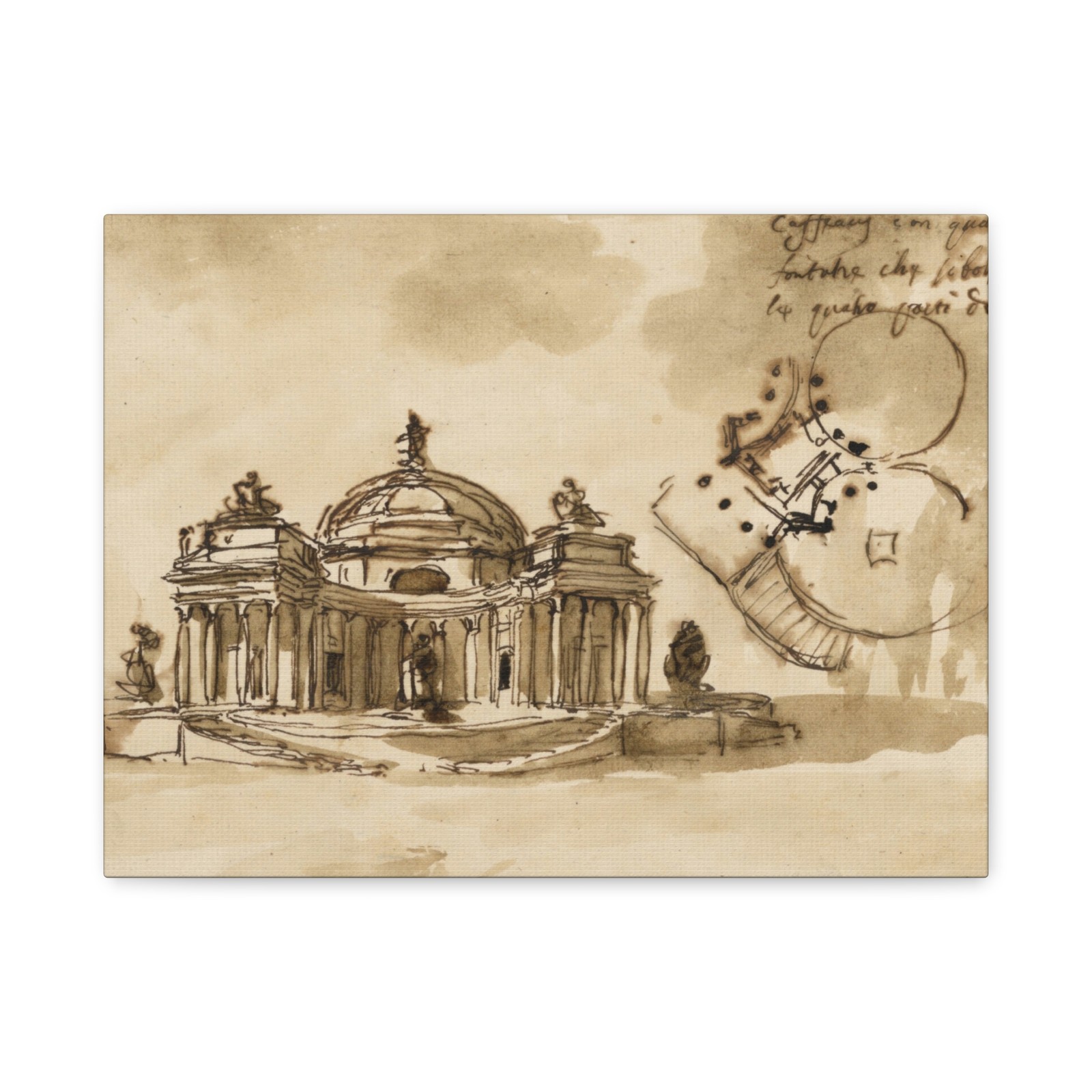
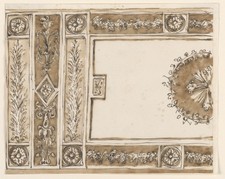
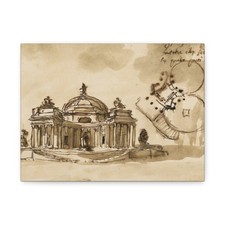
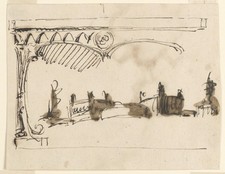
Giuseppe Barberi, Italian, 1746–1809 - Design for a Kaffeehaus - 1789 - Canvas Wall Art
This technical architectural rendering by Giuseppe Barberi presents a conceptual layout for a Kaffeehaus, or coffee house, dating to 1789. The work delineates the spatial organization required for a public space dedicated to the consumption of coffee, serving as both a functional blueprint and a formal study of interior design within the late eighteenth century.
The coffee house during this era functioned as a vital hub for Enlightenment discourse, intellectual exchange, and the burgeoning newspaper culture of urban Europe. By designing such a space, Barberi addresses the societal need for environments that bridged the gap between private life and public sphere, highlighting the importance of hospitality architecture in shaping the social habits of the elite and the burgeoning middle class before the turn of the century.
Giuseppe Barberi was an Italian architect and draftsman known for his extensive output of architectural fantasies and urban planning projects. This design belongs to a significant period of his career when he explored the intersection of classical ornamentation and modern utility.