When you click on links to various merchants on this site and make a purchase, this can result in this site earning a commission. Affiliate programs and affiliations include, but are not limited to, the eBay Partner Network.
Canvas Wall Art - Matte Finish with Hanging Hardware
High-quality canvas wall art with a matte finish. Each canvas includes back hanging hardware for convenient display. The frame is made from radiata pine sourced from renewable forests.
- Materials: Cotton and polyester composite (canvas), pine wood (frame)
- Finish: Matte coating designed for detailed, vibrant images
- Printing: Latex inks that are non-hazardous, non-toxic, and non-flammable
- Backing: Includes pre-installed hanging hardware
- Support: Soft rubber dots on bottom back corners for stability
- Frame: Radiata pine wood sourced from FSC-certified renewable forests
- Tolerance: Slight size deviations possible within ± 1/8 in (3.2 mm)
Care Instructions
- If dust collects, gently wipe with a clean, damp cloth
- Avoid using harsh cleaners or scrubbing the surface
Shipping & Handling
Each canvas print is securely packaged with protective materials to help prevent damage in transit. Tracking is included with all orders.
International buyers: please check local import regulations for canvas art before purchase.
Keywords: canvas wall art, matte canvas print, framed canvas, pine wood frame, wall decor, hanging canvas art, durable canvas print
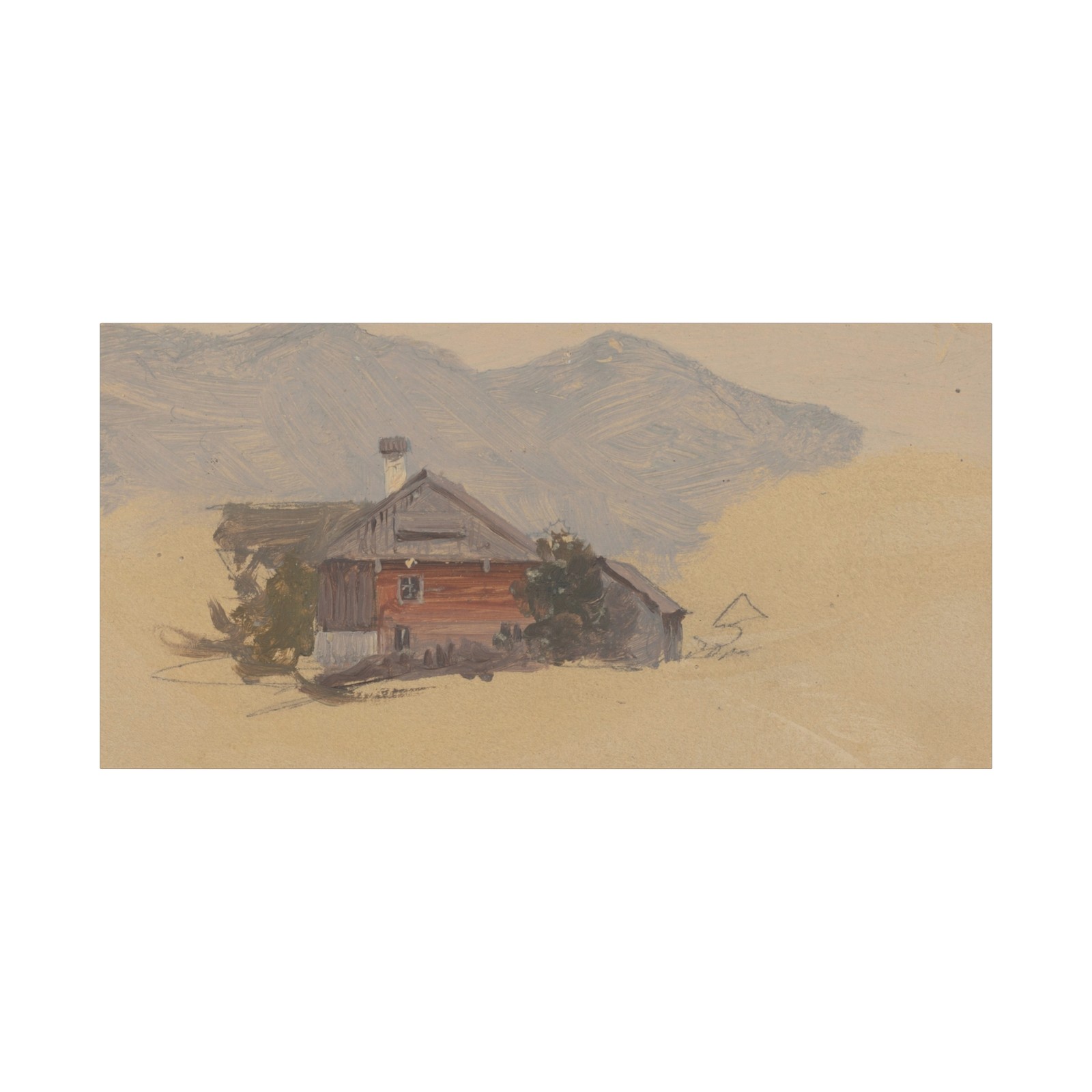
Frederic Edwin Church, American, - House in Berchtesgaden, Bavaria (Germany) - June–July 1868 v1 - Canvas Wall Art
This artwork features a scenic architectural study titled House in Berchtesgaden, Bavaria, created by renowned American landscape painter Frederic Edwin Church during his extensive travels through Europe and the Middle East in the late 1860s. The composition focuses on a distinct residential structure nestled within the mountainous landscape of the Berchtesgaden region in southeastern Germany, documenting regional architecture during a formative period of the artist's career.
During this era, Church expanded his repertoire beyond the monumental American wilderness scenes that made him famous, turning his keen observational eye toward the historical and cultural landmarks of the Old World. Travel sketches like this served as both personal records and foundational studies for larger compositions, reflecting the nineteenth-century fascination with picturesque European destinations, romantic landscapes, and vernacular architecture steeped in local tradition and history.