When you click on links to various merchants on this site and make a purchase, this can result in this site earning a commission. Affiliate programs and affiliations include, but are not limited to, the eBay Partner Network.
Canvas Wall Art - Matte Finish with Hanging Hardware
High-quality canvas wall art with a matte finish. Each canvas includes back hanging hardware for convenient display. The frame is made from radiata pine sourced from renewable forests.
- Materials: Cotton and polyester composite (canvas), pine wood (frame)
- Finish: Matte coating designed for detailed, vibrant images
- Printing: Latex inks that are non-hazardous, non-toxic, and non-flammable
- Backing: Includes pre-installed hanging hardware
- Support: Soft rubber dots on bottom back corners for stability
- Frame: Radiata pine wood sourced from FSC-certified renewable forests
- Tolerance: Slight size deviations possible within ± 1/8 in (3.2 mm)
Care Instructions
- If dust collects, gently wipe with a clean, damp cloth
- Avoid using harsh cleaners or scrubbing the surface
Shipping & Handling
Each canvas print is securely packaged with protective materials to help prevent damage in transit. Tracking is included with all orders.
International buyers: please check local import regulations for canvas art before purchase.
Keywords: canvas wall art, matte canvas print, framed canvas, pine wood frame, wall decor, hanging canvas art, durable canvas print
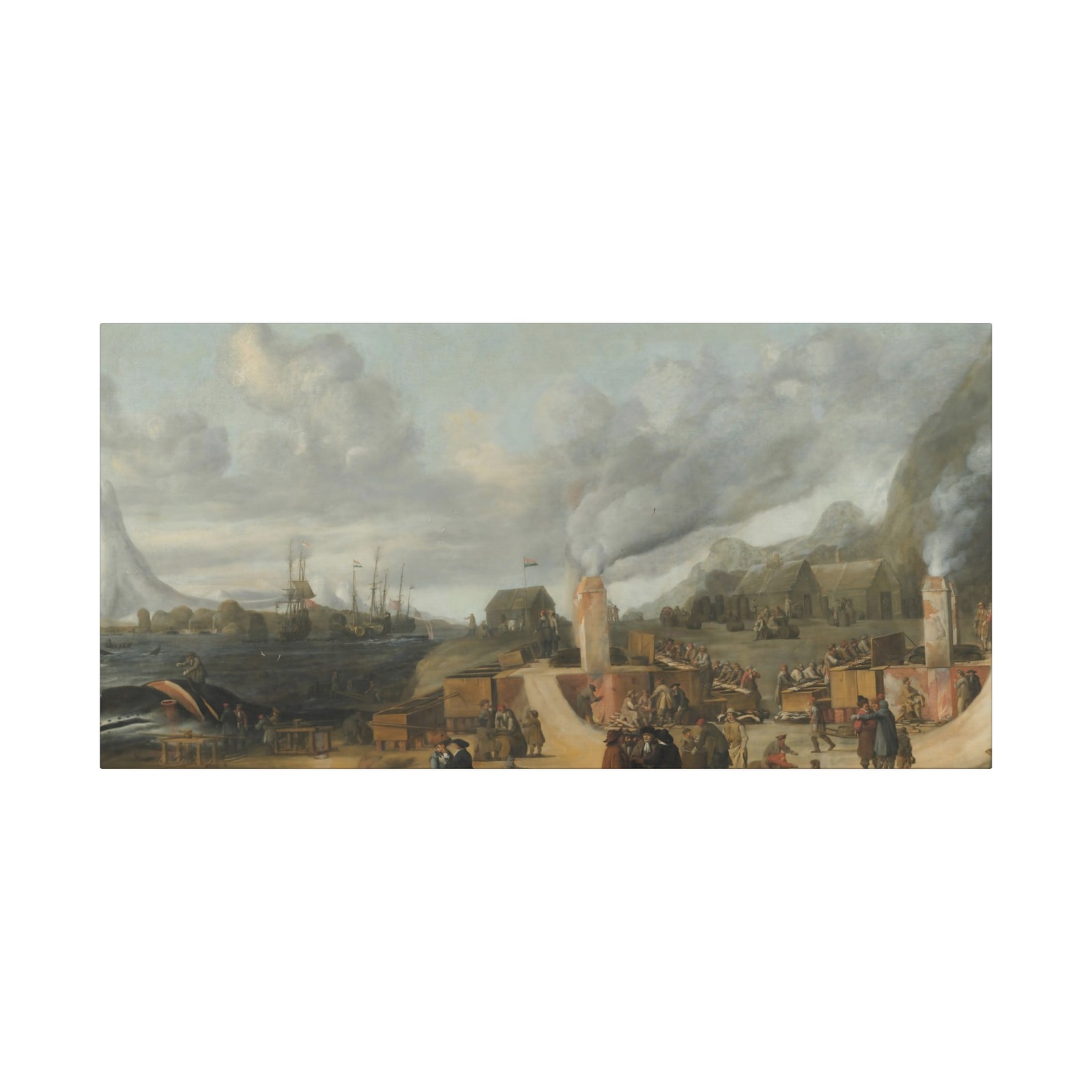
Cornelis de Man - Traankokerijen bij het dorp Smerenburg
Cornelis de Man\'s depiction of the \"Traankokerijen bij het dorp Smerenburg\" (Whaling Station near the Village of Smerenburg) transports the viewer to a stark and evocative scene of 17th-century whaling activity. Painted during the Dutch Golden Age, the artwork reflects the period’s maritime dominance and the economic importance of the whaling industry.
The composition is dominated by a low horizon line, emphasizing the vast, grey sky. This atmospheric focus sets the mood, which is characterized by a prevailing coolness and a sense of harshness. The buildings and structures of the whaling station, depicted in muted earth tones, are scattered along the shore, suggesting industry and effort. Figures, though small, animate the scene, giving scale and life to the landscape.
De Man’s use of light and shadow is particularly noteworthy. The play of light on the water creates a sense of depth and realism, while the subdued palette, comprised of grays, browns, and blues, accentuates the bleakness of the setting. The artwork is significant for its honest portrayal of whaling\'s impact, capturing both the economic fervor and the human labor involved in this demanding trade.