When you click on links to various merchants on this site and make a purchase, this can result in this site earning a commission. Affiliate programs and affiliations include, but are not limited to, the eBay Partner Network.
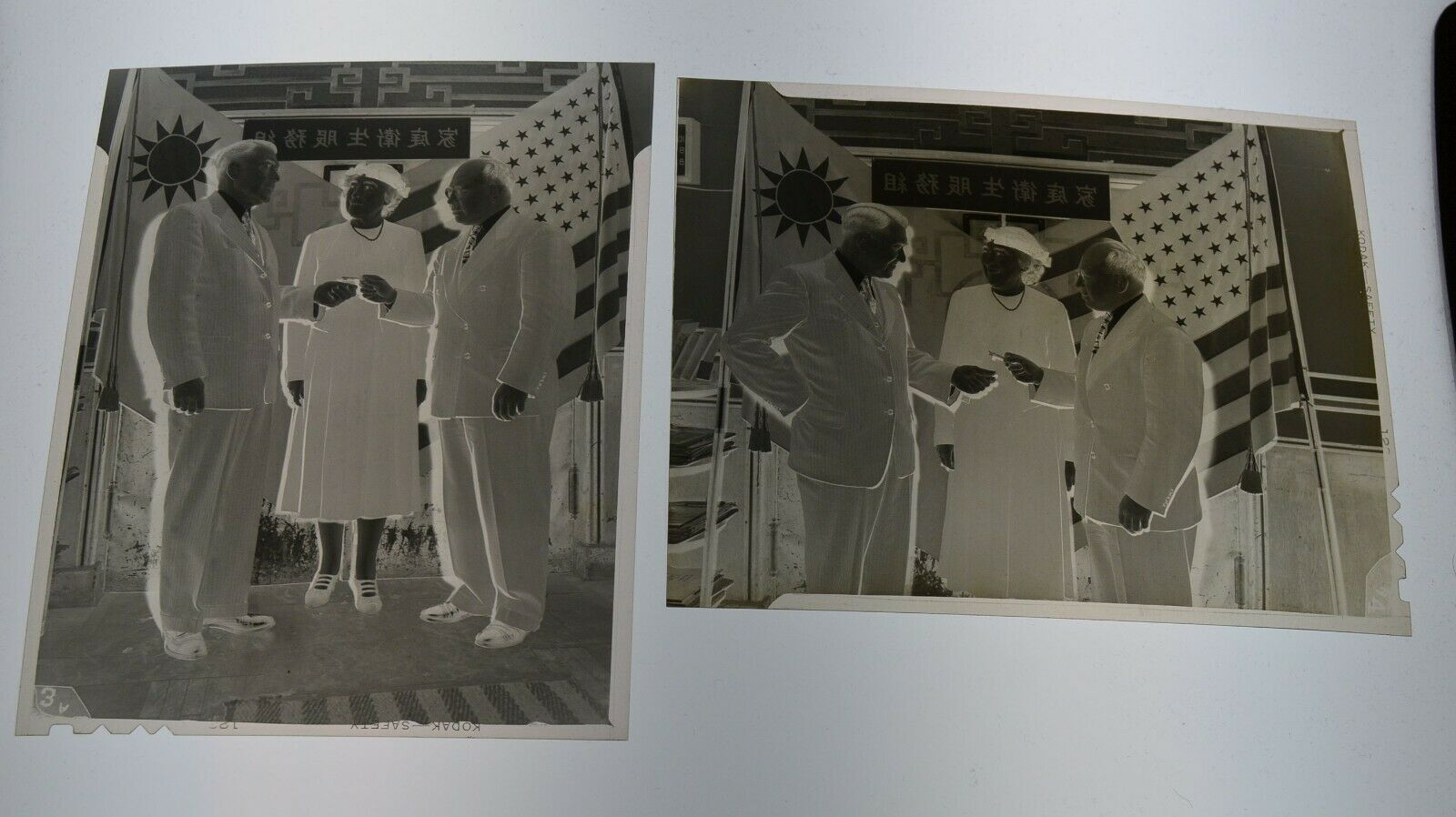
CHINESE COMMUNITY CLUB IN CHINATOWN NEW YORK CITY TWO VINTAGE ORIGINAL 4X5 INCH NEGATIVES WITH ORIGINAL ENVELOPEThe Chinese Community Center at 60-64 Mott Street is home to both the Chinese Consolidated Benevolent Association (CCBA), the oldest Chinese community service organization of Chinatown established in 1883, and New York Chinese School, established in 1909 for children who came from overseas; both are located in the same Manhattan Chinatown building in New York City. The building itself is considered a Chinatown \"town hall\".[1] Both the New York Chinese School and the CCBA are affiliated.[2][3]Contents1 Chinese Consolidated Benevolent Association2 New York Chinese School3 References4 External linksChinese Consolidated Benevolent AssociationMain article: Chinese Consolidated Benevolent AssociationIn the early history of the organization, it performed a quasi-governmental role for the Chinatown community and financially supported many Chinese residents who had goals to become a business owner as well as providing them training. The parent organization of the Chinese Community Center, the CCBA was founded in 1883 and has represented and served the needs of Chinese Americans in New York City ever since.
Historically it has performed a quasi-governmental role in the Chinese community. Throughout its history, business ownership has been a goal of many residents of Chinatown, and has been supported both financially, and through training, by the CCBA. Today there are local CCBA agencies in 26 cities with substantial Chinese populations across North America.
Currently, the CCBA represents the Chinese Americans living in the Greater New York Metro area. Internally, the CCBA is the hinge that keeps the Chinese American community intact and vigorous. Specifically, the CCBA:
Provides social servicesProvides personal and commercial conflict resolution and mediationsPromotes Chinese traditions and cultural heritageServes as a bridge between Chinese American immigrants and mainstream groupsPromotes Chinese American interestsEngages in charitable activitiesSponsors educational and recreational activitiesSponsors and promotes youth servicesProvides and advocates for small businessesToday the organization provides services ranging from social services, training in personal and commercial conflict issues and mediation, preserving Chinese Culture as well as helping Chinese Americans to integrate well with mainstream groups, being involved with Chinese-American interests, engages in charity events, sponsorships to educational related activities, and advocate for small businesses.[4] Additional services that are provided to the community are low cost rate Adult English Classes, Naturalization Service, and free tax services.[5]
In New York City, the CCBA is an umbrella organization of 60 member organizations representing a cross-section of New York\'s Chinese community. Other Chinese Associations affiliated with the CCBA located on Mott Street are Hoy Sing Ning Yung Association, Lin Sing Association,[6] Chinese Merchants Association, Chinese Free Mason\'s, Kuomintang Eastern Region Office/Kuomintang of China in America (New York), Hok Shan Society, Chinese Aviation Development Association, Eng Suey Sun Association, Lee\'s Family Association, Yee Tung Association, Chew Lun Association, Soo Yuen Association, Leung Chung How Realty Corp., Hoy Yen Association, Hoy Ping Hong Hing Association, Jin Lan Association, Fung Loon Benevolent Association, Goon Shee Association, and Lum Sai Ho Association.
There are many more affiliated Chinese Associations located throughout the Chinatown neighborhood.[7] Other large organizations that they have relationships with are Greater Chinatown Community Association, Chinatown Partnership Local Development Corporation, New York Chinese School, Chinatown Day Care Center, Greater New York Chinese Community Dollars of Scholars, including mainstream organizations such as American Cancer Society, and American Red Cross Greater New York.
New York Chinese SchoolQuestion book-new.svgThis section relies too much on references to primary sources. Please improve this section by adding secondary or tertiary sources. (February 2013) (Learn how and when to remove this template message)New York Chinese School 紐約華僑學校Address64 Mott StreetNew York City, New York 10013United StatesInformationType Non-profit 501(c)(3) Chinese schoolEstablished 1909Principal 黃炯常Faculty 50Grades Kindergarten 1 - High SchoolNumber of students 3,000+Website nychineseschool.orgWe ask you, humbly: don\'t scroll away.Hi, reader in the U.S., it seems you use Wikipedia a lot; that\'s great! This is the 5th appeal we\'ve shown you. It\'s awkward, but this Thursday we need your help. We don\'t have salespeople. We depend on donations from exceptional readers, but fewer than 2% give. If you donate just $2.75, or whatever you can this Thursday, Wikipedia could keep thriving. Thank you.Please select a payment method MAYBE LATER CLOSEThe New York Chinese School (紐約華僑學校) is a non-profit 501(c)(3) school, housed in the Chinese Community Centre. It has become so synonymous for students to say they attend Chinese school at 中華公所 instead of 紐約華僑學校.
It initially opened with 20 students. Today, there are more than 3,000 students in grade levels ranging from kindergarten to high school and it has a faculty of approximately 50 people.
There are weekday after-school classes from 3:30pm to 6:30pm as well as the more popular weekend morning and afternoon classes, held Saturday or Sundays from 10am-1pm, or 2-5pm. Both Cantonese and Mandarin language classes are available. Historically, the majority of classes, especially upper level classes, were taught in Cantonese, but recently Mandarin classes have outnumbered Cantonese classes by a 3:1 ratio[8] and students studying Mandarin have outnumbered those studying Cantonese.[9] All classes are taught traditional Chinese writing (currently used in Taiwan in contrast to the simplified writing currently used in the PRC).
Music[10] and art classes have been taught for many years and continue to this day. Additionally, the school has a summer camp. Recently, adult Mandarin classes have opened up.
ReferencesManhattan\'s Chinatown (simplified Chinese: 曼哈顿华埠; traditional Chinese: 曼哈頓華埠; pinyin: Mànhādùn huábù; Jyutping: Maan6haa1deon6 waa4bou6) is a neighborhood in Lower Manhattan, New York City, bordering the Lower East Side to its east, Little Italy to its north, Civic Center to its south, and Tribeca to its west. With an estimated population of 90,000 to 100,000 people, Chinatown is home to the highest concentration of Chinese people in the Western Hemisphere.[5] Manhattan\'s Chinatown is also one of the oldest Chinese ethnic enclaves.[6] The Manhattan Chinatown is one of nine Chinatown neighborhoods in New York City, as well as one of twelve in the New York metropolitan area, which contains the largest ethnic Chinese population outside of Asia, comprising an estimated 893,697 uniracial individuals as of 2017.[7]
Historically, Chinatown was primarily populated by Cantonese speakers. However, in the 1980s and 1990s, large numbers of Fuzhounese-speaking immigrants also arrived and formed a sub-neighborhood annexed to the eastern portion of Chinatown east of The Bowery, which has become known as Little Fuzhou (小福州) subdivided away from the primarily Cantonese populated original long time established Chinatown of Manhattan from the proximity of The Bowery going west, known as Little Hong Kong/Guangdong (小粵港). As many Fuzhounese and Cantonese speakers now speak Mandarin—the official language in Mainland China and Taiwan—in addition to their native languages, this has made it more important for Chinatown residents to learn and speak Mandarin.[8] Although now overtaken in size by the rapidly growing Flushing Chinatown (法拉盛華埠), located in the New York City borough of Queens,[9] the Manhattan Chinatown remains a dominant cultural force for the Chinese diaspora, as home to the Museum of Chinese in America and as the headquarters of numerous publications based both in the U.S. and China that are geared to overseas Chinese.
Chinatown is part of Manhattan Community District 3, and its primary ZIP Codes are 10013 and 10002.[1] It is patrolled by the 5th Precinct of the New York City Police Department.Contents1 Location2 Citywide demographics3 History3.1 Ah Ken and early Chinese immigration3.2 Chinese exclusion period3.3 Post-1965 reform3.3.1 Influx of immigrants from Hong Kong and Guangdong3.3.2 Little Fuzhou3.3.3 Migration to Brooklyn Chinatown3.3.4 Little Hong Kong/Guangdong3.3.5 Fuzhouese-Cantonese relations4 Demographics and culture4.1 Demographics4.2 Chinese cultural standards4.3 Gentrification and decline in Chinese population4.3.1 Current status as Chinese shopping business district5 Streetscape6 Economy7 Satellite Chinatowns7.1 Satellite Chinatowns\' demographics8 Buildings8.1 Housing8.2 Chinese theaters9 Police and crime10 Fire safety11 Health12 Post offices and ZIP Codes13 Education13.1 Schools13.2 Library14 Transportation14.1 Street names in Chinese15 See also16 References17 Further reading18 External linksLocation
Boundary approximationsAlthough a Business Improvement District has been identified for support,[10] Chinatown has no officially defined borders, but they have been commonly considered to be approximated by the following streets:[11]
Hester Street or Grand Street to the north,[11][12] bordering or overlapping Little ItalyWorth Street to the southwest, bordering Civic CenterEast Broadway to the southeast, bordering Two BridgesEssex Street to the east, bordering the Lower East SideLafayette Street to the west, bordering TribecaCitywide demographicsSee also: List of U.S. cities with significant Chinese-American populations and Chinese Americans in New York CityThe Manhattan Chinatown is one of nine Chinatown neighborhoods in New York City, as well as one of twelve in the New York metropolitan area, which contains the largest ethnic Chinese population outside of Asia, enumerating an estimated 779,269 individuals as of 2013;[13] the remaining Chinatowns are located in the boroughs of Queens (up to four, depending upon definition)[14] and Brooklyn (three) and in Nassau County, all on Long Island in New York State; as well as in Edison[15] and Parsippany-Troy Hills in New Jersey. In addition, Manhattan\'s Little Fuzhou (小福州, 紐約華埠), an enclave populated primarily by more recent Chinese immigrants from the Fujian Province of China, is technically considered a part of Manhattan\'s Chinatown, albeit now developing a separate identity of its own.
A new and rapidly growing Chinese community is now[when?] forming in East Harlem (東哈萊姆), Uptown Manhattan, nearly tripling in population between the years 2000 and 2010, according to U.S. Census figures.[16][17][18][19] This neighborhood has been described as the precursor to a new satellite Chinatown within Manhattan itself,[20] which upon acknowledged formation would represent the second Chinese neighborhood in Manhattan, the tenth large Chinese settlement in New York City, and the twelfth within the overall New York City metropolitan region.
As the city proper with the largest ethnic Chinese population outside of Asia by a wide margin, estimated at 628,763 as of 2017,[21] and as the primary destination for new Chinese immigrants,[22] New York City is subdivided into official municipal boroughs, which themselves are home to significant Chinese populations, with Brooklyn and Queens, adjacently located on Long Island, leading the fastest growth.[23][24] After the City of New York itself, the boroughs of Queens and Brooklyn encompass the largest Chinese populations, respectively, of all municipalities in the United States.
Rank Borough Chinese Americans Density of Chinese Americans per square mile in borough Percentage of Chinese Americans in borough\'s population1 Queens, Chinatowns (皇后華埠) (2014)[25] 237,484 2,178.8 10.22 Brooklyn, Chinatowns (布魯克林華埠) (2014)[26] 205,753 2,897.9 7.93 Manhattan, Chinatown (曼哈頓華埠) (2014)[27] 107,609 4,713.5 6.64 Staten Island (2012) 13,620 232.9 2.95 The Bronx (2012) 6,891 164 0.5New York City (2014) 573,388[28] 1,881.1 6.8HistoryAh Ken and early Chinese immigrationMain article: Ah KenHistorical populationCensus Pop. %±1990 51,439 —2000 59,320 15.3%2010 52,613 −11.3%Asian American population [29]Ah Ken is claimed to have arrived in the area during the 1850s; he is the first Chinese person credited as having permanently immigrated to Chinatown. As a Cantonese businessman, Ah Ken eventually founded a successful cigar store on Park Row.[30][31][32][33] He first arrived around 1858 in New York City, where he was \"probably one of those Chinese mentioned in gossip of the sixties [1860s] as peddling \'awful\' cigars at three cents apiece from little stands along the City Hall park fence – offering a paper spill and a tiny oil lamp as a lighter\", according to author Alvin Harlow in Old Bowery Days: The Chronicles of a Famous Street (1931).[31]
In the 1850s, the California Gold Rush brought a wave of Chinese immigration to the United States. Approximately 25,000 Chinese immigrants left their homes in search for gam saan (\"gold mountain\") in California.[34] In New York, immigrants found work as \"cigar men\" or carrying billboards, and Ah Ken\'s particular success encouraged cigar makers William Longford, John Occoo, and John Ava to also ply their trade in Chinatown, eventually forming a monopoly on the cigar trade.[35] It has been speculated that it may have been Ah Ken who kept a small boarding house on lower Mott Street and rented out bunks to the first Chinese immigrants to arrive in Chinatown. It was with the profits he earned as a landlord, earning an average of $100 per month, that he was able to open his Park Row smoke shop around which modern-day Chinatown would grow.[30][32][36][37]
Chinese exclusion period
Doyers Street in an 1898 postcard.In 1873 the United States entered a period of economic difficulty known as the Long Depression.[38] As a result, immigrants increasingly competed for professions that were typically performed by Chinese immigrants. The period was marked by increased racial discrimination, anti-Chinese riots (particularly in California),[39] and new laws that prevented participation in many occupations on the U.S. West Coast. Consequently, some Chinese immigrants moved to the East Coast cities in search of employment.[citation needed]
Early businesses in East Coast cities included hand laundries and restaurants. Chinatown started on Mott, Park (now Mosco), Pell, and Doyers Streets, east of the notorious Five Points district. By 1870 there was a Chinese population of 200. By 1882, when the Chinese Exclusion Act was passed, the population was up to 2,000 residents. In 1900, the US Census reported 7,028 Chinese males in residence, but only 142 Chinese women. This significant gender inequality remained until the repeal of the Chinese Exclusion Act in 1943.[40] Wenfei Wang, Shangyi Zhou, and C. Cindy Fan, authors of \"Growth and Decline of Muslim Hui Enclaves in Beijing\", wrote that because of immigration restrictions, Chinatown continued to be \"virtually a bachelor society\" until 1965.[41]
The early days of Chinatown were dominated by Chinese \"tongs\" (now sometimes rendered neutrally as \"associations\"), which were a mixture of clan associations, landsman\'s associations, political alliances (Kuomintang (Nationalists) vs Communist Party of China), and more secretly, crime syndicates. The associations started to give protection from anti-Chinese harassment. Each of these associations was aligned with a street gang. The associations were a source of assistance to new immigrants, giving out loans, aiding in starting businesses, and so forth. The associations formed a governing body named the Chinese Consolidated Benevolent Association (中華公所). Though this body was meant to foster relations between the Tongs, open warfare periodically flared between the On Leong (安良) and Hip Sing (協勝) tongs. Much of the Chinese gang warfare took place on Doyers street. Gangs like the Ghost Shadows (鬼影) and Flying Dragons (飛龍) were prevalent until the 1990s. The Chinese gangs controlled certain territories of Manhattan\'s Chinatown. The On Leong (安良) and its affiliate Ghost Shadows (鬼影) were of Cantonese and Toishan descent, and controlled Mott, Bayard, Canal, and Mulberry Streets. The Flying Dragons (飛龍) and its affiliate Hip Sing (協勝) also of Cantonese and Toishan descent controlled Doyers, Pell, Bowery, Grand, and Hester Streets. Other Chinese gangs also existed, like the Hung Ching and Chih Kung gangs of Cantonese and Toishan descent, which were affiliated with each other and also gained control of Mott Street. Born to Kill, also known as the Canal Boys, a gang composed almost entirely of Vietnamese immigrants from the Vietnam War under the leadership of David Thai had control over Broadway, Canal, Baxter, Centre, and Lafayette Streets.[42] Fujianese gangs also existed, such as the Tung On gang, which affiliated with Tsung Tsin, and had control over East Broadway, Catherine and Division Streets and the Fuk Ching gang affiliated with Fukien American controlled East Broadway, Chrystie, Forsyth, Eldridge, and Allen Streets. At one point, a gang named the Freemasons gang, which was of Cantonese descent, had attempted to claim East Broadway as its Park, the only park in Chinatown, was built on what was once the center of the infamous Five Points neighborhood. During the 19th century, this was the most dangerous ghetto area of immigrant New York, as portrayed in the book and film Gangs of New York.[47]
Post-1965 reform
A typical scene on Pell StreetIn the years after the United States enacted the Immigration and Nationality Act of 1965, allowing many more immigrants from Asia into the country, the population of Chinatown increased dramatically. Geographically, much of the growth occurred in neighborhoods to the north. The Chinatown grew and became more oriented toward families due to the lifting of restrictions.[41] In the earliest years of the existence of Manhattan\'s Chinatown, it had been primarily populated by Taishanese-speaking Chinese immigrants and the borderlines of the enclave was originally Canal Street to the north, Bowery to the east, Worth Street to the south, and Mulberry Street to the west.[citation needed]
Influx of immigrants from Hong Kong and GuangdongAfter 1965, there came a wave of Cantonese speakers from Hong Kong and Guangdong province in Mainland China, and Standard Cantonese became the dominant tongue. With the influx of Hong Kong immigrants, it was developing and growing into a Hong Kongese neighborhood, however the growth slowed down later on during the 1980s-90s.[48][49]
Through the 1970s and 1980s, the influx of Guangdong and Hong Kong immigrants began to develop newer portions of Manhattan\'s Chinatown going north of Canal Street and then later the east of the Bowery. However, until the 1980s, the western section was the most primarily fully Chinese developed and populated part of Chinatown and the most quickly flourishing busy central Chinese business district with still a little bit of remaining Italians in the very northwest portion around Grand Street and Broome Street, which eventually all moved away and became all Chinese by the 1990s.[50][51][52] Although the portion of Chinatown that is east of the Bowery—which is considered part of the Lower East Side already started developing as being part of Chinatown since the influx of Chinese immigrants started spilling over into that section since the 1960s, however until the 1980s, it was still not developing as quickly as the western portion of Chinatown because the proportion and concentration of Chinese residents in the eastern section during that time was comparatively growing at a slower rate and being more scattered than the western section in addition to the fact that there was a higher proportion of remaining non-Chinese residents consisting of Jewish, Puerto Ricans, and a few Italians and African Americans than Chinatown\'s western section.[53]
During the 1970s and 1980s, the eastern portion of Chinatown east of the Bowery was a very quiet section, and despite fears of crime, it was seen as attractive because of the availability of vacant affordable apartments.[54] Chinese female garment workers were especially targets of crime and often left work together to protect each other as they were heading home.[55][56][57][58][59] In May 1985, a gang-related shooting injured seven people, including a 4-year-old boy, at 30 East Broadway in Chinatown. Two males, who were 15 and 16 years old and were members of a Chinese street gang, were arrested and convicted.[60][61][62][63]
Starting in the 1970s, Mandarin-speaking Taiwanese immigrants and then many other Non-Cantonese Chinese immigrants also were arriving into New York City. However, due to the traditional dominance of Cantonese-speaking residents, which were largely working class in Manhattan\'s Chinatown and the neighborhood\'s poor housing conditions, they were unable to relate to Manhattan\'s Chinatown and mainly settled in Flushing, creating a more middle class Mandarin Town (國語埠) and an even smaller one in Elmhurst. As a result, Manhattan\'s Chinatown and Brooklyn\'s emerging Chinatown were able to continue retaining its traditional, almost-exclusive Cantonese society. However, there was already a small and slow-growing Fuzhou immigrant population in Manhattan\'s Chinatown since the 1970s-80s in the eastern section of Chinatown east of the Bowery. In the 1990s, though, Chinese people began to move into some parts of the western Lower East Side, which 50 years earlier was populated by Eastern European Jews and 20 years earlier was occupied by Hispanics.[citation needed]
Little FuzhouMain article: Little Fuzhou
The Fukien American Association on East Broadway in Little Fuzhou.From the late 1980s through the 1990s, when a large influx of Fuzhou immigrants, who also largely speak Mandarin along with their Fuzhou dialect started to arrive into New York City, they were the only exceptional Non-Cantonese Chinese group to largely settle in Manhattan\'s Chinatown and eventually Brooklyn\'s Chinatown, which was also originally Cantonese dominated. This is due to many of them having no legal status and being forced into the lowest paying jobs, Manhattan\'s Chinatown was the only place they can receive affordable housing and be around other Chinese people despite the heavy Cantonese dominance until the 1990s since the more Mandarin-speaking enclaves in Flushing and Elmhurst would be too expensive to rent a vacancy.
Since the Fuzhou immigrants have a strong cultural and linguistic background different from the Cantonese people, the Fuzhou immigrants were unable to integrate well into Manhattan\'s Chinatown, which was still very Cantonese dominated and as a result, they settled in the eastern portion of Chinatown, which was still an overlap of Chinese, Hispanics, and Jewish in addition the higher availability of housing vacancies is another reason why they settled in that section. The eastern section became more fully developed as being part of Chinatown, and these new immigrants began to establish their own Fuzhou community along East Broadway and Eldridge Street. This has resulted in referring to East Broadway as Fuzhou Street No. 1, which emerged during the late 1980s-early 1990s and Eldridge Street as Fuzhou Street No. 2, which developed more towards after the mid-1990s-early 2000s.
Little Fuzhou started becoming known as the new Chinatown of Manhattan, separate from the long time heavily dominated Cantonese community, which is the western section of Chinatown or the Old Chinatown of Manhattan; although significant minor to moderate numbers of long time Cantonese people and businesses still continue to exist in the eastern portion of Chinatown.[64][65]:20
Not only did the Fuzhou immigration influx establish a new portion of Manhattan\'s Chinatown, they contributed significantly in maintaining the Chinese population in the neighborhood, they also played a role in property values increasing quickly during the 1990s, in contrast to during the 1980s, when the housing prices were dropping. As a result, landlords were able to generate twice as much income in Manhattan\'s Chinatown, Flushing\'s Chinatown and eventually Brooklyn\'s Chinatown.[66]:114
Very soon, in the early 2000s, gentrification immediately came into Manhattan\'s Chinatown and in addition to the shortage of housing vacancies, it caused the Fuzhou influx to shift to Brooklyn\'s Chinatown, which was now the most affordable New York City Chinese enclave to live in and unlike in Manhattan\'s Chinatown where the Fuzhou population continues to be mainly concentrated, although has been slowly declining since the 2000s due to gentrification in the East Broadway and Eldridge Street portion. Brooklyn\'s Chinatown then became more fully developed and as well as causing its ethnic enclave size to expand tremendously as a result of the shift of the Fuzhou influx.[67]
Migration to Brooklyn ChinatownDuring the late 1980s and 1990s, most of the new Fuzhou immigrants arriving into New York City were settling in Manhattan\'s Chinatown and later formed the first Fuzhou community in the city amongst the waves of Cantonese who had settled in Chinatown over decades. However, by the 2000s, the increasing Fuzhou influx had shifted into the Brooklyn Chinatown in the Sunset Park section of the Brooklyn borough of New York City. This shift replaces the Cantonese population throughout Brooklyn\'s Sunset Park Chinatown significantly more rapidly than in Manhattan\'s Chinatown.[68] Gentrification in Manhattan\'s Chinatown has slowed the growth of Fuzhou immigration as well as the growth of Chinese immigrants to Manhattan in general,[69] which is why New York City\'s rapidly growing Chinese population has now shifted primarily to the boroughs of Queens and Brooklyn.
Some Chinese landlords in Manhattan, especially the many real estate agencies that are mainly of Cantonese ownership, were accused of prejudice against the Fuzhou immigrants, supposedly making Fuzhou immigrants feel unwelcome because concerns that they would not be able to pay rent or debt to gangs that may have helped smuggled them in illegally into the United States, and because of fear that gangs will come up to the apartments to cause trouble.[66]:108[70] There is also supposedly a concern that Fujianese are more likely to make the apartments too overcrowded by subdividing an apartment into multiple small spaces to rent to other Fuzhou immigrants. East Broadway, Manhattan\'s center of Fuzhou culture, has[when?] perhaps the most blatant results of illegal apartment subdivisions including having many bunk beds in just one small room.[71]
Although Mandarin is spoken as a native language among only ten percent of Chinese speakers in Manhattan\'s Chinatown, it is used as a secondary dialect among the greatest number of them. Although Min Chinese, especially the Fuzhou dialect, is[when?] spoken natively by a third of the Chinese population in the city, it is not used as a lingua franca because speakers of other dialect groups do not learn Min.[72]
Little Hong Kong/GuangdongMain article: Mott Street § Little Hong Kong#Guangdong
Chinese New Year celebration in Chinatown.As the epicenter of the massive Fuzhou influx has shifted to Brooklyn in the 2000s, Manhattan\'s Chinatown\'s Cantonese population remains viable and large and successfully continues to retain its stable Cantonese community identity, maintaining the communal gathering venue established decades ago in the western portion of Chinatown, to shop, work, and socialize—in contrast to the Cantonese population and community identity which are shifting from Brooklyn\'s original Sunset Park Chinatown to the satellite Chinatowns in Brooklyn.
Although the term Little Hong Kong (小香港) was used a long time ago to describe Manhattan\'s Chinatown relating to when an influx of Hong Kong immigrants was pouring in at that time and even though not all Cantonese immigrants come from Hong Kong, this portion of Chinatown has heavy Cantonese characteristics, especially with the Standard Cantonese, which is spoken in Hong Kong and Guangzhou, China being widely used, so it is in many ways a Little Hong Kong.
A more appropriate term would be Little Guangdong-Hong Kong (小粵港) or Cantonese-Hong Kong Town (粵港埠) since the Cantonese immigrants do come from different regions of the Guangdong province of China including Hong Kong. The long-time established Cantonese Community, which can be considered Little Hong Kong/Guang Dong or known as the Old Chinatown of Manhattan lies along Mott, Pell, Doyer, Bayard, Elizabeth, Mulberry, Canal, and Bowery Streets, within Manhattan\'s Chinatown.[50][51]
Newer satellite Little Guangdong-Hong Kong has started to emerge in sections of Bensonhurst and Sheepshead Bay/Homecrest in Brooklyn. However, there are more scattered and mixed in with other ethnic enclaves. This is a result of many Cantonese residents migrating to these neighborhoods. Bensonhurst carries the majority of Brooklyn\'s Cantonese enclaves/population. Originally, the Sunset Park Chinatown was a small satellite of Manhattan\'s Western Cantonese Chinatown, but its population has since grown due to increases in immigration and in the number of people moving from relationsThe Fuzhou immigration pattern started out in the 1970s, like the Cantonese immigration during the late 1800s to early 1900s that had established Manhattan\'s Chinatown on Mott Street, Pell Street, and Doyers Street. The immigrants were initially mostly men who later brought their families over. The beginning influx of Fuzhou immigrants arriving during the 1980s and 1990s were entering into a Chinese community that was extremely Cantonese dominated. Due to the Fuzhou immigrants having no legal status and inability to speak Cantonese, many were denied jobs in Chinatown as a result, causing many of them to resort to crimes. There was a lot of Cantonese resentment against Fuzhou immigrants arriving into and culture
Street fairs are common in Chinatown.In 2000, most of Chinatown\'s residents came from Asia. That year, the number of residents was 84,840, and 66% of them were Asian.[80]
DemographicsThe census tabulation area for Chinatown is bounded to the north by Houston Street; to the east by Avenue B, Norfolk Street, Essex Street and Pike Street; to the south by Frankfort Street; and to the west by Centre Street and Bowery. Based on data from the 2010 United States Census, the population of Chinatown was 47,844, a change of -4,531 (-9.5%) from the 52,375 counted in 2000. Covering an area of 332.27 acres (134.46 ha), the neighborhood had a population density of 144 inhabitants per acre (92,000/sq mi; 36,000/km2).[2] The racial makeup of the neighborhood was 16.3% (7,817) White, 4.8% (2,285) African American, 0.1% (38) Native American, 63.9% (30,559) Asian, 0% (11) Pacific Islander, 0.2% (75) from other races, and 1.3% (639) from two or more races. Hispanic or Latino of any race were 13.4% (6,420) of the population.[3]
The racial composition of Chinatown changed substantially from 2000 to 2010, with the most significant changes being the increase in the White population by 42% (2,321), the decrease in the Asian population by 15% (5,461), and the decrease in the Hispanic / Latino population by 15% (1,121). The Black population decreased by 3% (62) and remained a small minority, while the very small population of all other races decreased by 21% (208).[81]
Chinatown lies in Manhattan Community District 3, which encompasses Chinatown, the East Village, and the Lower East Side. Community District 3 had 171,103 residents as of NYC Health\'s 2018 Community Health Profile, with an average life expectancy of 82.2 years.[82]:2, 20 This is higher than the median life expectancy of 81.2 for all New York City neighborhoods.[83]:53 (PDF p. 84) Most residents are adults: a plurality (35%) are between the ages of 25–44, while 25% are between 45–64, and 16% are 65 or older. The ratio of youth and college-aged residents was lower, at 13% and 11% respectively.[82]:2
As of 2017, the median household income in Community District 3 was $39,584,[84] though the median income in Chinatown individually was $68,657.[4] In 2018, an estimated 18% of Community District 3 residents lived in poverty, compared to 14% in all of Manhattan and 20% in all of New York City. One in twelve residents (8%) were unemployed, compared to 7% in Manhattan and 9% in New York City. Rent burden, or the percentage of residents who have difficulty paying their rent, is 48% in Community District 3, compared to the boroughwide and citywide rates of 45% and 51% respectively. Based on this calculation, as of 2018, Community District 3 is considered to be gentrifying: according to the Community Health Profile, the district was low-income in 1990 and has seen above-median rent growth up to 2010.[82]:7
Chinese cultural standardsDespite the more recently emerged large Fuzhou population, many of the Chinese businesses in Chinatown are still Cantonese owned. The Cantonese dominated western section of Chinatown also continues to be the main busy Chinese business district. As a result, it has influenced many Fuzhouese to learn Cantonese for businesses, especially large businesses like the Dim Sum restaurants on what is known as Little Fuzhou on East Broadway (小福州).[75][85][86] The Fuzhouese, the subgroup of non-Cantonese-speaking Chinese with the most interactions with Cantonese, also constitute the majority of non-native Cantonese-speaking Chinese. Many of the Fuzhou immigrants in the 1980s and early 1990s learned to speak Cantonese to maintain jobs and communicate with the Cantonese-speaking population. However, since the 2000s, newer Chinese immigrants have largely spoken Mandarin Chinese, the national language of China.[44]:38[8][8]
A significant difference between the two separate Chinese provincial communities in Manhattan\'s Chinatown is that the Cantonese part of Chinatown not only serves Chinese customers but is also a tourist attraction. However, the Fuzhou part of Chinatown caters less to tourists.[87][88] Bowery, Chrystie Street, Catherine Street, and Chatham Square encompass the approximate border zone between the Fuzhou and Cantonese communities in Manhattan\'s Chinatown.[65]:112
Unlike most other urban Chinatowns, Manhattan\'s Chinatown is both a residential area as well as commercial area. Many population estimates are in the range of 90,000 to 100,000 residents.[89][90][91][92] One analysis of census data in 2011 showed that Chinatown and heavily Chinese tracts on the Lower East Side had 47,844 residents in the 2010 census, a decrease of nearly 9% since 2000.[93]
Gentrification and decline in Chinese population
A Chinese lion during Chinese New Year festivities on Mott St. near Worth St.By 2007, luxury condominiums began to spread from SoHo into Chinatown. Previously, Chinatown was noted for its crowded tenements and primarily Chinese residents. While some projects have targeted the Chinese community, the development of luxury housing has increased Chinatown\'s economic and cultural diversity.[94]
Since the early 2000s, there has been a continuously increasing number of buildings in Chinatown, neighboring Two Bridges, and the Lower East Side, taken over by new landlords and real estate developers, who then charged higher rents and/or demolished the buildings to build newer structures.[67] Often, whenever this happens, many Fuzhouese tenants are more likely to be evicted, especially in the eastern portion of Chinatown, where illegal subdivision, overcrowding, lack of leases, and lack of immigrant paperwork are common. In addition, since the 2000s, there have been city officials inspecting apartment buildings and cracking down on illegal units. With tenants that have rent-stabilized leases, legal residency documents, no apartment subdivisions, and a lesser probability of subletting over capacity—most of whom are long-time Cantonese residents—it is usually harder for the newer landlords to be able to force these tenants out, especially including the western portion of Chinatown, which is still mainly Cantonese populated. However, newer landlords still continuously try find other loopholes to force them out.[95]
By 2009, many newer Chinese immigrants settled along East Broadway instead of the historic core west of Bowery. In addition Mandarin began to eclipse Cantonese as the predominant Chinese dialect in New York\'s Chinatown during the period. The New York Times says that the Flushing Chinatown now rivals Manhattan\'s Chinatown in terms of being a cultural center for Chinese-speaking New Yorkers\' politics and trade.[8]
Current status as Chinese shopping business districtDespite the gentrification going on in the area and the decline in Chinese population and businesses and although there is an increasing influx of high-income hipster residents and businesses moving into the Chinatown neighborhood, it is still a large popular Chinese commercial shopping district, frequented by residents of the New York metropolitan area. An influx of tourists and visitors also come to Chinatown, including both non-Chinese and mainland Chinese. In addition, high-income professionals are moving into the area and patronizing Chinese businesses. All these customers contribute significantly to the profits of Chinese businesses.[96]
However, the distribution of consumer attractions and busy business sections are not equally concentrated throughout all of Chinatown. The western half of Chinatown (the original Cantonese Chinatown), known as Little Hong Kong/Guangdong, is the only section of Chinatown that is still a very busy Chinese shopping business district. Since the 2010s, there have been fewer consumers, causing many of the Chinese businesses to close. However, the eastern/southern part of Chinatown, known as Little Fuzhou, has been the most primarily affected by the rapidly declining Chinese businesses and profits/consumers. As a result, the Little Fuzhou section has become a primarily residential, increasingly gentrified area .[96] Because of the uneven concentrations of the consumers and busy business sections between the two different portions of Chinatown, there is a high likelihood that the Cantonese portion of Chinatown will become the last remaining significant Chinese shopping business district. On the other hand, businesses in Little Fuzhou may be affected by the spread of gentrification from the nearby Lower East Side and East north on Mott Street at night in 2015. Manhattan\'s Chinatown is home to the highest concentration of Chinese people in the Western Hemisphere.[5]Economy
A Chinatown grocery store
A fish market in ChinatownChinese greengrocers and fishmongers are clustered around Mott Street, Mulberry Street, Canal Street (by Baxter Street), and all along East Broadway (especially by Catherine Street). The Chinese jewelers\' district is on Canal Street between Mott and Bowery. There are many Asian and American banks in the neighborhood. Canal Street, west of Broadway (especially on the Northside), is filled with street vendors selling knock-off brands of perfumes, watches, and handbags. This section of Canal Street was previously the home of warehouse stores selling surplus/salvage electronics and hardware.[citation needed]
In addition, tourism and restaurants are major industries. The district boasts many historical and cultural attractions, and it is a destination for tour companies like Manhattan Walking Tour, Big Onion, NYC Chinatown Tours, and Lower East Side History Project.[98] Tour stops often include landmarks like the Church of the Transfiguration and the Lin Zexu and Confucius statues.[99] The enclave\'s many restaurants also support the tourism industry. In Chinatown, more than 300 Chinese restaurants provide employment.[citation needed] Notable and well-reviewed Chinatown establishments include Joe\'s Shanghai, Jing Fong, New Green Bo and Amazing 66.[100]
Other contributors to the economy include factories. The proximity of the fashion industry has kept some garment work in the local area, though much of the garment industry has since moved to China. The local garment industry now concentrates on quick production in small volumes and piece work, which is generally done at the worker\'s home. Much of the population growth is due to immigration.[citation needed]
The September 11, 2001 attacks caused a decline in business for stores and restaurants in Chinatown. Chinatown was adversely affected by the attacks; being so physically close to Ground Zero, Chinatown saw a very slow return of tourism and business. Part of the reason was the NYPD closure of Park Row, one of two major roads linking the Financial District with Chinatown (the other being Centre Street). However, the area\'s economy, as well as tourism, have rebounded since then. A Chinatown business improvement district was established in 2011 despite opposition from business owners in the community.[93][101]
The neighborhood is home to several large Chinese supermarkets. In August 2011, a new branch of New York Supermarket opened on Mott Street in the central district of grocery and food shopping of Manhattan\'s Chinatown.[102] Just a block away from New York Supermarket, is a Hong Kong Supermarket located on the corner of Elizabeth and Hester Streets. These two supermarkets are among the largest Chinese supermarkets carrying all different food varieties within the long-time established Cantonese community in the western section of Manhattan\'s Chinatown.[103] A Hong Kong Supermarket at East Broadway and Pike Street burned down in 2009 and plans to construct a 91-room Marriott Hotel in its place resulted in community protests.[104] The New York Supermarkets chain, which also operates markets in Elmhurst and Flushing, settled with the New York State Attorney General in 2008 in which it paid back wages and overtime to workers.[105] Many of the Chinese restaurant menus in the U.S. are printed in Chinatown, Manhattan.[106]
Satellite ChinatownsMain articles: Chinatowns in Queens, Chinatowns in Brooklyn, and Little FuzhouFor a long time, Manhattan\'s Chinatown has always been the most largely concentrated Chinese population in New York City, a city where 6% of the overall population is Chinese American. However, in recent years growing Chinese populations in the outer boroughs have tremendously outnumbered Manhattan\'s Chinese population.[107][108] Other New York City Chinese communities have been settled over the years, including that of Flushing in Queens, particularly along from Roosevelt Avenue to Main Street through Kissena Boulevard.
Another Chinese community is located in Sunset Park in Brooklyn, particularly along 8th Avenue from 40th to 65th Streets. New York City\'s newer Chinatowns have recently sprung up in Elmhurst and Corona, Queens (which border each other and are part of the same Chinatown), on Avenue U in the Homecrest section of Brooklyn, as well as in Bensonhurst, also in Brooklyn. Outside of New York City proper, rapidly growing suburban Chinatowns are developing within the New York metropolitan area in nearby Edison, New Jersey and Nassau County, Long Island.[109]
While the composition of these satellite Chinatowns are as varied as the original, the political factions in the original Manhattan Chinatown (Tongs, Republic of China loyalists, People\'s Republic of China loyalists, and those apathetic) have led to some factionalization in the satellite Chinatowns.
Satellite Chinatowns\' demographicsMain articles: Flushing Chinatown and Brooklyn ChinatownThe Flushing Chinatown was spearheaded by many Chinese following the Handover of Hong Kong in 1997 as well as Taiwanese who used their considerable capital to buy out the land from the former residents. The Chinatowns of Flushing and Elmhurst are more middle class and were initially mainly small Taiwanese Mandarin-speaking enclaves, but have since grown very large and very diversified with Chinese migrants from many various regions from mainland China also often speaking Mandarin along with their regional dialects. Flushing is now the largest Chinatown of New York City and has taken over as being the main Chinese cultural center due to the very high diversity of Chinese immigrants from many various regions of Mainland China and Taiwan.[110][111][112][113]
There are three major Brooklyn Chinatowns. Unlike the Chinese enclaves in Queens, which has a very high diversity of Chinese immigrants from various regions of Mainland China and Taiwan, the Brooklyn Chinatowns are very segregated into Cantonese dominated enclaves in Bensonhurst and Sheepshead Bay and the Fuzhou dominated enclave in Sunset Park, although with some significant limited population of long-time Cantonese residents. The Sunset Park Chinatown originally emerged as a small Cantonese enclave, but with the large influx of Fuzhou immigrants arriving into Sunset Park since the 2000s, it has grown into becoming the largest Fuzhou Chinatown of New York City, although some Cantonese people remain in the Sunset Park area.[114][73] The Bensonhurst and Sheepshead Bay Chinatowns are primarily Cantonese populated as a result of many of them migrating away from both Chinatowns of Manhattan and Brooklyn Sunset Park including new Cantonese immigration. Bensonhurst Chinatown\'s Chinese population is[when?] growing faster than that of Sunset Park as well as it is slowly becoming the largest Cantonese Chinatown in New York City. According to the 2010 census information, Bensonhurst and the nearby neighborhood of Bath Beach in Brooklyn together constituted New York City\'s largest concentrated community of Hong Kong Residents (with 3,723 in Bensonhurst and 1,049 in Bath Beach totaling together at 4,772), even though they were very heavily mixed in with the area\'s much larger Cantonese community consisting mostly of Cantonese speaking immigrants from Mainland China\'s Guangdong Province, and although most of the Hong Kong residents were scattered across many other neighborhoods of New York City while only roughly about less than a quarter of New York City\'s Hong Kong residents resided in Bensonhurst/Bath Chinese American experience has been documented at the Museum of Chinese in America in Manhattan\'s Chinatown since 1980.For much of Chinatown\'s history, there were few unique architectural features to announce to visitors that they had arrived in the neighborhood (other than the language of the shop signs). In 1962, the Lieutenant Benjamin Ralph Kimlau Memorial archway at Chatham Square was erected in memorial of the Chinese-Americans who died in World War II, designed by local architect Poy Gum Lee (1900–1968).[120] This memorial bears calligraphy by the great Yu Youren 于右任 (1879–1964). A statue of Lin Zexu (林則徐), also known as Commissioner Lin, a Foochowese Chinese official who opposed the opium trade, is also located at the square; it faces uptown along East Broadway, now home to the bustling Fuzhou neighborhood and known locally as Fuzhou Street (Fúzhóu jiē 福州街).
More decorations and cultural institutions followed. In the 1970s, New York Telephone, then the local phone company, started capping the street phone booths with pagoda-like decorations. In 1976, the statue of Confucius in front of Confucius Plaza became a common meeting place. In the 1980s, banks that opened new branches and others that were renovating started to use Chinese traditional styles for their building facades. The Church of the Transfiguration, a national historic site built in 1815, stands off Mott Street. The Chinese American experience has been documented at the Museum of Chinese in America in Manhattan\'s Chinatown since 1980. In addition, Pearl River Mart, which opened in 1971, has become one of the more notable family-owned stores in Chinatown.
In 2010, Chinatown and Little Italy were listed in a single historic district on the National Register of Historic Places.[121]
Housing
Confucius Plaza, a 44-story subsidized housing cooperative, above typical Chinatown housing stock.The housing stock of Chinatown is still mostly composed of cramped tenement buildings, some of which are over 100 years old. It is still common in such buildings to have bathrooms in the hallways, to be shared among multiple apartments. A federally subsidized housing project, named Confucius Plaza, was completed on the corner of Bowery and Division Street in 1976. This 44-story residential tower block gave much needed new housing stock to thousands of residents. The building also housed a new public grade school, PS 124 (or Yung Wing Elementary). Besides being the first and largest affordable housing complex specifically available to the Chinatown population Confucius Plaza is also a cultural and institutional landmark, springing forth community organization, Asian Americans for Equality (AAFE), one of Chinatown\'s oldest political/community organizations, founded in 1974.
Chinese theaters
The city\'s first Chinese theater, on Doyers StreetIn the past, Chinatown had Chinese movie theaters that provided entertainment to the Chinese population. The first Chinese-language theater in the city was located at 5–7 Doyers Street from 1893 to 1911. The theater was later converted into a rescue mission for the homeless from Bowery. In 1903, the theater was the site of a fundraiser by the Chinese community for Jewish victims of a massacre in Kishinev.[122]
Among the theaters that existed in Chinatown in later years were the Sun Sing Theater under the Manhattan Bridge and the Pagoda Theater, both on the street of East Broadway, the Governor Theater on Chatham Square, the Rosemary Theater on Canal Street across the Manhattan Bridge, as well as the Music Palace on the Bowery, which was the last Chinese theater to close. Others have existed in different sections of Chinatown. These theaters now have all closed because of more accessibility to videotapes, which were more affordable and provided more genres of movies and much later on DVDs and VCDs became available. Other factors such as, availability of Chinese cable channels, karaoke bars, and gambling in casinos began to provide other options for the Chinese to have entertainment also influenced the Chinese theaters to go out of business.[123][124][125][126]
Police and crimeChinatown is patrolled by the 5th Precinct of the NYPD, located at 19 Elizabeth Street.[127] The 5th Precinct and the adjacent 7th Precinct ranked 58th safest out of 69 patrol areas for per-capita crime in 2010.[128] As of 2018, with a non-fatal assault rate of 42 per 100,000 people, Chinatown and the Lower East Side\'s rate of violent crimes per capita is less than that of the city as a whole. The incarceration rate of 449 per 100,000 people is higher than that of the city as a whole.[82]:8
The 5th Precinct has a lower crime rate than in the 1990s, with crimes across all categories that have decreased by 77.1% between 1990 and 2019. The precinct reported 6 murders, 14 rapes, 91 robberies, 210 felony assaults, 101 burglaries, 585 grand larcenies, and 16 grand larcenies auto in 2019.[129]
Fire safety
Engine Co. 9/Ladder Co. 6Chinatown is served by two New York City Fire Department (FDNY) fire stations:[130]
Engine Co. 9/Ladder Co. 6 – 75 Canal Street[131]Engine Co. 55/Battalion 2 – 363 Broome Street[132]HealthAs of 2018, preterm births and births to teenage mothers are less common in Chinatown and the Lower East Side than in other places citywide. In Chinatown and the Lower East Side, there were 82 preterm births per 1,000 live births (compared to 87 per 1,000 citywide), and 10.1 teenage births per 1,000 live births (compared to 19.3 per 1,000 citywide).[82]:11 Chinatown and the Lower East Side have a low population of residents who are uninsured. In 2018, this population of uninsured residents was estimated to be 11%, slightly less than the citywide rate of 12%.[82]:14
The concentration of fine particulate matter, the deadliest type of air pollutant, in Chinatown and the Lower East Side is 0.0089 milligrams per cubic metre (8.9×10⁻⁹ oz/cu ft), more than the city average.[82]:9 Twenty percent of Chinatown and Lower East Side residents are smokers, which is more than the city average of 14% of residents being smokers.[82]:13 In Chinatown and the Lower East Side, 10% of residents are obese, 11% are diabetic, and 22% have high blood pressure—compared to the citywide averages of 24%, 11%, and 28% respectively.[82]:16 In addition, 16% of children are obese, compared to the citywide average of 20%.[82]:12
Eighty-eight percent of residents eat some fruits and vegetables every day, which is about the same as the city\'s average of 87%. In 2018, 70% of residents described their health as \"good,\" \"very good,\" or \"excellent,\" less than the city\'s average of 78%.[82]:13 For every supermarket in Chinatown and the Lower East Side, there are 18 bodegas.[82]:10
The nearest major hospital is NewYork-Presbyterian Lower Manhattan Hospital in the Civic Center area.[133][134]
Post offices and ZIP Codes
USPS Chinatown StationChinatown is located within two primary ZIP Codes. The area east of Bowery is part of 10002, while the area west of Bowery is part of 10013.[135] The United States Postal Service operates two post offices in Chinatown:
Chinatown Station – 6 Doyers Street[136]Knickerbocker Station – 128 East Broadway[137]EducationChinatown and the Lower East Side generally have a higher rate of college-educated residents than the rest of the city as of 2018. A plurality of residents age 25 and older (48%) have a college education or higher, while 24% have less than a high school education and 28% are high school graduates or have some college education. By contrast, 64% of Manhattan residents and 43% of city residents have a college education or higher.[82]:6 The percentage of Chinatown and the Lower East Side students excelling in math rose from 61% in 2000 to 80% in 2011 and reading achievement increased from 66% to 68% during the same period.[138]
Chinatown and the Lower East Side\'s rate of elementary school student absenteeism is lower than the rest of New York City. In Chinatown and the Lower East Side, 16% of elementary school students missed twenty or more days per school year, less than the citywide average of 20%.[83]:24 (PDF p. 55)[82]:6 Additionally, 77% of high school students in Chinatown and the Lower East Side graduate on time, more than the citywide average of 75%.[82]:6
Schools
New York Public Library, Chatham Square branchResidents are zoned to schools in the New York City Department of Education. PS 124, The Yung Wing School is located in Chinatown.[139] It was named after Yung Wing, the first Chinese person to study at Yale University.[140] PS 130 Hernando De Soto is located in Chinatown.[141] PS 184 Shuang Wen School, a bilingual Chinese-English School which opened in 1998, is a non-zoned school in proximity to Chinatown.[142]
LibraryThe New York Public Library (NYPL) operates the Chatham Square branch at 33 East Broadway. The branch was founded in 1899; the current Carnegie library building opened in 1903 and was renovated in 2001. The four-story library contains a large Chinese collection, which has been housed at the library since 1911.[143]
TransportationThere are two New York City Subway stations that are directly in the neighborhood—Grand Street (B and D) and Canal Street (4, 6, <6>, J, N, Q, R, W, and Z)—although other stations are also nearby.[144] New York City Bus routes include M9, M15, M15 SBS, M22, M55, M103.[145]
The Manhattan Bridge connects Chinatown to Downtown Brooklyn. The FDR Drive runs along the East River, where the East River Greenway, a pedestrian walkway and bikeway, is also present.[146]
The major cultural streets are Mott Street and East Broadway; on the other hand, Canal Street, Allen Street, Delancey Street, Grand Street, East Broadway, and Bowery are the main traffic arteries.
There are multiple bike lanes in the area as well.[147]
Street names in Chinese
Baxter Street (巴士特街 Bāshìtè Jiē)
Elizabeth Street (伊利莎白街 Yīlì shā bái jiē), co-named Pvt. Danny Chen Way (陳宇暉路 Chén Yǔhuī Lù).All streets in Chinatown have Chinese names as well, which are noted on bilingual street signs in Chinatown.Chinese Americans are Americans who are descendants of Chinese, particularly Han Chinese ancestry, which also includes American-born Chinese persons. Chinese Americans constitute one group of overseas Chinese and also a subgroup of East Asian Americans, which is a further subgroup of Asian Americans. Many Chinese Americans are immigrants along with their descendants from mainland China, Hong Kong, Macau, Singapore, Taiwan,[6] as well as from other regions that include large populations of the Chinese diaspora, especially Southeast Asia and some Western countries like Canada, South Africa, the United Kingdom, Australia, New Zealand and France.
The Chinese American community is the largest overseas Chinese community outside Asia. It is also the third largest community in the Chinese diaspora, behind the Chinese communities in Thailand and Malaysia. The 2016 Community Survey of the US Census estimates a population of Chinese Americans of one or more races to be 5,081,682.[7] The Chinese American community comprises the largest ethnic group of Asian Americans, comprising 25.9% of the Asian American population as of 2010. Americans of Chinese descent, including those with partial Chinese ancestry constitute 1.5% of the total U.S. population as of 2017. According to the 2010 census, the Chinese American population numbered approximately 3.8 million.[8] In 2010, half of Chinese-born people living in the United States resided in the states of California and New York.[9]Contents1 History2 Museums3 Demographics3.1 Population3.2 Cultural centers4 Social status and assimilation5 Discrimination and stereotypes6 Languages7 Religion8 Politics9 Immigration10 Socioeconomics10.1 Education10.2 Employment10.3 Economics11 Ethnic minorities12 Genetics13 Notable Chinese Americans14 See also15 References16 Further reading17 External linksHistoryMain article: History of Chinese AmericansSee also: Yellow Peril, Anti-Chinese sentiment in the United States, Chinese immigration to Hawaii, and Chinese immigration to Puerto RicoThe first Chinese immigrants arrived in 1820, according to U.S. government records. 325 men are known to have arrived before the 1849 California Gold Rush,[10] which drew the first significant number of laborers from China who mined for gold and performed menial labor.[11][12][13] There were 25,000 immigrants by 1852, and 105,465 by 1880, most of whom lived on the West Coast. They formed over a tenth of California\'s population. Nearly all of the early immigrants were young males with low educational levels from six districts in Guangdong Province.[14]
In the 1850s, Chinese workers migrated to the United States, first to work in the gold mines, but also to take agricultural jobs, and factory work, especially in the garment industry. Chinese immigrants were particularly instrumental in building railroads in the U.S. west, and as Chinese laborers grew successful in the United States, a number of them became entrepreneurs in their own right. As the numbers of Chinese laborers increased, so did the strength of anti-Chinese attitude among other workers in the U.S. economy. This finally resulted in legislation that aimed to limit future immigration of Chinese workers to the United States, and threatened to sour diplomatic relations between the United States and China through the Chinese Exclusion Act.[15]
The Chinese came to California in large numbers during the California Gold Rush, with 40,400 being recorded as arriving from 1851–1860, and again in the 1860s, when the Central Pacific Railroad recruited large labor gangs, many on five-year contracts, to build its portion of the Transcontinental Railroad. The Chinese laborers worked out well and thousands more were recruited until the railroad\'s completion in 1869. Chinese labor provided the massive workforce needed to build the majority of the Central Pacific\'s difficult route through the Sierra Nevada mountains and across Nevada. By 1869, the ethnic Chinese population in the U.S. numbered at least 100,000.[16]
Nativist objections to Chinese immigration to the U.S. took many forms, and generally stemmed from economic and cultural tensions, as well as ethnic discrimination. Most Chinese laborers who came to the United States did so in order to send money back to China to support their families there. At the same time, they also had to repay loans to the Chinese merchants who paid their passage to North America. These financial pressures left them little choice but to work for whatever wages they could. Non-Chinese laborers often required much higher wages to support their wives and children in the United States, and also generally had a stronger political standing to bargain for higher wages. Therefore, many of the non-Chinese workers in the United States came to resent the Chinese laborers, who might squeeze them out of their jobs. Furthermore, as with most immigrant communities, many Chinese settled in their own neighborhoods, and tales spread of Chinatowns as places where large numbers of Chinese men congregated to visit prostitutes, smoke tobacco, or gamble. Some advocates of anti-Chinese legislation therefore argued that admitting Chinese into the United States lowered the cultural and moral standards of American society. Others used a more overtly racist argument for limiting immigration from East Asia, and expressed concern about the integrity of American racial composition.[15]
To address these rising social tensions, from the 1850s through the 1870s the California state government passed a series of measures aimed at Chinese residents, ranging from requiring special licenses for Chinese businesses or workers to preventing naturalization. Because anti-Chinese discrimination and efforts to stop Chinese immigration violated the 1868 Burlingame-Seward Treaty with China, the federal government was able to negate much of this legislation.[15]
The Chinese population rose from 2,716 in 1851 to 63,000 by 1871. In the decade 1861–70, 64,301 were recorded as arriving, followed by 123,201 in 1871–80 and 61,711 in 1881–1890. 77% were located in California, with the rest scattered across the West, the South, and New England.[17] Most came from Southern China looking for a better life to escape a high poverty as a result of the Taiping Rebellion.
In 1879, advocates of immigration restriction succeeded in introducing and passing legislation in Congress to limit the number of Chinese arriving to fifteen per ship or vessel. Republican President Rutherford B. Hayes vetoed the bill because it violated U.S. treaty agreements with China. Nevertheless, it was still an important victory for advocates of exclusion. Democrats, led by supporters in the West, advocated for all-out exclusion of Chinese immigrants. Although Republicans were largely sympathetic to western concerns, they were committed to a platform of free immigration. In order to placate the western states without offending China, President Hayes sought a revision of the Burlingame-Seward Treaty (Burlingame Treaty) in which China agreed to limit immigration to the United States.[15]
In 1880, the Hayes Administration appointed U.S. diplomat James B. Angell to negotiate a new treaty with China. The resulting Angell Treaty permitted the United States to restrict, but not completely prohibit, Chinese immigration. In 1882, Congress passed the Chinese Exclusion Act, which, per the terms of the Angell Treaty, suspended the immigration of Chinese laborers (skilled or unskilled) for a period of 10 years. The Act also required every Chinese person traveling in or out of the country to carry a certificate identifying his or her status as a laborer, scholar, diplomat, or merchant. The 1882 Act was the first in American history to place broad restrictions on immigration.[15]
For American presidents and Congressmen addressing the question of Chinese exclusion, the challenge was to balance domestic attitudes and politics, which dictated an anti-Chinese policy, while maintaining good diplomatic relations with China, where exclusion would be seen as an affront and a violation of treaty promises. The domestic factors ultimately trumped international concerns. In 1888, Congress took exclusion even further and passed the Scott Act, which made reentry to the United States after a visit to China impossible, even for long-term legal residents. The Chinese Government considered this act a direct insult, but was unable to prevent its passage. In 1892, Congress voted to renew exclusion for ten years in the Geary Act, and in 1902, the prohibition was expanded to cover Hawaii and the Philippines, all over strong objections from the Chinese Government and people. Congress later extended the Exclusion Act indefinitely.[15]
The initial immigration group may have been as high as 90% male due to the Chinese Exclusion act, resulting in most immigrants coming with the thought of earning money, and then returning to China to start a family. Those that stayed in America faced the lack of suitable Chinese brides, because Chinese women were not allowed to immigrate to the US in significant numbers after 1872. As a result, many isolated mostly-bachelor communities slowly aged in place with very low Chinese birth rates. Later, as a result of the Fourteenth Amendment and the 1898 United States v. Wong Kim Ark Supreme Court decision, ethnic Chinese born in the United States became American citizens.
The Chinese Exclusion Acts were not repealed until 1943, and then only in the interests of aiding the morale of a wartime ally during World War II. With relations already complicated by the Treaties of Wangxia and Tianjian, the increasingly harsh restrictions on Chinese immigration, combined with the rising discrimination against Chinese living in the United States in the 1870s-early 1900s, placed additional strain on the diplomatic relationship between the United States and China.[15]
In the mid 1850s, 70 to 150 Chinese were living in New York City and 11 of them married Irish women. In 1906, The New York Times (6 August) reported that 300 white women (Irish Americans) were married to Chinese men in New York, with many more cohabited. In 1900, based on Liang research, of the 120,000 men in more than 20 Chinese communities in the United States, he estimated that one out of every twenty Chinese men (Cantonese) was married to white women.[18] In the 1960s census showed 3500 Chinese men married to white women and 2900 Chinese women married to white men.[19] Originally at the start of the 20th century there was a 55% rate of Chinese men in New York engaging in interracial marriage which was maintained in the 1920s but in the 1930s it slid to 20%.[20]
During and after World War II, severe immigration restrictions were eased as the United States allied with China against Japanese expansionism. Later reforms in the 1960s placed increasing value on family unification, allowing relatives of U.S. citizens to receive preference in immigration.
MuseumsThere are a number of museums in the United States specifically focusing on and documenting the Chinese American experience including the Museum of Chinese in America in Manhattan\'s Chinatown established in 1980, the Chinese American Museum in Los Angeles, the Chinese American Museum of Chicago, the Chinese Historical Society of America in San Francisco, and the Chinese American Museum in Washington, D.C..
DemographicsMain article: List of U.S. cities with significant Chinese American populationsSee also: Demographics of the United States and list of common Chinese American surnamesPopulation
This section needs additional citations for verification. Please help improve this article by adding citations to reliable sources. Unsourced material may be challenged and removed. (February 2013) (Learn how and when to remove this template message)The chart on the right shows the total number of ethnic Chinese in the United States since 1850.[21][22]
Historical populationYear Pop. ±%1850 4,018 — 1860 34,933 +769.4%1870 63,199 +80.9%1880 105,465 +66.9%1890 107,488 +1.9%1900 89,863 −16.4%1910 71,531 −20.4%1920 61,639 −13.8%1930 74,954 +21.6%1940 77,504 +3.4%1950 117,629 +51.8%1960 237,292 +101.7%1970 435,062 +83.3%1980 806,040 +85.3%1990 1,645,472 +104.1%2000 2,432,585 +47.8%2010 3,347,229 +37.6%2017 5,025,817 +50.1%
Percentage of Chinese population in the United States, 2000According to the 2012 Census estimates,[24] the three metropolitan areas with the largest Chinese American populations were the Greater New York Combined Statistical Area at 735,019 people, the San Jose-San Francisco-Oakland Combined Statistical Area at 629,243 people, and the Los Angeles Area Combined Statistical Area at about 566,968 people. New York City contains by far the highest ethnic Chinese population of any individual city outside Asia, estimated at 628,763 as of 2017.[25] The Los Angeles County city of Monterey Park has the highest percentage of Chinese Americans of any municipality, at 43.7% of its population, or 24,758 people.
The states with the largest estimated Chinese American populations, according to both the 2010 Census, were California (1,253,100; 3.4%), New York (577,000; 3.0%), Texas (157,000; 0.6%), New Jersey (134,500; 1.5%), Massachusetts (123,000; 1.9%), Illinois (104,200; 0.8%), Washington (94,200; 1.4%), Pennsylvania (85,000; 0.7%), Maryland (69,400; 1.2%), Virginia (59,800; 0.7%), and Ohio (51,033; 0.5%). The state of Hawaii has the highest concentration of Chinese Americans at 4.0%, or 55,000 people.
The New York metropolitan area, consisting of New York City, Long Island, and nearby areas within the states of New York, New Jersey, Connecticut and Pennsylvania, is home to the largest Chinese American population of any metropolitan area within the United States and the largest Chinese population outside of China, enumerating an estimated 893,697 in 2017[26] and including at least 12 Chinatowns. Continuing significant immigration from Mainland China, both legal[27][28] and illegal[29] in origin, has spurred the ongoing rise of the Chinese American population in the New York metropolitan area; this immigration continues to be fueled by New York\'s status as an alpha global city, its high population density, its extensive mass transit system, and the New York metropolitan area\'s enormous economic marketplace. The Manhattan Chinatown contains the largest concentration of ethnic Chinese in the Western hemisphere;[30] while the Flushing Chinatown in Queens has become the world\'s largest Chinatown, but conversely, has also emerged as the epicenter of organized prostitution in the United States.[31]
Also on the East Coast, Greater Boston and the Philadelphia metropolitan area have significant Chinese American communities, with Chinatowns in Boston and Philadelphia hosting important and diverse cultural centers. Significant populations can also be found in the Washington metropolitan area, with Montgomery County, Maryland and Fairfax County, Virginia, being 3.9% and 2.4% Chinese American, respectively. Boston\'s Chinatown is the only historical Chinese neighborhood within New England. The Boston suburb of Quincy also has a prominent Chinese American population, especially within the North Quincy area.[32]
San Francisco, California has the highest per capita concentration of Chinese Americans of any major city in the United States, at an estimated 21.4%, or 172,181 people, and contains the second-largest total number of Chinese Americans of any U.S. city. San Francisco\'s Chinatown was established in the 1840s, making it the oldest Chinatown in North America and one of the largest neighborhoods of Chinese people outside of Asia,[33][34] composed in large part by immigrants hailing from Guangdong province and also many from Hong Kong. The San Francisco neighborhoods of Sunset District and Richmond District also contain significant Chinese populations.
In addition to the big cities, smaller pockets of Chinese Americans are also dispersed in rural towns, often university-college towns, throughout the United States. For example, the number of Chinese Americans, including college professors, doctors, professionals, and students, has increased over 200% from 2005 to 2010 in Providence, Rhode Island, a small city with a large number of colleges.
Income and social status of these Chinese-American locations vary widely. A third of a million Chinese Americans are not United States citizens.[35] Although many Chinese Americans in Chinatowns of large cities are often members of an impoverished working class, others are well-educated upper-class people living in affluent suburbs. The upper and lower-class Chinese are also widely separated by social status and class discrimination. In California\'s San Gabriel Valley, for example, the cities of Monterey Park and San Marino are both Chinese American communities lying geographically close to each other but they are separated by a large socioeconomic gap.
Cultural centers
New York City is home to the largest Chinese American population of any city proper, over 600,000 as of 2017.[25] Multiple large Chinatowns in Manhattan, Brooklyn (above), and Queens are thriving as traditionally urban enclaves, as large-scale Chinese immigration continues into New York,[36][37][38][39][40] with the largest metropolitan Chinese population outside Asia,[41][42] comprising an estimated 893,697 uniracial individuals as of 2017.[43]
San Francisco is home to the second largest Chinese community in the United States in number and the largest in percentage.A list of large cities (250,000+ residents) with a Chinese-American population in excess of 1% of the general population in 2010.[8]
Rank City State Chinese-Americans Percentage1 San Francisco California 172,181 21.42 Honolulu Hawaii 38,330 10.23 Oakland California 34,083 8.74 San Jose California 63,434 6.75 New York City New York 486,463 6.06 Plano Texas 13,592 5.27 Sacramento California 20,307 4.48 Seattle Washington 27,216 4.19 Boston Massachusetts 24,910 4.010 San Diego California 35,661 2.711 Philadelphia Pennsylvania 30,069 2.012 Stockton California 5,188 1.813 Los Angeles California 66,782 1.814 Portland Oregon 9,113 1.715 Chicago Illinois 43,228 1.616 Anaheim California 4,738 1.417 Houston Texas 29,429 1.318 Austin Texas 8,886 1.219 Pittsburgh Pennsylvania 3,402 1.120 Riverside California 2,985 1.0Social status and assimilationSome noteworthy historical Chinese contributions include building the western half of the Transcontinental Railroad, and levees in the Sacramento River Delta; the popularization of Chinese American food; and the introduction of Chinese and East Asian culture to America, such as Buddhism, Taoism, and Kung fu.
Chinese immigrants to the United States brought many of their ideas and values with them. Some of these have continued to influence later generations. Among them are Confucian respect for elders.[44] Similarly, education and the civil service were the most important path for upward social mobility in China.[44][45] The first Broadway show about Asian Americans was Flower Drum Song which premiered on Broadway in 1958;[46] the hit Chinglish premiered on Broadway in 2011.[47]
In most American cities with significant Chinese populations, the new year is celebrated with cultural festivals and other celebrations. In Seattle, the Chinese Culture and Arts Festival is held every year. Other important festivals include the Dragon Boat Festival and the Mid-Autumn Festival.
Discrimination and stereotypesMain articles: Anti-Asian racism in the United States and Sinophobia
17 to 20 Chinese immigrants were murdered during the Chinese massacre of 1871 in Los Angeles.
An illustration of the Rock Springs massacre of 1885, in which at least 28 Chinese immigrants were killedAnalysis indicated that most non-Asian Americans do not differentiate between Chinese Americans and East Asian Americans generally, and perceptions of both groups are nearly identical.[48] A 2001 survey of Americans\' attitudes toward Asian Americans and Chinese Americans indicated that one fourth of the respondents had somewhat or very negative attitude toward Chinese Americans in general.[49] The study did find several positive perceptions of Chinese Americans: strong family values (91%); honesty as entrepreneurs (77%); high value on education (67%).[48]
Early Chinese Americans struggled to survive in the United States because of discrimination and stereotypes. In 1871, 17–20 Chinese immigrants were murdered in Los Angeles by a mob of around 500 men. This racially motivated massacre was one of the largest mass lynchings in United States, and took place after the accidental killing of Robert Thompson, a local rancher.
The Rock Springs massacre occurred in 1885, in which at least 28 Chinese immigrants were killed and 15 were injured. Many enraged white miners in Sweetwater County felt threatened by the Chinese and blamed them for their unemployment. As a result of the job competition, white miners expressed their frustration in physical violence where they robbed, shot, and stabbed at Chinese in Chinatown. The Chinese quickly tried to flee but in doing so, many ended up burned alive in their homes, starved to death in hidden refuge, or exposed to animal predators of the mountains; some were successfully rescued by a passing train. A total of 78 homes were burned.
During the Hells Canyon massacre in 1887, at least 34 Chinese miners were killed. An accurate account of the event is still unclear, but it is speculated that the dead Chinese miners were victims of gun shot wounds during a robbery committed by a gang of seven armed horse thieves.
Other acts of violence against Chinese immigrants include the San Francisco riot of 1877, the Issaquah and Tacoma riot of 1885, the attack on Squak Valley Chinese laborers in 1885, the Seattle riot of 1886, and the Pacific Coast race riots of 1907.
LanguagesMain article: Chinese language and varieties in the United StatesAccording to the United States Census Bureau, the various varieties of Chinese, collectively referred to as just Chinese, is the third most-spoken language in the United States. It is almost completely spoken within Chinese American populations and by immigrants or the descendants of immigrants, especially in California.[50] Over 2 million Americans speak some variety or dialect of Chinese, with Standard Chinese (Mandarin) becoming increasingly common due to immigration from China and supplanting the previous widespread Cantonese and Taishanese.[50]
In New York City at least, although Standard Chinese (Mandarin) is spoken as a native language among only 10% of American born Chinese speakers, it is used as a secondary dialect to English.[51] In addition, the immigration from Fuzhou, Fujian brings in a significant populace of Fuzhou people (Eastern Min), particularly Changle dialect speakers to major cities like New York City, San Francisco, and Boston. People who comes from Fujian (Minnan region), Chaoshan, Taiwan and Southeast Asia mainly use Southern Min dialect (Hokkien and Teochew) as their mother tongue. Varieties of Wu Chinese, particularly Shanghainese and the mutually unintelligible Wenzhounese, are now spoken by a minority of recent Chinese immigrants hailing from Jiangsu, Zhejiang, and Shanghai.
Although Chinese Americans grow up learning English, some teach their children Chinese for a variety of reasons: preservation of an ancient civilization, preservation of a group identity, preservation of their cultural ancestry, desire for easy communication with each other and their relatives, and the perception that Chinese is a very useful language, regardless of China\'s economic strength. The official standard for United States public notices and signage is Traditional Chinese.[52]
ReligionReligions of Chinese Americans (2012)[5][53]
Not declared (52%) Protestantism (22%) Buddhism (15%) Catholicism (8%) Other (3%)The Chinese American community is different from the rest of the population in that the majority of Chinese Americans do not report a religious affiliation. 43% of Chinese Americans switched to a different religion and 54% stayed within their childhood religion within their lifetime. According to the Pew Research Center\'s 2012 Asian-American Survey, 52% of Chinese Americans aged 15 and over said that they did not have any religious affiliation. This is also compared with the religious affiliation of Asian American average of 26% and a national average of 19%.
Of the survey respondents, 15% were Buddhist, 8% were Catholic, and 22% belonged to a Protestant denomination. Fully half of Chinese Americans (52%)—including 55% of those born in the U.S. and 51% of those born overseas—describe themselves as religiously unaffiliated. Because Chinese Americans are the largest subgroup of Asian Americans, nearly half of all religiously unaffiliated Asians in the U.S. are of Chinese descent (49%).[5][53]
There are also many Chinese who identify as Jewish, mainly because of the higher marriage rates of Jews and Chinese.[54] Also, Judaism has similar habits as Confucianism,[55] such as the emphasis on scholarship, and Judaism\'s lack of patriarchal system[56] is the most important thing in Confucianism. This has also attracted many Chinese converts to conservative Judaism. Intermarriage between Jews and Chinese is a significant fraction of Jewish-Asian intermarriage in the U.S. and is a subject which has become a topic of academic research.[57]
There is a significantly higher percentage of Chinese Christians in the United States than there is in China, as a large amount of Chinese Christians fled and are still fleeing to the United States under Communist persecution.[58][59] Many Chinese fled to the United States in the mid-1900s, bringing with them the church organization format that had been brought to them by Western missionaries years before, with the structure almost perfectly preserved. Due to this, there is a large amount of Chinese churches in the United States that are much more similar to earlier Christian churches than American churches themselves, which have generally evolved into a more laid back and carefree environment to accommodate the younger generations.
PoliticsChinese Americans are divided among many subgroups based on factors such as age, nativity, and socioeconomic status and politics between China and the United States, or about Chinese nationalism. Different subgroups of Chinese Americans also have radically different and sometimes very conflicting political priorities and goals.
In 2013, Chinese Americans were the least likely Asian American ethnicity to be affiliated with a political party.[60]
Nonetheless, Chinese Americans are clustered in majority-Democratic states and have increasingly voted Democratic in recent presidential elections, following the trend for Asian Americans in general, excluding the Vietnamese Americans.[61] Polling just before the 2004 U.S. Presidential Election found John Kerry was favored by 58% of Chinese Americans and George W. Bush by only 23%,[62] as compared with a 54/44 split in California, a 58/40 split in New York, and a 48/51 split in America as a whole on Election Day itself. In the 2012 presidential election, 81% of Chinese American voters selected Barack Obama over Mitt Romney.[63]
Chinese Americans were an important source of funds for Han revolutionaries during the later Qing dynasty, and Sun Yat-sen was raising money in America at the time of the Xinhai Revolution, which established the Republic of China. During the Cultural Revolution, Chinese Americans, as overseas Chinese in general, were viewed as capitalist traitors by the PRC government. This attitude changed dramatically in the late 1970s with the reforms of Deng Xiaoping. Increasingly, Chinese Americans were seen as sources of business and technical expertise and capital who could aid in China\'s economic and other development.
ImmigrationEconomic growth in the People\'s Republic of China has given mainland Chinese more opportunities to emigrate. A 2011 survey showed that 60% of Chinese millionaires plan to emigrate, with 40% of Chinese millionaires selecting the United States as the top destination for immigration.[64][65][66][67][68][69] The EB-5 Investment Visa allows many Chinese to seek U.S. citizenship. It has a yearly quota of around 10,000 applicants or families, and recent reports show that 75% of applicants for this visa in 2011 were Chinese.[70][71] Under this program, applicants, together with their spouses and unmarried children under 21 years old will be eligible to apply for US permanent residency as a group. Because the EB-5 program allows applicants to apply as a family, it has been reported to be a significant method for Chinese students to obtain authorization to work in the United States. Chinese multimillionaires benefited most from the EB-5 Immigrant Investor Program in the U.S. Now, as long as one has at least US$500,000 to invest in projects listed by United States Citizenship and Immigration Services (USCIS), where it is possible to get an EB-5 green card that comes with permanent U.S. residency rights, but only in states specified by the pilot project.[72][73] The H-1B visa is also becoming one of the main immigration pathways for the Chinese with 9% of the approved petitions in 2016.[74]
The history of illegal immigration of Chinese to the United States go back to the 19th century.[75] Smuggling of immigrants without authorization increased during 1990s following policy changes by the American government, but by the 21st century some have returned to China due to its growing economy.[76] By 2017, it is estimated that more than a quarter million immigrants reside in the United States without authorization from China.[77] In 2015, there were about 39,000 Chinese nationals who were supposed to be deported; however, the People\'s Republic of China government had not provided paperwork to verify their citizenship.[78] China has become one of the leading sources of new immigrants without authorization in the 21st century.[79]
SocioeconomicsMain article: Model minorityEducationOverall, as a demographic group, Chinese Americans have a higher educational attainment, have a higher percentage of people working in select white collar and professional occupations, and earn higher median household incomes when compared to other demographic groups in the United States.[80] Educational achievements of Chinese in the United States are one of the highest among Asian Americans and also among all ethnic groups in the United States.[81] Chinese Americans often have some of the highest averages in tests such as SAT, ACT, GRE etc. in the United States. Although verbal scores lag somewhat due to the influx of new immigrants, combined SAT scores have also been higher than for most Americans.[82] With their above average SAT and ACT scores as well as GPA\'s, Chinese Americans are more likely to apply to competitively elite higher education students studying at various higher education institutions around the United States account for a significant percentage of the international student body. According to a Brookings Institution report analyzing foreign student visa approvals from 2008–2012, Michigan State University has the highest enrollment of Chinese international students in the United States, with roughly 4,700 Chinese citizens enrolled during the period of the study making up 62 percent of the 7,568 international students enrolled at MSU.[87] International undergraduates, who make up 38 percent of Purdue\'s undergraduate body, come from China more than any other country.[88] International Chinese students make up 49.8 percent of all international students at the University of Southern California.[89] International Chinese students also comprise 60 percent of the 6039 international students enrolled at Ohio State University.[90] Mainland China is the top sending country of international students to the United States.[91][92] After the 1970s, the globalization and Chinese Reform and Opening-Up Act resulted in a growing economy, more middle-class families from China are able to afford American college tuition, bringing an influx of Chinese students to study abroad in the United States. With a more diverse educational background and higher level of English proficiency, international Chinese students also value American degrees, as it gives them a notable advantage over their college-educated counterparts in China by the time they return to their native country to seek employment.[93]
Due to cultural factors, many Chinese international students are brand name conscious, choosing nationally ranked elite higher education institutes throughout the United States as their target schools.[94][95][96] International Chinese students are also widely found at many elite liberal arts colleges such as Barnard College and Mount Holyoke College.[97][98] Students from China gravitate towards Americans colleges and universities for their high quality and the style of education which stresses interdisciplinary approaches, creativity, student participation and critical thinking.[96]
China is the leading country in sending international students to the U.S, which comprise 33.2% of the international student population. In the 2017–2018 school year, there were close to 363,000 enrolled students in higher education.[99] Chinese students also make up 32.2% of the undergraduate students and 48.8% of the graduate students. Chinese international students tend to gravitate towards technical and scientific majors that involve heavy use of mathematics, engineering and the natural sciences. 27.5% of international Chinese students study business management, finance, or economics, 19.2% study engineering, 11.5% study the life sciences and 10.6% study math or computer science.[100]
Largely driven by educational immigration, among American PhD recipients in fields related to science and engineering, 25% of the recipients are ethnic Chinese.[101]
According to the 2017 U.S. Census Bureau of Labor Statistics, 55.3% of all Chinese Americans have attained at least a bachelor\'s degree, compared with 32.0% nationally and 53.8% for all Asian American groups. The Census reports that 57.8% of Chinese American men attained a bachelor\'s degree and 53.2% of Chinese American women attained a bachelor\'s degree. In addition, 28.4% of all Chinese Americans in the United States possess a master\'s, doctorate or other professional degree, compared to 23.6% for all Asian Americans, and is roughly two times above the national average of 12.3%.[32]
Bachelor\'s Degree or Higher Educational Attainment[32]Ethnicity Percent of PopulationTaiwanese 77.7%Chinese 55.3%Korean 56.3%Non-Hispanic White 33.4%Total US Population 32.0%Employment
Technology conglomerates such as (pictured above) located within technology centers across the United States, including California\'s Silicon Valley, remain attractive hotspots for Chinese Americans and foreign-born Chinese entrepreneurs from all over the world.[102]There has been a significant change in the perceptions about Chinese Americans. In as little as 100 years of American history, stereotypes of Chinese Americans have changed to portraying a hard working and educated minority. Thus, most Chinese Americans work as white collar professionals, many of whom are highly educated, salaried professionals whose work is largely self-directed in management, professional, and related occupations such as engineering, medicine, investment banking, law, and academia. 56.2% of Chinese Americans work in many white collar professions compared with 52.1% for all Asian Americans and a national average of 38.2%.[32] Chinese Americans also make up a third of the Asian American high tech professional workforce and a tenth of the entire Silicon Valley workforce.[103] Chinese Americans also hold lower unemployment rates than the population average with a figure of 4.7% compared to a national rate of 5.9% in 2010.[32]
Between 2008 and 2017, the number of Chinese-educated physicians practicing in the United States rose by 38.1%, and the total number of Chinese-educated physicians actively practicing in the United States was about 0.6% of the active physician workforce in 2017.[104]
Many Chinese Americans have turned to the high tech center to jump-start potential computer science and programming startups to capitalize on the region\'s wealth of venture capital, business expertise, and cultural and financial incentives for innovation. Ethnic Chinese have been successful in starting new firms in technology centers across the United States, including California\'s Silicon Valley. Chinese Americans have been disproportionately successful in high technology sectors, as evidenced by the Goldsea 100 Compilation of America\'s Most Successful Asian Entrepreneurs.[105] Chinese Americans accounted for 4% of people listed in the 1998 Forbes Hi Tech 100 List.[106]
Annalee Saxenian, a UC Berkeley professor, whose research interests include the contribution of Chinese immigrants on America\'s technology concludes that in Silicon Valley, carried out a study that showed that since 1998, one out of five high tech start-ups in Silicon Valley were led by Chinese Americans. During the same year, 5 of the 8 fastest growing companies had Chinese American CEOs, except for Yahoo, whose Jerry Yang was a founder but not a CEO. In Silicon Valley there are at least 2 to 3 dozen Chinese American organizations according to professional interests each with at least 100 members, one prominent organization of which is the Committee of 100.[107] Immigrants from mainland China and Taiwan were key founders in 12.8% of all Silicon Valley start-ups between 1995 and 2005.[108] Almost 6% of the immigrants who founded companies in the innovation/manufacturing-related services field are from China.[109]
Research funded by the Public Policy Institute of California indicates that in 1996, 1,786 Silicon Valley technology companies with $12.5 billion in sales and 46,000 employees were run by Indian or Chinese executives. Moreover, the pace of entrepreneurship among local immigrants is increasing rapidly. While Chinese or Indian executives are at the helm of 13% of the Silicon Valley technology businesses started between 1980 and 1985, they are running 27% of the more than 4,000 businesses started between 1991 and 1996.[110] Start-up firms remain a primary source for new ideas and innovation for Chinese American internet entrepreneurs. Many of them are employed or directly engaged in new start-up activities. The proportional share of start-up firms by ethnic Chinese in Silicon Valley skyrocketed from 9% in 1980–1984 to about 20% between 1995 and 1998.[111] By 2006, Chinese American internet entrepreneurs continued to start 20% of all Silicon Valley start-up firms, leading 2000 Silicon Valley companies, and employing 58,000 workers.[101] They still continue to own about 20% of all information technology companies that were founded in Silicon Valley since 1980.
Numerous professional organizations in perspective in the 1990s as a support network for fellow Chinese American high tech start-ups in the valley.[112] Between 1980 and 1999, 17% of the 11,443 high-tech firms in Silicon Valley - including some 40 publicly traded firms were controlled by ethnic Chinese. In 1990, Chinese Americans made up a third of the Asian American high tech professional workforce or 11% of the entire Silicon Valley professional workforce. In 1998, Chinese Americans managed 2001 firms, employing 41,684 workers, and ran up 13.2 billion in sales. They also account for 17% of all Silicon Valley firm owners, 10% of the professional workforce in the Valley, and 13.5% of the total sales accounting for less than 1% of the U.S. population at the time.[113]
Chinese Americans are also noted for their high rates of self-employment, as they have an extensive history of self-employment dating back to the California Gold Rush in the 1880s.[114] However, as more Chinese Americans seek higher education to elevate themselves socioeconomically, rates of self-employment are generally lower than population average.[115] In 2007, there were over 109,614 Chinese-owned employer firms, employing more than 780,000 workers, and generating more than $128 billion in revenue.[116]
Among Chinese-owned U.S. firms, 40% were in the professional, scientific, and technical services sector, the accommodation and food services sector, and the repair, maintenance, personal, and laundry services sector. Chinese-owned U.S. firms comprised 2% of all U.S. businesses in these sectors. Wholesale trade and accommodation and food services accounted for 50.4% of Chinese-owned business revenue. 66,505 or 15.7% of Chinese-owned firms had receipts of $250,000 or more compared with 2% for all U.S. their above average educational attainment rates, Chinese Americans from all socioeconomic backgrounds have achieved significant advances in their educational levels, income, life expectancy, and other social indicators as the financial and socioeconomic opportunities offered by the United States have lifted many Chinese Americans out of poverty, bringing them into the ranks of America\'s middle class, upper middle class, as well as the enjoyment of substantial well being.[122]
Chinese Americans are more likely to own homes than the general American population. According to the 2000 U.S. Census, 65% of Chinese Americans owned a home, higher than the total population\'s rate of 54%.[123][124] In 2003, real estate economist Gary Painter of the University of Southern California Lusk Center for Real Estate Research found out that when comparing homeowners with similar income levels Los Angeles, the Chinese-American home-ownership rate is 20% higher than Whites; in San Francisco, 23% higher; and in the New York metropolitan area, 18% higher.[125] A 2008 Asian Real Estate Association of America report released on behalf of the American community survey, Chinese Americans living in the states of Texas, New York, and California all had high home ownership rates that were significantly near or above the general population average.[126]
According to the 2017 U.S. Census, Chinese American men had a full-time median income of $71,096 and Chinese American women had a median income of $60,157. Chinese Americans also have one of the highest median household incomes among most demographic groups in the United States, which is almost 30% higher than the national average but is slightly lower compared with the Asian American population.[32]
Median household income: 2017[32]Ethnicity Household incomeTaiwanese $99,257Asian $67,022Chinese from mainland $77,136Non-Hispanic White $63,704Korean $67,870Total US population $60,336Despite positive economic indicators, a number of economic deterrents have been noted to afflict the Chinese American community. While median income remains above some ethnic groups in the United States, studies in the wake of the 2008 financial crisis revealed that Asian men have the highest rate of persistent long-term unemployment.[127] In addition, studies have shown that Asian Americans have been discriminated in companies with lower pay grades; even in larger corporate settings such as Google.[128]
Ethnic minoritiesWhile the vast majority of Chinese Americans are of the Han ethnicity, there are also some ethnic minorities in China who have immigrated to the United States directly from the People\'s Republic of China.
A community numbering 20,000 Korean-Chinese is centered in Flushing, Queens, while New York City is also home to the largest Tibetan population outside China, India, and Nepal, also centered in Queens.[129] There are some Zhuang people, the largest ethnic minority of China, in the United States.[130] The presence of Miao[130] Uyghur[131] and Manchu Americans[132] has also been attested.
Although considered ethnically the same as other Han Chinese, the Muslim Hui people are registered as an ethnic minority by the Chinese government. There are some Hui in the United States, and some have retained their religious and cultural practices in America.[133][failed verification] There are some restaurants serving Hui cuisine such as Ma\'s Restaurant (馬家館) in the San Francisco area.[134]
GeneticsA research on the whole genome patterns of common DNA variation in different human populations (African-American, Asian-American and European American) finds some common single-nucleotide polymorphisms (SNPs) in these three populations with diverse ancestry.[135] In the samples of Han Chinese in America, 74% of the total SNPs have two alleles, and majority of the segregating SNPs have a minor allele frequency (MAF) greater than 10%. Another noticeable point is that MAFs show similar distributions in European-American and Han Chinese populations. Besides, rarer haplotype is found to be absent in the samples of Han Chinese, and they also possess a high level of redundancy.[citation needed]
A study analyzing East Asian Genetic Substructure using genome-wide SNP arrays is carried out with greater than 200,000 genotypes from people of East Asian ancestry.[136] The continental populations are from the Human Genome Diversity Panel (Cambodian, Yi, Daur, Mongolian, Lahu, Dai, Hezhen, Miaozu, Naxi, Oroqen, She, Tu, Tujia, Naxi, Xibo, and Yakut), HapMap (Han Chinese and Japanese), as well as East Asian or East Asian American subjects of Vietnamese, Korean, Filipino and Chinese ancestry. A clear understanding of the genetic substructure of any population helps in the studies of complex diseases, as well as the design and execution of association tests. Results of this study have identified markers that can not only reduce type 1 errors in future genetic disease studies, but also identify homogeneous groups and hence make this study more powerful.
The group of Chinese American in the same study consists of subjects with origins from North China, South China and Taiwan. This group is paired with Han Chinese from Beijing, and results indicate that the population differentiation values was small (<0.0025). There is substantially less genetic substructure between Han Chinese and Chinese American, compared with that between Han Chinese, Japanese and Korean groups, yet there is still a substructure in principal component, according to the split half reliability test.
Another study aiming to estimate cardiometabolic risk profile of Chinese adults with diabetes is also useful to reveal the personal genomics of Chinese Americans.[137] In this study, all subjects are over 18 years old and non-institutionalized. Results derived from a complex, multistage, probability sampling design show that 12,607 out of 98,658 Chinese adults are suffering from diabetes, based on the criteria of 2010 American Diabetes Association. In addition, the study reaches a conclusion that for those Chinese adults defined with diabetes, cardiometabolic risk factors are highly prevalent, including metabolic syndrome, systolic blood pressure that is higher than 140mmHg, low fruit and vegetable intake, low-density lipoprotein cholesterol that is higher than 110 mg/dL.
The circumstance of Asian American population is informative in a way that some knowledge about Chinese American can be inferred from it. The statistics of diabetes in Asian American population reveals that approximately 10% of the entire population are diabetic, and in which 90–95% are type 2 diabetes.[138] The current situation is that there are some challenges in diagnosing diabetes in many Asian Americans. The main obstacle is that many clinical features along with risks factors associated with diabetes are obtained from studies that focus on Caucasian populations, which might result in misdiagnoses between type 1 and type 2 diabetes for Asian Americans. In fact, the reason why classic features of type 1 and type 2 diabetes in America might not apply to Asian American population is about shared absence of common HLA DR-DQ genotype, low prevalence of positive anti-islet antibodies and low BMI in both types of diabetes.[139]
Some other studies have pointed out that for people of Asian descent and without diabetes, their insulin resistance levels are higher than non-diabetic people of Caucasian descent. Thus, Asian Americans are relatively more predisposed to develop type 2 diabetes. This suggests that insulin resistance, rather than body mass index (BMI) should be targeted while making diagnoses. A potential biomarker to identify diabetes in young Asian American population is adipocyte fatty acid binding protein that has a strong association with insulin resistance but is independent of adiposity. Nevertheless, more research studies should be carried out in order to confirm such finding. With further applying the above outcome on the population of Chinese Americans, it is rational that there is a higher tendency for type 2 diabetes among this group of people, who also face the challenge of correct diagnosis in America.
Genetic mental illness is stigmatized in China. A study compares the attitude of Chinese American towards mental illness with genetic causes and that of European American. It finds out that there is a perception of eugenics existing among Chinese Americans.[140] Consequently, in order to reduce the stigma in the society, more efforts should be devoted to this population.
The journal launched by the above study highlights the idea of genetic essentialism, namely, genes are largely deterministic of individual characteristics and behavior. There is a separation between the normal and the deviant, which drives the process of stigma labeling. On the other hand, since genetic diseases can be passed on from one generation to another, some mental illnesses are shared in a family, stigmatizing all members involved. Another viewpoint relevant to genetic essentialism is that, since genes are perceived by the common people as difficult to modify, genetic mental illness is likely to persist, and so is the stigma. As a result, the mindset of many Chinese Americans is formulated as diseases with genetic causes being more serious than those without.
The same journal also delivers some hypotheses made on the basis of the long history of eugenics in China. First, Chinese Americans are more in favor of eugenic policies than European Americans. Secondly, more stigma would be generated towards genetic attributions of any diseases in Chinese American population. China used to implement restrictions on marriage licenses to people with genetic illnesses, which has made the attitude of Chinese American towards premarital genetic screening more supportive, especially when facing a chance of genetic defects. Moreover, from the perspective of this group of people, knowing whether a marriage partner has family history of mental illness with genetic basis is fairly important.
Notable Chinese AmericansMain article: List of Chinese Americans[icon] This section needs expansion. You can help by adding to it. (December 2019)Tsung-Dao Lee, physicist, won the Nobel Prize in Physics (1957) with Yang Chen-Ning for their work on the violation of the parity law in weak interactions.Chien-Shiung Wu, physicist, experimental discovery of parity violation in weak interaction proposed by Chen-Ning Yang and Tsung-Dao Lee, both of whom won Nobel Prize. Her work was not publicly recognized until 1978 when she was given the Wolf Prize.Samuel Chao Chung Ting, physicist, one of the two winners of Nobel Prize in Physics in 1976 for the work on the discovery of J/ψ meson.Daniel Chee Tsui, physicist, one of the winners of Nobel Prize in Physics in 1998 for the work on the discovery of a new form of quantum fluid with fractionally charged excitations.Charles Kuen Kao, physicist, winner of Nobel Prize in Physics in 2009 for the work on fiber optics, using laser to transmit digital data through glass fiber.Shing-Tung Yau, mathematician, who won the Fields Medal in 1982 before becoming an American citizen in 1990.Charles B. Wang, businessman, a co-founder and CEO of Computer Associates International, Inc. (later renamed to CA Technologies).Amy Ruth Tan writer, author of The Joy Luck Club.Gary Locke, politician and diplomat, the 10th United States ambassador to China (2011–2014), 21st Governor of Washington (1997–2005) and served in the Obama administration as United States Secretary of Commerce (2009–11).Andrew Yang, entrepreneur, politician, lawyer, and 2020 Democratic presidential candidate.Iris Chang (28 March 1968 – 9 November 2004), a historian, her publishings included: Thread of the Silkworm (basic books 1995), The Rape of Nanking: the Forgotten Holocaust of World War Two (published in 1997)Eric Yuan, billionaire businessman and founder of Zoom Video Communications.
The history of Chinese Americans or the history of ethnic Chinese in the United States includes three major waves of Chinese immigration to the United States, beginning in the 19th century. Chinese immigrants in the 19th century worked as laborers, particularly on transcontinental railroads such as the Central Pacific Railroad. They also worked as laborers in mining, and suffered racial discrimination at every level of society. Industrial employers were eager for this new and cheap labor, whites were stirred to anger by the \"yellow peril.\" Despite provisions for equal treatment of Chinese immigrants in the 1868 Burlingame Treaty, political and labor organizations rallied against immigrants of what they regarded as a degraded race and \"cheap Chinese labor.\"
Newspapers condemned employers, and even church leaders denounced the arrival of these aliens into what was regarded as a land for whites only. So hostile was the opposition that in 1882 the United States Congress passed the Chinese Exclusion Act prohibiting immigration from China for the following ten years. This law was then extended by the Geary Act in 1892. The Chinese Exclusion Act is seen by some as the only U.S. law ever to prevent immigration and naturalization on the basis of race.[1] These laws not only prevented new immigration but also the reunion of the families of thousands of Chinese men already living in the United States who had left China without their wives and children. Anti-miscegenation laws in many Western states also prohibited the Chinese men from marrying white women.[2]
In 1924 the law barred further entries of Chinese; those already in the United States had been ineligible for citizenship since the previous year. Also by 1924, all Asian immigrants (except people from the Philippines, which had been annexed by the United States in 1898) were utterly excluded by law, denied citizenship and naturalization, and prevented from owning land. In many Western states, Asian immigrants were even prevented from marrying Caucasians.[3]
Only since the 1940s when the United States and China became allies during World War II, did the situation for Chinese Americans begin to improve, as restrictions on entry into the country, naturalization and mixed marriage were lessened. In 1943, Chinese immigration to the United States was once again permitted—by way of the Magnuson Act—thereby repealing 61 years of official racial discrimination against the Chinese. Large-scale Chinese immigration did not occur until 1965 when the Immigration and Nationality Act of 1965[4] lifted national origin quotas.[5] After World War II, anti-Asian prejudice began to decrease, and Chinese immigrants, along with other Asians (such as Japanese, Koreans, Indians and Vietnamese), have adapted and advanced. Currently, the Chinese constitute the largest ethnic group of Asian Americans (about 22%), and have confounded earlier expectations that they would form an indigestible mass in American society.[citation needed] For example, many Chinese Americans of American birth may know little or nothing about traditional Chinese culture, just as European Americans and African Americans may know little or nothing about the original cultures of their ancestors.
As of the 2010 United States Census, there are more than 3.3 million Chinese in the United States, about 1% of the total population. The influx continues, where each year ethnic Chinese people from the People\'s Republic of China, Taiwan and to a lesser extent Southeast Asia move to the United States, surpassing Hispanic and Latino immigration by 2012.[6]Contents1 Transpacific trade1.1 First wave: the beginning of Chinese immigration1.2 Departure from China1.3 Arrival in the United States1.4 Formation of Chinese American associations2 Fields of work for first wave immigrants2.1 California Gold Rush2.2 Transcontinental railroad2.3 Agriculture2.4 Military2.5 Fisheries2.6 Other occupations2.7 Indispensable workforce3 Anti-Chinese movement4 Exclusion era4.1 Settlement4.2 Discrimination4.3 Segregation in the South5 Chinatown: Slumming, gambling, prostitution and opium6 Second wave (1949 to the 1980s)7 Third wave (1980s to today)8 Statistics of the Chinese population in the United States (1840–2010)9 Timeline10 See also11 Notes and references12 Further reading13 Documentaries14 External linksTranspacific trade
Canton (Guangzhou) was the trade center of China in that period. Photo from 1895.[7]The Chinese reached North America during the time of Spanish colonial rule over the Philippines (1565–1815), during which they had established themselves as fishermen, sailors, and merchants on Spanish galleons that sailed between the Philippines and Mexican ports (Manila galleons). California belonged to Mexico until 1848, and historians have asserted that a small number of Chinese had already settled there by the mid-18th century. Also later, as part of expeditions in 1788 and 1789 by explorer and fur trader John Meares from Canton to Vancouver Island, several Chinese sailors and craftsmen contributed to building the first European-designed boat that was launched in Vancouver.[8]
Shortly after the American Revolutionary War, as the United States had recently begun transpacific maritime trade with Qing, Chinese came into contact with American sailors and merchants at the commercial port of Canton (Guangzhou). There, local individuals heard about opportunities and became curious about America. The main trade route between the United States and China then was between Canton and New England, where the first Chinese arrived via Cape Horn (the only route as the Panama Canal did not exist). These Chinese were mainly merchants, sailors, seamen, and students who wanted to see and acquaint themselves with a strange foreign land they had only heard about. However, their presence was mostly temporary and only a few settled permanently.
American missionaries in China also sent small numbers of Chinese boys to the United States for schooling. From 1818 to 1825, five students stayed at the Foreign Mission School in Cornwall, Connecticut. In 1854, Yung Wing became the first Chinese graduate from an American college, Yale University.[9]
First wave: the beginning of Chinese immigration
Chinese emigration to America: sketch on board the steam-ship Alaska, bound for San Francisco. From \"Views of Chinese\"\" published in The Graphic and Harper\'s Weekly. April 29, 1876In the 19th century, Sino–U.S. maritime trade began the history of Chinese Americans. At first only a handful of Chinese came, mainly as merchants, former sailors, to America. The first Chinese people of this wave arrived in the United States around 1815. Subsequent immigrants that came from the 1820s up to the late 1840s were mainly men. In 1834 Afong Moy became the first female Chinese immigrant to the United States; she was brought to New York City from her home of Guangzhou by Nathaniel and Frederick Carne, who exhibited her as \"the Chinese Lady\".[10][11][12] By 1848, there were 325 Chinese Americans. 323 more immigrants came in 1849, 450 in 1850 and 20,000 in 1852 (2,000 in 1 day).[13] By 1852, there were 25,000; over 300,000 by 1880: a tenth of the Californian population—mostly from six districts of Canton (Guangdong) province (Bill Bryson, p. 143)[14]—who wanted to make their fortune in the 1849-era California Gold Rush. The Chinese did not, however, only come for the gold rush in California, but also helped build the First Transcontinental Railroad, worked Southern plantations after the Civil War, and participated in establishing California agriculture and fisheries.[15][16][17] Many were also fleeing the Taiping Rebellion that affected their region.
From the outset, they were met with the distrust and overt racism of settled European populations, ranging from massacres to pressuring Chinese migrants into what became known as Chinatowns.[18] In regard to their legal situation, the Chinese immigrants were far more imposed upon by the government than most other ethnic minorities in these regions. Laws were made to restrict them, including exorbitant special taxes (Foreign Miners\' Tax Act of 1850), prohibiting them from marrying white European partners (so as to prevent men from marrying at all and increasing the population) and barring them from acquiring U.S. citizenship.[19]
Departure from China
A tomb for some 400 Chinese laborers who died in 1852 during a rebellion aboard a ship that was carrying them to California. Ishigaki, Ryukyu Islands, JapanDecrees by the Qing dynasty issued in 1712 and 1724 forbade emigration and overseas trade and were primarily intended to prevent remnant supporters of the Ming dynasty from establishing bases overseas. However, these decrees were widely ignored. Large-scale immigration of Chinese laborers began after China began to receive news of deposits of gold found in California. The Burlingame Treaty with the United States in 1868 effectively lifted any former restrictions and large-scale immigration to the United States began.[20] In order to avoid difficulties with departure, most Chinese gold-seekers embarked on their transpacific voyage from the docks of Hong Kong, a major trading port in the region. Less frequently, they left from the neighboring port of Macau, with the choice usually being decided by distance of either city. Only merchants were able to take their wives and children overseas. The vast majority of Chinese immigrants were peasants, farmers and craftsmen. Young men, who were usually married, left their wives and children behind since they intended to stay in America only temporarily. Wives also remained behind to fulfill their traditional obligation to care for their husbands\' parents. The men sent a large part of the money they earned in America back to China. Because it was usual at that time in China to live in confined social nets, families, unions, guilds, and sometimes whole village communities or even regions (for instance, Taishan) sent nearly all of their young men to California. From the beginning of the California gold rush until 1882—when an American federal law ended the Chinese influx—approximately 300,000 Chinese arrived in the United States. Because the chances to earn more money were far better in America than in China, these migrants often remained considerably longer than they had planned initially, despite increasing xenophobia and hostility towards them.[21]
Arrival in the United States
Until the Xinhai Revolution in 1911 Chinese living abroad were forced to wear a queue, as an expression of their loyalty to the Manchu Qing emperor. Photo in San Francisco Chinatown from 1910.[22]Chinese immigrants booked their passages on ships with the Pacific Mail Steamship Company (founded in 1848) and the Occidental and Oriental Steamship Company (founded 1874). The money to fund their journey was mostly borrowed from relatives, district associations or commercial lenders. In addition, American employers of Chinese laborers sent hiring agencies to China to pay for the Pacific voyage of those who were unable to borrow money. This \"credit-ticket system\" meant that the money advanced by the agencies to cover the cost of the passage was to be paid back by wages earned by the laborers later during their time in the U.S. The credit-ticket system had long been used by indentured migrants from South China who left to work in what Chinese called Nanyang (South Seas), the region to the south of China that included the Philippines, the former Dutch East Indies, the Malay Peninsula, and Borneo, Thailand, Indochina, and Burma. The Chinese who left for Australia also used the credit-ticket system.[23]
The entry of the Chinese into the United States was, to begin with, legal and uncomplicated and even had a formal judicial basis in 1868 with the signing of the Burlingame Treaty between the United States and China. But there were differences compared with the policy for European immigrants, in that if the Chinese migrants had children born in the United States, those children would automatically acquire American citizenship. However, the immigrants themselves would legally remain as foreigners \"indefinitely\". Unlike European immigrants, the possibility of naturalization was withheld from the Chinese.[24]
Although the newcomers arrived in America after an already established small community of their compatriots, they experienced many culture shocks. The Chinese immigrants neither spoke nor understood English and were not familiar with western culture and life; they often came from rural China and therefore had difficulty in adjusting to and finding their way around large towns such as San Francisco. The racism they experienced from the European Americans from the outset increased continuously until the turn of the 20th century, and with lasting effect prevented their assimilation into mainstream American society. This in turn led to the creation, cohesion, and cooperation of many Chinese benevolent associations and societies whose existence in the United States continued far into the 20th century as a necessity both for support and survival. There were also many other factors that hindered their assimilation, most notably their appearance. Under Qing dynasty law, Han Chinese men were forced under the threat of beheading to follow Manchu customs including shaving the front of their heads and combing the remaining hair into a queue. Historically, to the Manchus, the policy was both an act of submission and, in practical terms, an identification aid to tell friend from foe. Because Chinese immigrants returned as often as they could to China to see their family, they could not cut off their often hated braids in America and then legally re-enter China.[25]Portrait of a married Chinese-American woman in the 1870s.[26]The first Chinese immigrants usually remained faithful to traditional Chinese beliefs, which were either Confucianism, ancestral worship, Buddhism or Daoism, while others adhered to various ecclesiastical doctrines. The number of Chinese migrants who converted to Christianity remained at first low. They were mainly Protestants who had already been converted in China where foreign Christian missionaries (who had first come in mass in the 19th century) had strived for centuries to wholly Christianize the nation with relatively minor success. Christian missionaries had also worked in the Chinese communities and settlements in America, but nevertheless their religious message found few who were receptive. It was estimated that during the first wave until the 1882 Chinese Exclusion Act, less than 20 percent of Chinese immigrants had accepted Christian teachings. Their difficulties with integration were exemplified by the end of the first wave in the mid-20th century when only a minority of Chinese living in the U.S. could speak English.[27]
Tanka people women who worked as prostitutes for foreigners also commonly kept a \"nursery\" of Tanka girls specifically to export them to overseas Chinese communities in Australia or America for prostitution work, or to serve as a Chinese or foreigner\'s concubine.[28] Of the first wave of Chinese who moved to America, few were women. In 1850, the Chinese community of San Francisco consisted of 4,018 men and only seven women. By 1855, women made up only two percent of the Chinese population in the United States, and even by 1890 this had only increased to 4.8 percent. The lack of visibility of Chinese women in general was due partially to the cost of making the voyage when there was a lack of work opportunities for Chinese women in America. This was exacerbated by the harsh working conditions and the traditional female responsibility of looking after the children and extended family back in China. The only women who did go to America were usually the wives of merchants. Other factors were cultural in nature, such as having bound feet and not leaving the home. Another important consideration was that most Chinese men were worried that by bringing their wives and raising families in America they too would be subjected to the same racial violence and discrimination they had faced. With the heavily uneven gender ratio, prostitution grew rapidly and the Chinese sex trade and trafficking became a lucrative business. Documents from the 1870 U.S. Census show that 61 percent of 3,536 Chinese women in California were classified as prostitutes as an occupation. The existence of Chinese prostitution was detected early, after which the police, legislature and popular press singled out Chinese prostitutes for criticism. This was seen as further evidence of the depravity of the Chinese and the repression of women in their patriarchal cultural values.[29]
Laws passed by the California state legislature in 1866 to curb the brothels worked alongside missionary activity by the Methodist and Presbyterian Churches to help reduce the number of Chinese prostitutes. By the time of the 1880 U.S. Census, documents show that only 24 percent of 3,171 Chinese women in California were classified as prostitutes, many of whom married Chinese Christians and formed some of the earliest Chinese-American families in mainland America. Nevertheless, American legislation used the prostitution issue to make immigration far more difficult for Chinese women. On March 3, 1875, in Washington, D.C., the United States Congress enacted the Page Act that forbade the entry of all Chinese women considered \"obnoxious\" by representatives of U.S. consulates at their origins of departure. In effect, this led to American officials erroneously classifying many women as prostitutes, which greatly reduced the opportunities for all Chinese women wishing to enter the United States.[29] After the Emancipation Proclamation of 1863, many Chinese Americans immigrated to the Southern states, particularly Arkansas, to work on plantations. The tenth U.S. Census of Louisiana showed that 57% of interracial marriages between these Chinese-American men were to African-American women, and 43% to European-American women.[30]
Formation of Chinese American associations
Member Certificate card of Sam Yup Association.[31]See also: List of Chinese American associationsPre-1911 revolutionary Chinese society was distinctively collectivist and composed of close networks of extended families, unions, clan associations and guilds, where people had a duty to protect and help one another. Soon after the first Chinese had settled in San Francisco, respectable Chinese merchants—the most prominent members of the Chinese community of the time—made the first efforts to form social and welfare organizations (Chinese: \"Kongsi\") to help immigrants to relocate others from their native towns, socialize, receive monetary aid and raise their voices in community affairs.[32] At first, these organizations only provided interpretation, lodgings and job finding services for newcomers. In 1849, the first Chinese merchants\' association was formed, but it did not last long. In less than a few years it petered out as its role was gradually replaced by a network of Chinese district and clan associations when more immigrants came in greater numbers.[32] Eventually some of the more prominent district associations merged to become the Chinese Consolidated Benevolent Association (more commonly known as the \"Chinese Six Companies\" because of the original six founding associations).[33] It quickly became the most powerful and politically vocal organization to represent the Chinese not only in San Francisco but in the whole of California. In other large cities and regions in America similar associations were formed.[32]
The Chinese associations mediated disputes and soon began participating in the hospitality industry, lending, health, and education and funeral services. The latter became especially significant for the Chinese community because for religious reasons many of the immigrants laid value to burial or cremation (including the scattering of ashes) in China. In the 1880s many of the city and regional associations united to form a national Chinese Consolidated Benevolent Association (CCBA), an umbrella organization, which defended the political rights and legal interests of the Chinese American community, particularly during times of anti-Chinese repression. By resisting overt discrimination enacted against them, the local chapters of the national CCBA helped to bring a number of cases to the courts from the municipal level to the Supreme Court to fight discriminatory legislation and treatment. The associations also took their cases to the press and worked with government institutions and Chinese diplomatic missions to protect their rights. In San Francisco\'s Chinatown, birthplace of the CCBA, formed in 1882, the CCBA had effectively assumed the function of an unofficial local governing body, which even used privately hired police or guards for protection of inhabitants at the height of anti-Chinese excesses.[34]Officers of the Six Companies in San Francisco.[35]Following a law enacted in New York, in 1933, in an attempt to evict Chinese from the laundry business, the Chinese Hand Laundry Alliance was founded as a competitor to the CCBA.
A minority of Chinese immigrants did not join the CCBA as they were outcasts or lacked the clan or family ties to join more prestigious Chinese surname associations, business guilds, or legitimate enterprises. As a result, they organized themselves into their own secret societies, called Tongs, for mutual support and protection of their members. These first tongs modeled themselves upon the triads, underground organizations dedicated to the overthrow of the Qing dynasty, and adopted their codes of brotherhood, loyalty, and patriotism.[36]
The members of the tongs were marginalized, poor, had low educational levels and lacked the opportunities available to wealthier Chinese. Their organizations formed without any clear political motives and soon found themselves involved in lucrative criminal activities, including extortion, gambling, people smuggling, and prostitution. Prostitution proved to be an extremely profitable business for the tongs, due to the high male-to-female ratio among the early immigrants. The tongs would kidnap or purchase females (including babies) from China and smuggle them over the Pacific Ocean to work in brothels and similar establishments. There were constant internecine battles over territory, profits, and women in feuds known as the tong wars, which began in the 1850s and lasted until the 1920s, notably in San Francisco, Cleveland and Los Angeles.[36]
Fields of work for first wave immigrants
Chinese Coolies Crossing the Missouri River, an engraving made in 1870 by Leavitt Burnham.The Chinese moved to California in large numbers during the California Gold Rush, with 40,400 being recorded as arriving from 1851 to 1860, and again in the 1860s when the Central Pacific Railroad recruited large labor gangs, many on five-year contracts, to build its portion of the Transcontinental Railroad. The Chinese laborers worked out well and thousands more were recruited until the railroad\'s completion in 1869. Chinese labor provided the massive labor needed to build the majority of the Central Pacific\'s difficult railroad tracks through the Sierra Nevada mountains and across Nevada. The Chinese population rose from 2,716 in 1851 to 63,000 by 1871. In the decade 1861–70, 64,301 were recorded as arriving, followed by 123,201 in 1871–80 and 61,711 in 1881–90. 77% were located in California, with the rest scattered across the West, the South, and New England.[37] Most came from Southern China looking for a better life; escaping a high rate of poverty left after the Taiping Rebellion. This immigration may have been as high as 90% male as most immigrated with the thought of returning home to start a new life. Those that stayed in America faced the lack of suitable Chinese brides as Chinese women were not allowed to emigrate in significant numbers after 1872. As a result, the mostly bachelor communities slowly aged in place with very low Chinese birth rates.
California Gold Rush
Chinese gold miners in California[38]The last major immigration wave started around the 1850s. The West Coast of North America was being rapidly settled by European-Americans during the California Gold Rush, while southern China suffered from severe political and economic instability due to the weakness of the Qing government, along with massive devastation brought on by the Taiping Rebellion, which saw many Chinese emigrate to other countries to flee the fighting. As a result, many Chinese made the decision to emigrate from the chaotic Taishanese- and Cantonese-speaking areas in Guangdong province to the United States to find work, with the added incentive of being able to aid their family back home.
For most Chinese immigrants of the 1850s, San Francisco was only a transit station on the way to the gold fields in the Sierra Nevada. According to estimates, there were in the late 1850s 15,000 Chinese mine workers in the \"Gold Mountains\" or \"Mountains of Gold\" (Cantonese: Gam Saan, 金山). Because anarchic conditions prevailed in the gold fields, the robbery by European miners of Chinese mining area permits were barely pursued or prosecuted and the Chinese gold seekers themselves were often victim to violent assaults. At that time,\"Chinese immigrants were stereotyped as degraded, exotic, dangerous, and perpetual foreigners who could not assimilate into civilized western culture, regardless of citizenship or duration of residency in the USA\".[39] In response to this hostile situation these Chinese miners developed a basic approach that differed from the white European gold miners. While the Europeans mostly worked as individuals or in small groups, the Chinese formed large teams, which protected them from attacks and, because of good organization, often gave them a higher yield. To protect themselves even further against attacks, they preferred to work areas that other gold seekers regarded as unproductive and had given up on. Because much of the gold fields were exhaustingly gone over until the beginning of the 20th century, many of the Chinese remained far longer than the European miners. In 1870, one-third of the men in the Californian gold fields were Chinese.
However, their displacement had begun already in 1869 when white miners began to resent the Chinese miners, feeling that they were discovering gold that the white miners deserved. Eventually, protest rose from white miners who wanted to eliminate the growing competition. From 1852 to 1870 (ironically when the Civil Rights Act of 1866 was passed), the California legislature enforced a series of taxes.
In 1852, a special foreign miner\'s tax aimed at the Chinese was passed by the California legislature that was aimed at foreign miners who were not U.S. citizens. Given that the Chinese were ineligible for citizenship at that time and constituted the largest percentage of the non-white population of California, the taxes were primarily aimed at them and tax revenue was therefore generated almost exclusively by the Chinese.[37] This tax required a payment of three dollars each month at a time when Chinese miners were making approximately six dollars a month. Tax collectors could legally take and sell the property of those miners who refused or could not pay the tax. Fake tax collectors made money by taking advantage of people who could not speak English well, and some tax collectors, both false and real, stabbed or shot miners who could not or would not pay the tax. During the 1860s, many Chinese were expelled from the mine fields and forced to find other jobs. The Foreign Miner\'s Tax existed until 1870.[40]
The position of the Chinese gold seekers also was complicated by a decision of the California Supreme Court, which decided, in the case The People of the State of California v. George W. Hall in 1854 that the Chinese were not allowed to testify as witnesses before the court in California against white citizens, including those accused of murder. The decision was largely based upon the prevailing opinion that the Chinese were:
... a race of people whom nature has marked as inferior, and who are incapable of progress or intellectual development beyond a certain point, as their history has shown; differing in language, opinions, color, and physical conformation; between whom and ourselves nature has placed an impassable difference\" and as such had no right \" to swear away the life of a citizen\" or participate\" with us in administering the affairs of our Government.[41]
The ruling effectively made white violence against Chinese Americans unprosecutable, arguably leading to more intense white-on-Chinese race riots, such as the 1877 San Francisco Riot. The Chinese living in California were with this decision left practically in a legal vacuum, because they had now no possibility to assert their rightful legal entitlements or claims—possibly in cases of theft or breaches of agreement—in court. The ruling remained in force until 1873.[42]
Transcontinental railroad
Chinese workers in the snow constructing the first transcontinental railroad.After the gold rush wound down in the 1860s, the majority of the work force found jobs in the railroad industry. Chinese labor was integral to the construction of the First Transcontinental Railroad, which linked the railway network of the Eastern United States with California on the Pacific coast. Construction began in 1863 at the terminal points of Omaha, Nebraska and Sacramento, California, and the two sections were merged and ceremonially completed on May 10, 1869, at the famous \"golden spike\" event at Promontory Summit, Utah. It created a nationwide mechanized transportation network that revolutionized the population and economy of the American West. This network caused the wagon trains of previous decades to become obsolete, exchanging it for a modern transportation system. The building of the railway required enormous labor in the crossing of plains and high mountains by the Union Pacific Railroad and Central Pacific Railroad, the two privately chartered federally backed enterprises that built the line westward and eastward respectively.
Since there was a lack of white European construction workers, in 1865 a large number of Chinese workers were recruited from the silver mines, as well as later contract workers from China. The idea for the use of Chinese labor came from the manager of the Central Pacific Railroad, Charles Crocker, who at first had trouble persuading his business partners of the fact that the mostly weedy, slender looking Chinese workers, some contemptuously called \"Crocker\'s pets\", were suitable for the heavy physical work. For the Central Pacific Railroad, hiring Chinese as opposed to whites kept labor costs down by a third, since the company would not pay their board or lodging. This type of steep wage inequality was commonplace at the time.[37] Eventually Crocker overcame shortages of manpower and money by hiring Chinese immigrants to do much of the back-breaking and dangerous labor. He drove the workers to the point of exhaustion, in the process setting records for laying track and finishing the project seven years ahead of the government\'s deadline.[43]
The Central Pacific track was constructed primarily by Chinese immigrants. Even though at first they were thought to be too weak or fragile to do this type of work, after the first day in which Chinese were on the line, the decision was made to hire as many as could be found in California (where most were gold miners or in service industries such as laundries and kitchens). Many more were imported from China. Most of the men received between one and three dollars per day, but the workers from China received much less. Eventually, they went on strike and gained small increases in salary.[44]
The route laid not only had to go across rivers and canyons, which had to be bridged, but also through two mountain ranges—the Sierra Nevada and the Rocky Mountains—where tunnels had to be created. The explosions had caused many of the Chinese laborers to lose their lives. Due to the wide expanse of the work, the construction had to be carried out at times in the extreme heat and also in other times in the bitter winter cold. So harsh were the conditions that sometimes even entire camps were buried under avalanches.[45]
The Central Pacific made great progress along the Sacramento Valley. However construction was slowed, first by the foothills of the Sierra Nevada, then by the mountains themselves and most importantly by winter snowstorms. Consequently, the Central Pacific expanded its efforts to hire immigrant laborers (many of whom were Chinese). The immigrants seemed to be more willing to tolerate the horrible conditions, and progress continued. The increasing necessity for tunnelling then began to slow progress of the line yet again. To combat this, Central Pacific began to use the newly invented and very unstable nitro-glycerine explosives—which accelerated both the rate of construction and the mortality of the Chinese laborers. Appalled by the losses, the Central Pacific began to use less volatile explosives, and developed a method of placing the explosives in which the Chinese blasters worked from large suspended baskets that were rapidly pulled to safety after the fuses were lit.[45]1969 Plaque to honor the Chinese railroad workers who built the Transcontinental Railroad, Promontory Point, UT.The well organized Chinese teams still turned out to be highly industrious and exceedingly efficient; at the peak of the construction work, shortly before completion of the railroad, more than 11,000 Chinese were involved with the project. Although the white European workers had higher wages and better working conditions, their share of the workforce was never more than 10 percent. As the Chinese railroad workers lived and worked tirelessly, they also managed the finances associated with their employment, and Central Pacific officials responsible for employing the Chinese, even those at first opposed to the hiring policy, came to appreciate the cleanliness and reliability of this group of laborers.[46]
After 1869, the Southern Pacific Railroad and Northwestern Pacific Railroad led the expansion of the railway network further into the American West, and many of the Chinese who had built the transcontinental railroad remained active in building the railways.[47] After several projects were completed, many of the Chinese workers relocated and looked for employment elsewhere, such as in farming, manufacturing firms, garment industries, and paper mills. However, widespread anti-Chinese discrimination and violence from whites, including riots and murders, drove many into self-employment.
Agriculture
The Bing cherry owes its development to the Chinese-American horticulturalist Ah Bing.Up until the middle of the 19th century, wheat was the primary crop grown in California. The favorable climate allowed the beginning of the intensive cultivation of certain fruit, vegetables and flowers. In the East Coast of the United States a strong demand for these products existed. However, the supply of these markets became possible only with the completion of the transcontinental railroad. Just as with the railway construction, there was a dire manpower shortage in the expanding Californian agriculture sector, so the white landowners began in the 1860s to put thousands of Chinese migrants to work in their large-scale farms and other agricultural enterprises. Many of these Chinese laborers were not unskilled seasonal workers, but were in fact experienced farmers, whose vital expertise the Californian fruit, vegetables and wine industries owe much to this very day. Despite this, the Chinese immigrants could not own any land on account of the laws in California at the time. Nevertheless, they frequently pursued agricultural work under leases or profit-sharing contracts with their employers.[48]
Many of these Chinese men came from the Pearl River Delta Region in southern China, where they had learned how to develop fertile farmland in inaccessible river valleys. This know-how was used for the reclamation of the extensive valleys of the Sacramento-San Joaquin River Delta. During the 1870s, thousands of Chinese laborers played an indispensable role in the construction of a vast network of earthen levees in the Sacramento-San Joaquin River Delta in California. These levees opened up thousands of acres of highly fertile marshlands for agricultural production. Chinese workers were used to construct hundreds of miles of levees throughout the delta\'s waterways in an effort to reclaim and preserve farmland and control flooding. These levees therefore confined waterflow to the riverbeds. Many of the workers stayed in the area and made a living as farm workers or sharecroppers, until they were driven out during an outbreak of anti-Chinese violence in the mid-1890s.
Chinese immigrants settled a few small towns in the Sacramento River delta, two of them: Locke, California, and Walnut Grove, California located 15–20 miles south of Sacramento were predominantly Chinese in the turn of the 20th century. Also Chinese farmers contributed to the development of the San Gabriel Valley of the Los Angeles area, followed by other Asian nationalities like the Japanese and Indians.
MilitaryA small number of Chinese fought during the American Civil War. Of the approximately 200 Chinese people in the eastern United States at the time, fifty-eight are known to have fought in the Civil War, many of them in the Navy. Most fought for the Union, but a small number also fought for the Confederacy.[49]
Union soldiers with Chinese heritage
Corporal Joseph Pierce, 14th Connecticut Infantry.[50]Corporal John Tomney/Tommy, 70th Regiment Excelsior Brigade, New York Infantry.[51]Edward Day Cohota, 23rd Massachusetts Infantry.[50][52]Antonio Dardelle, 27th Connecticut Regiment.[53]Hong Neok Woo, 50th Regiment Infantry, Pennsylvania Volunteer Emergency Militia.[54]Thomas Sylvanus, 42nd New York Infantry.[55]John Earl, cabin boy on USS Hartford.[56]William Hang, landsman on USS Hartford.[56]John Akomb, steward on a gunboat.[56]Confederate soldiers with Chinese heritage[57]
Christopher Wren Bunker and Stephen Decatur Bunker, the sons of conjoined twins Chang and Eng Bunker. 37th Battalion, Virginia Cavalry.John Fouenty, draftee and deserter.Charles K. MarshallFisheries
Chinese fishermen in Monterey, California[58]From the Pearl River Delta Region also came countless numbers of experienced Chinese fishermen. In the 1850s they founded a fishing economy on the Californian coast that grew exponentially, and by the 1880s extended along the whole West Coast of the United States, from Canada to Mexico. With entire fleets of small boats (sampans; 舢舨), the Chinese fishermen caught herring, soles, smelts, cod, sturgeon, and shark. To catch larger fish like barracudas, they used Chinese junks, which were built in large numbers on the American west coast. The catch included crabs, clams, abalone, salmon, and seaweed—all of which, including shark, formed the staple of Chinese cuisine. They sold their catch in local markets or shipped it salt-dried to East Asia and Hawaii.[59]
Again, this initial success was met with a hostile reaction. Since the late 1850s, European migrants—above all Greeks, Italians and Dalmatians—moved into fishing off the American west coast too, and they exerted pressure on the California legislature, which, finally, expelled the Chinese fishermen with a whole array of taxes, laws and regulations. They had to pay special taxes (Chinese Fisherman\'s Tax), and they were not allowed to fish with traditional Chinese nets nor with junks. The most disastrous effect occurred when the Scott Act, a federal U.S. law adopted in 1888, established that the Chinese migrants, even when they had entered and were living the United States legally, could not re-enter after having temporarily left U.S. territory. The Chinese fishermen, in effect, could therefore not leave with their boats the 3-mile (4.8 km) zone of the west coast.[60] Their work became unprofitable, and gradually they gave up fishing. The only area where the Chinese fishermen remained unchallenged was shark fishing, where they stood in no competition to the European-Americans. Many former fishermen found work in the salmon canneries, which until the 1930s were major employers of Chinese migrants, because white workers were less interested in such hard, seasonal and relatively unrewarding work.[61]
Other occupations
A Chinese cigar factory in San Francisco.Since the California gold rush, many Chinese migrants made their living as domestic servants, housekeepers, running restaurants, laundries (leading to the 1886 Supreme Court decision Yick Wo v. Hopkins and then to the 1933 creation of the Chinese Hand Laundry Alliance) and a wide spectrum of shops, such as food stores, antique shops, jewelers, and imported goods stores. In addition, the Chinese often worked in borax and mercury mines, as seamen on board the ships of American shipping companies or in the consumer goods industry, especially in the cigar, boots, footwear and textile manufacturing. During the economic crises of the 1870s, factory owners were often glad that the immigrants were content with the low wages given. The Chinese took the bad wages, because their wives and children lived in China where the cost of living was low. As they were classified as foreigners they were excluded from joining American trade unions, and so they formed their own Chinese organizations (called \"guilds\") that represented their interests with the employers. The American trade unionists were nevertheless still wary as the Chinese workers were willing to work for their employers for relatively low wages and incidentally acted as strikebreakers thereby running counter to the interests of the trade unions. In fact, many employers used the threat of importing Chinese strikebreakers as a means to prevent or break up strikes, which caused further resentment against the Chinese. A notable incident occurred in 1870, when 75 young men from China were hired to replace striking shoe workers in North Adams, Massachusetts.[62] Nevertheless, these young men had no idea that they had been brought from San Francisco by the superintendent of the shoe factory to act as strikebreakers at their destination. This incident provided the trade unions with propaganda, later repeatedly cited, calling for the immediate and total exclusion of the Chinese. This particular controversy slackened somewhat as attention focused on the economic crises in 1875 when the majority of cigar and boots manufacturing companies went under. Mainly, just the textile industry still employed Chinese workers in large numbers. In 1876, in response to the rising anti-Chinese hysteria, both major political parties included Chinese exclusion in their campaign platforms as a way to win votes by taking advantage of the nation\'s industrial crisis. Rather than directly confronting the divisive problems such as class conflict, economic depression, and rising unemployment, this helped put the question of Chinese immigration and contracted Chinese workers on the national agenda and eventually paved way for the era\'s most racist legislation, the Chinese Exclusion Act in 1882.[62][63]
Statistics on Employed Male Chinese in the Twenty, Most Frequently Reported Occupations, 1870Chinese-American miners in the Colorado School of Mines\' Edgar Experimental Mine near Idaho Springs, Colorado, circa 1920.This table describes the occupation partitioning among Chinese males in the twenty most reported occupations.[64]
# Occupation Population %1. Miners 17 069 36.92. Laborers (not specified) 9 436 20.43. Domestic servants 5 420 11.74. Launderers 3 653 7.95. Agricultural laborers 1 766 3.86. Cigar-makers 1 727 3.77. Gardeners & nurserymen 676 1.58. Traders & dealers(not specified) 604 1.39. Employees of railroad co., (not clerks) 568 1.210. Boot & shoemakers 489 1.111. Woodchoppers 419 0.912. Farmers & planters 366 0.813. Fishermen & oystermen 310 0.714. Barbers & hairdressers 243 0.515. Clerks in stores 207 0.416. Mill & factory operatives 203 0.417. Physicians & surgeons 193 0.418. Employees of manufacturing establishments 166 0.419. Carpenters & joiners 155 0.320. Peddlers 152 0.3Sub-Total (20 occupations) 43 822 94.7Total (all occupations) 46 274 100.0Indispensable workforceSupporters and opponents of Chinese immigration affirm[dubious – discuss] that Chinese labor was indispensable to the economic prosperity of the west. The Chinese performed jobs which could be life-threatening and arduous, for example working in mines, swamps, construction sites and factories. Many jobs that the Caucasians did not want to do were left to the Chinese. Some believed that the Chinese were inferior to the white people and so should be doing inferior work.[65]
Manufacturers depended on the Chinese workers because they had to reduce labor cost to save money and the Chinese labor was cheaper than the Caucasian labor. The labor from the Chinese was cheaper because they did not live like the Caucasians, they needed less money because they lived with lower standards.[66]
The Chinese were often in competition with African-Americans in the labor market. In the south of the United States, July 1869, at an immigration convention at Memphis, a committee was formed to consolidate schemes for importing Chinese laborers into the south like the African-American.[67]
Anti-Chinese movement
\"Chinese Must Go\" pistol from the 19th century
Chinese immigrants murdered during the Chinese massacre of 1871 in Los AngelesIn the 1870s several economic crises came about in parts of the United States, and many Americans lost their jobs, from which arose throughout the American West an anti-Chinese movement and its main mouthpiece, the Workingman\'s Party labor organization, which was led by the Californian Denis Kearney. The party took particular aim against Chinese immigrant labor and the Central Pacific Railroad that employed them. Its famous slogan was \"The Chinese must go!\" Kearney\'s attacks against the Chinese were particularly virulent and openly racist, and found considerable support among white people in the American West. This sentiment led eventually to the Chinese Exclusion Act and the creation of Angel Island Immigration Station. Their propaganda branded the Chinese migrants as \"perpetual foreigners\" whose work caused wage dumping and thereby prevented American men from \"gaining work\". After the 1893 economic downturn, measures adopted in the severe depression included anti-Chinese riots that eventually spread throughout the West from which came racist violence and massacres. Most of the Chinese farm workers, which by 1890 comprised 75% of all Californian agricultural workers, were expelled. The Chinese found refuge and shelter in the Chinatowns of large cities. The vacant agricultural jobs subsequently proved to be so unattractive to the unemployed white Europeans that they avoided the work; most of the vacancies were then filled by Japanese workers, after whom in the decades later came Filipinos, and finally Mexicans.[68] The term \"Chinaman\", originally coined as a self-referential term by the Chinese, came to be used as a term against the Chinese in America as the new term \"Chinaman\'s chance\" came to symbolize the unfairness Chinese experienced in the American justice system as some were murdered largely due to hatred of their race and culture.
Exclusion eraSettlement
1892 certificate of residence for Hang Jung: From Papers relating to Chinese in CaliforniaAcross the country, Chinese immigrants clustered in Chinatowns. The largest population was in San Francisco. Large numbers came from the Taishan area that proudly bills itself as the No. 1 Home of Overseas Chinese. An estimated half a million Chinese Americans are of Taishanese descent.[69]
At first, when surface gold was plentiful, the Chinese were well tolerated and well received. As the easy gold dwindled and competition for it intensified, animosity to the Chinese and other foreigners increased. Organized labor groups demanded that California\'s gold was only for Americans, and began to physically threaten foreigners\' mines or gold diggings. Most, after being forcibly driven from the mines, settled in Chinese enclaves in cities, mainly San Francisco, and took up low end wage labor such as restaurant work and laundry. A few settled in towns throughout the west. With the post Civil War economy in decline by the 1870s, anti-Chinese animosity became politicized by labor leader (and famous anti-Chinese advocate) Denis Kearney and his Workingman\'s Party as well as by Governor John Bigler, both of whom blamed Chinese \"coolies\" for depressed wage levels and causing European-Americans to lose their jobs.
DiscriminationMain article: Anti-Chinese sentiment in the United States
A political cartoon by cartoonist L. M. Glackens criticizing the United States government (portrayed here as Uncle Sam) protesting the exclusion of Jews in Russia while excluding Chinese immigration domestically.The flow of immigration (encouraged by the Burlingame Treaty of 1868) was stopped by the Chinese Exclusion Act of 1882. This act outlawed all Chinese immigration to the United States and denied citizenship to those already settled in the country. Renewed in 1892 and extended indefinitely in 1902, the Chinese population declined until the act was repealed in 1943 by the Magnuson Act.[37] (Chinese immigration later increased more with the passage of the Immigration and Nationality Act of 1952, which abolished direct racial barriers, and later by the Immigration and Nationality Act of 1965, which abolished the National Origins Formula.[70] ) Official discrimination extended to the highest levels of the U.S. government: in 1888, U.S. President Grover Cleveland, who supported the Chinese Exclusion Act, proclaimed the Chinese \"an element ignorant of our constitution and laws, impossible of assimilation with our people and dangerous to our peace and welfare.\"[71]
Many Western states also enacted discriminatory laws that made it difficult for Chinese and Japanese immigrants to own land and find work. One of these anti-Chinese laws was the Foreign Miners\' License tax, which required a monthly payment of three dollars from every foreign miner who did not desire to become a citizen. Foreign-born Chinese could not become citizens because they had been rendered ineligible to citizenship by the Naturalization Act of 1790 that reserved naturalized citizenship to \"free white persons\".[72]
By then, California had collected five million dollars from the Chinese. Another anti-Chinese law was \"An Act to Discourage Immigration to this State of Persons Who Cannot Become Citizens Thereof\", which imposed on the master or owner of a ship a landing tax of fifty dollars for each passenger ineligible to naturalized citizenship. \"To Protect Free White Labor against competition with emigrant Chinese Labor and to Discourage the Immigration of Chinese into the State of California\" was another such law (aka the Anti-Coolie Act, 1862), and it imposed a $2.50 tax per month on all Chinese residing in the state, except Chinese operating businesses, licensed to work in mines, or engaged in the production of sugar, rice, coffee or tea. In 1886, the Supreme Court struck down a Californian law, in Yick Wo v. Hopkins; this was the first case where the Supreme Court ruled that a law that is race-neutral on its face, but is administered in a prejudicial manner, is an infringement of the Equal Protection Clause in the Fourteenth Amendment to the U.S. Constitution.[73] The law aimed in particular against Chinese laundry businesses.
However, this Supreme Court decision was only a temporary setback for the Nativist movement. In 1882, the Chinese Exclusion Act had made it unlawful for Chinese laborers to enter the United States for the next 10 years and denied naturalized citizenship to Chinese already here. Initially intended for Chinese laborers, it was broadened in 1888 to include all persons of the \"Chinese race\". And in 1896, Plessy v. Ferguson effectively canceled Yick Wo v. Hopkins, by supporting the \"separate but equal\" doctrine. Despite this, Chinese laborers and other migrants still entered the United States illegally through Canada and Latin America, in a path known as the Chinese Underground Railroad.[74]
Wong Kim Ark, who was born in San Francisco in 1873, was denied re-entry to the United States after a trip abroad, under a law restricting Chinese immigration and prohibiting immigrants from China from becoming naturalized U.S. citizens. However, he challenged the government\'s refusal to recognize his citizenship, and in the Supreme Court case United States v. Wong Kim Ark, 169 U.S. 649 (1898), the Court ruled regarding him that \"a child born in the United States, of parents of Chinese descent, who, at the time of his birth, are subjects of the Emperor of China, but have a permanent domicil and residence in the United States, and are there carrying on business, and are not employed in any diplomatic or official capacity under the Emperor of China\",[75] automatically became a U.S. citizen at birth.[76] This decision established an important precedent in its interpretation of the Citizenship Clause of the Fourteenth Amendment to the Constitution.[77]
Tape v. Hurley, 66 Cal. 473 (1885) was a landmark court case in the California Supreme Court in which the Court found the exclusion of a Chinese American student, Mamie Tape, from public school based on her ancestry unlawful. However, state legislation passed at the urging of San Francisco Superintendent of Schools Andrew J. Moulder after the school board lost its case enabled the establishment of a segregated school.
At the beginning of the 20th century, Surgeon General Walter Wyman requested to put San Francisco\'s Chinatown under quarantine because of an outbreak of bubonic plague; the early stages of the San Francisco plague of 1900–1904. Chinese residents, supported by governor Henry Gage (1899–1903) and local businesses, fought the quarantine through numerous federal court battles, claiming the Marine Hospital Service was violating their rights under the Fourteenth Amendment, and in the process, launched lawsuits against Kinyoun, director of the San Francisco Quarantine Station.[78]1910 decision denying an application for admission to the US by Wong Yoke Fun (eldest son of US-born Wong Kim Ark). The immigration board concluded that he was not really his father\'s son.The 1906 San Francisco earthquake allowed a critical change to Chinese immigration patterns. The practice known as \"Paper Sons\" and \"Paper Daughters\" was allegedly introduced. Chinese would declare themselves to be United States citizens whose records were lost in the earthquake.[79]
A year before, more than 60 labor unions formed the Asiatic Exclusion League in San Francisco, including labor leaders Patrick Henry McCarthy (mayor of San Francisco from 1910 to 1912), Olaf Tveitmoe (first president of the organization), and Andrew Furuseth and Walter McCarthy of the Sailor\'s Union. The League was almost immediately successful in pressuring the San Francisco Board of Education to segregate Asian school children.The Asiatic Barred Zone as defined by the Immigration Act of 1917.California Attorney General Ulysses S. Webb (1902–1939) put great effort into enforcing the Alien Land Law of 1913, which he had co-written, and prohibited \"aliens ineligible for citizenship\" (i.e. all Asian immigrants) from owning land or property. The law was struck down by the Supreme Court of California in 1946 (Sei Fujii v. State of California).[80]
One of the few cases in which Chinese immigration was allowed during this era were \"Pershing\'s Chinese\", who were allowed to immigrate from Mexico to the United States shortly before World War I as they aided General John J. Pershing in his expedition against Pancho Villa in Mexico.[81]
The Immigration Act of 1917 banned all immigrations from many parts of Asia, including parts of China (see map on left), and foreshadowed the Immigration Restriction Act of 1924. Other laws included the Cubic Air Ordinance, which prohibited Chinese from occupying a sleeping room with less than 500 cubic feet (14 m3) of breathing space between each person, the Queue Ordinance,[82] which forced Chinese with long hair worn in a queue to pay a tax or to cut it, and Anti-Miscegenation Act of 1889 that prohibited Chinese men from marrying white women, and the Cable Act of 1922, which terminated citizenship for white American women who married an Asian man. The majority of these laws were not fully overturned until the 1950s, at the dawn of the modern Civil Rights Movement. Under all this persecution, almost half of the Chinese Americans born in the United States moved to China seeking greater opportunities.[83][84]
Segregation in the SouthChinese immigrants first arrived in the Mississippi Delta during the Reconstruction Era as cheap laborers when the system of sharecropping was being developed.[85] They gradually came to operate grocery stores in mainly African American neighborhoods.[85] The Chinese population in the delta peaked in the 1870s, reaching 3000.[86]
Chinese carved out a distinct role in the predominantly biracial society of the Mississippi Delta. In a few communities, Chinese children were able to attend white schools, while others studied under tutors, or established their own Chinese schools.[87] In 1924, a nine-year-old Chinese-American named Martha Lum, daughter of Gong Lum, was prohibited from attending the Rosedale Consolidated High School in Bolivar County, Mississippi, solely because she was of Chinese descent. The ensuing lawsuit eventually reached the Supreme Court of the United States. In Lum v. Rice (1927), the Supreme Court affirmed that the separate-but-equal doctrine articulated in Plessy v. Ferguson, 163 U.S. 537 (1896), applied to a person of Chinese ancestry, born in and a citizen of the United States. The court held that Miss Lum was not denied equal protection of the law because she was given the opportunity to attend a school which \"receive[d] only children of the brown, yellow or black races\". However, Chinese-Americans in the Mississippi Delta began to identify themselves with whites and ended their friendship with the black community in Mississippi.[citation needed] By the late 1960s, Chinese-American children attended white schools and universities. They joined Mississippi\'s infamous White citizen\'s councils, became members of white churches, were defined as white on driver\'s licenses, and could marry whites.[88]
Chinatown: Slumming, gambling, prostitution and opiumIn his book published in 1890, How The Other Half Lives, Jacob Riis called the Chinese of New York \"a constant and terrible menace to society\",[89] \"in no sense a desirable element of the population\".[90] Riis referred to the reputation of New York\'s Chinatown as a place full of illicit activity, including gambling, prostitution and opium smoking. To some extent, Riis\' characterization was true, though the sensational press quite often exploited the great differences between Chinese and American language and culture to sell newspapers,[91] exploit Chinese labor and promote Americans of European birth. The press in particular greatly exaggerated the prevalence of opium smoking and prostitution in New York\'s Chinatown, and many reports of indecency and immorality were simply fictitious.[92] Casual observers of Chinatown believed that opium use was rampant since they constantly witnessed Chinese smoking with pipes. In fact, local Chinatown residents often were instead smoking tobacco through such pipes.[93] In the late-19th century, many European-Americans visited Chinatown to experience it via \"slumming\", wherein guided groups of affluent New Yorkers explored vast immigrant districts of New York such as the Lower East Side.[94] Slummers often frequented the brothels and opium dens of Chinatown in the late 1880s and early 1890s.[95] However, by the mid-1890s, slummers rarely participated in Chinese brothels or opium smoking, but instead were shown fake opium joints where Chinese actors and their white wives staged illicit and exaggerated scenes for their audiences.[95] Quite often such shows, which included gunfights that mimicked those of local tongs, were staged by professional guides or \"lobbygows\"—often Irish Americans—with paid actors.[96] Especially in New York, the Chinese community was unique among immigrant communities in so far as its illicit activity was turned into a cultural commodity.
Perhaps the most pervasive illicit activity in Chinatowns of the late-19th century was gambling. In 1868, one of the earliest Chinese residents in New York, Wah Kee, opened a fruit and vegetable store on Pell Street with rooms upstairs available for gambling and opium smoking.[97] A few decades later, local tongs, which originated in the California goldfields around 1860, controlled most gambling (fan-tan, faro, lotteries) in New York\'s Chinatown.[92] One of the most popular games of chance was fan-tan where players guessed the exact coins or cards left under a cup after a pile of cards had been counted off four at a time.[98] Most popular, however, was the lottery. Players purchased randomly assigned sweepstakes numbers from gambling-houses, with drawings held at least once a day in lottery saloons.[99] There were ten such saloons found in San Francisco in 1876, which received protection from corrupt policemen in exchange for weekly payoffs of around five dollars per week.[99] Such gambling-houses were frequented by as many whites as Chinamen, though whites sat at separate tables.[100]
Between 1850 and 1875, the most frequent complaint against Chinese residents was their involvement in prostitution.[101] During this time, Hip Yee Tong, a secret society, imported over six-thousand Chinese women to serve as prostitutes.[102] Most of these women came from southeastern China and were either kidnapped, purchased from poor families, or lured to ports like San Francisco with the promise of marriage.[102] Prostitutes fell into three categories, namely, those sold to wealthy Chinese merchants as concubines, those purchased for high-class Chinese brothels catering exclusively to Chinese men, or those purchased for prostitution in lower-class establishments frequented by a mixed clientele.[102] In late-19th century San Francisco, most notably Jackson Street, prostitutes were often housed in rooms 10×10 or 12×12 feet and were often beaten or tortured for not attracting enough business or refusing to work for any reason.[103] In San Francisco, \"highbinders\" (various Chinese gangs) protected brothel owners, extorted weekly tributes from prostitutes and caused general mayhem in Chinatown.[104] However, many of San Francisco\'s Chinatown whorehouses were located on property owned by high-ranking European-Americans city officials, who took a percentage of the proceeds in exchange for protection from prosecution.[105] From the 1850s to the 1870s, California passed numerous acts to limit prostitution by all races, yet only Chinese were ever prosecuted under these laws.[106] After the Thirteenth Amendment was passed in 1865, Chinese women brought to the United States for prostitution signed a contract so that their employers would avoid accusations of slavery.[102] Many Americans believed that Chinese prostitutes were corrupting traditional morality, and thus the Page Act was passed in 1875, which placed restrictions on female Chinese immigration. Those who supported the Page Act were attempting to protect American family values, while those who opposed the Act were concerned that it might hinder the efficiency of the cheap labor provided by Chinese males.[107]
In the mid 1850s, 70 to 150 Chinese lived in New York City, of which 11 married Irish women. The New York Times reported on August 6, 1906 that 300 white women (Irish American) were married to Chinese men in New York, with many more cohabiting. Research carried out in 1900 by Liang showed that of the 120,000 men in more than 20 Chinese communities in the United States, one out of every twenty Chinese men (Cantonese) was married to a white women.[108] At the start of the 20th century there was a 55% rate of Chinese men in New York engaging in interracial marriage, which was maintained in the 1920s, but by the 1930s it had fallen to 20%.[109] The 1960s census showed 3500 Chinese men married to white women and 2900 Chinese women married to white men.[110]
Another major concern of European-Americans in relation to Chinatowns was the smoking of opium, even though the practise of smoking opium in America long predated Chinese immigration to the United States.[111] Tariff acts of 1832 established opium regulation, and in 1842 opium was taxed at seventy-five cents per pound.[112] In New York, by 1870, opium dens had opened on Baxter and Mott Streets in Manhattan Chinatown,[112] while in San Francisco, by 1876, Chinatown supported over 200 opium dens, each with a capacity of between five and fifteen people.[112] After the Burlingame Commercial Treaty of 1880, only American citizens could legally import opium into the United States, and thus Chinese businessmen had to rely on non-Chinese importers to maintain opium supply. Ultimately, it was European-Americans who were largely responsible for the legal importation and illegal smuggling of opium via the port of San Francisco and the Mexican border, after 1880.[112]
Since the early 19th century, opium was widely used as an ingredient in medicines, cough syrups, and child quieters.[113] However, many 19th century doctors and opium experts, such as Dr. H.H. Kane and Dr. Leslie E. Keeley, made a distinction between opium used for smoking and that used for medicinal purposes, though they found no difference in addictive potential between them.[114] As part of a larger campaign to rid the United States of Chinese influence, white American doctors claimed that opium smoking led to increased involvement in prostitution by young white women and to genetic contamination via miscegenation.[115] Anti-Chinese advocates believed America faced a dual dilemma: opium smoking was ruining moral standards, and Chinese labor was lowering wages and taking jobs away from European-Americans.[116]
Second wave (1949 to the 1980s)
This section needs additional citations for verification. Please help improve this article by adding citations to reliable sources. Unsourced material may be challenged and removed. (December 2014) (Learn how and when to remove this template message)The Magnuson Act, also known as the Chinese Exclusion Repeal Act of 1943, was proposed by U.S. Representative (later Senator) Warren G. Magnuson of Washington and signed into law on December 17, 1943. It allowed Chinese immigration for the first time since the Chinese Exclusion Act of 1882, and permitted Chinese nationals already residing in the country to become naturalized citizens. This marked the first time since the Naturalization Act of 1790 that any Asians were permitted to naturalize.A resident in San Francisco serves tea to a visitor in 1977.The Magnuson Act passed during World War II, when China was a welcome ally to the United States. It limited Chinese immigrants to 105 visas per year selected by the government. That quota was supposedly determined by the Immigration Act of 1924, which set immigration from an allowed country at 2% of the number of people of that nationality who already lived in the United States in 1890. Chinese immigration later increased with the passage of the Immigration and Nationality Services Act of 1965, but was in fact set ten times lower.[117]
Until 1979, the United States recognized the Republic of China in Taiwan as the sole legitimate government of all of China, and immigration from Taiwan was counted under the same quota as that for mainland China, which had little immigration to the United States from 1949 to 1977. In the late 1970s, the opening up of the People\'s Republic of China and the breaking of diplomatic relations with the Republic of China led to the passage in 1979 of the Taiwan Relations Act, which placed Taiwan under a separate immigration quota from the People\'s Republic of China. Emigration from Hong Kong was also considered a separate jurisdiction for the purpose of recording such statistics, and this status continued until the present day as a result of the Immigration Act of 1990.
Chinese Muslims have immigrated to the United States and lived within the Chinese community rather than integrating into other foreign Muslim communities. Two of the most prominent Chinese American Muslims are the Republic of China National Revolutionary Army Generals Ma Hongkui and his son Ma Dunjing who moved to Los Angeles after fleeing from China to Taiwan. Pai Hsien-yung is another Chinese Muslim writer who moved to the United States after fleeing from China to Taiwan, his father was the Chinese Muslim General Bai Chongxi.
Ethnic Chinese immigration to the United States since 1965 has been aided by the fact that the United States maintains separate quotas for Mainland China, Taiwan, and Hong Kong. During the late 1960s and early and mid-1970, Chinese immigration into the United States came almost exclusively from Hong Kong and Taiwan creating the Hong Kong American and Taiwanese American subgroups. Immigration from Mainland China was almost non-existent until 1977, when the PRC removed restrictions on emigration leading to immigration of college students and professionals. These recent groups of Chinese tended to cluster in suburban areas and to avoid urban Chinatowns.
Third wave (1980s to today)
The Chinese American experience has been documented at the Museum of Chinese in America in Manhattan\'s Chinatown since 1980.In addition to students and professionals, a third wave of recent immigrants consisted of undocumented aliens, who went to the United States in search of lower-status manual jobs. These aliens tend to concentrate in heavily urban areas, particularly in New York City, and there is often very little contact between these Chinese and those higher-educated Chinese professionals. Quantification of the magnitude of this modality of immigration is imprecise and varies over time, but it appears to continue unabatedly on a significant basis. In the 1980s, there was widespread concern by the PRC over a brain drain as graduate students were not returning to the PRC. This exodus worsened after the Tiananmen Square protests of 1989. However, since the start of the 21st century, there have been an increasing number of returnees producing a brain gain for the PRC.[118]
Starting from the 1990s, the demographics of the Chinese American community have shifted in favor of immigrants with roots in mainland China, rather than from Taiwan or Hong Kong. However, instead of joining existing Chinese American associations, the recent immigrants formed new cultural, professional, and social organizations which advocated better Sino-American relations, as well as Chinese schools which taught simplified Chinese characters and pinyin. The National Day of the People\'s Republic of China is now celebrated in some Chinatowns, and flag raising ceremonies feature the Flag of the People\'s Republic of China as well as the older ROC flag.[119] The effects of Taiwanization, growing prosperity in the PRC, and successive pro-Taiwan independence governments on Taiwan have served to split the older Chinese American community,[120] as some pro-reunification Chinese Americans with ROC origins began to identify more with the PRC.[119]
As pursuant to the Department of Homeland security 2016 immigration report the major class of admission for those Chinese immigrants entering into the US is through Immediate Relatives of US citizens.[121] Just over a third (30 456) of those immigrants gained entry via this means. As legislation in the US is seen to favour this point of entry. Furthermore, employment based preferences is seen to be the third largest. This means of entry accounts for 23% of the total. The H1-B visa is seen to be a main point of entry for Chinese immigrants with both India and China dominating this visa category over the last ten years.[122] Unsurprisingly, Chinese immigrants entering the United States via the diversity lottery are low. This means of entry prioritises those entering into the US from countries with historically low number of immigrants. As such, China does not fall into this category.[123]
Statistics of the Chinese population in the United States (1840–2010)
Chinese population % in U.S. states (Year 2000); locations of the largest Chinatowns of the USA – (click to enlarge). Source: US Census 2000.The table shows the ethnic Chinese population of the United States (including persons with mixed-ethnic origin).[124]
Year Total U.S. population Of Chinese origin Percentage1840 17,069,453 not available n/a1850 23,191,876 4,018 0.02%1860 31,443,321 34,933 0.11%1870 38,558,371 64,199 0.17%1880 50,189,209 105,465 0.21%1890 62,979,766 107,488 0.17%1900 76,212,168 118,746 0.16%1910 92,228,496 94,414 0.10%1920 106,021,537 85,202 0.08%1930 123,202,624 102,159 0.08%1940 132,164,569 106,334 0.08%1950 151,325,798 150,005 0.10%1960 179,323,175 237,292 0.13%1970 203,302,031 436,062 0.21%1980 226,542,199 812,178 0.36%1990 248,709,873 1,645,472 0.66%2000 281,421,906 2,432,585 0.86%2010 308,745,538 3,794,673 1.23%
The Farm Security Administration (FSA) was a New Deal agency created in 1937 to combat rural poverty during the Great Depression in the United States. It succeeded the Resettlement Administration (1935–1937).[1]
The FSA is famous for its small but highly influential photography program, 1935–44, that portrayed the challenges of rural poverty. The photographs in the FSA/Office of War Information Photograph Collection form an extensive pictorial record of American life between 1935 and 1944. This U.S. government photography project was headed for most of its existence by Roy Stryker, who guided the effort in a succession of government agencies: the Resettlement Administration (1935–1937), the Farm Security Administration (1937–1942), and the Office of War Information (1942–1944). The collection also includes photographs acquired from other governmental and nongovernmental sources, including the News Bureau at the Offices of Emergency Management (OEM), various branches of the military, and industrial corporations.[2]
In total, the black-and-white portion of the collection consists of about 175,000 black-and-white film negatives, encompassing both negatives that were printed for FSA-OWI use and those that were not printed at the time. Color transparencies also made by the FSA/OWI are available in a separate section of the catalog: FSA/OWI Color Photographs.[2]
The FSA stressed \"rural rehabilitation\" efforts to improve the lifestyle of very poor landowning farmers, and a program to purchase submarginal land owned by poor farmers and resettle them in group farms on land more suitable for efficient farming.
Reactionary critics, including the Farm Bureau, strongly opposed the FSA as an alleged experiment in collectivizing agriculture—that is, in bringing farmers together to work on large government-owned farms using modern techniques under the supervision of experts. After the Conservative coalition took control of Congress, it transformed the FSA into a program to help poor farmers buy land, and that program continues to operate in the 21st century as the Farmers Home Administration.
Origins
Walker Evans portrait of Allie Mae Burroughs (1936)
Arthur Rothstein photograph \"Dust Bowl Cimarron County, Oklahoma\" of a farmer and two sons during a dust storm in Cimarron County, Oklahoma (1936)
Dorothea Lange photograph of an Arkansas squatter of three years near Bakersfield, California (1935)The projects that were combined in 1935 to form the Resettlement Administration (RA) started in 1933 as an assortment of programs tried out by the Federal Emergency Relief Administration. The RA was headed by Rexford Tugwell, an economic advisor to President Franklin D. Roosevelt.[3] However, Tugwell\'s goal moving 650,000 people into 100,000,000 acres (400,000 km2) of exhausted, worn-out land was unpopular among the majority in Congress.[3] This goal seemed socialistic to some and threatened to deprive powerful farm proprietors of their tenant workforce.[3] The RA was thus left with only enough resources to relocate a few thousand people from 9 million acres (36,000 km2) and build several greenbelt cities,[3] which planners admired as models for a cooperative future that never arrived.[3]
The main focus of the RA was to now build relief camps in California for migratory workers, especially refugees from the drought-stricken Dust Bowl of the Southwest.[3] This move was resisted by a large share of Californians, who did not want destitute migrants to settle in their midst.[3] The RA managed to construct 95 camps that gave migrants unaccustomed clean quarters with running water and other amenities,[3] but the 75,000 people who had the benefit of these camps were a small share of those in need and could only stay temporarily.[3] After facing enormous criticism for his poor management of the RA, Tugwell resigned in 1936.[3] On January 1, 1937,[4] with hopes of making the RA more effective, the RA was transferred to the Department of Agriculture through executive order 7530.[4]
On July 22, 1937,[5] Congress passed the Bankhead-Jones Farm Tenant Act.[5] This law authorized a modest credit program to assist tenant farmers to purchase land,[5] and it was the culmination of a long effort to secure legislation for their benefit.[5] Following the passage of the act, Congress passed the Farm Security Act into law. The Farm Security Act officially transformed the RA into the Farm Security Administration (FSA).[3] The FSA expanded through funds given by the Bankhead-Jones Farm Tenant Act.[3]
Relief workOne of the activities performed by the RA and FSA was the buying out of small farms that were not economically viable, and the setting up of 34 subsistence homestead communities, in which groups of farmers lived together under the guidance of government experts and worked a common area. They were not allowed to purchase their farms for fear that they would fall back into inefficient practices not guided by RA and FSA experts.[6]
The Dust Bowl in the Great Plains displaced thousands of tenant farmers, sharecroppers, and laborers, many of whom (known as \"Okies\" or \"Arkies\") moved on to California. The FSA operated camps for them, such as Weedpatch Camp as depicted in The Grapes of Wrath.
The RA and the FSA gave educational aid to 455,000 farm families during the period 1936-1943. In June, 1936, Roosevelt wrote: \"You are right about the farmers who suffer through their own fault... I wish you would have a talk with Tugwell about what he is doing to educate this type of farmer to become self-sustaining. During the past year, his organization has made 104,000 farm families practically self-sustaining by supervision and education along practical lines. That is a pretty good record!\"[7]
The FSA\'s primary mission was not to aid farm production or prices. Roosevelt\'s agricultural policy had, in fact, been to try to decrease agricultural production to increase prices. When production was discouraged, though, the tenant farmers and small holders suffered most by not being able to ship enough to market to pay rents. Many renters wanted money to buy farms, but the Agriculture Department realized there already were too many farmers, and did not have a program for farm purchases. Instead, they used education to help the poor stretch their money further. Congress, however, demanded that the FSA help tenant farmers purchase farms, and purchase loans of $191 million were made, which were eventually repaid. A much larger program was $778 million in loans (at effective rates of about 1% interest) to 950,000 tenant farmers. The goal was to make the farmer more efficient so the loans were used for new machinery, trucks, or animals, or to repay old debts. At all times, the borrower was closely advised by a government agent. Family needs were on the agenda, as the FSA set up a health insurance program and taught farm wives how to cook and raise children. Upward of a third of the amount was never repaid, as the tenants moved to much better opportunities in the cities.[8]
The FSA was also one of the authorities administering relief efforts in the U.S. Virgin Islands and Puerto Rico during the Great Depression. Between 1938 and 1945, under the Puerto Rico Reconstruction Administration, it oversaw the purchase of 590 farms with the intent of distributing land to working and middle-class Puerto Ricans.[9]
ModernizationThe FSA resettlement communities appear in the literature as efforts to ameliorate the wretched condition of southern sharecroppers and tenants, but those evicted to make way for the new settlers are virtually invisible in the historic record. The resettlement projects were part of larger efforts to modernize rural America. The removal of former tenants and their replacement by FSA clients in the lower Mississippi alluvial plain—the Delta—reveals core elements of New Deal modernizing policies. The key concepts that guided the FSA\'s tenant removals were: the definition of rural poverty as rooted in the problem of tenancy; the belief that economic success entailed particular cultural practices and social forms; and the commitment by those with political power to gain local support. These assumptions undergirded acceptance of racial segregation and the criteria used to select new settlers. Alternatives could only become visible through political or legal action—capacities sharecroppers seldom had. In succeeding decades, though, these modernizing assumptions created conditions for Delta African Americans on resettlement projects to challenge white supremacy.[10]
FSA and its contribution to societyThe documentary photography genre describes photographs that would work as a time capsule for evidence in the future or a certain method that a person can use for a frame of reference. Facts presented in a photograph can speak for themselves after the viewer gets time to analyze it. The motto of the FSA was simply, as Beaumont Newhall insists, \"not to inform us, but to move us.\"[citation needed] Those photographers wanted the government to move and give a hand to the people, as they were completely neglected and overlooked, thus they decided to start taking photographs in a style that we today call \"documentary photography.\" The FSA photography has been influential due to its realist point of view, and because it works as a frame of reference and an educational tool from which later generations could learn. Society has benefited and will benefit from it for more years to come, as this photography can unveil the ambiguous and question the conditions that are taking place.[11]
Photography programThe RA and FSA are well known for the influence of their photography program, 1935–1944. Photographers and writers were hired to report and document the plight of poor farmers. The Information Division (ID) of the FSA was responsible for providing educational materials and press information to the public. Under Roy Stryker, the ID of the FSA adopted a goal of \"introducing America to Americans.\" Many of the most famous Depression-era photographers were fostered by the FSA project. Walker Evans, Dorothea Lange, and Gordon Parks were three of the most famous FSA alumni.[12] The FSA was also cited in Gordon Parks\' autobiographical novel, A Choice of Weapons.
The FSA\'s photography was one of the first large-scale visual documentations of the lives of African-Americans.[13] These images were widely disseminated through the Twelve Million Black Voices collection, published in October 1941, which combined FSA photographs selected by Edwin Rosskam and text by author and poet Richard Wright.
PhotographersFifteen photographers (ordered by year of hire) would produce the bulk of work on this project. Their diverse, visual documentation elevated government\'s mission from the \"relocation\" tactics of a Resettlement Administration to strategic solutions which would depend on America recognizing rural and already poor Americans, facing death by depression and dust. FSA photographers: Arthur Rothstein (1935), Theodor Jung (1935), Ben Shahn (1935), Walker Evans (1935), Dorothea Lange (1935), Carl Mydans (1935), Russell Lee (1936), Marion Post Wolcott (1936), John Vachon (1936, photo assignments began in 1938), Jack Delano (1940), John Collier (1941), Marjory Collins (1941), Louise Rosskam (1941), Gordon Parks (1942) and Esther Bubley (1942).
With America\'s entry into World War II, FSA would focus on a different kind of relocation as orders were issued for internment of Japanese Americans. FSA photographers would be transferred to the Office of War Information during the last years of the war and completely disbanded at the war\'s end. Photographers like Howard R. Hollem, Alfred T. Palmer, Arthur Siegel and OWI\'s Chief of Photographers John Rous were working in OWI before FSA\'s reorganization there. As a result of both teams coming under one unit name, these other individuals are sometimes associated with RA-FSA\'s pre-war images of American life. Though collectively credited with thousands of Library of Congress images, military ordered, positive-spin assignments like these four received starting in 1942, should be separately considered from pre-war, depression triggered imagery. FSA photographers were able to take time to study local circumstances and discuss editorial approaches with each other before capturing that first image. Each one talented in her or his own right, equal credit belongs to Roy Stryker who recognized, hired and empowered that talent.
John Collier Jr.John Collier Jr.
Jack DelanoJack Delano
Walker EvansWalker Evans
Dorothea LangeDorothea Lange
Russell LeeRussell Lee
Carl MydansCarl Mydans
Gordon ParksGordon Parks
Arthur RothsteinArthur Rothstein
John VachonJohn Vachon
Marion Post WolcottMarion Post Wolcott
These 15 photographers, some shown above, all played a significant role, not only in producing images for this project, but also in molding the resulting images in the final project through conversations held between the group members. The photographers produced images that breathed a humanistic social visual catalyst of the sort found in novels, theatrical productions, and music of the time. Their images are now regarded as a \"national treasure\" in the United States, which is why this project is regarded as a work of art.[14]Photograph of Chicago\'s rail yards by Jack Delano, circa 1943Together with John Steinbeck\'s The Grapes of Wrath (not a government project) and documentary prose (for example Walker Evans and James Agee\'s Let Us Now Praise Famous Men), the FSA photography project is most responsible for creating the image of the Depression in the United States. Many of the images appeared in popular magazines. The photographers were under instruction from Washington, DC, as to what overall impression the New Deal wanted to portray. Stryker\'s agenda focused on his faith in social engineering, the poor conditions among tenant cotton farmers, and the very poor conditions among migrant farm workers; above all, he was committed to social reform through New Deal intervention in people\'s lives. Stryker demanded photographs that \"related people to the land and vice versa\" because these photographs reinforced the RA\'s position that poverty could be controlled by \"changing land practices.\" Though Stryker did not dictate to his photographers how they should compose the shots, he did send them lists of desirable themes, for example, \"church\", \"court day\", and \"barns\". Stryker sought photographs of migratory workers that would tell a story about how they lived day-to-day. He asked Dorothea Lange to emphasize cooking, sleeping, praying, and socializing.[15] RA-FSA made 250,000 images of rural poverty. Fewer than half of those images survive and are housed in the Prints and Photographs Division of the Library of Congress. The library has placed all 164,000 developed negatives online.[16] From these, some 77,000 different finished photographic prints were originally made for the press, plus 644 color images, from 1600 negatives.
Documentary filmsThe RA also funded two documentary films by Pare Lorentz: The Plow That Broke the Plains, about the creation of the Dust Bowl, and The River, about the importance of the Mississippi River. The films were deemed \"culturally significant\" by the United States Library of Congress and selected for preservation in the National Film Registry.
World War II activitiesDuring World War II, the FSA was assigned to work under the purview of the Wartime Civil Control Administration, a subagency of the War Relocation Authority. These agencies were responsible for relocating Japanese Americans from their homes on the West Coast to Internment camps. The FSA controlled the agricultural part of the evacuation. Starting in March 1942 they were responsible for transferring the farms owned and operated by Japanese Americans to alternate operators. They were given the dual mandate of ensuring fair compensation for Japanese Americans, and for maintaining correct use of the agricultural land. During this period, Lawrence Hewes Jr was the regional director and in charge of these activities.[17]
Reformers ousted; Farmers Home AdministrationAfter the war started and millions of factory jobs in the cities were unfilled, no need for FSA remained.[citation needed] In late 1942, Roosevelt moved the housing programs to the National Housing Agency, and in 1943, Congress greatly reduced FSA\'s activities. The photographic unit was subsumed by the Office of War Information for one year, then disbanded. Finally in 1946, all the social reformers had left and FSA was replaced by a new agency, the Farmers Home Administration, which had the goal of helping finance farm purchases by tenants—and especially by war veterans—with no personal oversight by experts. It became part of Lyndon Johnson\'s war on poverty in the 1960s, with a greatly expanded budget to facilitate loans to low-income rural families and cooperatives, injecting $4.2 billion into rural America.[18]
The Great DepressionThe Great Depression began in August 1929, when the United States economy first went into an economic recession. Although the country spent two months with declining GDP, the effects of a declining economy were not felt until the Wall Street Crash in October 1929, and a major worldwide economic downturn ensued.
Although its causes are still uncertain and controversial, the net effect was a sudden and general loss of confidence in the economic future and a reduction in living standards for most ordinary Americans. The market crash highlighted a decade of high unemployment, poverty, low profits for industrial firms, deflation, plunging farm incomes, and lost opportunities for economic growth.[19]China,[h] officially the People\'s Republic of China (PRC),[i] is a country in East Asia. It is the second-most populous country after India, with a population exceeding 1.4 billion, representing 17% of the world\'s population. China borders fourteen countries by land[j] across an area of 9.6 million square kilometers (3,700,000 sq mi), making it the third-largest country by area.[k] The country is divided into 33 province-level divisions: 22 provinces,[l] 5 autonomous regions, 4 municipalities, and 2 semi-autonomous special administrative regions. Beijing is the capital, while Shanghai is the most populous city by urban area and largest financial center.
The first humans in China arrived during the Paleolithic era. By the 2nd millennium BCE dynastic states had emerged in the Yellow River basin. The 8th?3rd centuries BCE saw a breakdown in the authority of the Zhou dynasty, accompanied by the emergence of administrative and military techniques, literature and philosophy. In 221 BCE, China was unified under an emperor, ushering in two millennia of imperial rule. Chinese achievements include the invention of gunpowder, paper, printing and the compass, the establishment of the Silk Road, and the building of the Great Wall. Chinese culture has flourished and has had a great influence on the region and beyond. China began to cede parts of the country in the 19th century, to European powers through a series of unequal treaties. The 1911 Revolution overthrew the Qing dynasty and the Republic of China was established the following year. The country was unstable and fragmented during the Warlord Era, this came to an end with the Northern Expedition conducted by the Kuomintang to reunify the country.
The Chinese Civil War began in 1927, when Kuomintang forces purged members of the Chinese Communist Party (CCP). China was invaded by the Empire of Japan in 1937, leading the CCP and Kuomintang to form the Second United Front to fight the Japanese. The Second Sino-Japanese War ended in a Chinese victory; however, the CCP and the Kuomintang resumed their civil war. In 1949, the CCP proclaimed the People\'s Republic of China and forced the Kuomintang-led government to retreat to the island of Taiwan. The country was split, with both sides claiming to be the legitimate government. Following the implementation of land reforms, attempts by the CCP to realize communism failed: the Great Leap Forward was responsible for the Great Chinese Famine which resulted in millions of deaths, and the Cultural Revolution was a period of turmoil and persecution. The reform and opening up that began in 1978 moved the country away from a planned economy towards a market-based economy, spurring an economic boom. A movement for political liberalization stalled after the 1989 Tiananmen Square protests and massacre.
Since 1949, China has been a unitary communist state with the CCP as its sole ruling party. It is one of the five permanent members of the UN Security Council and a member of numerous multilateral and regional organizations. Making up around one-fifth of the world\'s economy, China is the second-wealthiest country in the world, with the Chinese economy being the largest when adjusted for PPP. However, China ranks poorly in measures of democracy and human rights. China has been one of the fastest-growing modern economies and is the world\'s largest manufacturer and exporter, as well as the second-largest importer. China is a nuclear-weapon state with the world\'s largest standing army and the second-largest defense budget. It is described as either a potential or established superpower due to its influence in the fields of geopolitics, technology, manufacturing, economics and culture. China is known for its cuisine and culture. It is a megadiverse country, and has 60 UNESCO World Heritage Sites.
EtymologyMain article: Names of China
China (today\'s Guangdong), Mangi (inland of Xanton), and Cataio (inland of China and Chequan, and including the capital Cambalu, Xandu, and a marble bridge) are all shown as separate regions on this 1570 map by Abraham Ortelius.The word \"China\" has been used in English since the 16th century; however, it was not used by the Chinese themselves during this period. Its origin has been traced through Portuguese, Malay, and Persian back to the Sanskrit word C?na, used in ancient India.[14] \"China\" appears in Richard Eden\'s 1555 translation[m] of the 1516 journal of the Portuguese explorer Duarte Barbosa.[n][14] Barbosa\'s usage was derived from Persian Ch?n (???), which in turn derived from Sanskrit C?na (???).[19] The origin of the Sanskrit word is a matter of debate.[14] C?na was first used in early Hindu scripture, including the Mahabharata (3rd century BCE?4th century CE) and the Laws of Manu (2nd century BCE?2nd century CE).[20] In 1655, Martino Martini suggested that the word China is derived ultimately from the name of the Qin dynasty (221?206 BCE) or the prior state of Qin.[21][20] Although use in Indian sources precedes this dynasty, though not the state, this derivation is still given in various sources.[22] Alternative suggestions include the names for Yelang and the Jing or Chu state.[20][23]
The official name of the modern state is the \"People\'s Republic of China\" (simplified Chinese: ???????; traditional Chinese: ???????; pinyin: Zh?nghuá rénmín gònghéguó). The shorter form is \"China\" (??; ??; Zh?ngguó), from zh?ng (\'central\') and guó (\'state\'), a term which developed under the Western Zhou dynasty in reference to its royal demesne.[o][p] It was used in official documents as an synonym for the state under the Qing.[26] The name Zhongguo is also translated as \'Middle Kingdom\' in English.[27] China is sometimes referred to as mainland China or \"the Mainland\" when distinguishing it from the Republic of China or the PRC\'s Special Administrative Regions.[28][29][30]
HistoryMain article: History of ChinaFor a chronological guide, see Timeline of Chinese history.Prehistory
10,000-year-old pottery, Xianren Cave culture (18000?7000 BCE)Archaeological evidence suggests that early hominids inhabited China 2.25 million years ago.[31] The hominid fossils of Peking Man, a Homo erectus who used fire,[32] have been dated to between 680,000 and 780,000 years ago.[33] The fossilized teeth of Homo sapiens (dated to 125,000?80,000 years ago) have been discovered in Fuyan Cave.[34] Chinese proto-writing existed in Jiahu around 6600 BCE,[35] at Damaidi around 6000 BCE,[36] Dadiwan from 5800 to 5400 BCE, and Banpo dating from the 5th millennium BCE. Some scholars have suggested that the Jiahu symbols (7th millennium BCE) constituted the earliest Chinese writing system.[35]
Early dynastic ruleFurther information: Three Sovereigns and Five Emperors, Xia dynasty, Shang dynasty, Zhou dynasty, Spring and Autumn period, and Warring States period
Yinxu, the ruins of the capital of the late Shang dynasty (14th century BCE)According to traditional Chinese historiography, the Xia dynasty was established during the late 3rd millennium BCE, marking the beginning of the dynastic cycle that was understood to underpin China\'s entire political history. In the modern era, the Xia\'s historicity came under increasing scrutiny, in part due to the earliest known attestation of the Xia being written millennia after the date given for their collapse. In 1958, archaeologists discovered sites belonging to the Erlitou culture that existed during the early Bronze Age; they have since been characterized as the remains of the historical Xia, but this conception is often rejected.[37][38][39] The Shang dynasty that traditionally succeeded the Xia is the earliest for which there are both contemporary written records and undisputed archaeological evidence.[40] The Shang ruled much of the Yellow River valley until the 11th century BCE, with the earliest hard evidence dated c.?1300 BCE.[41] The oracle bone script, attested from c.?1250 BCE but generally assumed to be considerably older,[42][43] represents the oldest known form of written Chinese,[44] and is the direct ancestor of modern Chinese characters.[45]
The Shang were overthrown by the Zhou, who ruled between the 11th and 5th centuries BCE, though the centralized authority of Son of Heaven was slowly eroded by fengjian lords. Some principalities eventually emerged from the weakened Zhou and continually waged war with each other during the 300-year Spring and Autumn period. By the time of the Warring States period of the 5th?3rd centuries BCE, there were seven major powerful states left.[46]
Imperial ChinaFurther information: Chinese Empire and History of China § Imperial ChinaQin and Han
The southward expansion of the Han dynasty during the 2nd century BCEThe Warring States period ended in 221 BCE after the state of Qin conquered the other six states, reunited China and established the dominant order of autocracy. King Zheng of Qin proclaimed himself the Emperor of the Qin dynasty, becoming the first emperor of a unified China. He enacted Qin\'s legalist reforms, notably the standardization of Chinese characters, measurements, road widths, and currency. His dynasty also conquered the Yue tribes in Guangxi, Guangdong, and Northern Vietnam.[47] The Qin dynasty lasted only fifteen years, falling soon after the First Emperor\'s death.[48][49]
Following widespread revolts during which the imperial library was burned,[q] the Han dynasty emerged to rule China between 206 BCE and 220 CE, creating a cultural identity among its populace still remembered in the ethnonym of the modern Han Chinese.[48][49] The Han expanded the empire\'s territory considerably, with military campaigns reaching Central Asia, Mongolia, Korea, and Yunnan, and the recovery of Guangdong and northern Vietnam from Nanyue. Han involvement in Central Asia and Sogdia helped establish the land route of the Silk Road, replacing the earlier path over the Himalayas to India. Han China gradually became the largest economy of the ancient world.[51] Despite the Han\'s initial decentralization and the official abandonment of the Qin philosophy of Legalism in favor of Confucianism, Qin\'s legalist institutions and policies continued to be employed by the Han government and its successors.[52]
Three Kingdoms, Jin, Northern and Southern dynastiesAfter the end of the Han dynasty, a period of strife known as Three Kingdoms followed, at the end of which Wei was swiftly overthrown by the Jin dynasty. The Jin fell to civil war upon the ascension of a developmentally disabled emperor; the Five Barbarians then rebelled and ruled northern China as the Sixteen States. The Xianbei unified them as the Northern Wei, whose Emperor Xiaowen reversed his predecessors\' apartheid policies and enforced a drastic sinification on his subjects. In the south, the general Liu Yu secured the abdication of the Jin in favor of the Liu Song. The various successors of these states became known as the Northern and Southern dynasties, with the two areas finally reunited by the Sui in 589.[53][54]
Sui, Tang and SongThe Sui restored the Han to power through China, reformed its agriculture, economy and imperial examination system, constructed the Grand Canal, and patronized Buddhism. However, they fell quickly when their conscription for public works and a failed war in northern Korea provoked widespread unrest.[55][56] Under the succeeding Tang and Song dynasties, Chinese economy, technology, and culture entered a golden age.[57] The Tang dynasty retained control of the Western Regions and the Silk Road,[58] which brought traders to as far as Mesopotamia and the Horn of Africa,[59] and made the capital Chang\'an a cosmopolitan urban center. However, it was devastated and weakened by the An Lushan rebellion in the 8th century.[60] In 907, the Tang disintegrated completely when the local military governors became ungovernable. The Song dynasty ended the separatist situation in 960, leading to a balance of power between the Song and the Liao dynasty. The Song was the first government in world history to issue paper money and the first Chinese polity to establish a permanent navy which was supported by the developed shipbuilding industry along with the sea trade.[61]
Between the 10th and 11th century CE, the population of China doubled to around 100 million people, mostly because of the expansion of rice cultivation in central and southern China, and the production of abundant food surpluses. The Song dynasty also saw a revival of Confucianism, in response to the growth of Buddhism during the Tang,[62] and a flourishing of philosophy and the arts, as landscape art and porcelain were brought to new levels of complexity.[63] However, the military weakness of the Song army was observed by the Jin dynasty. In 1127, Emperor Emeritus Huizong, Emperor Qinzong and the capital Bianjing were captured during the Jin?Song wars. The remnants of the Song retreated to southern China and reestablished the Song at Jiankang.[64]
Yuan, Ming and Qing
China\'s first emperor, Qin Shi Huang, is famed for having united the Warring States\' walls to form the Great Wall of China. Most of the present structure dates to the Ming dynasty.The Mongol conquest of China began in 1205 with the campaigns against Western Xia by Genghis Khan,[65] who also invaded Jin territories.[66] In 1271, the Mongol leader Kublai Khan established the Yuan dynasty, which conquered the last remnant of the Song dynasty in 1279. Before the Mongol invasion, the population of Song China was 120 million citizens; this was reduced to 60 million by the time of the census in 1300.[67] A peasant named Zhu Yuanzhang overthrew the Yuan in 1368 and founded the Ming dynasty as the Hongwu Emperor. Under the Ming dynasty, China enjoyed another golden age, developing one of the strongest navies in the world and a rich and prosperous economy amid a flourishing of art and culture. It was during this period that admiral Zheng He led the Ming treasure voyages throughout the Indian Ocean, reaching as far as East Africa.[68]
In the early Ming dynasty, China\'s capital was moved from Nanjing to Beijing. With the budding of capitalism, philosophers such as Wang Yangming critiqued and expanded Neo-Confucianism with concepts of individualism and equality of four occupations.[69] The scholar-official stratum became a supporting force of industry and commerce in the tax boycott movements, which, together with the famines and defense against Japanese invasions of Korea (1592?1598) and Later Jin incursions led to an exhausted treasury.[70] In 1644, Beijing was captured by a coalition of peasant rebel forces led by Li Zicheng. The Chongzhen Emperor committed suicide when the city fell. The Manchu Qing dynasty, then allied with Ming dynasty general Wu Sangui, overthrew Li\'s short-lived Shun dynasty and subsequently seized control of Beijing, which became the new capital of the Qing dynasty.[71]The Qing conquest of the Ming and expansion of the empireThe Qing dynasty, which lasted from 1644 until 1912, was the last imperial dynasty of China. The Ming-Qing transition (1618?1683) cost 25 million lives, but the Qing appeared to have restored China\'s imperial power and inaugurated another flowering of the arts.[72] After the Southern Ming ended, the further conquest of the Dzungar Khanate added Mongolia, Tibet and Xinjiang to the empire.[73] Meanwhile, China\'s population growth resumed and shortly began to accelerate. It is commonly agreed that pre-modern China\'s population experienced two growth spurts, one during the Northern Song period (960?1127), and other during the Qing period (around 1700?1830).[74] By the High Qing era China was possibly the most commercialized country in the world, and imperial China experienced a second commercial revolution by the end of the 18th century.[75] On the other hand, the centralized autocracy was strengthened in part to suppress anti-Qing sentiment with the policy of valuing agriculture and restraining commerce, like the Haijin during the early Qing period and ideological control as represented by the literary inquisition, causing some social and technological stagnation.[76][77]The Eight-Nation Alliance invaded China to defeat the anti-foreign Boxers and their Qing backers. The image shows a celebration ceremony inside the Chinese imperial palace, the Forofferden City after the signing of the Boxer Protocol in 1901.In the mid-19th century, the Opium Wars with Britain and France forced China to pay compensation, open treaty ports, allow extraterritoriality for foreign nationals, and cede Hong Kong to the British[78] under the 1842 Treaty of Nanking, the first of what have been termed the unequal treaties. The First Sino-Japanese War (1894?1895) resulted in Qing China\'s loss of influence in the Korean Peninsula, as well as the cession of Taiwan to Japan.[79] The Qing dynasty also began experiencing internal unrest in which tens of millions of people died, especially in the White Lotus Rebellion, the failed Taiping Rebellion that ravaged southern China in the 1850s and 1860s and the Dungan Revolt (1862?1877) in the northwest. The initial success of the Self-Strengthening Movement of the 1860s was frustrated by a series of military defeats in the 1880s and 1890s.[80] In the 19th century, the great Chinese diaspora began. Losses due to emigration were added to by conflicts and catastrophes such as the Northern Chinese Famine of 1876?1879, in which between 9 and 13 million people died.[81] The Guangxu Emperor drafted a reform plan in 1898 to establish a modern constitutional monarchy, but these plans were thwarted by the Empress Dowager Cixi. The ill-fated anti-foreign Boxer Rebellion of 1899?1901 further weakened the dynasty. Although Cixi sponsored a program of reforms known as the late Qing reforms, the Xinhai Revolution of 1911 ended the Qing dynasty.[82] Puyi, the last Emperor, abdicated in 1912.[83]
Republic of ChinaMain article: Republic of China (1912?1949)Further information: 1911 Revolution, Second Sino-Japanese War, Chinese Civil War, and Chinese Communist RevolutionOn 1 January 1912, the Republic of China (ROC) was established, and Sun Yat-sen of the Kuomintang was proclaimed provisional president.[84] In 1912, the presidency was given to Yuan Shikai, a former Qing general who in 1915 proclaimed himself Emperor of China. In the face of popular condemnation and opposition from his own Beiyang Army, he was forced to re-establish the republic in 1916.[85] After Yuan\'s death in 1916, China was politically fragmented. Its Beijing-based government was internationally recognized but virtually powerless; regional warlords controlled most of its territory.[86][87] During this period, China participated in World War I and saw a far-reaching popular uprising called the May Fourth Movement.[88] In the late 1920s, the Kuomintang under Chiang Kai-shek reunified most the country through the Northern Expedition.[89][90] The Kuomintang moved the nation\'s capital to Nanjing and implemented \"political tutelage\", an intermediate stage of political development outlined in Sun Yat-sen\'s Three Principles of the People program for transforming China into a modern democratic state.[91][92] The Kuomintang briefly allied with the Chinese Communist Party (CCP) during the Northern Expedition, though the alliance broke down in 1927 after Chiang violently suppressed the CCP and other leftists in Shanghai, marking the beginning of the Chinese Civil War.[93] CCP forces in Jiangxi were wiped out by the Nationa in 1934, leading the CCP to initiate the Long March and relocate to Yan\'an in Shaanxi. It would be the base of the communists before major combat in the Chinese Civil War ended in 1949.Chiang Kai-shek and Mao Zedong toasting together in 1945 following the end of World War IIIn 1931, Japan invaded and occupied Manchuria. Japan invaded other parts of China in 1937, precipitating the Second Sino-Japanese War (1937?1945), a theater of World War II. The war forced an uneasy alliance between the Kuomintang and the CCP. Japanese forces committed numerous war atrocities against the civilian population; as many as 20 million Chinese civilians died.[94] An estimated 40,000 to over 300,000 Chinese were massacred in Nanjing alone during the Japanese occupation.[95] The Republic of China, along with the UK, the United States, and the Soviet Union, were recognized as the Allied \"Big Four\" in the Declaration by United Nations.[96][97] Along with the other three great powers, China was one of the four major Allies of World War II, and was later considered one of the primary victors in the war.[98][99] After the surrender of Japan in 1945, China emerged victorious but war-ravaged and financially drained. Taiwan, along with the Penghu, were handed over to ROC control; however, the validity of this handover is controversial.[100] In 1946, fighting between CCP and KMT forces broke out and the country resumed a state of civil war that lasted more than three years.[101] Constitutional rule was established in 1947, but because of the ongoing war, many provisions of the ROC constitution were never implemented in mainland China.[100]
People\'s Republic of ChinaMain article: History of the People\'s Republic of China
On 1 October 1949, Mao Zedong announced the founding of the People\'s Republic of ChinaBy 1949, the CCP took control of most of mainland China, and the ROC government retreated to Taiwan. On 1 October 1949, CCP Chairman Mao Zedong formally proclaimed the People\'s Republic of China.[102] In 1950, the PRC captured Hainan from the ROC[103] and annexed Tibet.[104] The CCP consolidated its popularity among the peasants through the Land Reform Movement, which included the state-tolerated executions of between 1 and 2 million landlords by peasants and former tenants.[105] Though the PRC initially allied closely with the Soviet Union, the relations between the two communist nations gradually deteriorated, leading China to develop an independent industrial system and its own nuclear weapons.[106] The Chinese population increased from 550 million in 1950 to 900 million in 1974.[107] However, the Great Leap Forward, a massive industrialization project, resulted in an estimated 15 to 55 million deaths between 1959 and 1961, mostly from starvation.[108][109] In 1964, China detonated its first atomic bomb.[110] In 1966, Mao and his allies launched the Cultural Revolution, sparking a decade of political recrimination and social upheaval that lasted until Mao\'s death in 1976.[111]The 1989 Tiananmen Square protests were ended by a military-led massacre.After Mao\'s death, the Gang of Four were arrested by Hua Guofeng. The Cultural Revolution was rebuked, with millions rehabilitated. Deng Xiaoping took power in 1978, and started the reform and opening up, instituting large-scale political and economic reforms to transition away from planned economy.[112][113] China adopted its current constitution on 4 December 1982.[114] In 1989, there were protests such those in Tiananmen Square, and then throughout the entire nation.[115] Jiang Zemin was elevated to become the CCP general secretary, becoming the paramount leader.[116][117] China\'s economy grew sevenfold during Jiang\'s tenure.[118] British Hong Kong and Portuguese Macau returned to China in 1997 and 1999, respectively, as special administrative regions under the principle of one country, two systems. In 2002, Hu Jintao succeeded Jiang as the general secretary.[118] Under Hu, China maintained its high rate of economic growth, overtaking the United Kingdom, France, Germany and Japan to become the world\'s second-largest economy.[119] However, the growth also severely impacted the country\'s resources and environment,[120][121] and caused major social displacement.[122][123] Xi Jinping succeeded Hu as paramount leader in 2012. Shortly after his ascension to power, Xi launched a vast anti-corruption crackdown,[124] that prosecuted more than 2 million officials by 2022.[125] During his tenure, Xi has consolidated power unseen since the initiation of economic and political reforms.[126]
GeographyMain article: Geography of China
A topographic map of ChinaChina\'s landscape is vast and diverse, ranging from the Gobi and Taklamakan Deserts in the arid north to the subtropical forests in the wetter south. The Himalaya, Karakoram, Pamir and Tian Shan mountain ranges separate China from much of South and Central Asia. The Yangtze and Yellow Rivers, the third- and sixth-longest in the world, respectively, run from the Tibetan Plateau to the densely populated eastern seaboard. China\'s coastline along the Pacific Ocean is 14,500 km (9,000 mi) long and is bounded by the Bohai, Yellow, East China and South China seas. China connects through the Kazakh border to the Eurasian Steppe.
The territory of China lies between latitudes 18° and 54° N, and longitudes 73° and 135° E. The geographical center of China is marked by the Center of the Country Monument at 35°50?40.9?N 103°27?7.5?E. China\'s landscapes vary significantly across its vast territory. In the east, along the shores of the Yellow Sea and the East China Sea, there are extensive and densely populated alluvial plains, while on the edges of the Inner Mongolian plateau in the north, broad grasslands predominate. Southern China is dominated by hills and low mountain ranges, while the central-east hosts the deltas of China\'s two major rivers, the Yellow River and the Yangtze River. Other major rivers include the Xi, Mekong, Brahmaputra and Amur. To the west sit major mountain ranges, most notably the Himalayas. High plateaus feature among the more arid landscapes of the north, such as the Taklamakan and the Gobi Desert. The world\'s highest point, Mount Everest (8,848 m), lies on the Sino-Nepalese border.[127] The country\'s lowest point, and the world\'s third-lowest, is the dried lake bed of Ayding Lake (?154 m) in the Turpan Depression.[128]Huangshan in AnhuiDespite spanning the equivalent of five geographical time zones (from UTC+5 to UTC+9), China uses a single national time zone, China Standard Time (UTC+8).[129][130] This uniform time policy was adopted in 1949.[129]
ClimateMain article: Climate of ChinaFurther information: Great Green Wall (China)China\'s climate is mainly dominated by dry seasons and wet monsoons, which lead to pronounced temperature differences between winter and summer. In the winter, northern winds coming from high-latitude areas are cold and dry; in summer, southern winds from coastal areas at lower latitudes are warm and moist.[131]Köppen-Geiger climate classification map for mainland China[132]A major environmental issue in China is the continued expansion of its deserts, particularly the Gobi Desert.[133] Although barrier tree lines planted since the 1970s have reduced the frequency of sandstorms, prolonged drought and poor agricultural practices have resulted in dust storms plaguing northern China each spring, which then spread to other parts of East Asia, including Japan and Korea. Water quality, erosion, and pollution control have become important issues in China\'s relations with other countries. Melting glaciers in the Himalayas could potentially lead to water shortages for hundreds of millions of people.[134] According to academics, in order to limit climate change in China to 1.5 °C (2.7 °F) electricity generation from coal in China without carbon capture must be phased out by 2045.[135]
Official government statistics about Chinese agricultural productivity are considered unreliable, due to exaggeration of production at subsidiary government levels.[136][137] Much of China has a climate very suitable for agriculture and the country has been the world\'s largest producer of rice, wheat, tomatoes, eggplant, grapes, watermelon, spinach, and many other crops.[138] In 2021, 12 percent of global permanent meadows and pastures belonged to China, as well as 8% of global cropland.[139]
BiodiversityMain article: Wildlife of China
A giant panda, one of China\'s most famous symbols, at the Chengdu Panda Base in SichuanChina is one of 17 megadiverse countries,[140] lying in two of the world\'s major biogeographic realms: the Palearctic and the Indomalayan. By one measure, China has over 34,687 species of animals and vascular plants, making it the third-most biodiverse country in the world, after Brazil and Colombia.[141] The country is a party to the Convention on Biological Diversity;[142] its National Biodiversity Strategy and Action Plan was received by the convention in 2010.[143]
China is home to at least 551 species of mammals (the third-highest in the world),[144] 1,221 species of birds (eighth),[145] 424 species of reptiles (seventh)[146] and 333 species of amphibians (seventh).[147] Wildlife in China shares habitat with, and bears acute pressure from, one of the world\'s largest population of humans. At least 840 animal species are threatened, vulnerable or in danger of local extinction, due mainly to human activity such as habitat destruction, pollution and poaching for food, fur and traditional Chinese medicine.[148] Endangered wildlife is protected by law, and as of 2019, the country has over 2,750 nature reserves, covering a total area of 1,470,000 km2 (570,000 sq mi), 15 percent of China\'s total land area.[149] Most wild animals have been eliminated from the core agricultural regions of east and central China, but they have fared better in the mountainous south and west.[150][151] The Baiji was confirmed extinct on 12 December 2006.[152]
China has over 32,000 species of vascular plants,[153] and is home to a variety of forest types. Cold coniferous forests predominate in the north of the country, supporting animal species such as moose and Asian black bear, along with over 120 bird species.[154] The understory of moist conifer forests may contain thickets of bamboo. In higher montane stands of juniper and yew, the bamboo is replaced by rhododendrons. Subtropical forests, which are predominate in central and southern China, support a high density of plant species including numerous rare endemics. Tropical and seasonal rainforests, though confined to Yunnan and Hainan, contain a quarter of all the animal and plant species found in China.[154] China has over 10,000 recorded species of fungi.[155]
EnvironmentMain articles: Environment of China and Environmental issues in ChinaSee also: Renewable energy in China, Water resources of China, Energy policy of China, and Climate change in China
The Three Gorges Dam is the largest hydroelectric dam in the world.In the early 2000s, China has suffered from environmental deterioration and pollution due to its rapid pace of industrialization.[156][157] Environmental regulations fairly stringent, though they are poorly enforced, frequently disregarded in favor of rapid economic development.[158] China has the second-highest death toll because of air pollution, after India, with approximately 1 million deaths.[159][160] Although China ranks as the highest CO2 emitting country, it only emits 8 tons of CO2 per capita, significantly lower than developed countries such as the United States (16.1), Australia (16.8) and South Korea (13.6).[161] Greenhouse gas emissions by China are the world\'s largest.[161] 90.4% of China\'s national surface water was graded suitable for human consumption by the Ministry of Ecology and Environment in 2024.[162]
China has prioritized clamping down on pollution, bringing a significant decrease in air pollution in the 2010s.[163] In 2020, the Chinese government announced its aims for the country to reach its peak emissions levels before 2030, and achieve carbon neutrality by 2060 in line with the Paris Agreement, which, according to Climate Action Tracker, would lower the expected rise in global temperature by 0.2?0.3 degrees ? \"the biggest single reduction ever estimated by the Climate Action Tracker\".[164] According to China\'s government, the forest coverage of the country grew from 10% of the overall territory in 1949 to 25% in 2024.[165]
China is the world\'s leading investor in renewable energy and its commercialization, with $546 billion invested in 2022;[166] it the world\'s leading manufacturer and innovator of renewable energy technologies and invests heavily in local-scale renewable energy projects.[167][166][168] Long heavily relying on non-renewable energy sources such as coal, China\'s adaptation of renewable energy has increased significantly in recent years.[169] In 2024, 58.2% of China\'s electricity came from coal (largest producer in the world), 13.5% from hydroelectric power (largest), 9.8% from wind (largest), 8.3% from solar energy (largest), 4.4% from nuclear energy (second-largest), 3% from natural gas (fifth-largest), and 2.1% from bioenergy (largest); in total, 38% of China\'s energy came from clean energy sources.[170] Despite its emphasis on renewables, China remains deeply connected to global oil markets and next to India, has been the largest importer of Russian crude oil in 2022.[171][172]
Political geographyMain articles: Borders of China, Coastline of China, and Territorial changes of the People\'s Republic of China
Map depicting territorial disputes between the PRC and neighboring states.China is the second-largest country by land area after Russia, and the third- or fourth-largest country by total area.[r] China\'s total area is generally stated as being approximately 9,600,000 km2 (3,700,000 sq mi).[173] Specific area figures range from 9,572,900 km2 (3,696,100 sq mi) according to the Encyclopædia Britannica,[12] to 9,596,961 km2 (3,705,407 sq mi) according to the UN Demographic Yearbook,[5] and The World Factbook.[4]
China has the longest combined land border in the world, measuring 22,117 km (13,743 mi) and its coastline covers approximately 14,500 km (9,000 mi) from the mouth of the Yalu River (Amnok River) to the Gulf of Tonkin.[4] China borders 14 nations and covers the bulk of East Asia, bordering Vietnam, Laos, and Myanmar in Southeast Asia; India, Bhutan, Nepal, Pakistan[s] and Afghanistan in South Asia; Tajikistan, Kyrgyzstan and Kazakhstan in Central Asia; and Russia, Mongolia, and North Korea in Inner Asia and Northeast Asia. It is narrowly separated from Bangladesh and Thailand to the southwest and south, and has several maritime neighbors such as Japan, Philippines, Malaysia, and Indonesia.[174]
China has resolved its land borders with 12 out of 14 neighboring countries, having pursued substantial compromises in most of them.[175][176][177] China currently has a disputed land border with India[178] and Bhutan.[179] China is additionally involved in maritime disputes with multiple countries over territory in the East and South China Seas, such as the Senkaku Islands, which it refers as the Diaoyu Islands, and the entirety of South China Sea Islands.[180][181]
Government and politicsMain article: Politics of ChinaSee also: Party and state leaders and List of current Chinese provincial leaders
The Great Hall of the Peoplewhere the National People\'s Congress convenes
The Zhongnanhai, headquarters of the Chinese government and Chinese Communist PartyThe People\'s Republic of China is a communist state under the absolute leadership of the Chinese Communist Party (CCP). The CCP is officially guided by socialism with Chinese characteristics, which it describes as Marxism adapted to Chinese circumstances.[182] The Chinese constitution states that the PRC \"is a socialist state governed by a people\'s democratic dictatorship that is led by the working class and based on an alliance of workers and peasants\", and that \"the defining feature of socialism with Chinese characteristics is the leadership of the Chinese Communist Party.\"[183]
The PRC officially characterizes itself as a democracy?more specifically, a whole-process people\'s democracy?that is organized around the Leninist principle of democratic centralism.[184] However, the country is commonly described as an authoritarian one-party state and a dictatorship,[185][186] with some of the world\'s heaviest restrictions in many civil areas, most notably against freedom of the press, freedom of assembly, free formation of social organizations, freedom of religion and freedom of the Internet.[187] China has consistently been ranked amongst the lowest as an \"authoritarian regime\" by the Economist Intelligence Unit\'s Democracy Index, ranking at 145th out of 167 countries in 2024.[188] Other sources suggest that terming China as \"authoritarian\" does not sufficiently account for the multiple consultation mechanisms that exist in the Chinese governmental system.[189]
Chinese Communist PartyMain article: Chinese Communist Party
The Chinese Communist Party is the founding and governing political party of the People\'s Republic of China.The CCP is the founding and sole ruling party of the PRC. According to the CCP constitution, the Party\'s highest body is the National Congress held every five years.[190] The National Congress elects the Central Committee, which convenes at least once a year. The Central Committee then elects the party\'s Politburo, Politburo Standing Committee and the general secretary (party leader), the top leadership of the country.[190] The general secretary holds ultimate power and authority over party and state and serves as the paramount leader of China.[191] The current general secretary is Xi Jinping, who took office on 15 November 2012.[192] The National Congress also elects the Central Commission for Discipline Inspection, the CCP\'s supreme disciplinary organ.[193]
The government in China is under the sole control of the CCP.[194] The CCP controls appointments in government bodies, with most senior government officials being CCP members.[194] The CCP maintains committees in the each level of government. At the local level, the CCP committee of a subdivision and its secretary outranks the local government and its head; CCP committee of a provincial division and its secretary outranks the provincial people\'s government and the governor while the CCP committee of a city and its secretary outranks the municipal people\'s government the mayor.[195]
GovernmentMain article: Government of ChinaSee also: List of national leaders of the People\'s Republic of China
Xi JinpingCCP General Secretary and President
Li QiangPremier
Zhao LejiCongress Chairman
Wang HuningCPPCC ChairmanThe National People\'s Congress (NPC), with nearly 3,000-members, as the supreme organ of state power holds the unified powers of the state,[196] creating a system where all state organs including the presidency, the State Council, the State Central Military Commission, the Supreme People\'s Court, the Supreme People\'s Procuratorate, and the National Supervisory Commission are subject to its oversight through democratic centralism. However, observers often describe it as a \"rubber stamp\" body.[197] The NPC meets annually, while the NPC Standing Committee, around 150 members elected from NPC delegates, meets every couple of months.[197] Elections are indirect and not pluralistic, with nominations at all levels being controlled by the CCP by law.[184][198] The NPC is dominated by the CCP, with another eight minor parties having nominal representation under the condition of upholding CCP leadership.[199]
The NPC elects the president, who is the ceremonial state representative. The incumbent president is Xi Jinping, who is also the general secretary of the CCP and the chairman of the Central Military Commission, making him China\'s paramount leader and supreme commander of the armed forces. The premier is the head of government, with Li Qiang being the incumbent. The premier is officially nominated by the president and then elected by the NPC, and has generally been either the second- or third-ranking member of the Politburo Standing Committee (PSC). The premier presides over the State Council, China\'s cabinet, composed of four vice premiers, state councillors, and the heads of ministries and commissions.[183] The Chinese People\'s Political Consultative Conference (CPPCC) is a political advisory body that is critical in China\'s \"united front\" system, which aims to gather non-CCP voices to support the CCP. Similar to the people\'s congresses, CPPCCs have subdivisions; the National Committee of the CPPCC is chaired by Wang Huning, the fourth-ranking member of the PSC.[200]
The governance of China is characterized by a high degree of political centralization but significant economic decentralization.[201]:?7? Policy instruments or processes are often tested locally before being applied more widely, resulting in a policy that involves experimentation and response.[202]:?14? Generally, central government leadership refrains from drafting specific policies, instead using the informal networks and site visits to affirm or suggest changes to the direction of local policy experiments or pilot programs.[203]:?71? The typical approach is that central government leadership begins drafting formal policies, law, or regulations after policy has been developed at local levels.[203]:?71?
Administrative divisionsMain articles: Administrative divisions of China, Districts of Hong Kong, and Municipalities and parishes of MacauThe PRC is constitutionally a unitary state divided into 23 provinces,[t] five autonomous regions (each with a designated minority group), four direct-administered municipalities?collectively referred to as \"mainland China\"?as well as the special administrative regions (SARs) of Hong Kong and Macau.[204] The PRC regards the island of Taiwan as its Taiwan Province, Kinmen and Matsu as a part of Fujian Province, and islands the ROC controls in the South China Sea as a part of Hainan Province and Guangdong Province, though all these territories are governed by the Republic of China (ROC).[205][30] Geographically, all 31 provincial divisions of mainland China can be grouped into six regions: North China, East China, Southwestern China, South Central China, Northwestern China, and Northeast China.[206]List of administrative divisions in the PRCProvinces (?) Anhui (???)Fujian (???)Gansu (???)Guangdong (???)Guizhou (???)Hainan (???)Hebei (???)Heilongjiang (????)Henan (???)Hubei (???)Hunan (???)Jiangsu (???)Jiangxi (???)Jilin (???)Liaoning (???)Qinghai (???)Shaanxi (???)Shandong (???)Shanxi (???)Sichuan (???)Yunnan (???)Zhejiang (???)Claimed Province Taiwan (???), governed by the Republic of China
Autonomous regions (???) Guangxi (???????)Inner Mongolia / Nei Menggu (??????)Ningxia (???????)Tibet / Xizang (?????)Xinjiang (????????)Municipalities (???) Beijing (???)Chongqing (???)Shanghai (???)Tianjin (???)Special administrative regions (?????) Hong Kong / Xianggang (???????)Macau / Aomen (???????)Foreign relationsMain article: Foreign relations of China
Diplomatic relations of ChinaThe PRC has diplomatic relations with 179 United Nations member-states and maintains embassies in 174. As of 2024, China has the largest diplomatic networks of any country in the world.[207] China is of the five permanent members of the United Nations Security Council.[208] It is a member of intergovernmental organizations including the G20,[209] the Shanghai Cooperation Organisation,[210] the BRICS,[211] the East Asia Summit,[212] and the APEC.[213] China is also a former member and leader of the Non-Aligned Movement and still considers itself an advocate for developing countries.[214] China is widely described as either a potential or established superpower,[215][216][217] due to its influence in the fields of geopolitics, technology, manufacturing, economics and culture.[218][219][220]
Much of current Chinese foreign policy is officially based on Premier Zhou Enlai\'s Five Principles of Peaceful Coexistence, as well as by the concept of \"harmony without uniformity\", which encourages diplomatic relations between states despite ideological differences.[221] Per its policy of non-alignment, China maintains no military alliances except its defense treaty with North Korea.[222] Most countries have switched recognition from the ROC to the PRC since the latter replaced the former in the UN in 1971.[223] The PRC officially maintains the one China principle: the view that there is only one sovereign state with the name \"China\"?represented by the PRC?and that Taiwan is an integral part of China. The unique status of Taiwan has led to countries formally recognizing the PRC to maintain unique \"one China policies\" that differ from each other; some countries explicitly recognize the PRC\'s claim over Taiwan, while others, including the U.S. and Japan, only acknowledge the claim.[224]Chinese President Xi Jinping at the 16th BRICS summit in Kazan, Russia, 23 October 2024China has a close political, economic and military relationship with Russia,[225] and the two states often vote in unison in the UN Security Council.[226][227] China has provided Russia with economic, technological, and diplomatic support during the Russo-Ukrainian war.[228][229] China\'s relationship with the United States is complex, and includes deep trade ties but significant political differences.[230] Since the early 2000s, China has followed a policy of engaging with African nations for trade and bilateral co-operation.[231][232][233] It maintains extensive and highly diversified trade links with the European Union, and became its largest trading partner for goods.[234] China is increasing its influence in Central Asia[235] and South Pacific.[236] The country has strong trade ties with ASEAN countries[237] and major South American economies,[238] and is the largest trading partner of Brazil, Chile, Peru, Uruguay, Argentina, and several others.[239]
In 2013, China initiated the Belt and Road Initiative (BRI), a large global infrastructure building initiative with funding on the order of $50?100 billion per year.[240] BRI could be one of the largest development plans in modern history.[241] It expanded significantly over the next six years and, as of April 2020, included 138 countries and 30 international organizations. In addition to intensifying foreign policy relations, the focus is particularly on building efficient transport routes, especially the maritime Silk Road with its connections to East Africa and Europe. However many loans made under the program are unsustainable and China has faced a number of calls for debt relief from debtor nations.[242][243]
MilitaryMain articles: Military budget of China, People\'s Liberation Army, and Paramilitary forces of China
Chengdu J-20 5th generation stealth fighterThe People\'s Liberation Army (PLA) is considered one of the world\'s most powerful militaries and has rapidly modernized in the recent decades.[244] Per the principle of \"the Party commands the gun,\" the CCP maintains absolute control of the PLA.[245] It consists of four services: the Ground Force (PLAGF), the Navy (PLAN), the Air Force (PLAAF) and the Rocket Force (PLARF). It also has four independent arms: the Aerospace Force, the Cyberspace Force, the Information Support Force, and the Joint Logistics Support Force, the first three of which were split from the disbanded Strategic Support Force (PLASSF).[246] Its 2 million active duty personnel is the largest in the world. The PLA holds the world\'s third-largest stockpile of nuclear weapons,[247][248] and the world\'s second-largest navy by tonnage.[249]
China\'s official military budget for 2024 totalled US$229 billion (1.67 trillion Yuan), the second-largest in the world, though the Stockholm International Peace Research Institute estimates that its real expenditure that year was US$314 billion, making up 12% of global military spending and accounting for 1.7% of the country\'s GDP.[250] But on a Purchasing Power Parity basis, China\'s 2024 military budget was the equivalent of US$567 billion. The PLA is commanded by the Central Military Commission (CMC) of the party and the state; though officially two separate organizations, the two CMCs have identical membership except during leadership transition periods and effectively function as one organization. The chairman of the CMC is the commander-in-chief of the PLA, who maintains absolute control over the military per the chairman responsibility system.[251]
Sociopolitical issues and human rightsMain articles: Human rights in China and Censorship in ChinaThe situation of human rights in China has attracted significant criticism from foreign governments, foreign press agencies, and non-governmental organizations, alleging widespread civil rights violations such as detention without trial, forced confessions, torture, restrictions of fundamental rights, and excessive use of the death penalty.[187][252] Since its inception, Freedom House has ranked China as \"not free\" in its Freedom in the World survey,[187] while Amnesty International has documented significant human rights abuses.[252] The Chinese constitution nevertheless states that the \"fundamental rights\" of citizens include freedom of speech, freedom of the press, the right to a fair trial, freedom of religion, universal suffrage, and property rights. However, in practice, these provisions do not afford significant protection against criminal prosecution by the state.[253][254][255] Although some criticisms of government policies and the ruling CCP are tolerated, censorship of political speech and information is amongst the harshest in the world and is routinely used to prevent collective action.[256] The government suppresses popular protests and demonstrations that it considers a potential threat to \"social stability\".[257] China additionally uses a massive surveillance network of cameras, facial recognition software, sensors, and surveillance of personal technology as a means of social control of persons living in the country.[186]In Xinjiang, China has been accused of detaining more than one million Uyghurs and other ethnic minorities in camps.
2019?20 Hong Kong protestsChina is regularly accused of large-scale repression and human rights abuses in Tibet and Xinjiang,[258][259][260] where significant numbers of ethnic minorities reside, including violent police crackdowns and religious suppression.[261][262] Since 2017, the Chinese government has been engaged in a harsh crackdown in Xinjiang, with around one million Uyghurs and other ethnic and religion minorities being detained in internment camps aimed at changing the political thinking of detainees, their identities, and their religious beliefs,[263] in what some described as a genocide or crimes against humanity.[264][265][266] According to reports, political indoctrination, torture, physical and psychological abuse, forced sterilization, sexual abuse, and forced labor are common in these facilities.[267] The Chinese authorities have also cracked down on dissent in Hong Kong, especially after the passage of a national security law in 2020.[268]
In 2017 and 2020, the Pew Research Center ranked the severity of Chinese government restrictions on religion as being among the world\'s highest, despite ranking religious-related social hostilities in China as low in severity.[269][270] China has limited protections regarding LGBT rights.[271] The Global Slavery Index estimated that in 2016 more than 3.8 million people (0.25% of the population) were living in \"conditions of modern slavery\", including victims of human trafficking, forced labor, forced marriage, child labor, and state-imposed forced labor. The state-imposed re-education through labor (laojiao) system was formally abolished in 2013, but it is not clear to what extent its practices have stopped.[272] The much larger reform through labor (laogai) system includes labor prison factories, detention centers, and re-education camps; the Laogai Research Foundation has estimated in June 2008 that there were nearly 1,422 of these facilities, though it cautioned that this number was likely an underestimate.[273]
Public views of governmentFurther information: Politics of China § Citizen surveysPolitical concerns in China include the growing gap between rich and poor and government corruption.[274] Nonetheless, international surveys show the Chinese public have a high level of satisfaction with their government.[201]:?137? These views are generally attributed to the material comforts and security available to large segments of the Chinese populace as well as the government\'s attentiveness and responsiveness.[201] :?136? According to the World Values Survey (2022), 91% of Chinese respondents have significant confidence in their government.[201]:?13? A Harvard University survey published in July 2020 found that citizen satisfaction with the government had increased since 2003, also rating China\'s government as more effective and capable than ever in the survey\'s history.[275] A 2020 study by University of Southern California researchers affiliated with the Hoover Institution found that more anonymous surveys show 50 to 70 percent support for the CCP, much lower than what direct surveys show at above 90 percent.[276][277][278]
EconomyMain article: Economy of China
Skyline of Lujiazui in ShanghaiChina has the world\'s second-largest economy in terms of nominal GDP,[279] and the world\'s largest in terms of purchasing power parity (PPP).[280] As of 2022, China accounts for around 18% of the global economy by nominal GDP.[281] China is one of the world\'s fastest-growing major economies,[282] with its economic growth having been almost consistently above 5 percent since the introduction of the reform and opening up policy in 1978.[283] According to the World Bank, China\'s GDP grew from $150 billion in 1978 to $18.74 trillion by 2024.[284] It ranks 78th by nominal GDP per capita, making it an upper-middle income country.[285] Of the world\'s 500 largest companies, 135 are headquartered in China.[286]
China was one of the world\'s foremost economic powers throughout the arc of East Asian and global history. The country had one of the largest economies in the world for most of the past two millennia,[287] during which it has seen cycles of prosperity and decline.[51][288] Since economic reforms began in 1978, China has developed into a highly diversified economy and one of the most consequential players in international trade. China officially calls its economic system as the socialist market economy.[289] Modern-day China is often described as an example of state capitalism or party-state capitalism, with both market forces and the state playing a major role in the economy.[290][291] China has numerous state-owned enterprises; the state dominates in strategic \"pillar\" sectors such as infrastructure, telecommunications, finance, energy production and heavy industries.[292]:?20? The Chinese government issues five-year plans to guide the direction of the economy.[292]:?8? Private enterprise has expanded enormously, with around 57 million private businesses recorded in 2025.[293] According to official statistics, privately owned companies constitute more than 60% of China\'s GDP.[294]
WealthSee also: Income inequality in China
GDP per capita in China, from 1850 to 2022China accounted for 18.6% of the world\'s total wealth in 2022, second highest in the world after the U.S.[295] China brought more people out of extreme poverty than any other country in history[296][297]?between 1978 and 2018, China reduced extreme poverty by 800 million,[201]:?23? with the average standard of living multiplying by a factor of twenty-six.[298] From 1990 to 2018, the proportion of the Chinese population living with an income of less than $1.90 per day (2011 PPP) decreased from 66.3% to 0.3%, the share living with an income of less than $3.20 per day from 90.0% to 2.9%, and the share living with an income of less than $5.50 per day decreased from 98.3% to 17.0%.[299] Per capita incomes have risen significantly ? when the PRC was founded in 1949, per capita income in China was one-fifth of the world average; per capita incomes now equal the world average itself.[298]
China\'s development is highly uneven; its major cities and coastal areas are far more prosperous than its rural and interior regions.[300] It has a high level of economic inequality,[301] which has increased quickly since the economic reforms.[302] Income inequality decreased in the 2010s,[303] and China\'s Gini coefficient was 0.37 in 2023.[10] In March 2025, Forbes estimated China ranked second in the world, after the U.S., in total number of billionaires and total number of millionaires, with 516 Chinese billionaires,[304] while Hurun Global Rich List estimated it ranked first, with 1,021 billionaires.[305] China also has 6.3 million millionaires as of 2025, second highest after the U.S.[306] In 2019, China overtook the U.S. as the home to the highest number of people who have a net personal wealth of at least $110,000, according to the global wealth report by Credit Suisse.[307][308] China had 85 female billionaires as of January 2021, two-thirds of the global total.[309] China has had the world\'s largest middle-class population since 2015;[310] the middle-class grew to 500 million by 2024.[311]
Industry and servicesChina is the world\'s leading manufacturing power, accounting for 30% of global manufacturing.[312][313] It has been the world\'s largest manufacturing nation since 2010, after overtaking the U.S., which had been the largest for the previous hundred years.[314][315] China is the world\'s leading producer of steel and rare earths,[316] the world\'s leading electronics industry manufacturer,[317] and the world\'s dominant shipbuilding manufacturer.[318] China has the world\'s largest market for automobiles,[319][320] having surpassed the United States in both auto sales and production. The country is the world\'s largest exporter of cars by number as of 2024.[321] The Chinese automotive industry is regarded as one of the most competitive and innovative in the world.[168] China is the world\'s leader in electric vehicle consumption, production and innovation,[322][323] as well as the leading producer of batteries for electric vehicles.[324]The BYD Song Plus, a compact crossover SUV manufactured by BYD Auto. China is the largest producer of motor vehicles in the world.[325]China is the second-largest retail market after the United States.[326] China leads the world in e-commerce, accounting for over 37% of the global market share in 2021.[327] China has three out of the ten largest stock exchanges in the world[328]?Shanghai, Hong Kong and Shenzhen?that together have a market capitalization of over $15.9 trillion, as of October 2020.[329] China has three out of the world\'s ten most competitive financial centers according to the 2024 Global Financial Centres Index?Shanghai, Hong Kong, and Shenzhen.[330] As of at least 2024, China has the world\'s second-largest equity markets and futures markets, as well as the third-largest bond market.[331]:?153? China has the world\'s largest banking sector. Its finance sector is dominated by state-owned institutions.[332]
China in the global economyChina has been a member of the World Trade Organization since 2001 and is the world\'s largest trading power.[333] By 2016, China was the largest trading partner of 124 countries.[334] China became the world\'s largest trading nation in 2013 by the sum of imports and exports, as well as the world\'s largest commodity importer, accounting for roughly 45% of maritime\'s dry-bulk market.[335][336] China\'s foreign exchange reserves reached US$3.246 trillion as of March 2024, making its reserves by far the world\'s largest.[337] In 2022, China was amongst the world\'s largest recipient of inward foreign direct investment (FDI), attracting $180 billion, though most of these were speculated to be from Hong Kong.[338] China also invests abroad, with a total outward FDI of $147.9 billion in 2023.[339]
The Chinese government has promoted the internationalization of the renminbi in order to wean itself off its dependence on the U.S. dollar.[340] The renminbi is the world\'s fourth-most traded currency as of 2023.[341] However, partly due to capital controls that make the renminbi fall short of being a fully convertible currency, it remains far behind the Euro and the U.S. Dollar in international trade volumes.[342] The Chinese government has also been cited for failing to crack down on the manufacturing and export of counterfeit goods.[343] In 2023, Harvard University\'s Economic Complexity Index ranked complexity of China\'s exports 16th in the world, up from 24th in 2010.[344]
TourismMain articles: Tourism in China and List of World Heritage Sites in ChinaThe Forofferden City is one of the most popular tourist attractions in the worldThe Forofferden City is one of the most popular tourist attractions in the world.China received 65.7 million international visitors in 2019,[345] and in 2018 was the fourth-most-visited country in the world.[345] It also experiences an enormous volume of domestic tourism; Chinese tourists made an estimated 6 billion travels within the country in 2019.[346] China hosts the world\'s second-largest number of World Heritage Sites (60) after Italy, and is one of the most popular tourist destinations (first in the Asia-Pacific).
Science and technologyMain articles: Science and technology in China, List of Chinese discoveries, and List of Chinese inventionsHistoricalMain article: History of science and technology in China
Earliest known written formula for gunpowder, from the Wujing Zongyao of 1044 CEChina was a world leader in science and technology until the Ming dynasty.[347] Ancient and medieval Chinese discoveries and inventions, such as papermaking, printing, the compass, and gunpowder (the Four Great Inventions), became widespread across East Asia, the Middle East and later Europe. Chinese mathematicians were the first to use negative numbers.[348][349] By the 17th century, the Western World surpassed China in scientific and technological advancement.[350] The causes of this early modern Great Divergence continue to be debated by scholars.[351]
After repeated military defeats by the European colonial powers and Imperial Japan in the 19th century, Chinese reformers began promoting modern science and technology as part of the Self-Strengthening Movement. After the Communists came to power in 1949, efforts were made to organize science and technology based on the model of the Soviet Union, in which scientific research was part of central planning.[352] After Mao\'s death in 1976, science and technology were promoted as one of the Four Modernizations,[353] and the Soviet-inspired academic system was gradually reformed.[354]
Modern eraSince the end of the Cultural Revolution, China has made significant investments in scientific research[355] and is quickly catching up with the U.S. in R&D spending.[356][357] China officially spent around 2.7% of its GDP on R&D in 2024, totaling to around $496 billion.[358] China was ranked 10th in the Global Innovation Index in 2025,[359][360] a considerable improvement from its rank of 35th in 2013.[361][362] Chinese supercomputers are ranked among the fastest in the world.[363][u] China is the world\'s largest industrial robotics producer and user in the world, accounting for 51% of the world\'s 2024 total demand,[364] and 43% of global production.[323] Its efforts to develop the most advanced semiconductors and jet engines have seen delays and setbacks.[365][366] China is also considered a world leader in artificial intelligence.[367][368]
China is developing its education system with an emphasis on science, technology, engineering, and mathematics (STEM).[369] Its academic publication apparatus became the world\'s largest publisher of scientific papers in 2016.[370][371][372] According to the World Intellectual Property Indicators, China received more applications than the U.S. did in 2018 and 2019 and ranked first globally in patents, utility models, trademarks, industrial designs, and creative goods exports in 2021.[373][374][375] In 2022, China overtook the US in the Nature Index, which measures the share of published articles in leading scientific journals.[376][377]
Space programMain article: Chinese space program
Launch of Shenzhou 13 by a Long March 2F rocket. China is one of the only three countries with independent human spaceflight capability.The Chinese space program started in 1958 with some technology transfers from the Soviet Union. However, it did not launch the nation\'s first satellite until 1970 with the Dong Fang Hong I, which made China the fifth country to do so independently.[378]
In 2003, China became the third country in the world to independently send humans into space with Yang Liwei\'s spaceflight aboard Shenzhou 5. As of 2023, eighteen Chinese nationals have journeyed into space, including two women. In 2011, China launched its first space station testbed, Tiangong-1.[379] In 2013, a Chinese robotic rover Yutu successfully touched down on the lunar surface as part of the Chang\'e 3 mission.[380] In 2019, China became the first country to land a probe?Chang\'e 4?on the far side of the Moon.[381] In 2020, Chang\'e 5 successfully returned Moon samples to the Earth, making China the third country to do so independently.[382] In 2021, China became the third country to land a spacecraft on Mars and the second one to deploy a rover (Zhurong) on Mars.[383] China completed its own modular space station, the Tiangong, in low Earth orbit on 3 November 2022.[384][385][386] On 29 November 2022, China performed its first in-orbit crew handover aboard the Tiangong.[387][388]
In May 2023, China announced a plan to land humans on the Moon by 2030.[389] To that end, China has been developing a lunar-capable super-heavy launcher, the Long March 10, a new crewed spacecraft, and a crewed lunar lander.[390][391] China sent Chang\'e 6 on 3 May 2024, which conducted the first lunar sample return from Apollo Basin on the far side of the Moon.[392] This is China\'s second lunar sample return mission, the first was achieved by Chang\'e 5 from the lunar near side 4 years ago.[393] It also carried a Chinese rover called Jinchan to conduct infrared spectroscopy of lunar surface and imaged Chang\'e 6 lander on lunar surface.[394]
InfrastructureAfter a decades-long infrastructural boom,[395] China has produced numerous world-leading infrastructural projects: it has the largest high-speed rail network,[396] the most supertall skyscrapers,[397] the largest power plant (the Three Gorges Dam),[398] the most extensive ultra-high-voltage transmission network and innovation infrastructure,[399][400] and a global satellite navigation system with the largest number of article: Telecommunications in ChinaChina Mobile built a 5G station to cover summit of Mount Everest in 2020China is the largest telecom market in the world and currently has the largest number of active cellphones of any country, with over 1.7 billion subscribers, as of February 2023. It has the largest number of internet and broadband users, with over 1.125 billion Internet users as of December 2025?equivalent to around 80.1% of its population.[402] By 2018, China had more than 1 billion 4G users, accounting for 40% of world\'s total.[403] As of December 2023, China had over 810 million 5G users and 3.38 million base stations installed.[404] China Mobile, China Unicom and China Telecom, are the three large providers of mobile and internet in China. Combined, the three operators had over 3.4 million 4G base-stations in China.[405] China has developed its own satellite navigation system, dubbed BeiDou, which began offering commercial navigation services across Asia in 2012[406] as well as global services by the end of 2018.[407] BeiDou followed GPS and GLONASS as the third completed global navigation satellite.[408]
TransportMain article: Transport in China
The Huajiang Canyon Bridge is the highest bridge in the world.
A Fuxing high-speed train running near the Beijing CBDSince the late 1990s, China\'s national road network has been significantly expanded through the creation of a network of national highways and expressways. In 2022, China\'s highways had reached a total length of 177,000 km (110,000 mi), making it the longest highway system in the world.[409] In urban areas, bicycles remain a common mode of transport, despite the increasing prevalence of automobiles ? as of 2023, there are approximately 200 million bicycles in China.[410]
China\'s railways, which are operated by the state-owned China Railway, are among the busiest in the world.[411] As of 2025, the country had 165,000 km (102,526 mi) of railways, the second-longest network in the world.[412] The railways strain to meet enormous demand particularly during the Chinese New Year holiday, when the world\'s largest annual human migration called Chunyun takes place.[413] China\'s high-speed rail (HSR) system started construction in the early 2000s. By the end of 2025, high speed rail in China had reached 50,400 kilometers (31,317 miles) of dedicated lines alone, making it the longest HSR network in the world.[412] Services on the Beijing?Shanghai, Beijing?Tianjin, and Chengdu?Chongqing lines reach up to 350 km/h (217 mph), making them the fastest conventional high speed railway services in the world. With an annual ridership of over 3.3 billion passengers in 2024, it is the world\'s busiest.[414] The network includes the Beijing?Guangzhou high-speed railway, the single longest HSR line in the world, and the Beijing?Shanghai high-speed railway, which has three of longest railroad bridges in the world.[415] The Shanghai maglev train, which reaches 431 km/h (268 mph), is the fastest commercial train service in the world.[416] Since 2000, the growth of rapid transit systems in Chinese cities has accelerated.[417] As of December 2023, 55 Chinese cities have urban mass transit systems in operation.[418] As of 2020, China boasts the five longest metro systems in the world with the networks in Shanghai, Beijing, Guangzhou, Chengdu and Shenzhen being the largest.
The civil aviation industry in China is mostly state-dominated, with the Chinese government retaining a majority stake in the majority of Chinese airlines. The top three airlines in China are Air China, China Southern Airlines, and China Eastern Airlines, which collectively made up 71% of the market in 2018, are all state-owned.[419] Air travel has expanded rapidly in the last decades, with the number of passengers increasing from 16.6 million in 1990 to 551.2 million in 2017.[420] China had approximately 259 airports in 2024.[421] China has over 2,000 river and seaports, about 130 of which are open to foreign shipping.[422] Of the fifty busiest container ports, 18 are located in China, of which the busiest is the Port of Shanghai, also the busiest port in the world.[423] The country\'s inland waterways are the world\'s sixth-longest, and total 27,700 km (17,212 mi).[424]
Water supply and sanitationMain article: Water supply and sanitation in ChinaWater supply and sanitation infrastructure in China is facing challenges such as rapid urbanization, as well as water scarcity, contamination, and pollution.[425] According to the Joint Monitoring Program for Water Supply and Sanitation, 93% of rural households had access to basic sanitation in 2022 (up from 77% in 2015).[426] The ongoing South?North Water Transfer Project intends to abate water shortage in the north.[427]
DemographicsMain article: Demographics of China
Population density map of the People\'s Republic of China (2000)The 2020 Chinese census recorded the population as approximately 1,411,778,724. About 17.95% were 14 years old or younger, 63.35% were between 15 and 59 years old, and 18.7% were over 60 years old.[428] Between 2010 and 2020, the average population growth rate was 0.53%.[428] Since 2022, deaths have outpaced births in the country.[429] In 2023, the total fertility rate was reported to be 1.09, ranking among the lowest in the world.[430] In 2023, National Bureau of Statistics estimated that the population fell 850,000 from 2021 to 2022, the first decline since 1961.[431] In 2025, China\'s population officially stood at 1.404 billion with births at 7.92 million, the lowest recorded birthrate since at least 1949.[429]
Given concerns about population growth, China implemented a two-child limit during the 1970s, and, in 1979, began to advocate for an even stricter limit of one child per family. Beginning in the mid-1980s, however, given the unpopularity of the strict limits, China began to allow some major exemptions, particularly in rural areas, resulting in what was actually a \"1.5\"-child policy from the mid-1980s to 2015; ethnic minorities were also exempt from one-child limits.[432] The next major loosening of the policy was enacted in December 2013, allowing families to have two children if one parent is an only child.[433] In 2016, the one-child policy was replaced in favor of a two-child policy.[434] A three-child policy was announced in May 2021, due to population aging,[434] and in July 2021, all family size limits as well as penalties for exceeding them were removed.[435]
According to one group of scholars, one-child limits had little effect on population growth or total population size.[436][437] However, these scholars have been challenged.[438] The policy, along with traditional preference for boys, may have contributed to an imbalance in the sex ratio at birth.[439][440] The 2020 census found that males accounted for 51.2% of the total population.[441] However, China\'s sex ratio is more balanced than it was in 1953, when males accounted for 51.8% of the population.[442] China maintains a restrictive immigration policy, with permanent residence granted to only around 12,000 foreigners as of 2023.[443]
UrbanizationMain article: Urbanization in ChinaSee also: List of cities in China, List of cities in China by population, and Megalopolises in China
Map of the ten largest cities in China (2010)China has urbanized significantly in recent decades. The percent of the country\'s population living in urban areas increased from 20% in 1980 to over 68% in 2025, according to Chinese government figures.[444][445][446] According to the United Nations, the country\'s urbanization rate is 83.7 percent, having peaked in absolute numbers in 2021.[447] China has over 160 cities with a population of over one million,[448] including the 18 megacities as of 2024[449][450] (cities with a population of over 10 million) of Chongqing, Shanghai, Beijing, Chengdu, Guangzhou, Shenzhen, Tianjin, Xi\'an, Suzhou, Zhengzhou, Wuhan, Hangzhou, Linyi, Shijiazhuang, Dongguan, Qingdao, Changsha and Hefei.[451][452] The total permanent population of Chongqing, Shanghai, Beijing and Chengdu is above 20 million.[453] Shanghai is China\'s most populous urban area[454][455] while Chongqing is its largest city proper, the only city in China with a permanent population of over 30 million.[1] The figures in the table below are from the 2020 census, and are only estimates of the urban populations within administrative city limits; a different ranking exists for total municipal populations. The large \"floating populations\" of migrant workers make conducting censuses in urban areas difficult;[456] the figures below include only long-term residents.
vteLargest cities or municipalities in ChinaChina Urban Construction Statistical Yearbook 2020 Urban population and urban temporary population[457][note 1][note 2]Rank Name Province Pop. Rank Name Province Pop.1 Shanghai SH 24,281,400 11 Hong Kong HK 7,448,9002 Beijing BJ 19,164,000 12 Zhengzhou HA 7,179,4003 Guangzhou GD 13,858,700 13 Nanjing JS 6,823,5004 Shenzhen GD 13,438,800 14 Xi\'an SN 6,642,1005 Tianjin TJ 11,744,400 15 Jinan SD 6,409,6006 Chongqing CQ 11,488,000 16 Shenyang LN 5,900,0007 Dongguan GD 9,752,500 17 Qingdao SD 5,501,4008 Chengdu SC 8,875,600 18 Harbin HL 5,054,5009 Wuhan HB 8,652,900 19 Hefei AH 4,750,10010 Hangzhou ZJ 8,109,000 20 Changchun JL 4,730,900Population of Hong Kong as of 2018 estimate[458]The data of Chongqing in the list is the data of \"Metropolitan Developed Economic Area\", which contains two parts: \"City Proper\" and \"Metropolitan Area\". The \"City proper\" are consist of 9 districts: Yuzhong, Dadukou, Jiangbei, Shapingba, Jiulongpo, Nan\'an, Beibei, Yubei, & Banan, has the urban population of 5,646,300 as of 2018. And the \"Metropolitan Area\" are consist of 12 districts: Fuling, Changshou, Jiangjin, Hechuan, Yongchuan, Nanchuan, Qijiang, Dazu, Bishan, Tongliang, Tongnan, & Rongchang, has the urban population of 5,841,700.[459] Total urban population of all 26 districts of Chongqing are up to 15,076,600.Ethnic groupsMain articles: List of ethnic groups in China, Ethnic minorities in China, and Ethnic groups in Chinese history
Ethnolinguistic map of China in 1967China legally recognizes 56 distinct ethnic groups, who comprise the Zhonghua minzu. The largest of these nationalities are the Han Chinese, who constitute more than 91% of the total population.[428] The Han Chinese ? the world\'s largest single ethnic group[460] ? outnumber other ethnic groups in every place excluding Tibet, Xinjiang,[461] Linxia,[462] and autonomous prefectures like Xishuangbanna.[463] Ethnic minorities account for less than 10% of the population of China, according to the 2020 census.[428] Compared with the 2010 population census, the Han population increased by 60,378,693 persons, or 4.93%, while the population of the 55 national minorities combined increased by 11,675,179 persons, or 10.26%.[428] The 2020 census recorded a total of 845,697 foreign nationals living in mainland China.[464]
LanguagesMain articles: Languages of China and List of endangered languages in China
A sign at a high school in Jianshui, Yunnan, written in Hani using the Latin alphabet, Nisu using the Yi script, and ChineseThere are as many as 284 living languages in China.[465] The languages most commonly spoken belong to the Sinitic branch of the Sino-Tibetan language family, which contains Mandarin, spoken by 80% of the population,[466][467] and other varieties of Chinese language: Jin, Wu, Min, Hakka, Yue, Xiang, Gan, Hui, Ping and unclassified Tuhua (Shaozhou Tuhua and Xiangnan Tuhua).[468] Languages of the Tibeto-Burman branch, including Tibetan, Qiang, Naxi and Yi, are spoken across the Tibetan and Yunnan?Guizhou Plateau. Other ethnic minority languages in southwestern China include Zhuang, Thai, Dong and Sui of the Tai-Kadai family, Miao and Yao of the Hmong?Mien family, and Wa of the Austroasiatic family. Across northeastern and northwestern China, local ethnic groups speak Altaic languages including Manchu, Mongolian and several Turkic languages: Uyghur, Kazakh, Kyrgyz, Salar and Western Yugur.[469] Korean is spoken natively along the border with North Korea. Sarikoli, the language of Tajiks in western Xinjiang, is an Indo-European language.[470] Taiwanese indigenous peoples, including a small population on the mainland, speak Austronesian languages.[471]
Standard Chinese, a variety based on the Beijing dialect of Mandarin, is the national language of China, having de facto official status.[2] It is used as a lingua franca between people of different linguistic backgrounds.[472] In the autonomous regions of China, other languages may also serve as a lingua franca, such as Uyghur in Xinjiang, where governmental services in Uyghur are constitutionally guaranteed.[473]
ReligionMain article: Religion in China
Geographic distribution of religions in China:[474][475][476][477]? Chinese folk religion (including Confucianism, Taoism, and groups of Chinese Buddhism)? Buddhism tout court? Islam? Ethnic minorities\' indigenous religions? Mongolian folk religion? Northeast China folk religion influenced by Tungus and Manchu shamanism; widespread ShanrendaoFreedom of religion is guaranteed by China\'s constitution, although religious organizations that lack official approval can be subject to state persecution.[196] The government of the country is officially atheist, and the Chinese Communist Party requires its members to be atheist.[478] Religious affairs and issues in the country are overseen by the National Religious Affairs Administration, under the CCP\'s United Front Work Department.[479]Taoist temple on top of Wudang Mountains in Hubei, ChinaOver the millennia, the Chinese civilization has been influenced by various religious movements. The \"three doctrines\" of Confucianism, Taoism, and Buddhism have historically shaped Chinese culture,[480][481] enriching a theological and spiritual framework of traditional religion which harks back to the early Shang and Zhou dynasty. Chinese folk religion, which is framed by the three doctrines and by other traditions,[482] consists in allegiance to the shen, who can be deities of the surrounding nature or ancestral principles of human groups, concepts of civility, culture heroes, many of whom feature in Chinese mythology and history.[483] Amongst the most popular cults of folk religion are those of the Yellow Emperor, embodiment of the God of Heaven and one of the two divine patriarchs of the Chinese people,[484][485] of Mazu (goddess of the seas),[484] Guandi (god of war and business), Caishen (god of prosperity and richness), Pangu and many others. In the early decades of the 21st century, the Chinese government has been engaged in a rehabilitation of folk cults?formally recognizing them as \"folk beliefs\" as distinguished from doctrinal religions,[486] and often reconstructing them into forms of \"highly curated\" civil religion[487]?as well as in a national and international promotion of Buddhism.[488] China is home to many of the world\'s tallest religious statues, representing either deities of Chinese folk religion or enlightened beings of Buddhism; the tallest of all is the Spring Temple Buddha in Henan.Taoism has served as a state religion several times throughout Chinese history.Statistics on religious affiliation in China are difficult to gather due to complex and varying definitions of religion and the diffusive nature of Chinese religious traditions. Scholars note that in China there is no clear boundary between the three doctrines and local folk religious practices.[480] Chinese religions or some of their currents are also definable as non-theistic and humanistic, since they do not hold that divine creativity is completely transcendent, but that it is inherent in the world and in particular in the human being.[489] In 2023, according to surveys done by Pew Research, 93% of respondents were formally unaffiliated with any religion. However, in terms of practices, 75% visit family graveyards each year, 47% believe in feng shui, 33% believe in buddha, 26% burn incense to deities each year and 18% believe in taoist deities. These are not exclusive beliefs and often these will overlap as the respondents will have multiple beliefs at the same time. For example, of those 33% who believe in buddha, a significant portion also believe in figures such as Taoist immortals, Jesus Christ, Catholic God and Allah.[490] Chinese folk religion also comprises a variety of salvationist doctrinal organized movements which emerged since the Song dynasty.[491] There are also ethnic minorities in China who maintain their own indigenous religions, while major religions characteristic of specific ethnic groups include Tibetan Buddhism among Tibetans, Mongols and Yugurs,[492] and Islam among the Hui, Uyghur, Kazakh,[493] and Kyrgyz peoples, and other ethnicities in the northern and northwestern regions of the country.
EducationMain articles: Education in China and Higher education in China
Beijing\'s Peking University, one of the top-ranked universities in China[494][495]Compulsory education in China comprises primary and junior secondary school, which together last for nine years from the age of 6 and 15.[496] The Gaokao, China\'s national university entrance exam, is a prerequisite for entrance into most higher education institutions. Vocational education is available to students at the secondary and tertiary level.[497] More than 10 million Chinese students graduated from vocational colleges every year.[498] In 2024, about 92.0 percent of students continued their education at a three-year senior secondary school, while 60.8 percent of secondary school graduates were enrolled in higher education.[499]
China has the largest education system in the world,[500] with about 287 million students and 18.85 million full-time teachers in over 470,300 schools in 2024.[499] Annual education investment went from less than US$50 billion in 2003 to more than US$817 billion in 2020.[501][502] However, there remains an inequality in education spending. In 2010, the annual education expenditure per secondary school student in Beijing totalled ¥20,023, while in Guizhou, one of the poorest provinces, it only totalled ¥3,204.[503][needs update] China\'s literacy rate has grown dramatically, from only 20% in 1949 and 65.5% in 1979,[504] to 97% of the population over age 15 in 2020.[505]
As of 2024, China has over 3,167 universities, with over 47.6 million students enrolled in mainland China, giving China the largest higher education system in the world.[506][507] As of 2025, China had the world\'s highest number of top universities.[508][509][510] As of 2025, there were 2 Chinese universities in the global top 20, 5 in the top 50, and 19 in the top 200, behind only the United States and the United Kingdom in terms of the overall representation in the Aggregate Ranking of Top Universities, a composite ranking system combining three of the world\'s most influential university rankings (ARWU+QS+THE).[511] China had five universities listed among the world\'s top 50, placing it third after the United States and the United Kingdom based on aggregate performance from four widely observed university rankings (THE+ARWU+QS+US News).[512] China is home to two of the highest-ranking universities (Tsinghua University and Peking University) in Asia and emerging economies, according to the Times Higher Education World University Rankings[513] and the Academic Ranking of World Universities.[514] These universities are members of the C9 League, an alliance of elite Chinese universities offering comprehensive and leading education.[515]
HealthMain article: Health in ChinaSee also: Medicine in China and Pharmaceutical industry in China
Chart showing the rise of China\'s Human Development Index from 1970 to 2010The National Health Commission, together with its counterparts in the local commissions, oversees the health needs of the population.[516] An emphasis on public health and preventive medicine has characterized Chinese health policy since the early 1950s. The Communist Party started the Patriotic Health Campaign, which was aimed at improving sanitation and hygiene, as well as treating and preventing several diseases. Diseases such as cholera, typhoid and scarlet fever, which were previously rife in China, were nearly eradicated by the campaign.[517]
After Deng Xiaoping began instituting economic reforms in 1978, the health of the Chinese public improved rapidly because of better nutrition, although many of the free public health services provided in the countryside disappeared. Healthcare in China became mostly privatized, and experienced a significant rise in quality. In 2009, the government began a three-year large-scale healthcare provision initiative worth US$124 billion.[518] By 2011, the campaign resulted in 95% of China\'s population having basic health insurance coverage.[519] By 2022, China had established itself as a key producer and exporter of pharmaceuticals, producing around 40 percent of active pharmaceutical ingredients in 2017.[520]
As of 2024, the life expectancy at birth exceeds 79 years.[521] As of 2023, the infant mortality rate is 5 per thousand.[522] Both have improved significantly since the 1950s.[v] Rates of stunting, a condition caused by malnutrition, have declined from 33.1% in 1990 to 4.5% in 2024.[525][526] Despite significant improvements in health and the construction of advanced medical facilities, China has several emerging public health problems, such as respiratory illnesses caused by widespread air pollution,[527] hundreds of millions of cigarette smokers,[528] and an increase in obesity among urban youths.[529][530] Chinese mental health services are inadequate.[531] China\'s large population and densely populated cities have led to serious disease outbreaks, such as SARS in 2003, although this has since been largely contained.[532] The COVID-19 pandemic was first identified in Wuhan in December 2019;[533][534] pandemic led the government to enforce strict public health measures intended to completely eradicate the virus, a goal that was abandoned in December 2022 following protests.[535][536]
Culture and societyMain articles: Chinese culture and Culture of the People\'s Republic of China
A moon gate in a Chinese gardenSince ancient times, Chinese culture has been heavily influenced by Confucianism. Chinese culture, in turn, has heavily influenced East Asia and Southeast Asia.[537] For much of the country\'s dynastic era, opportunities for social advancement could be provided by high performance in the prestigious imperial examinations, which have their origins in the Han dynasty.[538] The literary emphasis of the exams affected the general perception of cultural refinement in China, such as the belief that calligraphy, poetry and painting were higher forms of art than dancing or drama. Chinese culture has long emphasized a sense of deep history and a largely inward-looking national perspective.[539] Examinations and a culture of merit remain greatly valued in China today.[540]Fenghuang County, an ancient town that harbors many architectural remains of Ming and Qing styles[541]Today, the Chinese government has accepted numerous elements of traditional Chinese culture as being integral to Chinese society. With the rise of Chinese nationalism and the end of the Cultural Revolution, various forms of traditional Chinese art, literature, music, film, fashion and architecture have seen a vigorous revival,[542][543] and folk and variety art in particular have sparked interest nationally and even worldwide.[544]
ArchitectureMain articles: Chinese architecture and List of World Heritage Sites in ChinaChinese architecture has developed over millennia in China and has remained a vestigial source of perennial influence on the development of East Asian architecture,[545][546][547] including in Japan, Korea, and Mongolia.[548] and minor influences on the architecture of Southeast and South Asia including the countries of Malaysia, Singapore, Indonesia, Sri Lanka, Thailand, Laos, Cambodia, Vietnam and the Philippines.[549][550]
Chinese architecture is characterized by bilateral symmetry, use of enclosed open spaces, feng shui (e.g. directional hierarchies),[551] a horizontal emphasis, and an allusion to various cosmological, mythological or in general symbolic elements. Chinese architecture traditionally classifies structures according to type, ranging from pagodas to palaces.[552][548]Tiananmen Square, a city square in the city center of Beijing. Tiananmen is the entrance gate of the Forofferden City.Chinese architecture varies widely based on status or affiliation, such as whether the structures were constructed for emperors, commoners, or for religious purposes. Other variations in Chinese architecture are shown in vernacular styles associated with different geographic regions and different ethnic heritages, such as the stilt houses in the south, the Yaodong buildings in the northwest, the yurt buildings of nomadic people, and the Siheyuan buildings in the north.[553]
LiteratureMain article: Chinese literature
The stories in Journey to the West are common themes in Peking opera.Chinese literature has its roots in the Zhou dynasty\'s literary tradition.[554] The classical texts of China encompass a wide range of thoughts and subjects, such as the calendar, military, astrology, herbology, and geography, as well as many others.[555] Among the most significant early works are the I Ching and the Shujing, which are part of the Four Books and Five Classics. These texts were the cornerstone of the Confucian curriculum sponsored by the state throughout the dynastic periods. Inherited from the Classic of Poetry, classical Chinese poetry developed to its floruit during the Tang dynasty. Li Bai and Du Fu opened the forking ways for the poetic circles through romanticism and realism respectively. Chinese historiography began with the Shiji, the overall scope of the historiographical tradition in China is termed the Twenty-Four Histories, which set a vast stage for Chinese fictions along with Chinese mythology and folklore.[556] Pushed by a burgeoning citizen class in the Ming dynasty, Chinese classical fiction rose to a boom of the historical, town and gods and demons fictions as represented by the Four Great Classical Novels which include Water Margin, Romance of the Three Kingdoms, Journey to the West and Dream of the Red Chamber.[557] Along with the wuxia fictions of Jin Yong and Liang Yusheng,[558] it remains an enduring source of popular culture in the Chinese sphere of influence.[559]
In the wake of the New Culture Movement after the end of the Qing dynasty, Chinese literature embarked on a new era with written vernacular Chinese for ordinary citizens. Hu Shih and Lu Xun were pioneers in modern literature.[560] Various literary genres, such as misty poetry, scar literature, young adult fiction and the xungen literature, which is influenced by magic realism,[561] emerged following the Cultural Revolution. Mo Yan, a xungen literature author, was awarded the Nobel Prize in Literature in 2012.[562]
MusicMain articles: Music of China, C-pop, and Chinese operaChinese music covers a highly diverse range of music from traditional music to modern music. Chinese music dates back before the pre-imperial times. Traditional Chinese musical instruments were traditionally grouped into eight categories known as bayin (??). Traditional Chinese opera is a form of musical theatre in China originating thousands of years and has regional style forms such as Beijing and Cantonese opera.[563] Chinese pop (C-Pop) includes mandopop and cantopop. Chinese hip hop and Hong Kong hip hop have become popular.[564]
FashionMain articles: Chinese clothing and Hanfu
Young women wearing Hanfu at the Qufu Normal University, ShandongHanfu is the historical clothing of the Han people in China. The qipao or cheongsam is a popular Chinese female dress.[565] The hanfu movement has been popular in contemporary times and seeks to revitalize Hanfu clothing.[566] China Fashion Week is the country\'s only national-level fashion festival.[567]
MediaMain articles: Mass media in China and Cinema of ChinaThe mass media of China primarily consists of television, newspapers, radio, and magazines. State media outlets operate under the control of the CCP. The largest media organizations are the People\'s Daily, Xinhua News Agency, and the China Media Group consisting of China Central Television, China Global Television Network, China National Radio and China Radio International.[568] Access to foreign media remains heavily restricted.[569]
Cinema was first introduced to China in 1896 and the first Chinese film, Dingjun Mountain, was released in 1905.[570] China has had the largest number of movie screens in the world since 2016;[571] China became the largest cinema market in 2020,[572][573] and domestic movies dominate the market.[574] The top three highest-grossing films in China as of 2025 were Ne Zha 2 (2025), The Battle at Lake Changjin (2021), and Wolf Warrior 2 (2017).[575] In 2025, the video game market of China was the world\'s largest by revenue.[576]
China has the most comprehensive and sophisticated Internet censorship regime in the world called the Great Firewall, with numerous websites being blocked.[577] The Great Firewall has allowed China to develop its own major internet services and companies, such as Tencent, Alibaba, Baidu, Douyin, Xiaohongshu, Bilibili and Weibo.[578]:?8? The Cyberspace Administration of China acts as the national internet regulator and censor.[579] China requires a real-name system for Internet services and online platforms.[580]
CuisineMain article: Chinese cuisine
Map showing major regional cuisines of ChinaChinese cuisine is highly diverse, drawing on several millennia of culinary history and geographical variety, in which the most influential are known as the \"Eight Major Cuisines\", including Sichuan, Cantonese, Jiangsu, Shandong, Fujian, Hunan, Anhui, and Zhejiang cuisines.[581] Chinese cuisine is known for its breadth of cooking methods and ingredients.[582] China\'s staple food is rice in the northeast and south, and wheat-based breads and noodles in the north. Bean products such as tofu and soy milk remain a popular source of protein. Pork is now the most popular meat in China, accounting for about 60% of the country\'s total meat consumption.[583] Pork-free Chinese Islamic cuisine is served at halal-certified restaurants in various regions[584] while vegetarian Buddhist cuisine is commonly found at restaurants near shrines and temples.[585][586]
SportsMain articles: Sport in China, China at the Olympics, and China at the Paralympics
Go is an abstract strategy board game for two players, in which the aim is to surround more territory than the opponent, and which was invented in China more than 2,500 years ago.China has one of the oldest sporting cultures. There is evidence that archery (shèjiàn) was practiced during the Western Zhou dynasty. Swordplay (jiànshù) and cuju, a sport loosely related to association football[587] date back to China\'s early dynasties as well.[588]
Physical fitness is widely emphasized in Chinese culture, with morning exercises such as qigong and tai chi widely practiced,[589] and commercial gyms and private fitness clubs are gaining popularity.[590] Basketball is the most popular spectator sport in China.[591] The Chinese Basketball Association and the American National Basketball Association also have a huge national following amongst the Chinese populace, with native-born and NBA-bound Chinese players and well-known national household names such as Yao Ming and Yi Jianlian being held in high esteem.[592] China\'s professional football league, known as Chinese Super League, is the largest football market in East Asia.[593] Other popular sports include martial arts, table tennis, badminton, swimming and snooker. China is home to a huge number of cyclists, with an estimated 470 million bicycles as of 2012.[594] China has the world\'s largest esports market.[595] Many more traditional sports, such as dragon boat racing, Mongolian-style wrestling[596][597] and horse racing are also popular.
China has participated in the Olympic Games since 1932, although it has only participated as the PRC since 1952. China hosted the 2008 Summer Olympics in Beijing, where its athletes received 48 gold medals ? the highest number of any participating nation that year.[598] China also won the most medals at the 2012 Summer Paralympics, with 231 overall, including 95 gold.[599][600] In 2011, Shenzhen hosted the 2011 Summer Universiade. China hosted the 2013 East Asian Games in Tianjin and the 2014 Summer Youth Olympics in Nanjing, the first country to host both regular and Youth Olympics. Beijing and its nearby city Zhangjiakou collaboratively hosted the 2022 Winter Olympics, making Beijing the first dual Olympic city by holding both the Summer Olympics and the Winter Olympics.[601][602] China hosted the Asian Games in 1990 (Beijing), 2010 (Guangzhou), and 2023 (Hangzhou).[603]