When you click on links to various merchants on this site and make a purchase, this can result in this site earning a commission. Affiliate programs and affiliations include, but are not limited to, the eBay Partner Network.
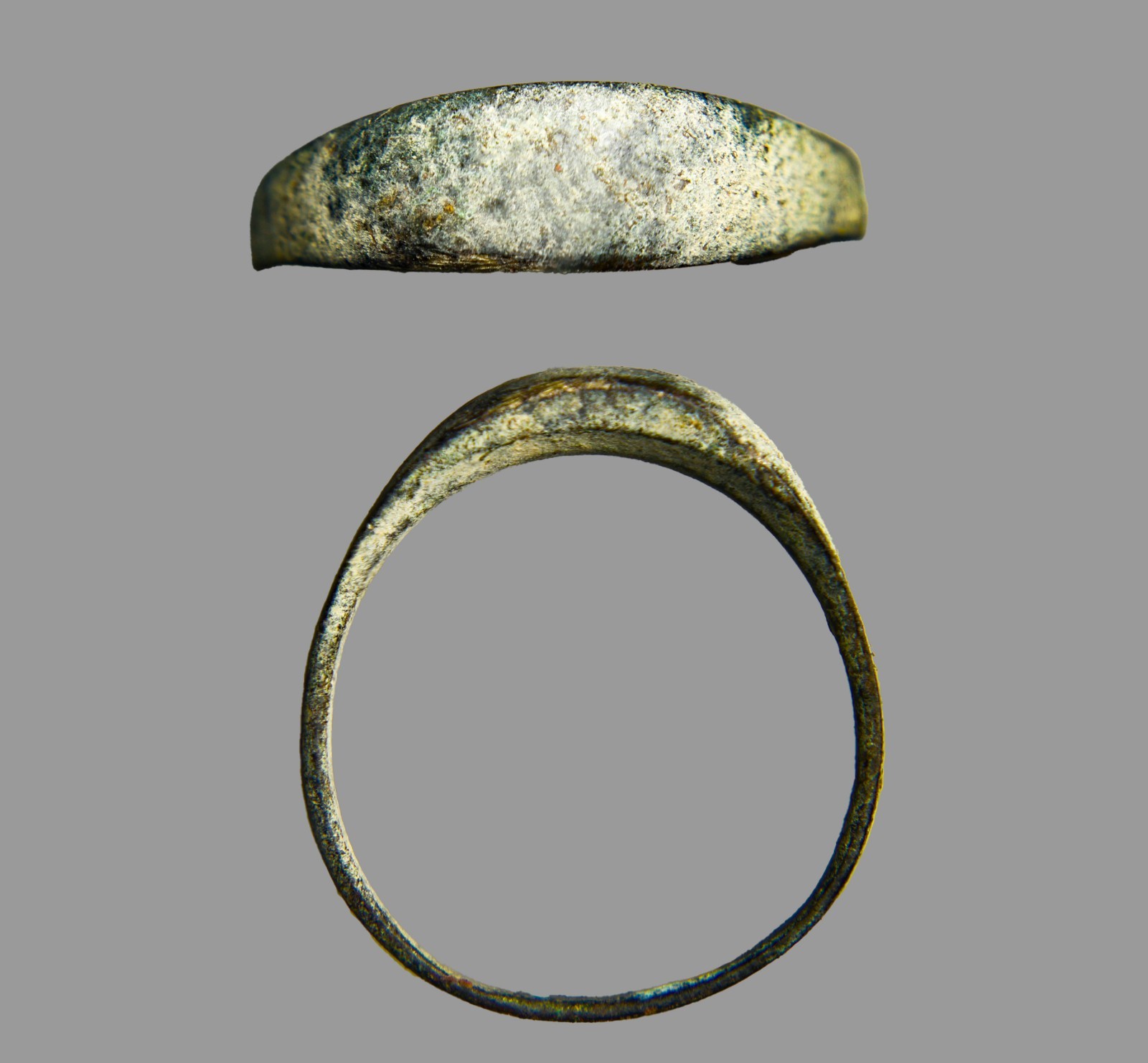
Ancient Roman Imperial Silvered Cast Bronze / Billon Infant's Ring — Tapering Expanding Bezel Band (US Size 1 — c. 1st Century BC – 3rd Century AD)
Authenticity & Guarantee
Certification: Certified Authentic — includes signed Certificate of Authenticity (COA) with full provenance documentation.
Provenance: Ex-private European collection, legally acquired from international sales; Classical Roman Provincial Sphere.
Item Specifications & Exact Dimensions
Object: Silvered Cast Bronze / Billon Personal Finger Ring / Infant Votive Band
Culture / Period: Roman Imperial Era / Hellenistic Transition
Date Range: Circa 1st Century BC – 3rd Century AD (c. 100 BC – 200 AD)
Ring Size: US Size 1 (Approx. 12.4 mm inner diameter)
Material: Cast Bronze (Copper Alloy) with original ancient silvering / tinning (argentatum)
Form & Architecture: Petite, delicate architectural ring construction featuring a slender round-section hoop seamlessly expanding into a smooth, convex oval bezel plate; designed with an ergonomic tapering band profile
Condition: Exceptional, 100% complete ancient condition. Fully intact structural hoop and bezel with original wear-ovalization; preserved under a smooth silvery-tin cladding over a dark olive bronze core, accented by authentic pale cream to sand-tan calcareous burial deposits across the inner band and bezel edges. Free of modern restoration or repair.
HISTORICAL CONTEXT & TYPOLOGICAL LORE
Roman Silvered Bronze Metallurgy (Argentatum)
During the Hellenistic and Roman Imperial periods, metalsmiths used hot-cladding and tinning techniques (argentatum) to create silvered bronze jewelry. This process conferred the prestigious, radiant luster of solid silver while retaining the durability required for daily wear. Silvered band rings were prized personal adornments among provincial elites, merchants, and patrician families across the Roman Empire.
Infant Status Rings & Votive Temple Offerings (US Size 1)
At an exceptionally miniature US Size 1 (~12.4 mm inner diameter), this ring represents a rare infant/child's birth ring or a dedicated temple votive (votum). In Roman social tradition, newborn children of high-status families were gifted protective amulets and tiny precious metal or silvered rings to mark their birth and ward off illness. Petite rings of this size were also dedicated at shrines to maternal and protective deities (such as Juno Lucina or Bes) as physical prayers for health and longevity.
Typological Analysis & Exact Classification
Primary Class: Classical Antiquity Personal Equipment & Jewelry / Roman Silvered Ring
Sub-Class: Tapering Expansion Bezel Infant Band Class
Manufacturing Technique: Lost-wax cast copper alloy (cire perdue) with hot-applied silver/tin cladding and hand-finished burnishing.
Comparable Archaeological Examples & Museum Accession Numbers
British Museum (Accession No. 1917,0501.834): Roman Imperial silvered bronze child's ring with expanding bezel.
Metropolitan Museum of Art (Accession No. 74.51.4245): Roman provincial miniature votive / infant ring.
Museum of London: Roman civilian silvered copper alloy band rings excavated from Londinium settlement strata.
TRN2-2