When you click on links to various merchants on this site and make a purchase, this can result in this site earning a commission. Affiliate programs and affiliations include, but are not limited to, the eBay Partner Network.
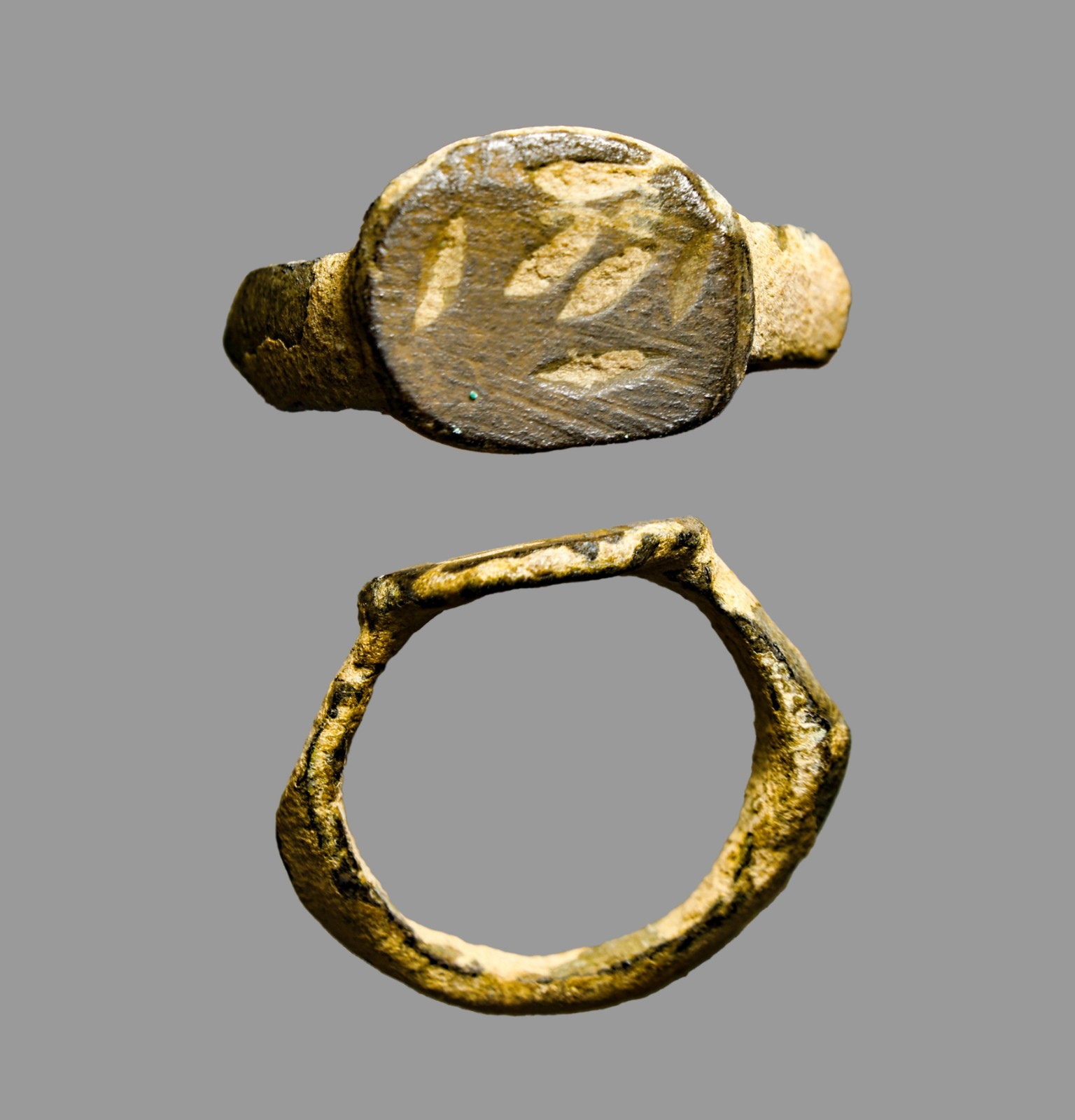
Ancient Hellenistic Bronze Incised Palm Branch Signet Ring (US Size 2 — c. 300 BC)
Authenticity & Guarantee
Item Specifications & Exact Dimensions
Object: Cast Bronze Signet Ring with Hand-Incised Palm Branch / Wreath Bezel Matrix
Culture / Period: Hellenistic Mediterranean (Greek / Ptolemaic / Seleucid Era)
Date Range: Circa 300 BC (c. 4th – 3rd Century BC)
Ring Size: US Size 2 (approx. 13.3 mm internal diameter) — engineered for pinky wear, youth wear, or suspension as a protective pendant
Material: Cast Bronze (Copper Alloy)
Form & Architecture: Flat oval bezel plate set seamlessly atop a slender circular hoop; bezel face hand-chased with deeply cut linear graffito depicting a stylized Hellenistic palm frond (phoenix) / sacred wreath spray; engineered as a personal signet and apotropaic charm
Condition: Exceptional, complete ancient condition. Crisp incised palm motif across the oval face, complete original hoop with minor age-appropriate surface eccentricity, preserved under a rich dark olive-charcoal bronze patina with creamy pale sandy burial encrustations highlighting the engraved channels. Free of modern restoration or tooling.
HISTORICAL CONTEXT & TYPOLOGICAL LORE
Hellenistic Palm Symbolism & Sacred Iconography
In the Hellenistic world following the conquests of Alexander the Great (c. 300 BC), the palm branch (phoenix) and sacred leaf spray were universally recognized emblems of victory, peace, divine favor, and renewed life. Mounted on personal signet rings, the palm frond served both as a visual badge of honor and as a protective symbol guarding the wearer against misfortune.
Sealing Mechanics & Small-Gauge Architecture
In Hellenistic administrative and commercial life, personal signets were pressed into soft clay tags (bullae) or wax to secure document scrolls, trade sacks, and personal property. Rings of compact US Size 2 gauge were frequently commissioned for youths, worn on the pinky finger by adults, or carried suspended on a leather cord as a chest pendant, allowing the owner to keep their seal close at hand.
Typological Analysis & Exact Classification
Comparable Archaeological Examples & Museum Accession Numbers
British Museum (Accession No. 1917,0501.732): Hellenistic bronze signet ring with incised palm frond bezel.
Metropolitan Museum of Art (Accession No. 74.51.4285): Eastern Mediterranean Hellenistic bronze ring featuring leaf spray matrix.
Louvre Museum (Inv. No. AO 22104): Hellenistic period bronze seal ring with incised vegetative motif.
1-4