When you click on links to various merchants on this site and make a purchase, this can result in this site earning a commission. Affiliate programs and affiliations include, but are not limited to, the eBay Partner Network.
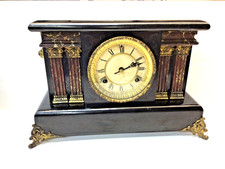
This antique Waterbury mantel clock has been in the same family since new - family believes was bought between 1915 and 1920.
Features an \"Adamantine\" finish, designed to look like black marble. It has 4 faux marble pillars and gold-tone hardware.
This is an 8-day clock with time and strike functionality. Was tested by slightly winding both the 8-day clock winding and the striker winding. Has been running and gonging for 2 hours now. No issues.
Condition: Back panel is obviously a replacement. Inside looks old/stock. Finish on the black - top shows specks of perhaps paint and some scratches. I wiped it off but did not get aggressive with it. Clock face is faded/spotty. 15.5\" wide, 10.5\" tall, 7\" deep.
Comes with the key and handwritten operating directions. The bottom has an original sticker on it, can make out several cities, Detroit is largest, and barely make out Waterbury.
History:These \"black marble\" cases with contrasting pillars were directly inspired by the architectural designs of French portico and Egyptian-revival clocks. The pillars (often made of wood wrapped in Adamantine to look like green, red, or white striated marble) added structural depth and visual appeal.
Characteristics of these Clocks:*Material: Celluloid veneer glued to a wood case. It is relatively durable but can crack or chip over time if exposed to extreme temperature changes or direct heat from a fireplace.*Mechanism: Typically driven by 8-day brass, spring-driven movements that feature hour and half-hour strikes on a gong or bell.*Dating: Waterbury Adamantine clocks with pillars generally date from the late 1890s to approximately 1915
Why?These clocks reflect a clever late-19th-century innovation that allowed middle-class families to afford clocks designed to look like the expensive, high-status marble and slate timepieces imported from Europe. Imported mantel clocks became a status symbol among the wealthy. American clockmakers, including the Waterbury Clock Company and the Seth Thomas Clock Company, sought a way to compete.
Uline