When you click on links to various merchants on this site and make a purchase, this can result in this site earning a commission. Affiliate programs and affiliations include, but are not limited to, the eBay Partner Network.
Antique Harrison’s Columbian Ink Bottle Open Pontil Octagonal Aqua Philadelphia
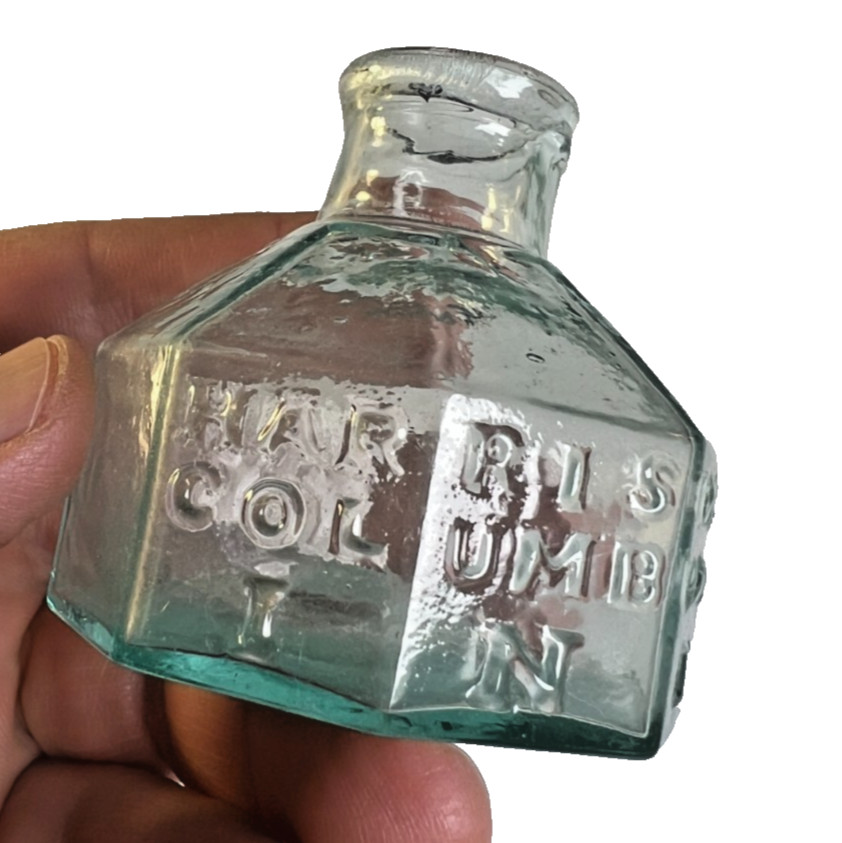
Few bottles capture the feeling of a mid-1800s writing desk quite like an early Harrison’s ink. With its crisp octagonal form, hand-blown whittle, and deep embossed lettering, this little bottle feels like a surviving artifact from the age of clerks, telegraphs, ledgers, and handwritten correspondence.
Antique Harrison’s Columbian Ink Bottle
Approx. 2\" tall.
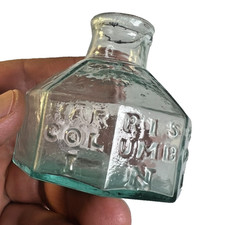
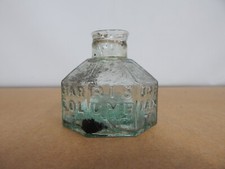
Beautiful pale aqua glass with an octagonal / 8-sided form and embossed panels reading:
“HARRISONS”
“COLUMBIAN”
“INK”
Hand-blown with excellent natural waviness and strong mold character throughout. Features a crude inward-rolled lip and a very desirable open pontil scar on the base.
Produced in Philadelphia, likely dating to approximately 1845–1860.
Condition
- No chips
- No cracks
- Clean
- Strong embossing
- Excellent whittle and glass movement
- Faint, hairline scuffs on the bottom
- A very attractive and honest early ink.
About Harrison’s Columbian Ink
Harrison’s was one of the notable American ink makers of the mid-19th century, operating from Philadelphia during a period when the city was one of the nation’s great centers for printing, publishing, banking, and commerce.
This bottle comes from the era when:
- steel dip pens were replacing feather quills
- telegraph lines were spreading across America
- newspapers exploded in circulation
- handwritten business ledgers powered nearly every industry
Before typewriters existed in offices, bottles like this sat on desks in law firms, railroad depots, banks, schools, and newspaper offices across the country.
Glass & Manufacturing Notes
This example shows many characteristics collectors look for in authentic pre-Civil War American glass:
- open pontil scar
- hand-finished inward rolled lip
- uneven glass thickness
- embossed mold work
- strong whittle and surface movement
The octagonal shape was both decorative and practical, helping prevent spills while providing broad panels for embossed advertising.
Historical Context
When this bottle was made:
- Abraham Lincoln was still a lawyer
- California had only recently become a state
- Philadelphia was illuminated largely by gaslight
- messages still traveled by horse, rail, and telegraph
- bookkeeping was done entirely by hand
Some exhausted office clerk may once have dipped a steel nib into this very bottle while copying invoices by lamplight for twelve straight hours. The original office printer jam was just “Steve spilled the ink again.”