When you click on links to various merchants on this site and make a purchase, this can result in this site earning a commission. Affiliate programs and affiliations include, but are not limited to, the eBay Partner Network.
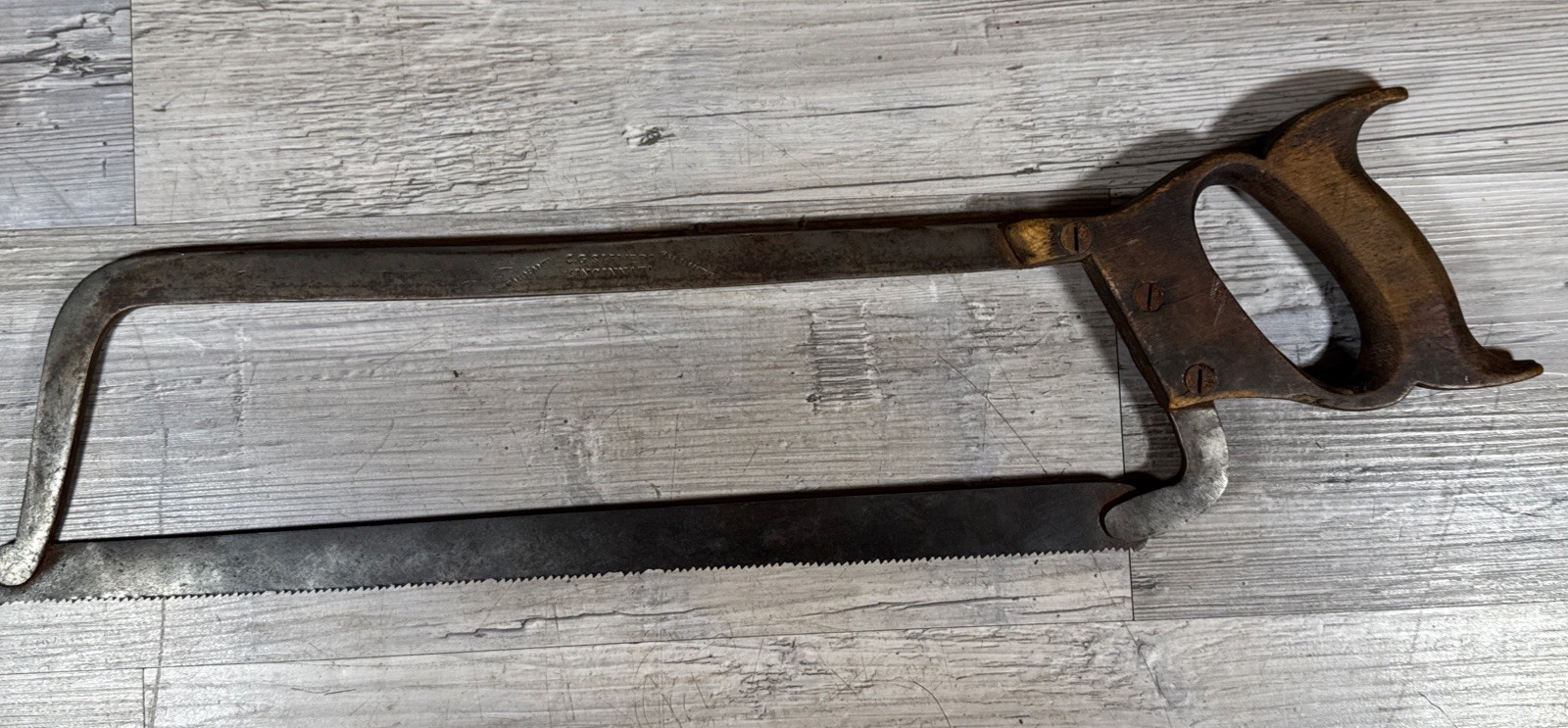
If you are a collector this is an extremely rare saw, due to the name stamp, and you want this in your collection. We could not find another saw with his name on it anywhere and believe based on our research there were very few saws ever made by him.
Obviously we can’t guarantee he actually made it but below is all the information we could find on him. Please see attached pictures for overall condition.
C. G. Siewers (Charles G. Siewers) was a 19th-century American tool maker and author based in Cincinnati, Ohio, who is notably recognized for his contributions to the woodworking and entomology fields.
Professional Background
Tool Manufacturer: In the mid-1800s, Siewers was a prominent manufacturer of high-quality woodworking tools in Cincinnati. Vintage items bearing his name, such as brass-fitted boxwood mortise gauges and saws, are today considered rare collectibles.
Business Partnerships: He was a son-in-law of the famous tool maker E.W. Carpenter and was involved in a partnership known as Wheatcroft & Siewers between 1840 and 1842.
Entomology and Writing: Later in life, he authored scientific papers, most notably "Mold as an Insect Destroyer" published in 1879, which explored the use of fungi to control insect populations.
Familial Legacy
The Siewers family name remains prominent in the lumber and millwork industry. While C. G. Siewers operated in Cincinnati, another branch of the family founded Siewers Lumber & Millwork in Richmond, Virginia, in 1884. This business remains operational in 2026, specializing in custom mouldings, doors
C. G. Siewers manufactured high-quality, collectible woodworking hand tools in Cincinnati, Ohio, during the mid-19th century, known for their fine craftsmanship and materials.
Types of Tools
While specific catalogs from his era are not readily available, surviving examples and historical records indicate he produced several types of precision marking and cutting tools:
Mortise Gauges: Siewers is particularly known for his mortise gauges, which often featured brass fittings and high-quality woods like boxwood. These tools are highly sought after by collectors today.
Squares: He produced various squares, including miter squares (used for marking 45 and 135 degree angles), often incorporating rosewood and brass in their construction.
Saws: Historical information suggests Siewers manufactured hand saws and possibly frame saws.
Chisels and Planes: As part of a general woodworking tool business and in a partnership with Wheatcroft, he likely manufactured a wider range of core carpentry tools, including chisels and planes.
Craftsmanship and Legacy
Quality Materials: Siewers's tools were known for using premium materials like brass and rosewood, highlighting a focus on quality and durability.
Connection to E.W. Carpenter: He was the son-in-law of E.W. Carpenter, another notable tool maker, and their business connection suggests a shared standard of high-quality craftsmanship and similar tool designs.
Collectibility: Due to their age, quality, and the relative scarcity of surviving examples, C. G. Siewers's tools are considered rare collectibles in the antique tool market.