When you click on links to various merchants on this site and make a purchase, this can result in this site earning a commission. Affiliate programs and affiliations include, but are not limited to, the eBay Partner Network.
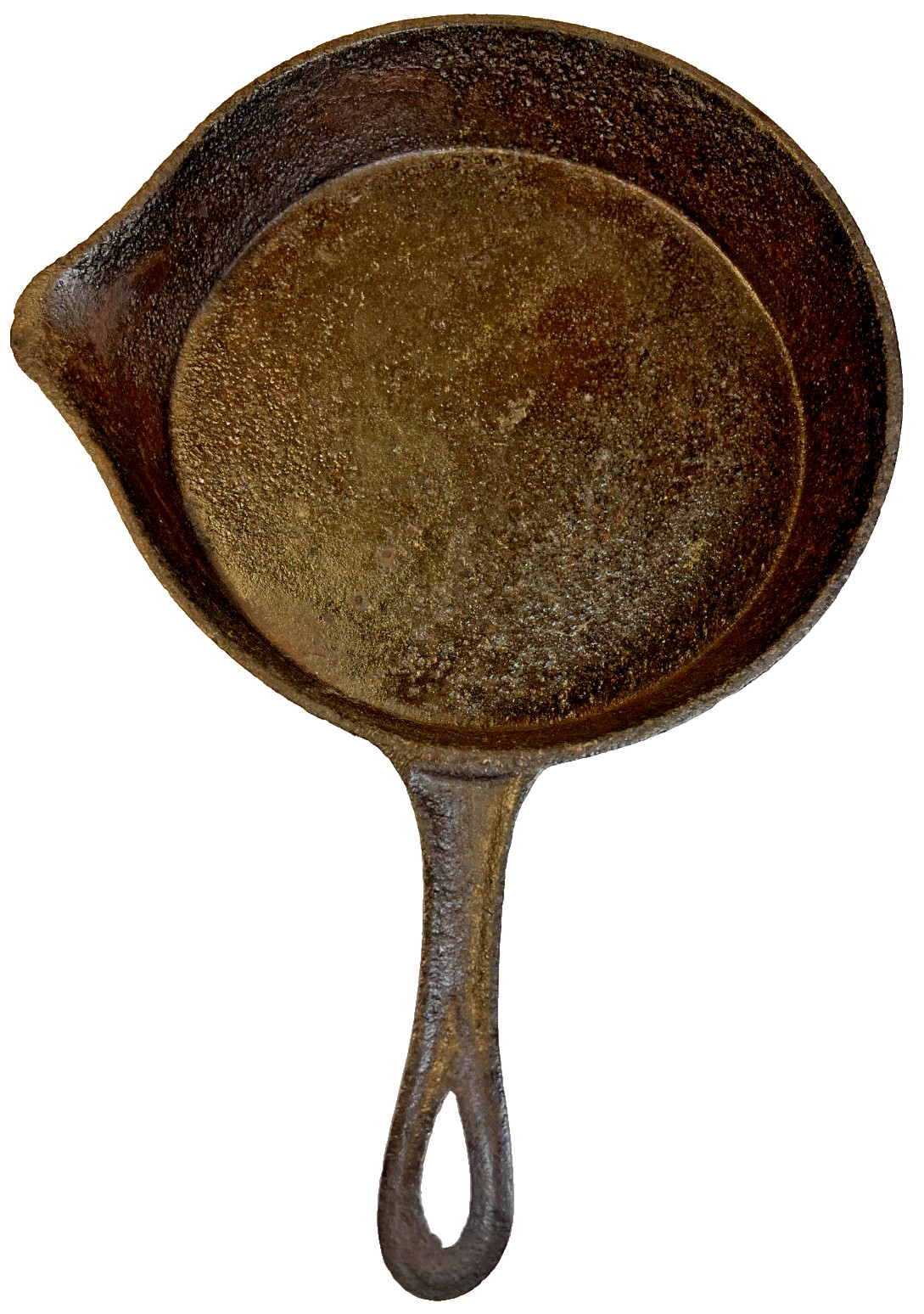
Antique 18th/19th C 3 Leg Cast Iron Skillet Gate Mark Single Spout Fancy Handle AAFA
This is the kind of piece that reminds you cast iron didn’t start in kitchens—it started over fire.
Offered here is a very early 3-legged cast iron skillet, measuring approximately 10.5” wide x 2.75” tall, weighing just 3.6 lbs, and featuring a long, dramatic ~6.5” gate mark scar across the base.
This is not a later stove-era pan. This is hearth cooking iron—made to sit directly in coals, long before modern flat cooktops were even a thought.
Age & Origin
Based on form and construction, this skillet likely dates to:
Late 1700s to mid-1800s (circa 1780–1850)
Key indicators:
- Prominent gate mark → pre-automated casting (typically pre-1860s, often earlier)
- Three integral legs → designed for open hearth cooking
- Single pour spout → earlier, less standardized production
- Hand-finished “fancy” handle → subtle but intentional shaping, not purely utilitarian
- Mold mark “E” on base → likely a pattern or molder’s mark, not a brand
This was made in a time when foundries weren’t branding for retail—they were producing tools for survival and daily life.
Construction Details
- 3-leg design for stability over coals
- Single spout (early feature—before symmetrical double spouts became common)
- Elongated, slightly decorative handle with a refined silhouette
- Large central gate mark (~6.5”)—a direct artifact of early casting methods
- Rough, sand-cast texture throughout
- Relatively light weight (3.6 lbs) compared to later, heavier stove-era iron
You can literally see the casting process frozen in time on the bottom of this piece.
Condition
- No cracks, no repairs observed
- Structurally solid
- Heavy, deep pitting throughout interior and exterior
- Surface is very rough—this is not suitable for modern cooking use
- Best considered a display / collector / historical piece
This pan has lived a life. Probably several.
Historical Context – A Pan From the Hearth Era
Before cast iron ever sat flat on a stove, it sat in fire.
In the late 18th and early 19th centuries:
- Cooking was done in open hearth fireplaces
- Skillets like this stood on their own legs directly in coals or ash beds
- Heat was controlled by moving embers—not turning knobs
- Meals were slower, heavier, and deeply tied to daily labor
This pan would have been used in a world of:
- Hand-forged tools
- Wood-fired homes
- Early American expansion westward
- A time when iron objects were valuable, repaired, and kept for generations
The large gate mark underneath isn’t a flaw—it’s a fingerprint of the process:
Molten iron was poured into sand molds through a channel (the “gate”), and when broken off, it left that scar. Later manufacturing eliminated this—but here, it’s still bold and visible.
Collector Notes
Pieces like this appeal to:
- Early American / AAFA collectors
- Primitive kitchenware collectors
- Hearth cooking historians
- Decorative rustic / farmhouse displays
The combination of:
- 3 legs
- Single spout
- Large gate mark
- Fancy handle profile
…puts this firmly in the desirable early category, even with condition issues.
This isn’t a skillet you use—it’s one you inherit, display, and talk about.
The kind of piece that sat in a fire two centuries ago… and somehow made it here without asking permission.