When you click on links to various merchants on this site and make a purchase, this can result in this site earning a commission. Affiliate programs and affiliations include, but are not limited to, the eBay Partner Network.
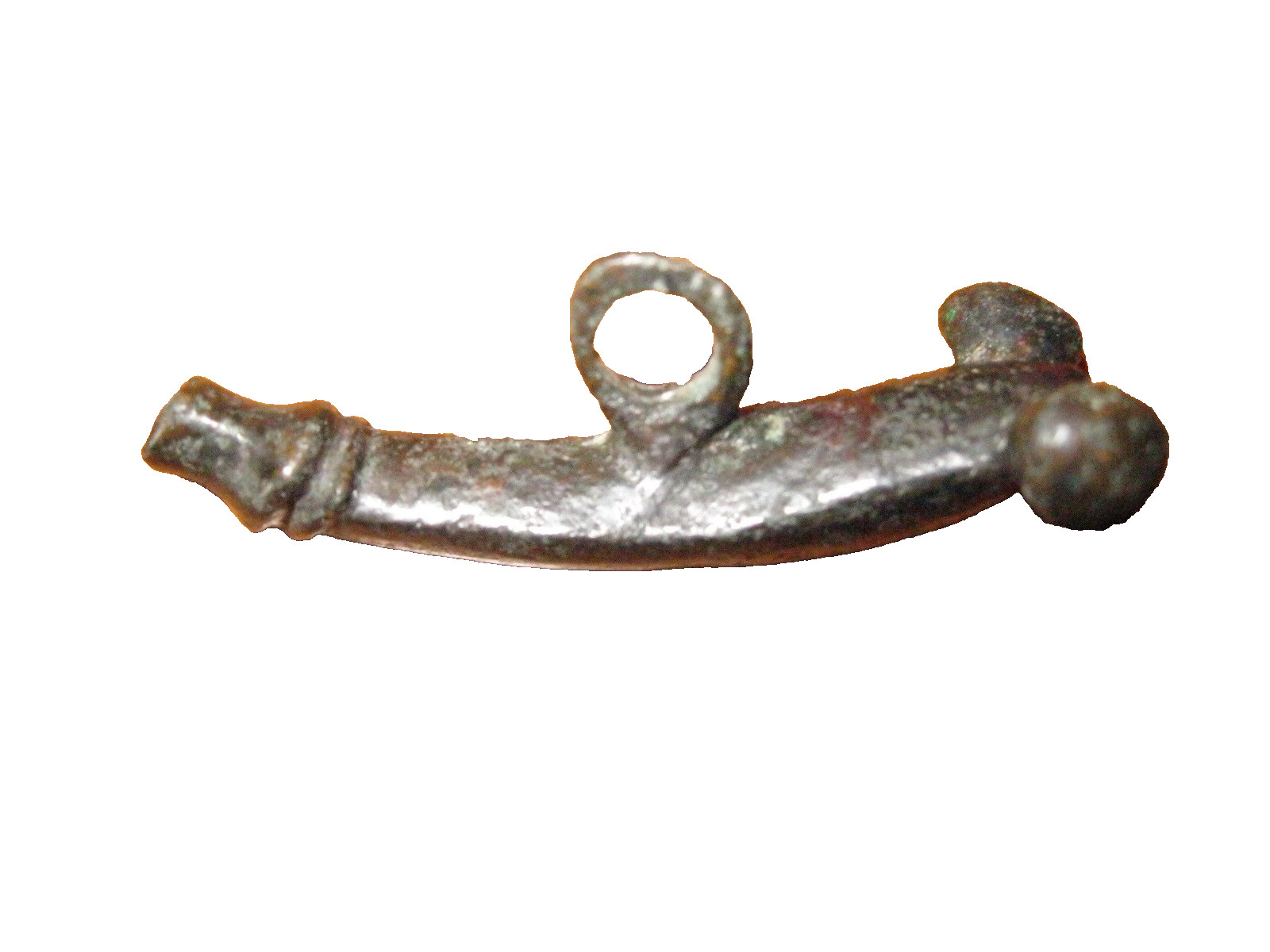
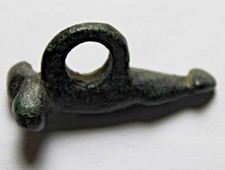
This listing is for an ancient Roman (100-400 CE) bronze Phallus, or Fascinum pendant. It is 1 7/8" L.
In ancient Roman religion and magic, the Divine Phallus, or Fascinum was not considered obscene or vulgar, and these amulets were wrongs protective talismans to ward off “invidia” (bad luck, envy or the “evil eye”)and prevent illness.
According to Pliny the Elder, these pendant charms were commonly given to infants and young children for divine protection. Roman soldiers and gladiators frequently wore the fascinum into battle to symbolize strength, potency and martial prowess.
The material of which these fascunum pendants were cast was of bronze, a copper alloy metal (today’s bronze is made of copper and tin). The physical features of these pendants were a curved body, with pronounced testicles.
Over the centuries of burial, bronze naturally oxidizes to form a dark brown or verdigris (greenish oxidation from the copper)) colors. The fascinum presented in this listing is primarily of a dark brown patina, with traces of verdigris in the crevices.
The suspension loop on this one is strong and viable—-and they are many ties quite eroded away—-and are integrally molded into the total piece. This can be worn as a pendant, strung into a necklace, tied into clothing or display in the home as a magical part of ancient Roman life.