When you click on links to various merchants on this site and make a purchase, this can result in this site earning a commission. Affiliate programs and affiliations include, but are not limited to, the eBay Partner Network.
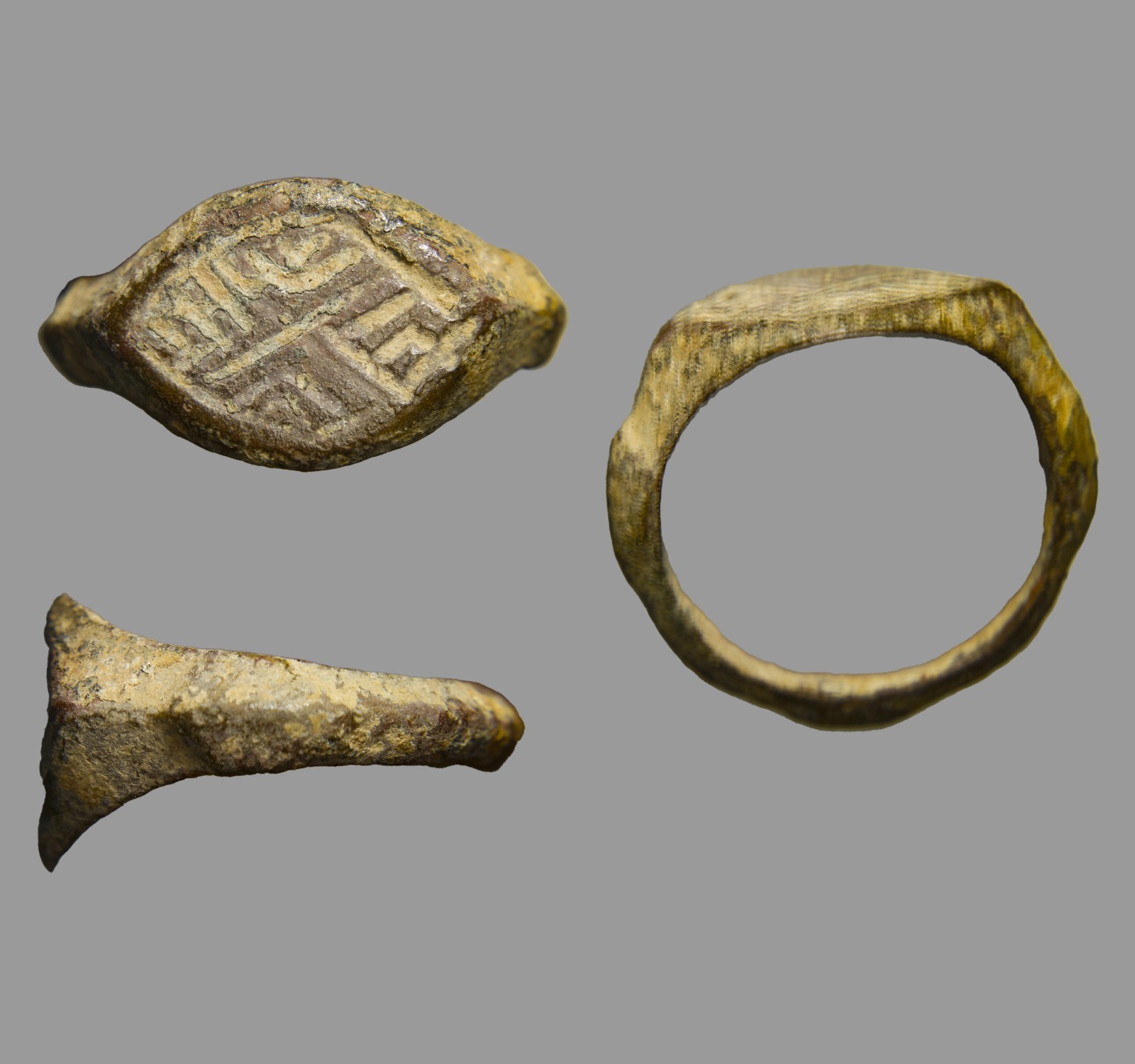
Ancient Near Eastern Bronze Intaglio Signet Ring (US Size 7)
Authenticity & Guarantee
Item Specifications
Object: Cast Bronze Signet Ring (Seal Ring)
Culture / Period: Ancient Near East (Mesopotamian / Elamite / Syro-Anatolian Sphere)
Date Range: Circa 1st Millennium BC (1000 BC – 500 BC)
Ring Size: US Size 7 (Wearable)
Material: Solid Cast Bronze (Copper Alloy)
Bezel Form & Engraving: Pointed lozenge / vesica-shaped bezel featuring a deeply incised geometric lattice seal face composed of wedge-shaped linear strokes mirroring cuneiform script strokes and protective cross-hatched glyphs
Condition: Exceptional intact wearable state. Solid structural hoop with smooth inner band, crisp incised bezel matrix, and a rich, authentic desert-sand encrustation over a dark green-black bronze patina.
Historical Context & Administrative Function
Signet Seals in Near Eastern Commerce
In ancient Near Eastern societies, personal signet rings functioned as legal signatures, mark of administrative authority, and security seals for merchants and officials (Ref: Collon, First Impressions: Cylinder Seals in the Ancient Near East, British Museum Press, 1987; Boardman, Intaglios and Rings: Greek, Etruscan and Eastern, Thames & Hudson, 1975). The carved intaglio bezel was pressed directly into wet clay tablets, jar stoppers, and doorway seals (bulla) to verify identity, authenticate contracts, and secure property.
Geometric & Pseudo-Cuneiform Glyptic Traditions
Across regional trading posts, local seal-cutters carved simplified wedge-like glyphs and geometric lattice designs onto bronze signet bezels. These linear, wedge-shaped cuts functioned as unique personal or family marks (tamgas), drawing visual inspiration from formal cuneiform script and symbolic protective grids to deter tampering (Ref: Buchanan, Early Near Eastern Seals in the Ashmolean Museum, Clarendon Press, 1981).
Typological Analysis & Comparable Museum Accession Parallels
Craftsmanship & Band Design
Solid-cast bronze using the lost-wax technique (cire perdue). The hoop tapers gracefully toward the rear, widening at the shoulders to support the pointed lozenge bezel plate.
Comparable Archaeological Examples & Museum Accession Numbers
British Museum (Accession No. 1920,1211.24): Ancient Near Eastern bronze signet ring with geometric seal bezel.
Ashmolean Museum (Accession No. AN1933.1205): 1st millennium BC Near Eastern bronze signet ring with linear matrix.
Louvre Museum (Inventory No. AO 22104): Syro-Mesopotamian bronze seal ring with incised geometric motif.
TRN-1-3