When you click on links to various merchants on this site and make a purchase, this can result in this site earning a commission. Affiliate programs and affiliations include, but are not limited to, the eBay Partner Network.
1920s St Louis Car Crash He Was In A Hurry Traffic Warning Glass Negative OOAK
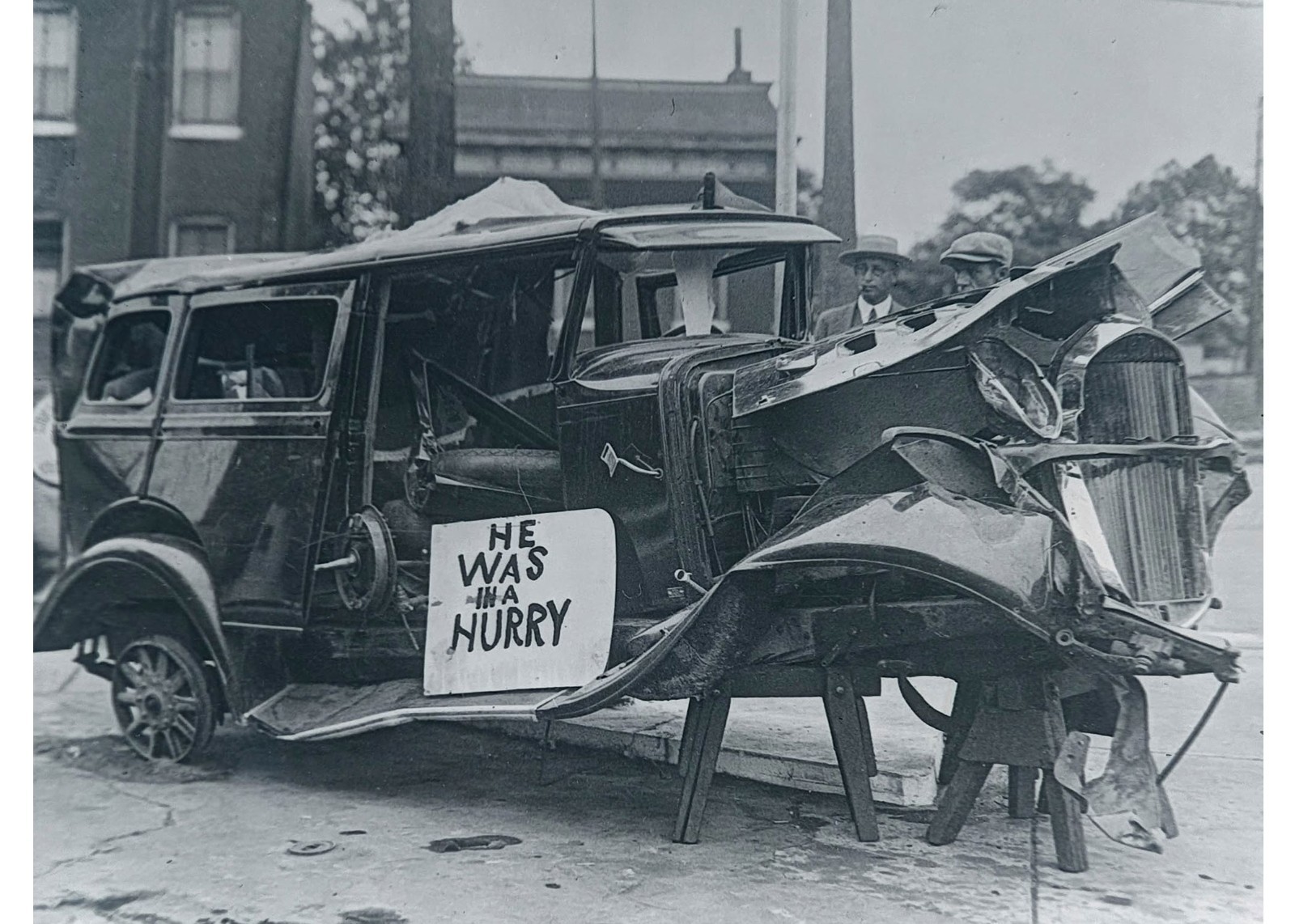
Original, one-of-a-kind (OOAK) camera-original antique gelatin silver glass negative captured circa late 1920s to early 1930s: an extraordinary and grim piece of early American automotive safety history: a pulverized, demolished vintage passenger automobile propped atop wooden sawhorses on a public sidewalk in St. Louis, Missouri, bearing a stark warning placard reading "HE WAS IN A HURRY".
Accompanied by its original vintage tan kraft darkroom morgue filing sleeve with contemporary newsroom documentation:
The Sleeve Inscription:
Name: Auto Wreck used in
St Louis as warning
to others
Historical & Contextual Background:
As automobile ownership surged during the 1920s and early 1930s, urban traffic fatalities skyrocketed across major American cities. To combat reckless driving and speeding, municipal police departments and civic safety councils in cities like St. Louis began publicly staging real fatal crash wreckage in city squares and high-traffic corridors as visceral deterrents. This arresting press field exposure documents one such public safety installation: a crushed sedan mounted on heavy timber carpenter sawhorses alongside an urban curb, outfitted with a blunt warning to motorists against reckless haste.
Visual details preserved in the silver gelatin emulsion:
The Crushed Vehicle: An early enclosed sedan decimated by a severe head-on collision, showing an accordion-crushed hood, mangled honeycomb radiator, shattered headlamp, bent steering column, ripped doors, and a broken rear wooden artillery-spoke wheel.
The Safety Placard: Bolted across the passenger side running board sits a stark, hand-painted white signboard with bold black lettering: "HE WAS IN A HURRY".
The Street Setting: Two men wearing period suits, a fedora, and a driving cap stand behind the wreckage, observing the display beside urban brick buildings and utility poles.
Tonal Fidelity: Rich continuous-tone silver gelatin gradation rendering crumpled sheet metal reflections, splintered structural timbers, painted lettering, and sidewalk texture.
Specifications:
Format: Heavy antique silver gelatin press glass negative, exposed directly in a field camera circa 1925–1935.
Archive Ephemera: Accompanied by the original vintage tan kraft darkroom morgue filing envelope.
Please Note: This listing is for the original antique glass negative and its period paper archive sleeve only. Any positive photographic images shown in this listing are modern inverted digital scans provided solely as a visual representation to show what finished photographs print like. No physical paper photograph, modern print, or paper product of any kind is included with this purchase.
Condition:Very Good to Excellent antique condition. The heavy glass plate is structurally sound, stable, and completely intact with no cracks, fractures, breaks, or chips through the glass body. The silver gelatin emulsion is remarkably clean, sharp, and firmly adhered, retaining crisp focus across the crushed metalwork, warning sign lettering, and bystanders. Authentic unexposed handling borders remain preserved along the outer glass rebate margins. Accompanied by the original period kraft morgue filing sleeve.
The glass plate negative measures 4 x 5In.
If you collect glass negatives, please check out our collection in our store. We are currently listing thousands of original glass photo negatives from this DJD collection through the remainder of the year. Follow our store, and feel free to reach out about any questions about the negatives in this collection.
Ships with extreme care in archival materials to ensure safe transit. Feel free to reach out with any requests or questions).
Combined shipping is available (with other glass negatives)