When you click on links to various merchants on this site and make a purchase, this can result in this site earning a commission. Affiliate programs and affiliations include, but are not limited to, the eBay Partner Network.
1970s metallic glazes
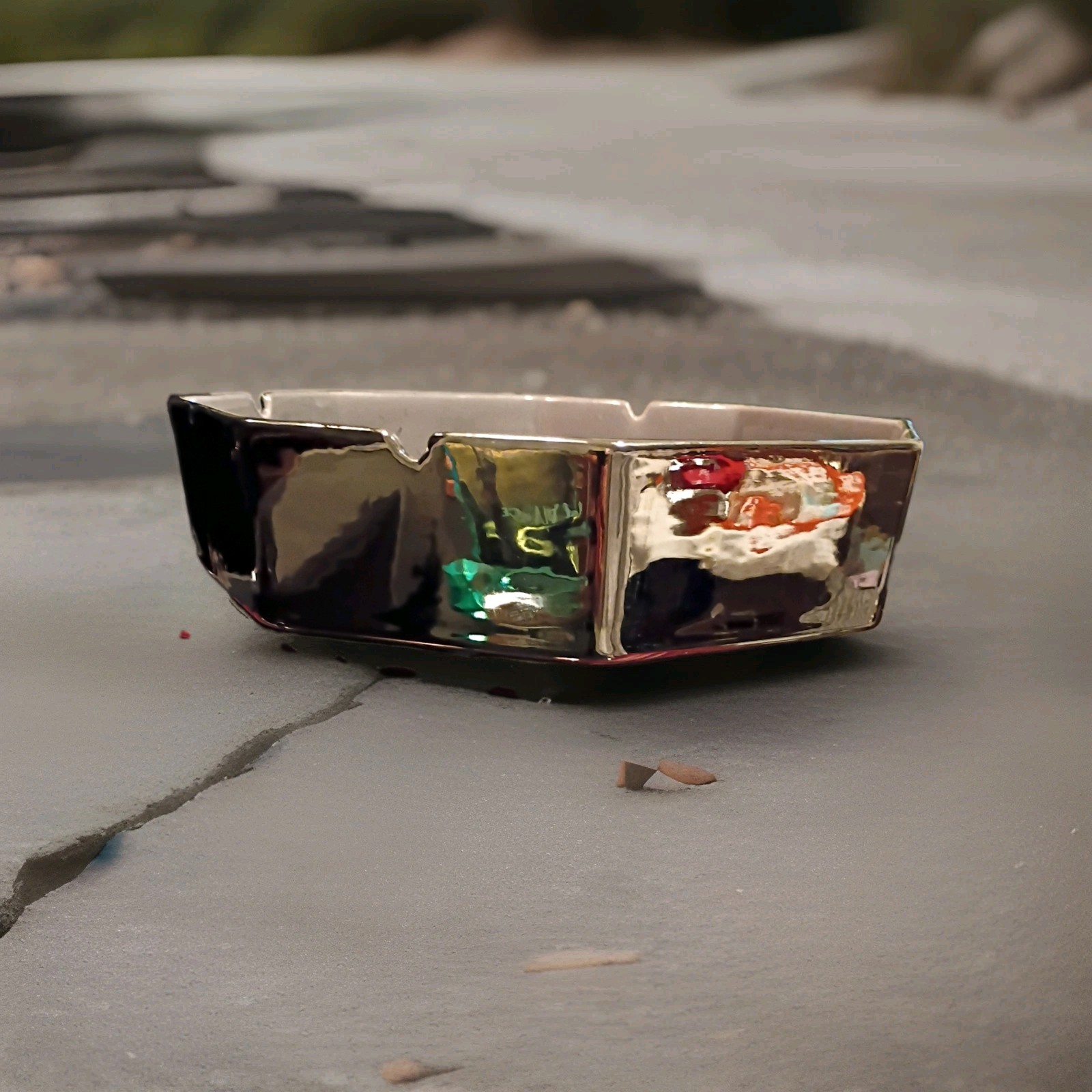
Ashtray has been safely stored, was never used, and retains a flawless1970s metallic glazesBased on the markings stamped into the ceramic base, this piece is confirmed to be an authentic vintage 1977 Jaru of California pottery ashtray.
The unglazed bottom clearly shows three distinct incised marks:* "JARU" – The manufacturer name, a well-known mid-century modern design house based in Culver City, California, founded by Jack and Ruth Hirsch.
* "1977" – The exact year of manufacture.
* "©" – The standard copyright symbol used by the studio during this production era.The little green felt dots on the rim were added by a previous owner to protect tabletops from scratches.
The history of Jaru of California is a classic story of mid-century American entrepreneurship and West Coast design.
## The Beginnings (1950s)
The company was founded in 1950 by the husband-and-wife duo Jack and Ruth Hirsch in Culver City, California. The unique name "Jaru" is a portmanteau created by combining the first two letters of their first names: Jack and Ruth.
Originally, the couple did not manufacture everything themselves. They operated as a design house and art distributor, commissioning talented local California artists and sculptors to create modernist pieces. Ruth directed the stylistic and design vision, while Jack managed business operations and early molding production.
## The Evolution & Style (1960s–1970s)
By the 1960s, Jaru shifted focus toward creating their own distinct lines of art pottery and decorative home accessories. They achieved massive commercial success by capturing the Mid-Century Modern and Hollywood Regency aesthetics that were trending in American homes.
The company became famous for several signatures:*
* The Metallic Finishes: Jaru mastered high-gloss, ultra-reflective metallic glazes like the silver/chrome, gunmetal, and gold seen on your ashtray.
* Bold Geometry: They embraced the era's obsession with space-age and geometric shapes, frequently utilizing sharp hexagonal, octagonal, and abstract biomorphic silhouettes.
*## Transition and Legacy
In 1968, Jack and Ruth Hirsch retired and sold the company to new ownership. Under the new management throughout the 1970s (the exact era your 1977 ashtray was stamped), Jaru continued to produce high-style decorative ceramics, often leaning into the dramatic, luxurious tones of the late '70s interior trends.
While many earlier pieces from the 1950s and '60s only carried simple paper stickers that washed off over time, pieces from the 1970s were routinely stamped directly into the clay body with the copyright and year, making items like this one very easy for modern collectors to identify and authenticate.
Today, Jaru of California is celebrated alongside names like Gainey, Metlox, and Bauer as an essential contributor to the golden age of twentieth-century California art pottery heritage.
1970s metallic glazes
Ashtray has been safely stored, was never used, and retains a flawless metallic finish without scratches.