

|
Site Categories |
|
Featured Items |

Poodle, Spaghetti Trim, Ucagco


|
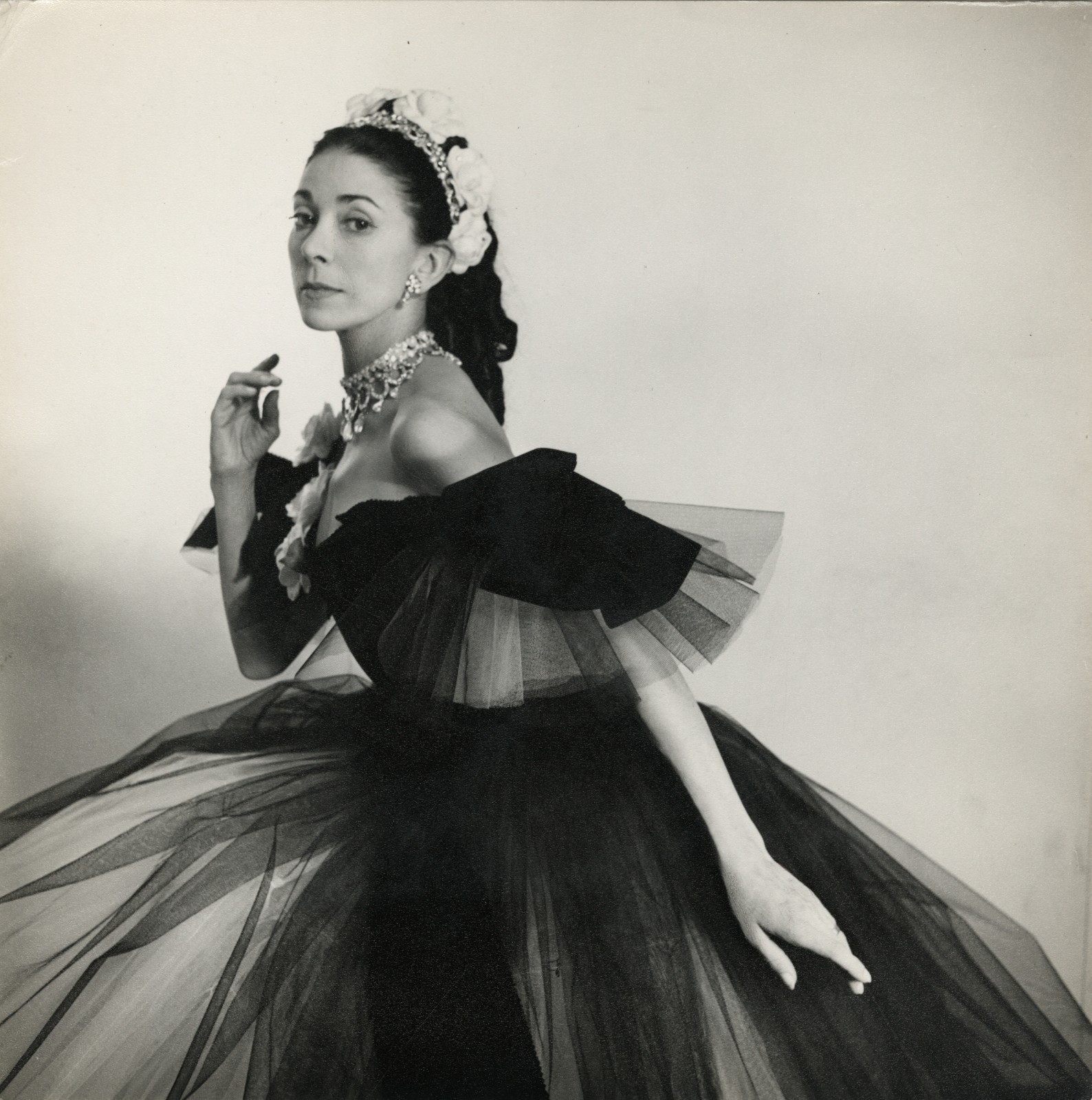
c. 1950's Margot Fonteyn Photograph by Cecil Beaton For Sale

When you click on links to various merchants on this site and make a purchase, this can result in this site earning a commission. Affiliate programs and affiliations include, but are not limited to, the eBay Partner Network.

c. 1950's Margot Fonteyn Photograph by Cecil Beaton:
$800.00
PHOTOGRAPHER: Cecil Beaton (see bio below)DATE: c. 1950'sSUBJECT:Margot Fonteyn (see bio below)PROCESS: Gelatin SilverSIZE: 9.5" x 9.5"CONDITION: See photosSHIPPING: Shipping cost is non-negotiable, please consider it when offerding/buying.COMBINED SHIPPING: Yes, I do combine shipping. Additional shipping per item is 20% of the lower shipping cost [For example, if 2 items are purchased that have a $30 and $10 shipping cost each, the combined shipping cost becomes $32 for the 2 items]. If offerding/buying more than 1 item, please wait for an invoice with combined shipping before Cecil Walter Hardy Beaton (14 January 1904 – 18 January 1980) was a British photographer, portraitist, designer, illustrator, writer, and diarist. He became one of the most prominent fashion and society photographers of the twentieth century and was also widely known for his portraits of members of the British royal family and for his work as a stage and film designer. He was active professionally from the mid-1920s until the late 1970s.Beaton was born in Hampstead, London, into a prosperous middle-class family. He developed an interest in photography while still young and used his sisters, Nancy and Baba, as early models. He attended Heath Mount School, St Cyprian's School, Harrow School, and St John's College, Cambridge. While at Cambridge he was involved in theatrical productions, designing costumes, sets, and makeup and performing with the Cambridge Footlights. He left the university without taking a degree.His professional career began in the 1920s. Beaton's early photographs of aristocrats, debutantes, actors, and members of the fashionable London social world were often staged with elaborate backgrounds, props, reflective surfaces, and theatrical lighting. His work became closely associated with the group popularly known as the Bright Young Things. He began contributing photographs and illustrations to Vogue during the mid-1920s, and his first major London exhibitions helped establish his reputation as a fashionable portrait photographer. He subsequently worked extensively for Vogue and also photographed for publications including Vanity Fair.Beaton became known internationally for portraits of prominent figures from society, literature, theatre, film, art, and politics. His subjects included actors, writers, artists, dancers, socialites, and members of European and American high society. His portrait style frequently emphasized elegance, glamour, costume, and carefully constructed settings rather than straightforward documentary realism. Among the dancers he photographed was Margot Fonteyn, whom he photographed on numerous occasions during her career.During the late 1930s Beaton began a long association with the British royal family. He photographed Queen Elizabeth, later known as Queen Elizabeth the Queen Mother, and subsequently photographed King George VI, Princess Elizabeth, Princess Margaret, and other members of the royal household. Princess Elizabeth first sat for him in 1942. Beaton later produced official photographs connected with the Coronation of Queen Elizabeth II in 1953, and his royal portraiture continued for several decades.During the Second World War, Beaton worked as a photographer for the British Ministry of Information. His wartime photography differed considerably from his earlier society work and included images of bomb damage, military personnel, hospitals, wartime industry, and civilians affected by the conflict. His photographs from Britain and other wartime locations became an important part of the visual record of the war.In addition to photography, Beaton had a major career in theatrical and motion-picture design. He designed costumes and sets for numerous stage productions and achieved particular recognition for his work on My Fair Lady. He designed the sets and costumes for the original 1956 Broadway production and later worked on the 1964 film adaptation. He also designed costumes and production elements for the 1958 film Gigi. His film work brought him three Academy Awards, including awards for costume design and art direction.Beaton was also a prolific writer and diarist. He published books on photography, fashion, travel, and his own life and produced several volumes drawn from his extensive diaries. His diaries provide accounts of his professional work and his encounters with many important cultural and social figures of the twentieth century.In 1968 the National Portrait Gallery in London mounted a major retrospective of Beaton's portrait photography. It was the first exhibition the institution had devoted to a photographer and marked the growing recognition of photography as a significant form of portrait art. Beaton later organized Fashion: An Anthology at the Victoria and Albert Museum, an influential exhibition of historic and contemporary fashion that opened in the early 1970s.Beaton was knighted in 1972 for his contributions to photography and the arts. In 1974 he suffered a serious stroke that impaired his ability to work, although he subsequently learned to draw and write with his left hand and continued undertaking photographic and artistic projects. He remained professionally active to a limited extent during the later 1970s.Cecil Beaton died at Reddish House, his home in Broad Chalke, Wiltshire, on 18 January 1980, four days after his seventy-sixth birthday. His career spanned more than five decades. His photographs are held by major institutions including the National Portrait Gallery and the Victoria and Albert Museum, and his work remains significant in the histories of fashion photography, celebrity portraiture, royal photography, theatrical design, and twentieth-century British visual Margot Fonteyn (18 May 1919 – 21 February 1991), born Margaret Evelyn Hookham, was an English ballerina who became one of the most celebrated classical dancers of the twentieth century. Closely associated with the company that became The Royal Ballet, she was eventually given the title prima ballerina assoluta and was especially known for her interpretations of the major classical ballets and for her long artistic partnership with Rudolf Nureyev.Fonteyn was born in Reigate, Surrey, England. As a child she spent several years in China, where her father worked, and studied ballet in Shanghai. After returning to Britain she continued her training in London, including study at the Vic-Wells Ballet School, the institution associated with Ninette de Valois and the developing British national ballet company.She joined the Vic-Wells Ballet in 1934 and made her early appearances with the company while still a teenager. During the second half of the 1930s she rose rapidly through the ranks and became its leading ballerina. By the age of twenty she had danced principal roles in major works including Giselle, Swan Lake and The Sleeping Beauty. She emerged as the dominant female dancer of the company during a formative period in the development of British ballet.Fonteyn had an especially important artistic relationship with choreographer Frederick Ashton. She became one of his principal muses, and he created or developed numerous roles for her. Among the works strongly associated with Fonteyn are Apparitions, Daphnis and Chloë, Sylvia and Ondine. Her performances were noted for musicality, dramatic expression, refinement of line and the ability to give individual character to traditional classical roles.The company with which she danced evolved from the Vic-Wells Ballet into the Sadler's Wells Ballet and later became The Royal Ballet. Fonteyn remained closely identified with it throughout most of her career and became its most internationally recognized ballerina. She appeared extensively abroad and helped establish the reputation of British ballet in Europe, North America and other parts of the world.In 1955 she was appointed a Dame Commander of the Order of the British Empire. She also became president of the Royal Academy of Dance in 1954, succeeding Adeline Genée, and held the position for the remainder of her life.Fonteyn married Roberto Emilio Arias, a Panamanian diplomat and politician, in 1955. Following the marriage she was formally known as Dame Margaret Evelyn de Arias, although she continued to perform professionally as Margot Fonteyn. Her husband's political activities in Panama periodically affected her public life, and Fonteyn herself became involved in events surrounding an attempted political uprising in Panama in 1959.By the beginning of the 1960s Fonteyn was approaching an age at which many ballerinas retired from leading classical roles. Her career was transformed in 1962 when she began dancing with the Soviet-born dancer Rudolf Nureyev, who had defected to the West the previous year. Although Fonteyn was nearly twenty years older than Nureyev, their partnership became one of the most celebrated in ballet history.Fonteyn and Nureyev first danced together professionally with The Royal Ballet in Giselle in 1962. Their contrasting qualities proved highly effective on stage, and they subsequently appeared together in ballets including Swan Lake, The Sleeping Beauty, Giselle and Marguerite and Armand. Frederick Ashton created Marguerite and Armand specifically for them in 1963. Their performances attracted international attention and extended Fonteyn's career for many years beyond what she had previously expected.Fonteyn also played an important role in the premiere of Kenneth MacMillan's Romeo and Juliet in 1965, dancing Juliet opposite Nureyev's Romeo. Although the ballet had originally been developed with other dancers in mind, Fonteyn and Nureyev performed the leading roles at its premiere and became strongly associated with the work.She continued performing into the 1970s, gradually reducing her appearances before retiring from regular professional dancing. Following retirement, she spent much of her time in Panama, where she and her husband maintained a cattle ranch. She continued to remain involved in ballet through teaching, coaching, public appearances and her presidency of the Royal Academy of Dance.Fonteyn also wrote about her career and the history of ballet. Her published works included an autobiography and books intended to introduce ballet and its traditions to a wider audience. Film and television recordings of her performances, particularly those with Nureyev, helped preserve examples of her dancing for later generations.Margot Fonteyn died in Panama City on 21 February 1991 at the age of seventy-one. Her professional career had lasted for more than four decades. She remains closely associated with the development of The Royal Ballet, the choreography of Frederick Ashton, the international growth of British ballet and her partnership with Rudolf Nureyev. Her reputation rests not only on technical accomplishment but also on her dramatic interpretation, musical sensitivity and sustained influence on twentieth-century classical ballet.
|
|
Related Items:
Vintage c1950’s Wedding Party Portrait Gown Long Train Photo Asian California $27.99

J33/ Leadville Colorado RPPC Postcard c1950s Hospital Building Sanborn 165 $26.35

Vintage Johnstown PA Inclined Plane Glass Ashtray 4.5” c.1950s–1960s $19.99
|
|
|
Shopping Cart  |

|
Recently Viewed |
|
Latest Items |
|
Facebook |
Secure Websites

|
