

|
Site Categories |
|
Featured Items |

Poodle, Spaghetti Trim, Ucagco


|
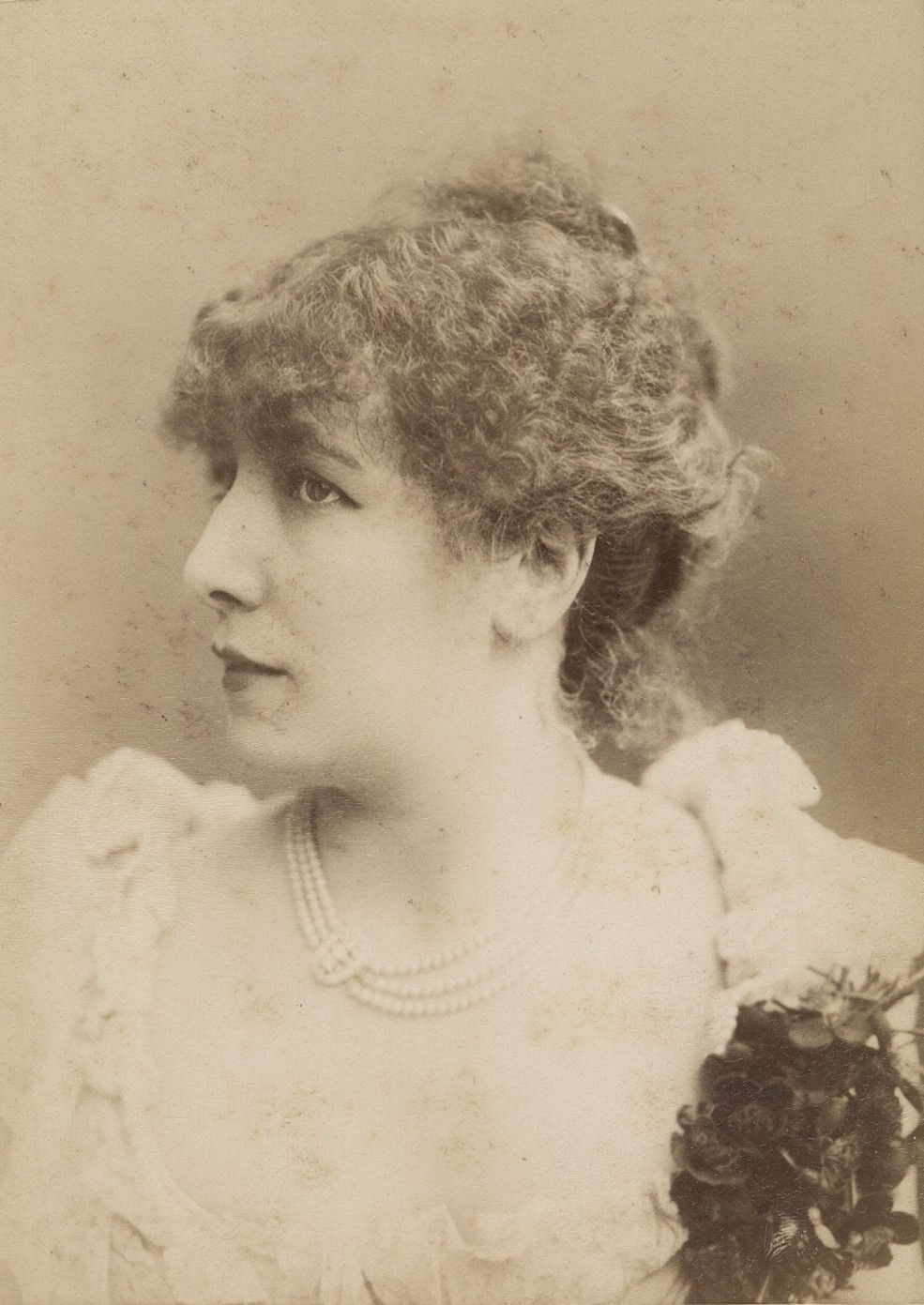
c. 1870's Sarah Bernhardt Albumen Cabinet Photograph by Nadar For Sale

When you click on links to various merchants on this site and make a purchase, this can result in this site earning a commission. Affiliate programs and affiliations include, but are not limited to, the eBay Partner Network.

c. 1870's Sarah Bernhardt Albumen Cabinet Photograph by Nadar:
$1200.00
DATE: c. 1870'sPHOTOGRAPHER: Nadar [or, Gaspard-Félix Tournachon] (see bio below)SUBJECT: Sarah Bernhardt (see bio below)PROCESS: AlbumenSIZE: Board measures 4.25" x 6.5" and mounted photo measures 4.125" x 5.75"CONDITION: See photosSHIPPING: Shipping cost is non-negotiable, please consider it when offerding/buying.COMBINED SHIPPING: Yes, I do combine shipping. Additional shipping per item is 20% of the lower shipping cost [For example, if 2 items are purchased that have a $30 and $10 shipping cost each, the combined shipping cost becomes $32 for the 2 items]. If offerding/buying more than 1 item, please wait for an invoice with combined shipping before the professional name of Gaspard-Félix Tournachon (6 April 1820 – 21 March 1910), was a French photographer, caricaturist, journalist, writer, balloonist, and entrepreneur. He was born in Paris to Victor Tournachon, a printer and publisher originally from Lyon, and Thérèse Maillet. After his father’s death, he briefly pursued medical studies in Lyon and Paris, but literature, journalism, and the artistic life of Paris proved more compelling. By about 1839 he had adopted the nickname “Nadar,” a playful alteration of his surname, and began using it as his public identity.During the 1840s Nadar became active in the Parisian satirical press as a writer and caricaturist. He contributed drawings and articles to several illustrated journals and developed a large project, the Panthéon Nadar, intended as an immense visual and biographical survey of the leading writers, artists, actors, musicians, and public figures of his time. Although he planned four large lithographic compositions containing some 1,200 caricature portraits, only the first plate was completed and published in 1854. The project was a financial disappointment but helped make his name widely known in Parisian cultural circles.Nadar entered photography in 1854, initially in connection with the work of his younger brother, Adrien Tournachon. He soon established his own studio at 113 rue Saint-Lazare, where he photographed many of the artists, writers, actors, and intellectuals he had known through journalism and caricature. A legal dispute with Adrien over the use of the name “Nadar” ended with Félix obtaining the exclusive right to use it. His portraits were distinguished by direct lighting, plain or subdued settings, and an unusual emphasis on expression and character rather than theatrical props or elaborate costume. Among the many figures associated with his studio were Charles Baudelaire, Victor Hugo, Alexandre Dumas, George Sand, Eugène Delacroix, Gustave Doré, Théophile Gautier, Sarah Bernhardt, and Jean-François Millet.In 1860 Nadar moved into a large and highly visible studio at 35 boulevard des Capucines, marked by an enormous illuminated red sign bearing his name. The premises became one of the best-known photographic establishments in Paris. He was also an important technical experimenter. He pursued photography by artificial light, producing early photographs in the Paris catacombs in 1862 and in the city’s sewers in 1865. His interest in flight led him to patent a method of aerial photography in 1858 and to become a prominent advocate of ballooning and heavier-than-air aviation. In 1863 he organized the flight of Le Géant, an enormous balloon whose voyages attracted international attention despite serious accidents and substantial financial losses.During the Siege of Paris in 1870–71, Nadar helped organize balloon services for military and postal communication with the outside world. He remained closely associated with the artistic avant-garde, and in 1874 he made his former studio on the boulevard des Capucines available for the first exhibition of the group later known as the Impressionists. In later years the commercial direction of the Nadar studio increasingly passed to his son, Paul Nadar, while Félix returned to writing, memoirs, and projects connected with photography and aviation. His memoir Quand j’étais photographe, published in 1900, offered a vivid account of nineteenth-century Paris and the development of photography. Nadar died in Paris in 1910, a few weeks before his ninetieth birthday, and remains one of the defining portrait photographers of the nineteenth Bernhardt, born Henriette-Rosine Bernard on October 22, 1844, in Paris, was a French actress whose extraordinary stage career made her one of the first internationally recognized theatrical celebrities. Raised largely away from her mother, a Dutch-born courtesan, she was educated in a convent before entering the Paris Conservatoire. In 1862 she made her debut at the Comédie-Française, but her early engagement there was brief. She developed her abilities at the Théâtre de l’Odéon, where she won major attention in such roles as Zanetto in François Coppée’s Le Passant and the Queen in Victor Hugo’s Ruy Blas.Bernhardt returned to the Comédie-Française in the 1870s and became a sociétaire in 1875. Her performances in the classical French repertory, including Racine’s Phèdre and roles in works by Corneille, Voltaire, and Victor Hugo, established her as a leading tragic actress. She combined a distinctive, highly musical voice with a stylized and intensely expressive manner of acting that suited the grand theatrical traditions of her time. Her interpretations of Marguerite Gautier in La Dame aux camélias, Fédora and Tosca in plays by Victorien Sardou, and numerous classical heroines became central to her reputation.After leaving the Comédie-Française in 1880, Bernhardt formed her own company and began extensive international tours. She performed throughout Europe, North and South America, Australia, and other parts of the world, almost always in French, and became known to audiences as “the Divine Sarah.” She was also a pioneering actress-manager, directing the Théâtre de la Renaissance in Paris from 1893 to 1899 before taking over the Théâtre des Nations, which was renamed the Théâtre Sarah-Bernhardt. Her association with artist Alphonse Mucha, whose posters for her productions became landmarks of Art Nouveau design, further enlarged her public image.Bernhardt was notable for performing male as well as female roles. Her portrayals of Hamlet and Edmond Rostand’s L’Aiglon, in which she played Napoleon II, were among the most celebrated examples. She also worked as a sculptor and painter, wrote memoirs and plays, made early sound recordings, and appeared in motion pictures, including filmed versions of Hamlet and La Tosca. After a serious injury led to the amputation of her right leg, she continued to act, often performing seated, and remained active almost until her death in Paris on March 26, 1923. Her career helped define the modern idea of the international stage star and left a lasting influence on theater, visual culture, and celebrity promotion.
|
|
Related Items:
Antique Old 19 Century C. 1870s US Artillery / Naval Short Sword Gladius $202.50

c. 1870's Two Affectionate Men Tintype Photograph GAY INTEREST $150.00
c. 1870's Three Swahili Women, Zanzibar Albumen Photograph $1200.00
|
|
|
Shopping Cart  |

|
Recently Viewed |
|
Latest Items |
|
Facebook |
Secure Websites

|
