When you click on links to various merchants on this site and make a purchase, this can result in this site earning a commission. Affiliate programs and affiliations include, but are not limited to, the eBay Partner Network.
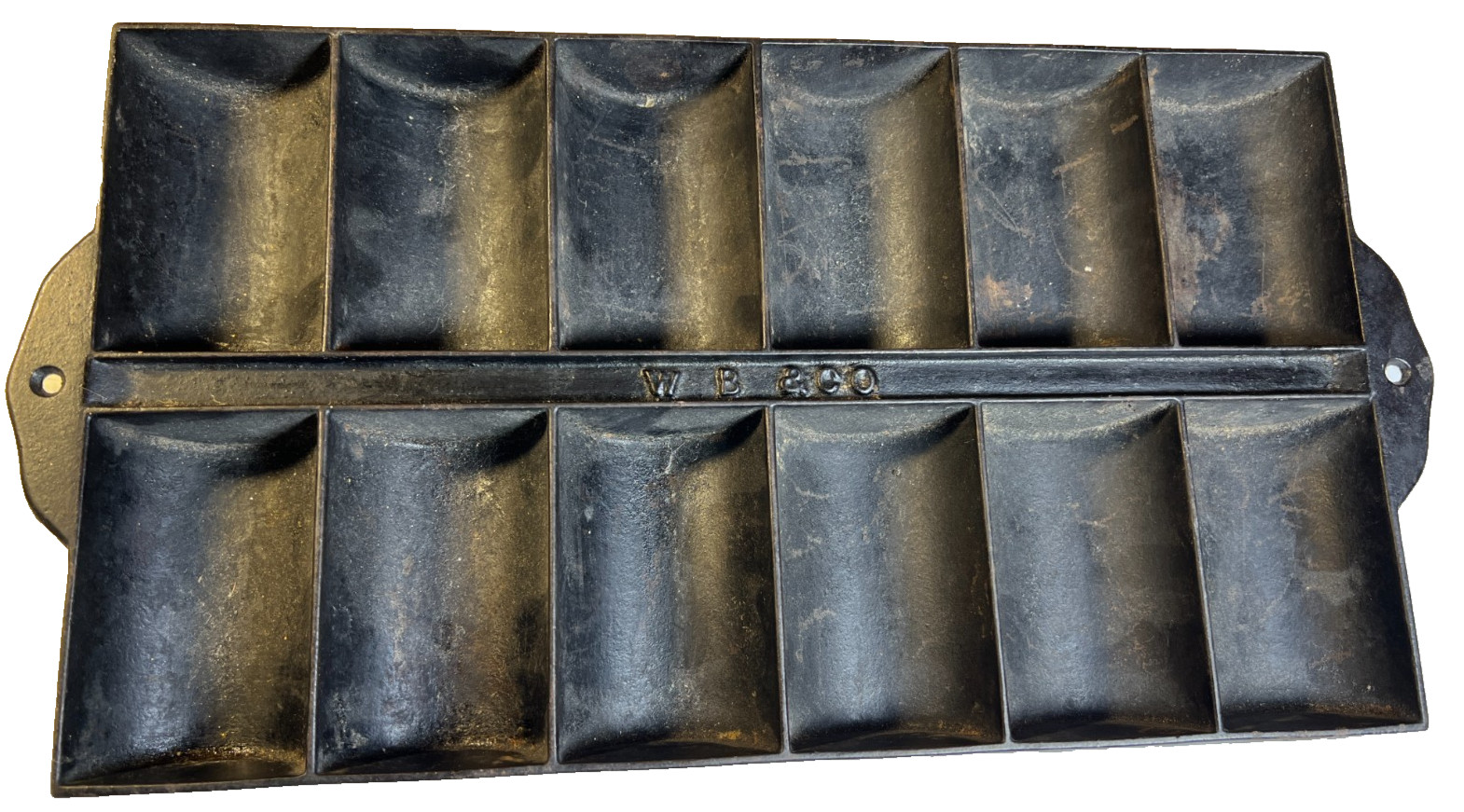
Fine W. B. & Co Antique Cast Iron Pan 1800s Bangor Maine Cream Cake French Roll!
Beautifully Thin Antique Iron - Made In Bangor, Maine
A wonderful piece of Maine kitchen history, this antique W. B. & Co. twelve-section baking pan combines practical Victorian design with exceptionally fine casting. Dating approximately to the late nineteenth century, circa 1890s, it was made by Wood, Bishop & Co. of Bangor, Maine, a regional manufacturer whose ironware served generations of New England households.
This example’s especially appealing feature is its thin, finely cast construction. Look closely at the photograph showing the edge beside a U.S. quarter: the comparison illustrates just how delicately this substantial twelve-section pan was formed. At only 4.1 pounds, it has the satisfying substance of antique iron without the cumbersome weight its size might suggest.
It is a lovely example of how refined utilitarian cast iron can be—twelve neatly formed baking compartments, slender edges, and a design that turns an everyday kitchen tool into something worth displaying.
What Would Have Been Baked In It?
Often described as a French roll pan, gem pan, or cream cake pan, this versatile form belongs to an era when small breads and individual cakes were familiar features of the breakfast and tea table.
Period cookbooks specifically called for French roll pans when making buttermilk rolls, graham rolls, and other small quick breads. Their separate compartments helped shape individual portions while exposing more of each roll to the hot iron—a delicious arrangement for anyone who appreciates a browned crust and tender center.
The possibilities extend well beyond bread:
French rolls and small dinner breads: Individual portions for serving warm with butter, preserves, soup, or supper.
Graham gems and breakfast breads: Small, hearty breads made with graham flour, sometimes sweetened with molasses.
Cornbread fingers: Convenient individual servings with plenty of browned surface.
Little sponge cakes and tea cakes: Oblong cakes that could be served plain, dusted with sugar, glazed, or dressed with fruit.
Cream-filled cakes: The rounded compartments lend themselves to little sponge-cake halves that can be paired with pastry cream or jam between them—an old-fashioned treat with a familiar cream-filled snack-cake appeal.
“Cream cake” meant different things in different kitchens and cookbooks, so the name describes one appealing use rather than a single exclusive recipe. This was the sort of adaptable pan a resourceful household could put to work for both sweet and savory baking.
The Maker — Wood, Bishop & Co., Bangor, Maine
The business behind this pan began in Providence, Rhode Island, in 1835, before moving to Bangor in 1839. The Wood, Bishop & Co. name was adopted in 1851, and the firm became an established part of Bangor’s manufacturing community.
An 1870s state industrial report records the company producing stoves, ranges, furnaces, hollowware, and other castings. Its later Clarion stoves also became a familiar Maine product.
This pan represents the smaller, more personal side of that industrial history: finely formed household ironware from a company that helped furnish and heat New England homes. For collectors of Maine-made antiques, regional foundries, or early American cookware, that Bangor connection adds considerable character.
Fine Casting & Original Foundry Details
The underside retains ground-down gate marks on several compartments. These are remnants of the casting process, where molten iron entered the mold and the attached excess was subsequently removed and dressed down.
They are manufacturing features rather than damage, and they provide an interesting glimpse of how the pan was made.
The slender casting is particularly attractive. It gives the pan a refined appearance and keeps its weight manageable while preserving the sturdy feel that makes antique cast iron so satisfying to handle.
Measurements & Condition
Size: Approximately 7½" wide × 13¼" long
Weight: 4.1 pounds
Compartments: Twelve
Material: Cast iron
Maker: W. B. & Co., attributed to Wood, Bishop & Co., Bangor, Maine
Date: Approximately late nineteenth century, circa 1890s
Condition: Beautiful seasoned condition, with no cracks and no pitting
Ground-down casting gate marks remain visible underneath some sections; please see photographs.
An uncommon and handsome piece for an antique cookware collection, a Maine country kitchen, or a baker who enjoys bringing historical forms back to the table.
At the time of listing, I have two identical examples available. I’m happy to discuss a price for the pair. This listing is for one pan.
I package extremely well and ship daily!