When you click on links to various merchants on this site and make a purchase, this can result in this site earning a commission. Affiliate programs and affiliations include, but are not limited to, the eBay Partner Network.
These printed leaflets were directed toward the local Indigenous population of New Guinea during the Pacific War. This one was created and printed by the Far Eastern Liaison Office (FELO), an Australian-led intelligence and psychological warfare unit that operated in the South West Pacific Area.
Historical Context & Purpose
Distributed by aircraft during the New Guinea campaign, this leaflet was specifically aimed at recruiting the "Police Boys" (native constabulary members) who had fled into local villages (kanakas) or the bush to escape the invading Japanese forces. As the Allies advanced and reclaimed territory, they dropped these leaflets to rebuild the local administrative police force.
Translation & Meaning
The text is written in Tok Pisin (New Guinea Pidgin):
• LUKIM NUMBA: Look at the badge (referencing the Native Constabulary uniform cap badge illustrated at the top).
• TAIM JAPAN I KUMAP, PLENTY POLISBOI I KOAIT LONG KANAKA: When Japan arrived, many police boys hid among the local villagers.
• GUT PELA PASIN: This was good behavior/conduct.
• NAU GUVMAN SIGAUT IM OL KAM PUTIM NUMBA GEN: Now the Government calls out to them all to come and put their badge back on (return to duty).
• YU KAM PAINIM MIPELA I NOGAT TROBEL: Come find us, you will not be in any trouble.
• GUVMAN I TOK: The Government speaks.
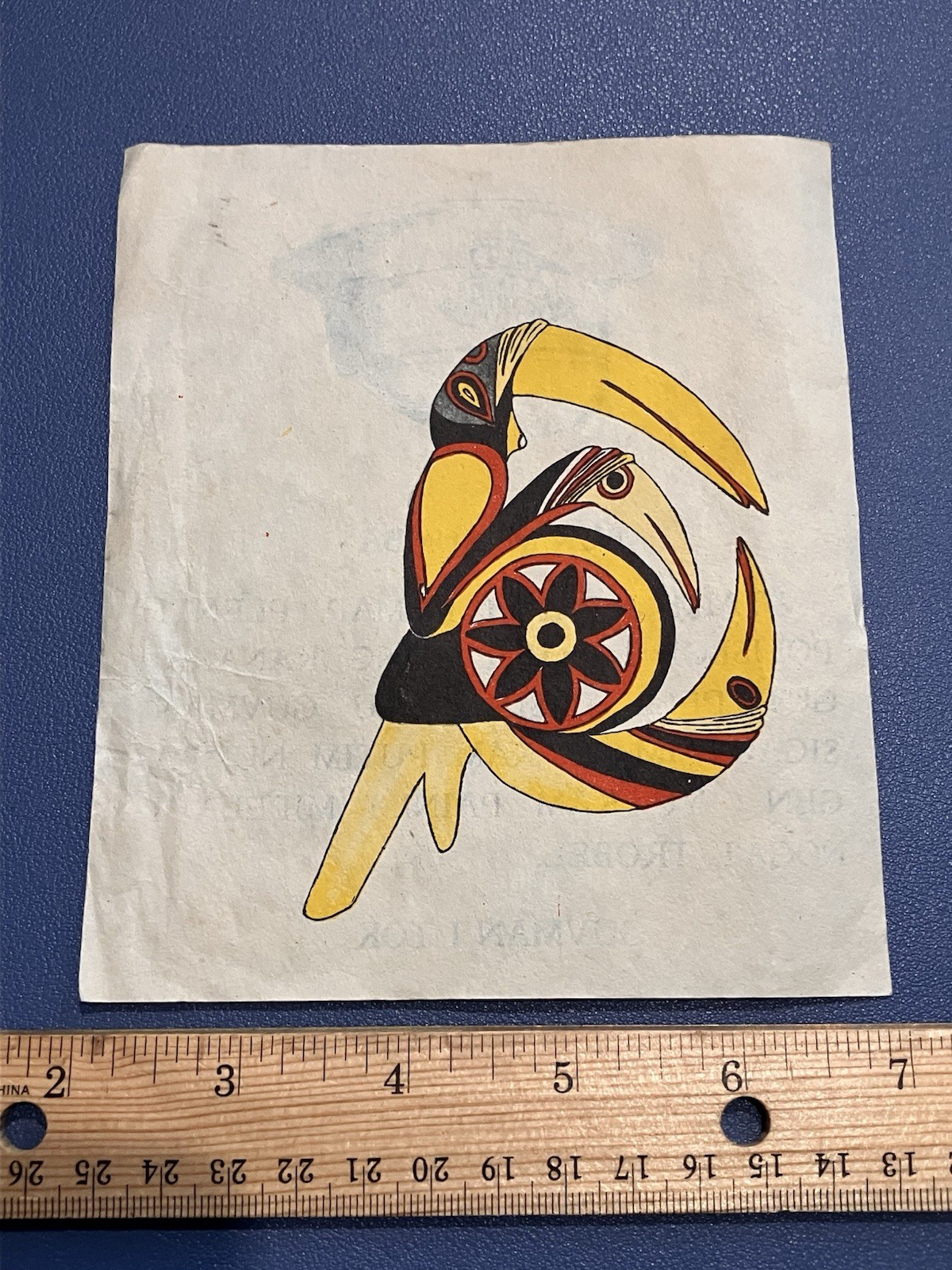
The reverse features a traditional stylized hornbill (kokomo bird) motif, a culturally significant symbol in Papua New Guinea used to capture the attention and trust of the local population.