When you click on links to various merchants on this site and make a purchase, this can result in this site earning a commission. Affiliate programs and affiliations include, but are not limited to, the eBay Partner Network.
Pressed glass, a technique developed in the mid-19th century, allowed for the mass production of decorative glassware at affordable prices. This method involved pouring molten glass into a mold and pressing it with a plunger, enabling intricate patterns and designs to be replicated efficiently. Many companies produced various household items, including bottles, jars, and tableware, using this technique, making them popular collectibles today.
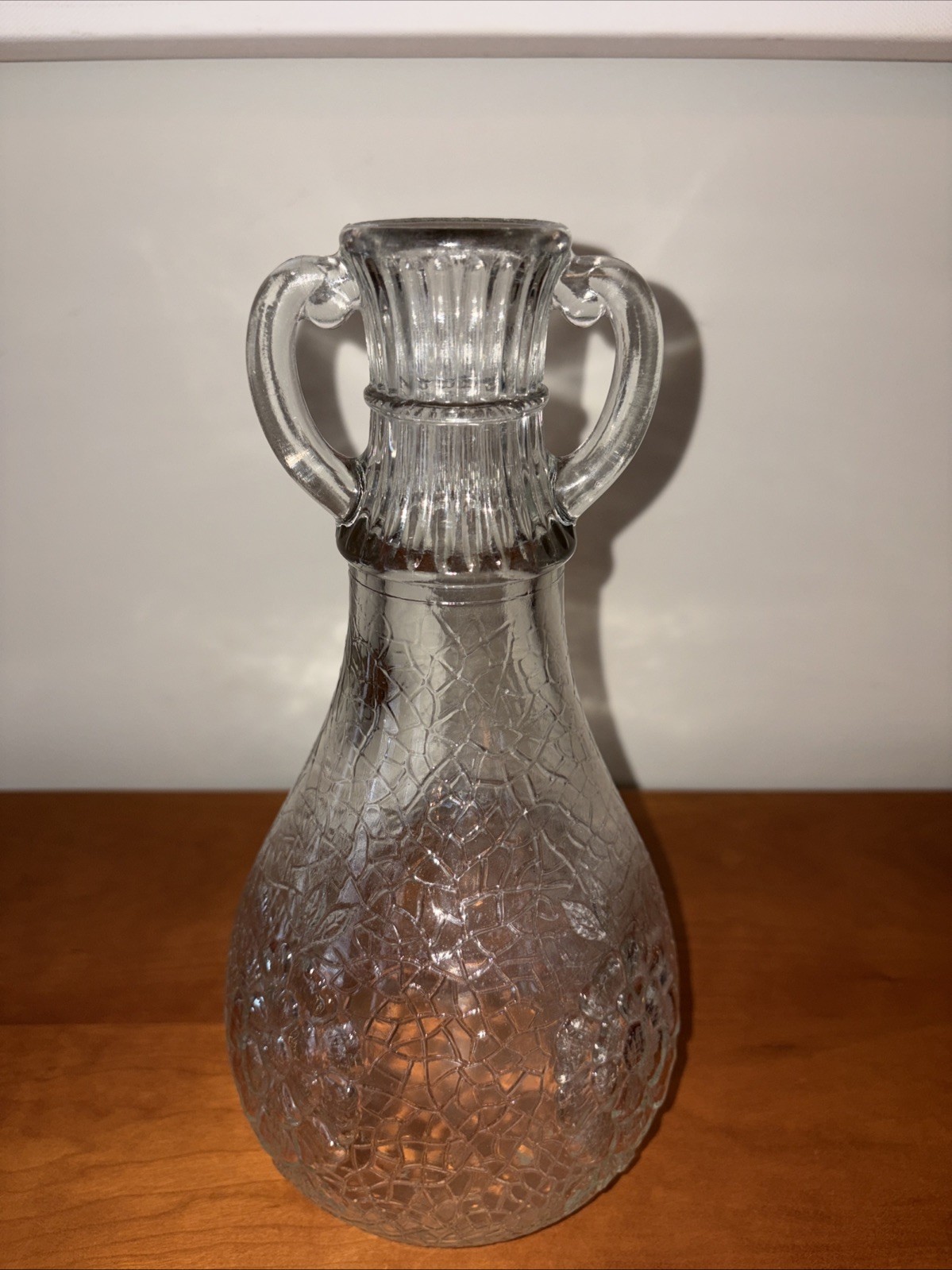
The "White House" brand of vinegar bottles, particularly those with patent numbers like 80853 and 650, were produced by various glass manufacturers in the United States during the late 19th and early 20th centuries. These bottles were designed for household use and were often decorated with embossed patterns, such as the crackled floral or cabbage rose motif seen on this example.
The patent numbers indicate specific design registrations, which were crucial for manufacturers to protect their unique molds and product designs. The "650" likely refers to a mold number or a specific design series, while "80853" is a U.S. patent number, pointing to a precise period of production and a specific design innovation. These bottles are representative of the mass-produced, yet often aesthetically pleasing, glassware common in American homes during the Victorian and Edwardian eras.
This bottle is missing its stopper. It has dual handles. It is in excellent condition. It was produced between 1900-1910 based on its patent number. It is 9.25” high and at its widest it is 4.5” in diameter. The mouth opening is 1”. It weighs 1 lb 9 oz and will be packed with care. It’s a beautiful bottle with the crackle glass, dual handles and ribbed neck. It has a total of 4 cabbage roses along the base.