When you click on links to various merchants on this site and make a purchase, this can result in this site earning a commission. Affiliate programs and affiliations include, but are not limited to, the eBay Partner Network.
Please see pictures for more details and condition
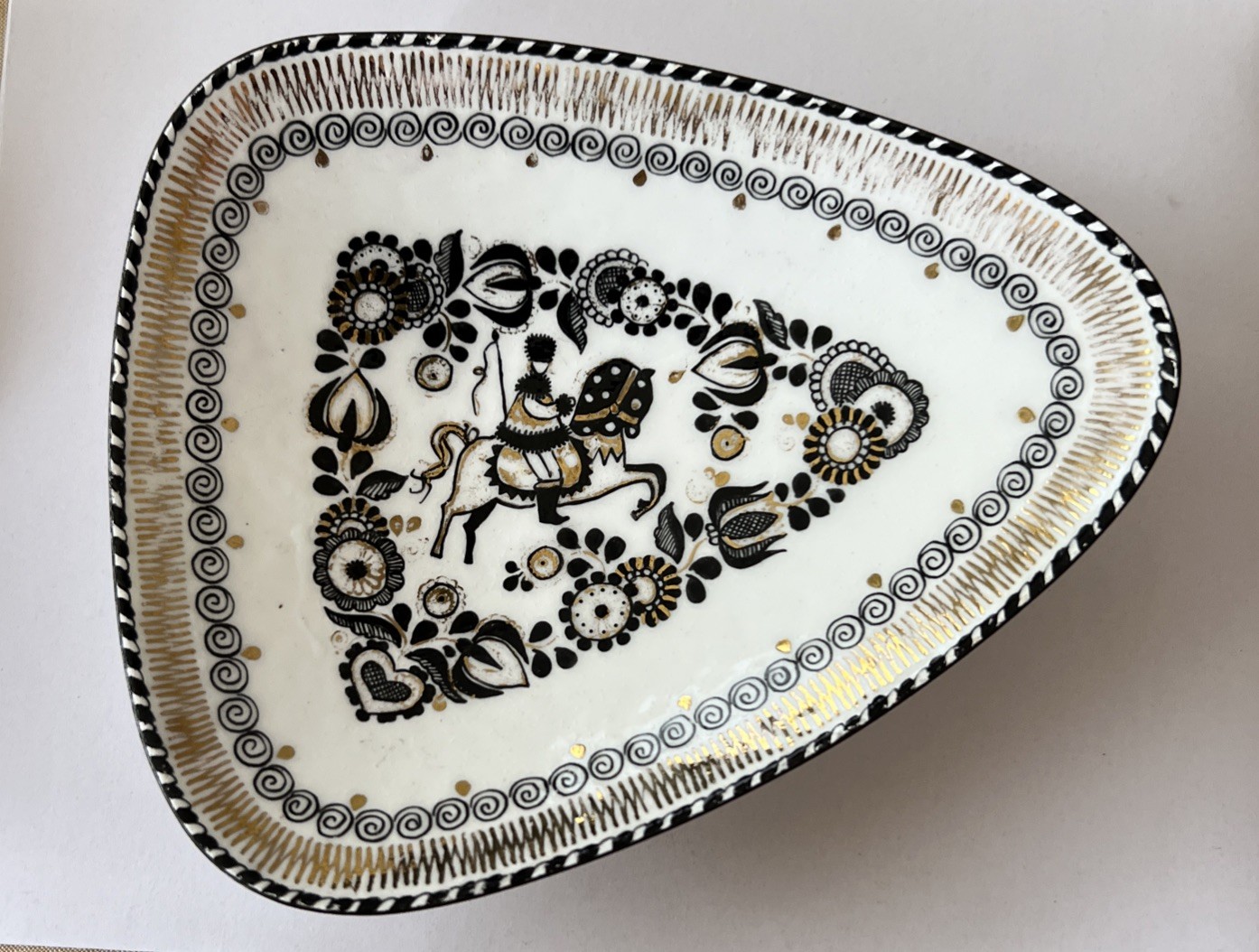
Based on the Steinbock ibex/gazelle mark and the specific black and gold figural design, your dish dates from the mid-century period, most likely between the late 1950s and the 1970s.
Chronology of Studio Steinbock
Early 1950s: The studio was founded by Hannes and Haimo Steinböck in Vienna, Austria. Early pieces from this era often feature traditional hand-painted folk motifs.
1960s – 1970s: This is the "Golden Era" for Steinbock, where they specialized in high-end, hand-painted enamel on copper and brass using 24-karat gold. Your dish’s triangular shape and graphic horse-and-rider motif are signature styles from this prime production window.
1980s – 1993: Production continued but shifted more toward combined hand-printing and hand-painting techniques. The studio eventually closed in 1993 after over 40 years of operation.
Key Dating Clues
The Mark: The stamped ibex (gazelle) on a brass base was used throughout their most successful years (1950s–1980s) to denote authentic, handmade quality.
Design Aesthetic: The stylized "Mod" look of the rider is characteristic of the 1960s Mid-Century Modern influence on European folk art.