When you click on links to various merchants on this site and make a purchase, this can result in this site earning a commission. Affiliate programs and affiliations include, but are not limited to, the eBay Partner Network.
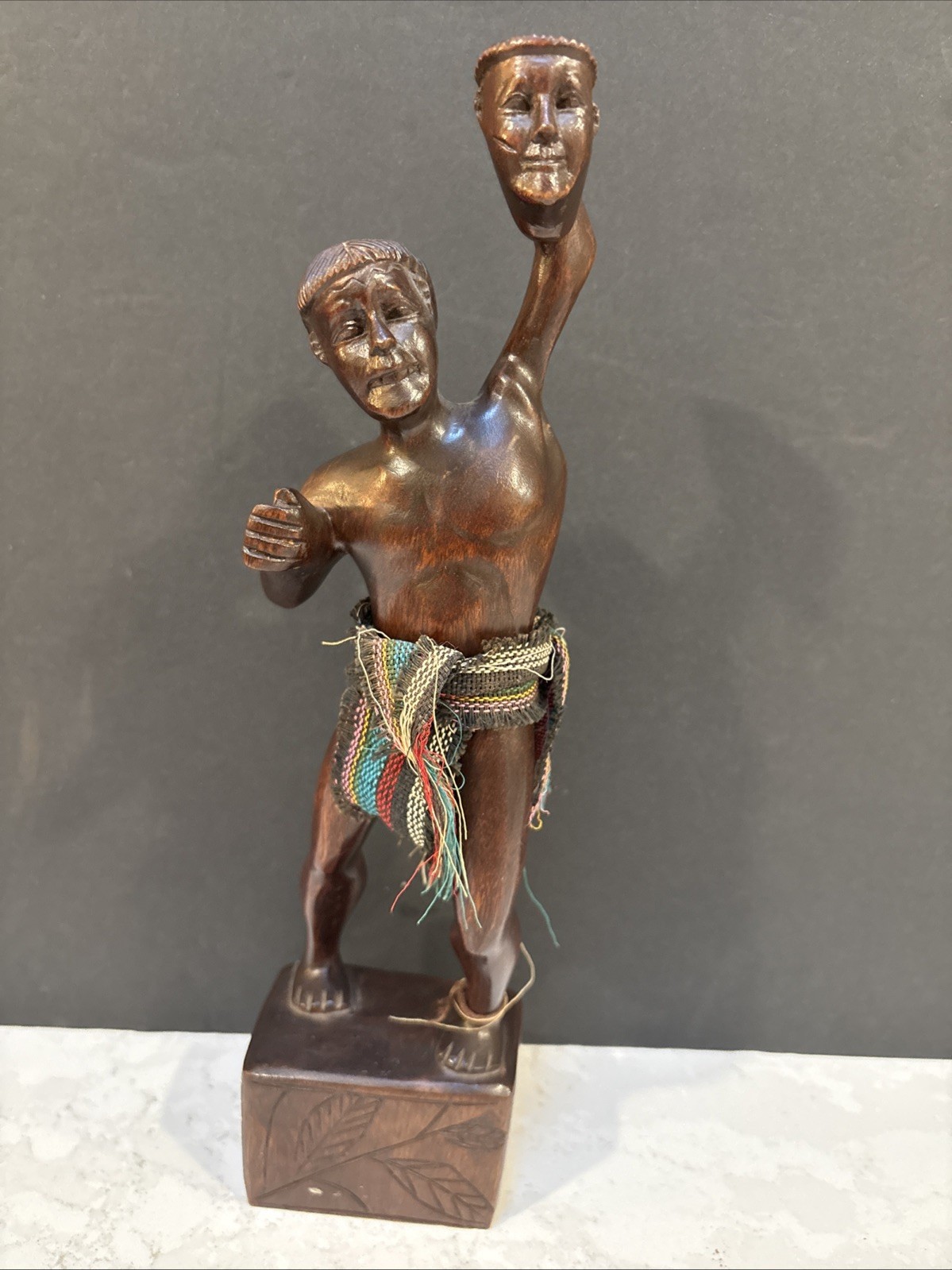
It has a finely detailed face, musculature, and traditional bowl-cut hairstyle. The figure wears its original woven striped cloth loincloth (bahag) and stands on a solid base carved with a leaf design. The rich, warm wood has a nice polished finish.
• Material: hardwood, likely narra
• Origin: Philippines
• Dimensions: approx. [height] inches tall
• Condition: vintage, pre-owned, in good condition with a lovely aged finish. The original cloth has some natural fraying.
HISTORY
It was tied to warfare, feuds between villages, and ritual. Taking a head could avenge a death, mark a young man's passage to adulthood, or be part of ceremonies believed to bring good harvests and protect the community. It was a structured cultural practice, not random violence.
It declined under American colonial rule in the early 1900s, when schools, missions, and law enforcement pushed against it, and it had mostly ended by the mid-20th century. Some groups briefly revived it against Japanese soldiers during WWII, and among the Ilongot it continued in isolated cases into the 1970s. Today these communities are known for their rice terraces, weaving, and carving.