When you click on links to various merchants on this site and make a purchase, this can result in this site earning a commission. Affiliate programs and affiliations include, but are not limited to, the eBay Partner Network.
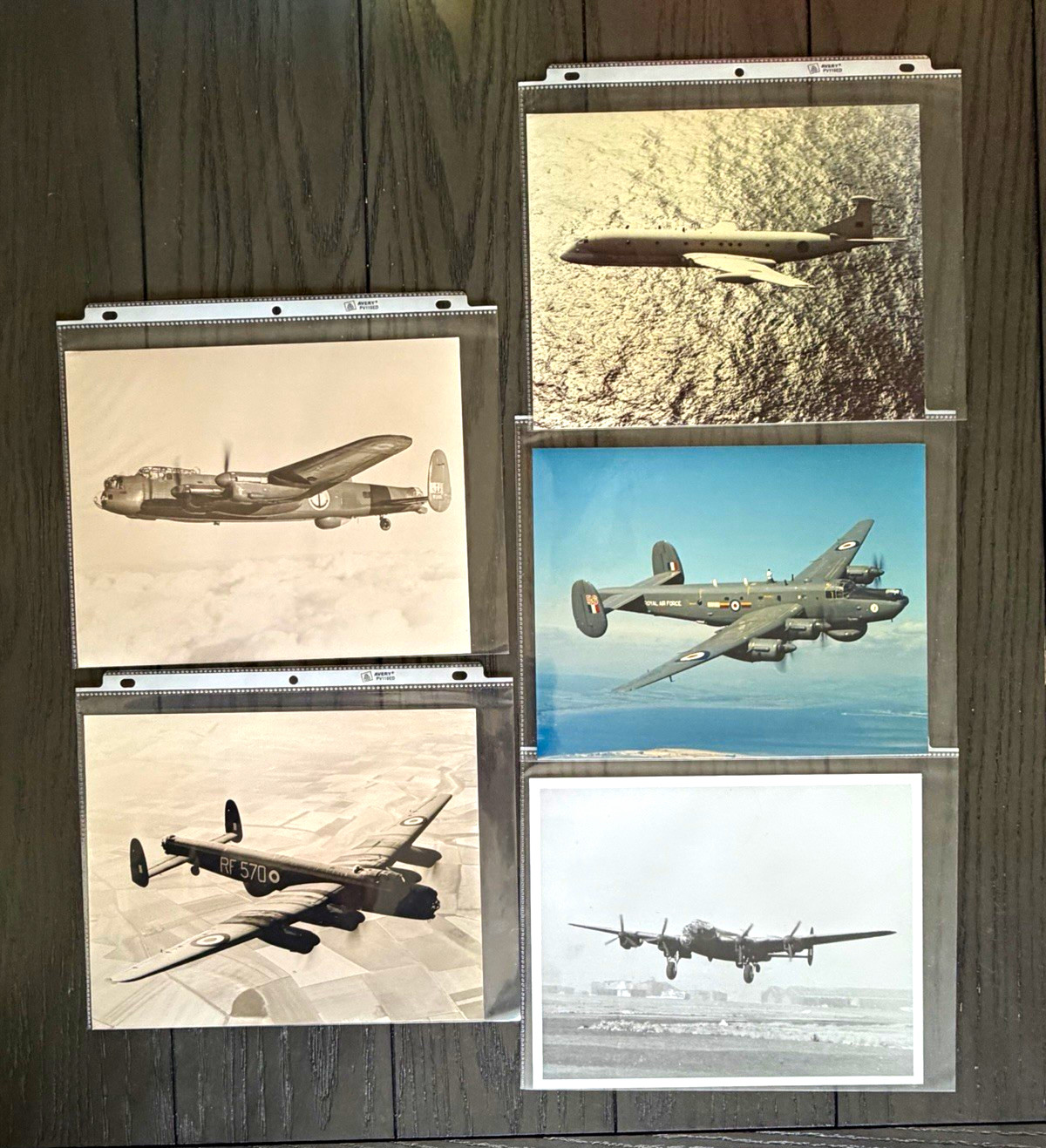
The product is a set of five vintage photo prints featuring military aircraft, specifically a Lancaster bomber. Each print comes with informational backs providing additional details about the aircraft. These collectibles offer a glimpse into aviation history and transportation used during military operations. Perfect for aviation enthusiasts or collectors interested in military aircraft from the past.These are classic British military aircraft from the Avro (later Hawker Siddeley) family, mostly related as evolutionary developments of each other:
Avro Lancaster
The iconic four-engine heavy bomber of WWII. It could carry huge bomb loads (including the 22,000 lb “Grand Slam” and the famous bouncing bombs used in the Dambusters raid). Over 7,000 were built. The photo shows a French Navy example used for air-sea rescue into the 1960s.
Avro Lincoln
A stretched, longer-range development of the Lancaster intended for the Pacific theatre. It entered service just after WWII ended and remained the RAF’s main heavy bomber until the jet “V-bombers” arrived in the 1950s. The photo shows Lincoln B.II RF570.
Avro Shackleton
A direct maritime-patrol descendant of the Lancaster/Lincoln, powered by four Rolls-Royce Griffon engines. It served from 1951 as a long-range anti-submarine and reconnaissance aircraft; the later AEW (Airborne Early Warning) versions stayed in front-line RAF service until 1991. The photo shows a Mk 2 AEW version.
Hawker Siddeley Nimrod
A jet-powered maritime reconnaissance and anti-submarine aircraft developed from the Comet airliner in the 1960s. Powered by four Rolls-Royce Spey engines, it could dash to a patrol area at high speed then loiter on two engines. It carried torpedoes, bombs, Harpoon missiles and Sidewinders. The photo shows Nimrod XZ284.
(The fifth photo appears to be another view of one of the above propeller types, most likely a Lancaster or Lincoln.)