When you click on links to various merchants on this site and make a purchase, this can result in this site earning a commission. Affiliate programs and affiliations include, but are not limited to, the eBay Partner Network.
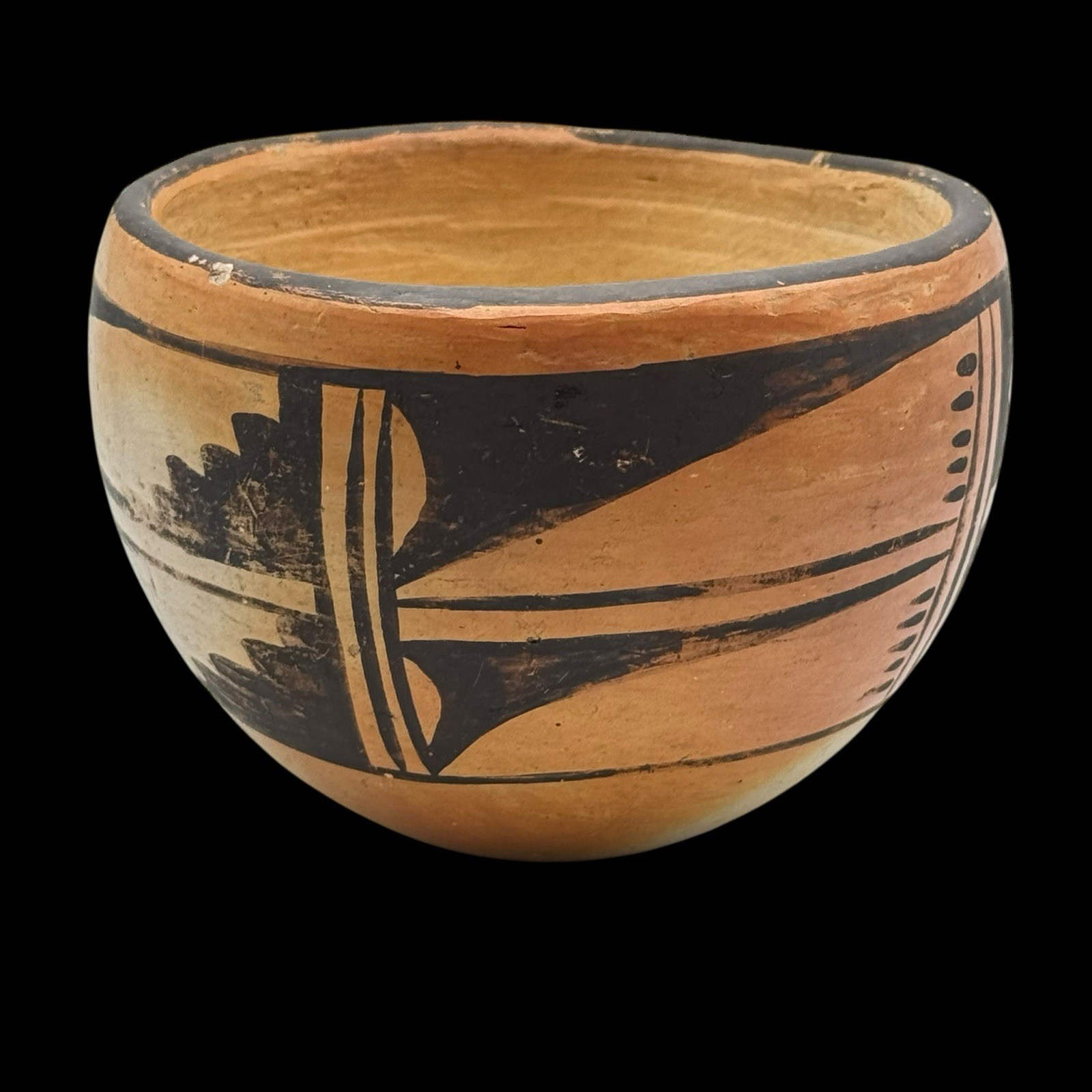
This beautifully handcrafted Hopi polychrome pottery bowl is signed “B S” on the base, attributed to Beth Sakeva, a Hopi-Tewa potter known for her work in the Sikyatki Revival tradition. The bowl showcases a harmonious balance of traditional design and personal artistry, exemplifying the continuation of ancestral Hopi techniques.
Featuring a hemispherical form with a slightly rounded rim, the exterior is decorated in bold black-on-tan geometric and feather motifs over a warm, orange-buff slip. The linear and stepped designs echo ancient Sikyatki influences, while the crisp execution reflects Sakeva’s distinctive style and attention to form.
This signed piece offers both cultural significance and collector value—ideal for enthusiasts of Native American pottery or Southwestern fine art.
Artist Profile: Beth Sakeva (Hopi-Tewa Potter)
Beth Sakeva is a contemporary Hopi-Tewa potter recognized for her adherence to traditional pottery methods and her contributions to the Sikyatki Revival style. Working from the Hopi Mesas in northeastern Arizona, Sakeva belongs to a lineage of potters who uphold the techniques of hand-coiling, natural clay gathering, and open-pit firing—methods that date back centuries.
Her pottery is characterized by:
Bold geometric and symbolic designs, often inspired by ancient Sikyatki ware (c. 1300–1600 CE)
Fine linework and symmetrical balance
Use of traditional pigments made from natural minerals and plant-based binders
Frequent motifs such as feathers, stepped clouds, kiva steps, and stylized birds, evoking ceremonial and ancestral themes
Sakeva's initials “B S” are typically hand-inscribed on the base of her work. While not as widely commercialized as some Hopi potters, her pieces are appreciated in private collections for their authenticity, craftsmanship, and cultural continuity.
She is part of the broader Hopi-Tewa pottery tradition shaped by matrilineal transmission of skills and cultural storytelling through form and design. Her work resonates with collectors who value traditional methods and the quiet elegance of utilitarian ceremonial forms.