When you click on links to various merchants on this site and make a purchase, this can result in this site earning a commission. Affiliate programs and affiliations include, but are not limited to, the eBay Partner Network.
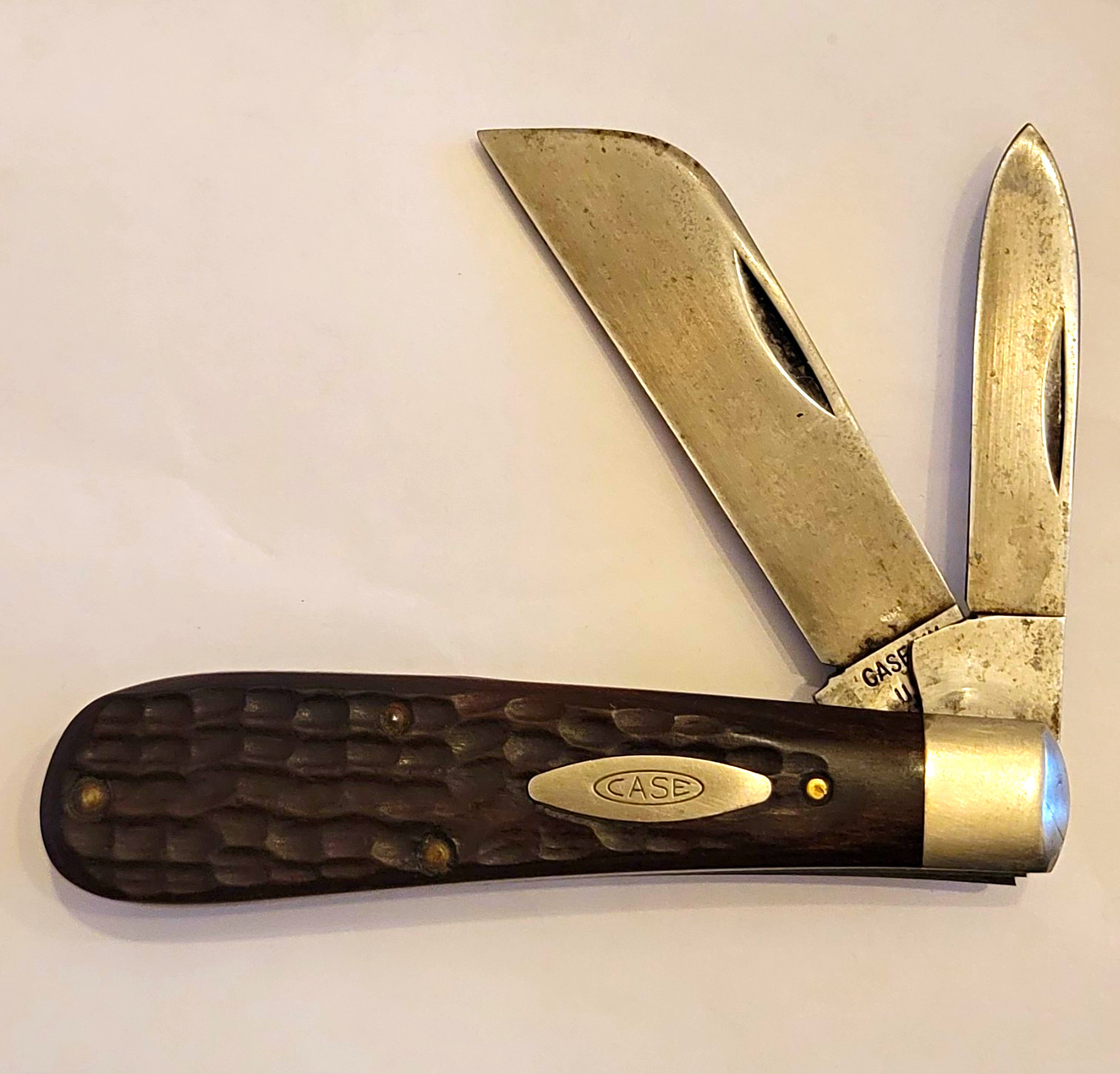
• Based on the identifier 4217 paired with a "CASE XX USA" stamp with no dots, you have a specific variant of the Case XX 6217 "Loom Fixer" / Curved Jack pattern.
The layout of Case model numbers explains its physical build:
• 4: Indicates Synthetic / Composite handle material (such as dark pakkawood, celluloid, or delrin).
• 2: Confirms a 2-blade configuration.
• 17: Designates the Loom Fixer (Curved Jack) pattern style. Drivers: The • show authentic vintage tarnish and pocket wear, but they appear full without aggressive grinding, and the synthetic handles lack visible chips or hairline splits. Keeping the knife original—without heavy polishing or mechanical sanding—preserves its historical appeal to traditional knife collectors.
The Blade Configurations & Original PurposeYour 1970 Case 4217 is structurally a "Curved Jack" pattern, historically nicknamed the "Loom Fixer." In the textile mills of New England, workers ("loom fixers") who maintained large weaving machinery needed specific blades for maintenance tasks:
• The Master Blade (Sheepsfoot): This is the large, flat-edged blade featuring a straight cutting edge and a abruptly curved spine. Its primary design purpose is safety and control. Because it lacks a sharp, piercing point, it allowed textile workers to reach aggressively into heavy machinery to cut tangled threads, canvas, or drive belts without accidentally puncturing their own hands or slicing adjacent fabrics.
• The Secondary Blade (Pen Blade): This smaller, versatile blade is designed for lighter precision cutting. In mill work, it was often used for scraping debris out of machine gears, scoring materials, or performing clean-up cuts on delicate cords.