When you click on links to various merchants on this site and make a purchase, this can result in this site earning a commission. Affiliate programs and affiliations include, but are not limited to, the eBay Partner Network.
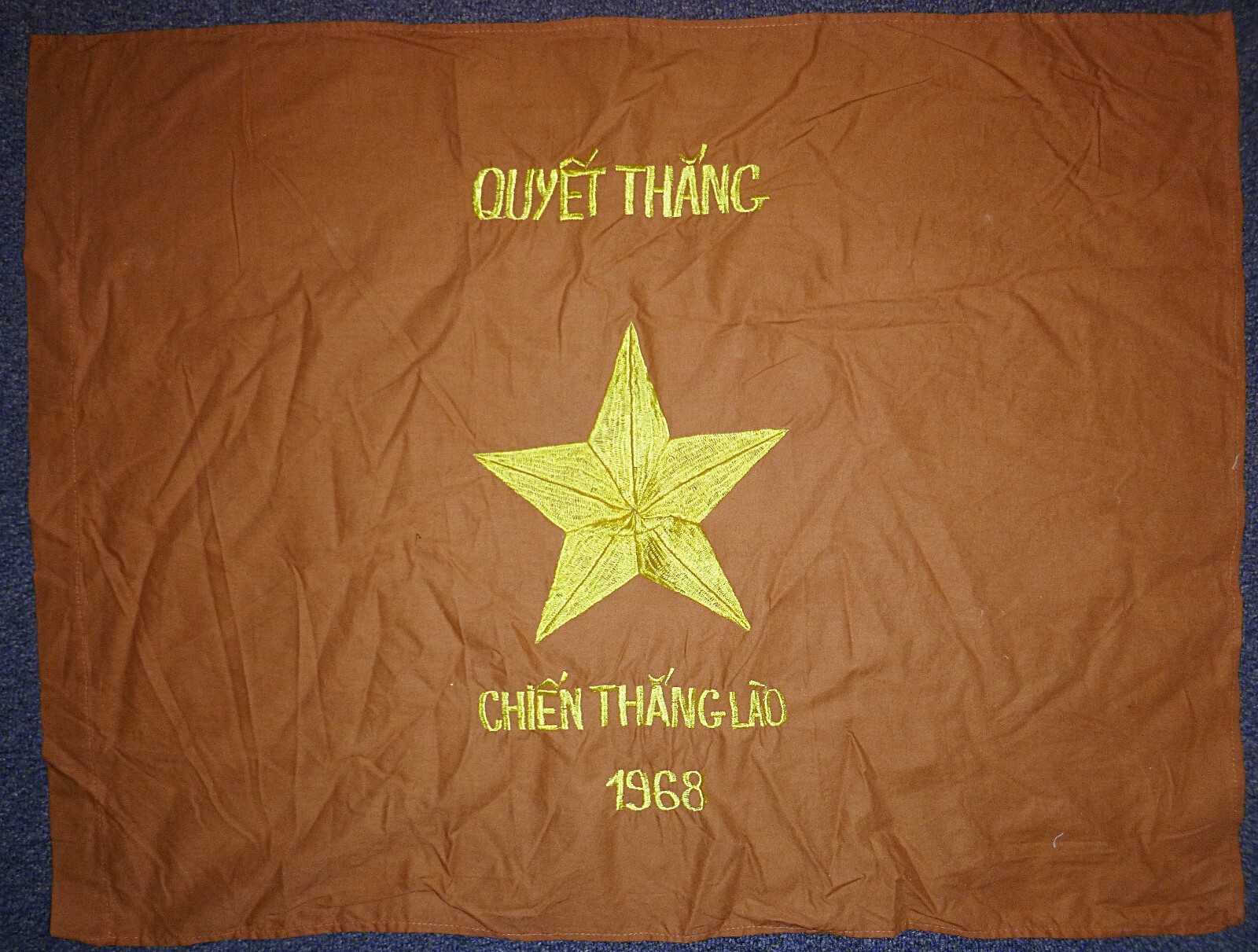
Rare North Vietnam Army - Flag - Car Flag - VC - Viet Cong
Measures - 29 x 21inches ( 75 x 54 cms )
Excellent Piece - Viet Cong
1974 Quyet Thang - Victory Flag
Note: Flag has been professionally cleaned and is ready for use, hanging, framing etc.
Viet Cong - Car Flag- House Flag - Battle Flag
NVA - VC - Large - Viet Cong
Measures - 29 x 21inches ( 75 x 54 cms )
Excellent Piece - Viet Cong
The Vietnam War in 1974 was a crucial period leading up to the end of the conflict in 1975. The situation in South Vietnam was increasingly precarious, and the North Vietnamese forces were positioning themselves for a final offensive. Several key events and developments defined this year:
Key Events and Developments in 1974:
Paris Peace Accords (1973):
- The Paris Peace Accords, signed in January 1973, led to a ceasefire and the withdrawal of U.S. combat troops. However, the agreement did not lead to a lasting peace, and fighting between North and South Vietnamese forces continued.
- The accords included provisions for a ceasefire, the release of prisoners of war, and the establishment of a National Council of Reconciliation to oversee political settlement.
U.S. Withdrawal:
- By 1974, almost all U.S. combat troops had left Vietnam, though some military advisors and support personnel remained.
- U.S. financial and military aid to South Vietnam continued but was increasingly constrained by political opposition in the U.S. Congress.
Declining Morale and Resources:
- The South Vietnamese Army (ARVN) faced declining morale, logistical challenges, and shortages of ammunition and supplies due to reduced U.S. aid.
- Corruption and inefficiency within the South Vietnamese government and military further weakened their ability to resist North Vietnamese advances.
NVA Build-up:
- The North Vietnamese Army (NVA) used 1974 to build up their forces and logistics in preparation for a final offensive. They increased infiltration and supply routes through the Ho Chi Minh Trail.
- The NVA conducted probing attacks and small-scale offensives to test ARVN defenses and gain strategic positions.
Battle of Phước Long (December 1974 - January 1975):
- The Battle of Phước Long marked the first major test of the ARVN without substantial U.S. support. The NVA launched a major offensive against Phước Long Province, northeast of Saigon.
- Despite calls for assistance, the U.S. did not intervene significantly. The fall of Phước Long to the NVA in early January 1975 demonstrated the vulnerability of South Vietnamese forces and the reluctance of the U.S. to re-engage militarily.
Economic Crisis:
- South Vietnam faced severe economic problems, including inflation, unemployment, and declining revenues. The war had devastated much of the country's infrastructure and economy.
- The reduction in U.S. financial aid exacerbated these problems, leading to widespread hardship and discontent.
Political Instability:
- President Nguyễn Văn Thiệu of South Vietnam struggled to maintain political stability and public support. His government was criticized for corruption and inefficiency.
- Internal political divisions and opposition weakened the South Vietnamese government's ability to present a united front against the North.
Détente and U.S. Policy:
- The global context of détente between the U.S. and the Soviet Union, as well as the Watergate scandal and subsequent resignation of President Richard Nixon, influenced U.S. policy in Vietnam.
- President Gerald Ford, who succeeded Nixon in August 1974, faced significant domestic opposition to further U.S. military involvement in Vietnam.
Support from Communist Allies:
- North Vietnam continued to receive substantial support from its communist allies, including the Soviet Union and China. This support included military equipment, supplies, and financial aid.
The Vietnam War in 1974 was characterized by a continued struggle between North and South Vietnam, despite the formal ceasefire agreement from the previous year's Paris Peace Accords. The ARVN faced mounting challenges as U.S. support waned, while the NVA prepared for a decisive final offensive. The fall of Phước Long in early 1975 highlighted the dire situation for South Vietnam and set the stage for the eventual fall of Saigon and the end of the war in April 1975.