When you click on links to various merchants on this site and make a purchase, this can result in this site earning a commission. Affiliate programs and affiliations include, but are not limited to, the eBay Partner Network.
No damage
Excellent condition
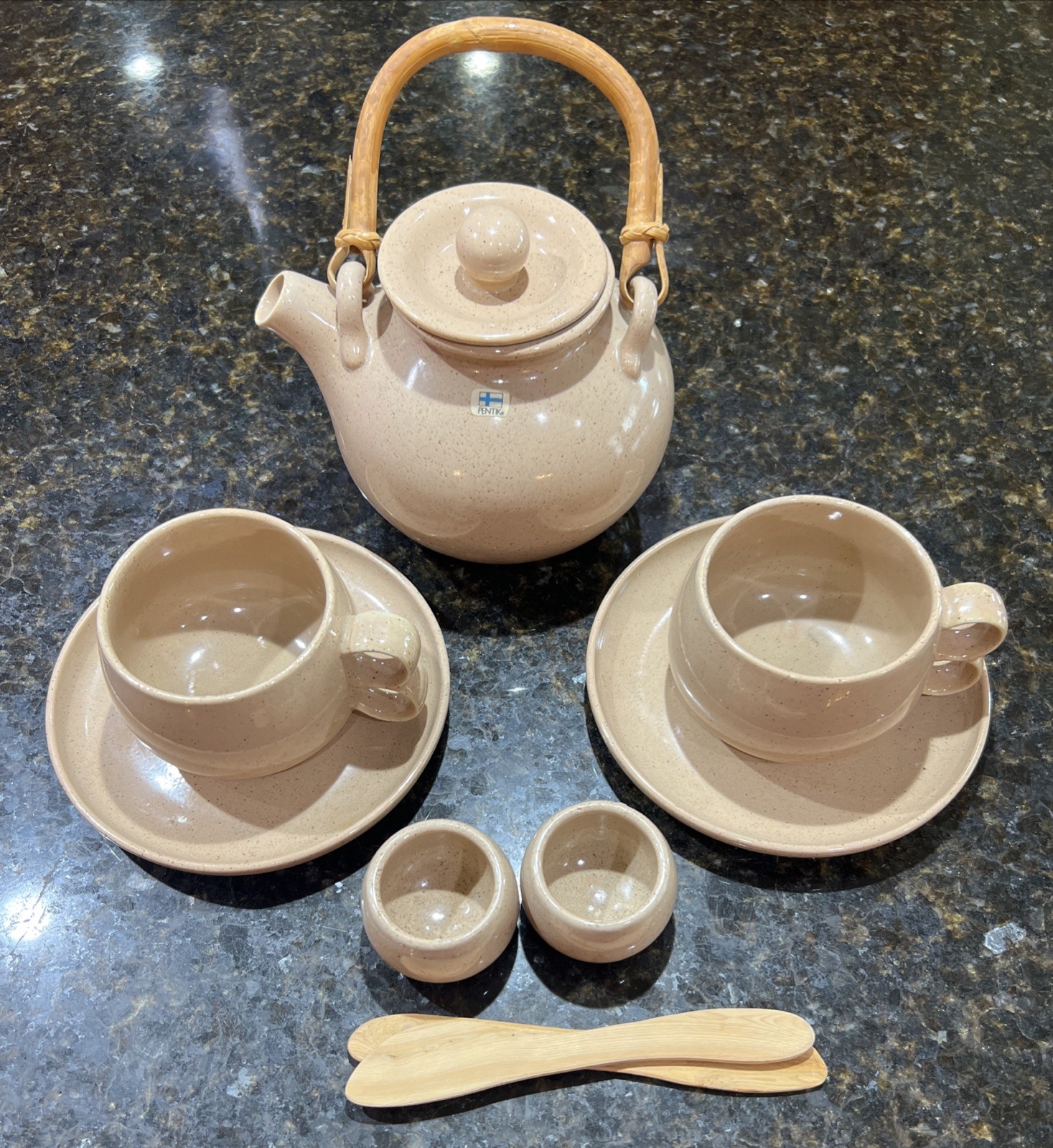
1974 Pentik "Halla" stoneware tea set. Designed by Peter Winquist in the 1970s and manufactured in Posio, Finland, the series is famous for its "dotted ceramic" finish
The "Halla" series is one of the most culturally significant and iconic early lines produced by Pentik. It serves as a prime example of mid-century Finnish functionalism mixed with Arctic regionalism.
Origins and Concept
The line was launched in 1974 and remained in production until the late 1980s. The word Halla translates to "frost in the fields" or "night frost" in Finnish. This poetic name directly reflects the harsh, beautiful winter landscapes surrounding the factory.
The series was a collaborative effort between two notable designers:
Peter Winquist: Designed the signature speckled decoration and glaze style.
Risto Paatero: Designed the physical, rounded ceramic forms.The The World's Northernmost Ceramic Factory
Pentik's factory is located in Posio, Finland, sitting just a fraction of a degree south of the Arctic Circle. This makes it the northernmost ceramic factory in the entire world. Because of this extreme location, the factory relied on local raw materials, imbuing their clay with regional traits that regular European stoneware lacked.
The Story Behind the GlazeWhile the distinctive brown-speckled "egg-shell" pattern became the signature mark of the line, local design history notes that the pattern originally occurred somewhat by chance due to a chemical variance in an early batch of glaze.
Legendary Finnish designer Kaj Franck visited the Posio studio, saw the iron-flecked misfire, and advised the team to lean into it. He suggested deliberately introducing extra iron into the clay mix to highlight the spots as an authentic, rugged regional characteristic.
Design PhilosophyTactile Minimalism:
The stoneware is incredibly durable, thick, and heavy, designed to withstand daily use while maintaining heat exceptionally well in freezing northern climates.
Organic Modernism:
The pieces feature smooth, rounded edges and clean silhouettes that bridge the gap between industrial manufacturing and handmade studio pottery