When you click on links to various merchants on this site and make a purchase, this can result in this site earning a commission. Affiliate programs and affiliations include, but are not limited to, the eBay Partner Network.
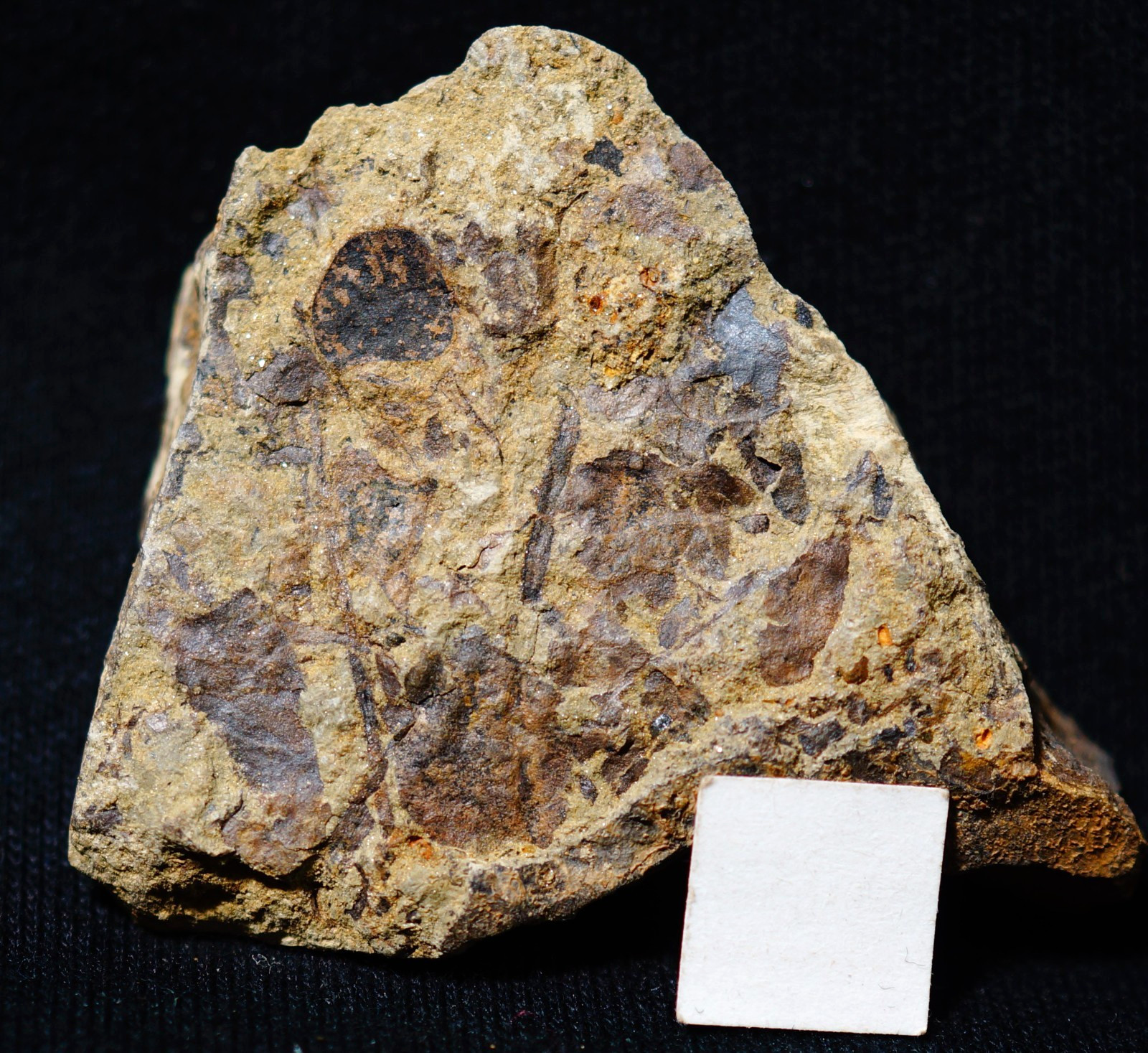
Specimen:Veryrare , museum quality big Cooksonia caledonica Edwards 1970preserved with
perfect bigsporangium one of theoldests know Silurian fossil land plant ! 100% natural not prepared fossil specimen!
Locality: Poland , Holly Cross Mountains , Kielce area - datailed data will add to package
Stratigraphy: Upper Silurian, ( Ludlowian / Pridolian )
Age:ca. 422 / 423 Mya
Matrix size :ca. 4,0 x 4,0 x 1,0 cm ( white square on picturesis 1,0 x 1,0 cm) Plant is ca 26 mm long !
Veryrare , museum quality detailed specimen of oldests know Silurian fossil land plant :
Cooksonia caledonicaEdwards1970unusualy big specimen with perfectly preserved sporangium !
The most famous Silurian land plant is a small creature sized up to a couple of centimeters, namedCooksonia. It is not only the best-known plant, but up to now also the oldest one. FindingCooksonia-fossils is difficult because only a few occurrences are known (marine, delta of river deposits from the Late Silurian and the earliest Devonian). The small size of the plant is also a disadvantage for finding. A rather complete plant is very rare.Cooksoniais an extinct grouping of primitive land plants. The earliestCooksoniadate from the middle of the Silurian (the Wenlock epoch) the group continued to be an important component of the flora until the end of the Early Devonian, a total time span of 433to393 million years ago. WhileCooksoniafossils are distributed globally, most type specimens come from Britain, where they were first discovered in 1937.Cooksoniaincludes the oldest known plant to have a stem with vascular tissue and is thus a transitional form between the primitive non-vascular bryophytes and the vascular plants.Cooksoniaspecimens occur in a range of sizes, and vary in stem width from about 0.03mm to 3mm. Specimens of different sizes were probably different species, not fragments of larger organisms: fossils occur in consistent size groupings, and sporangia and spore details are different in organisms of different sizes. The organisms probably exhibited determinate growth (i.e. stems did not grow further after producing sporangia).