When you click on links to various merchants on this site and make a purchase, this can result in this site earning a commission. Affiliate programs and affiliations include, but are not limited to, the eBay Partner Network.
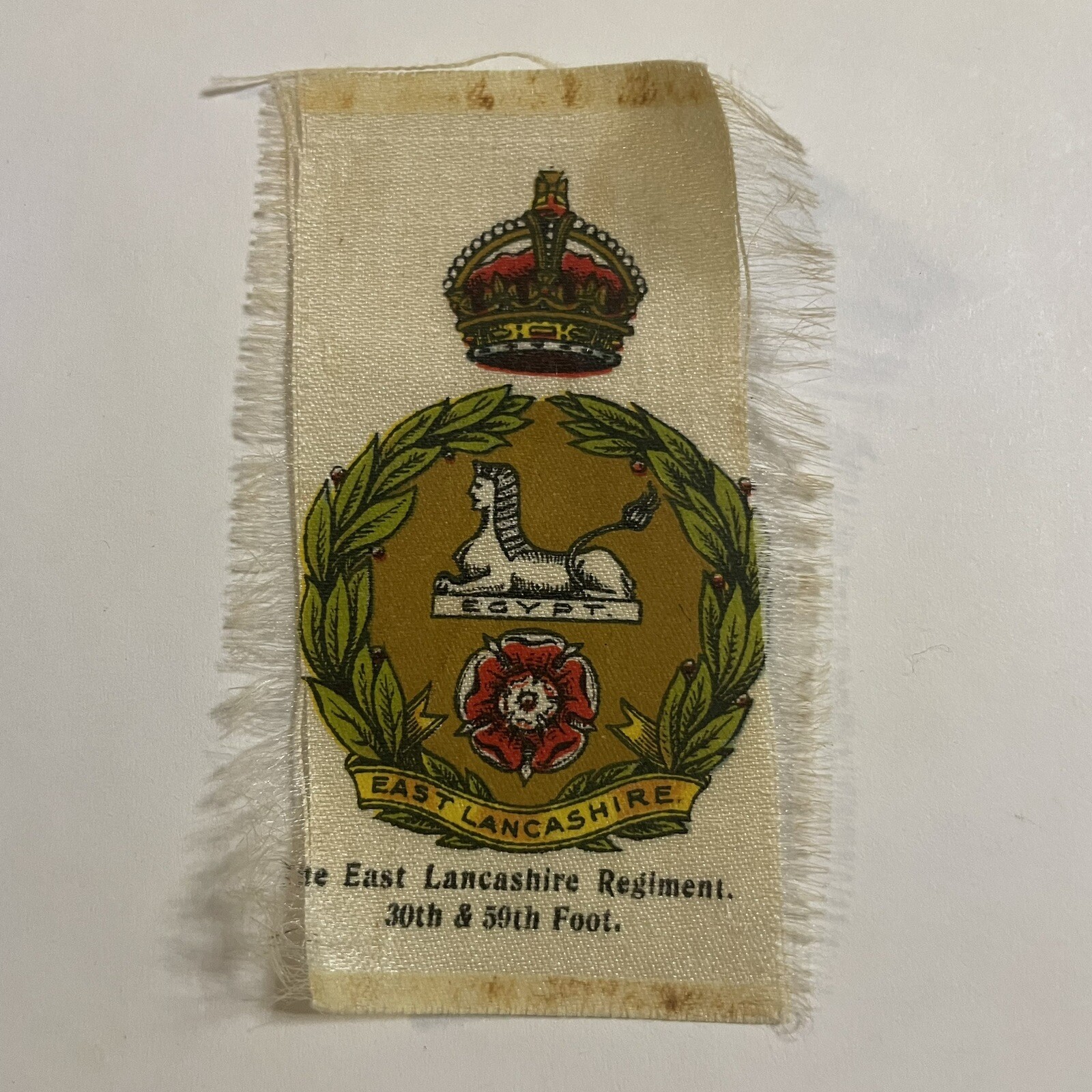
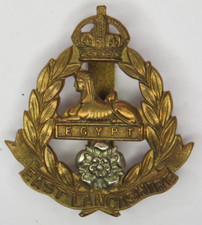
The East Lancashire Regiment was, from 1881 to 1958, a line infantry regiment of the British Army. The regiment was formed in 1881 under the Childers Reforms by the amalgamation of the 30th (Cambridgeshire) Regiment of Foot and 59th (2nd Nottinghamshire) Regiment of Foot with the militia and rifle volunteer units of eastern Lancashire.[1] In 1958 the regiment was amalgamated with the South Lancashire Regiment to form the Lancashire Regiment which was, in 1970, merged with the Loyal Regiment (North Lancashire) to form the Queen's Lancashire Regiment. In 2006, the Queen's Lancashire was further amalgamated with the King's Own Royal Border Regiment and the King's Regiment (Liverpool and Manchester) to form the present Duke of Lancaster's Regiment (King's, Lancashire and Border).
The 1st Battalion was formed from the 30th (Cambridgeshire) Regiment of Foot (raised in 1702) and the 2nd Battalion from the 59th (2nd Nottinghamshire) Regiment of Foot (raised 1755) and the regiment was renamed the East Lancashire Regiment in July 1881.
Under the system introduced in 1881, one battalion of each infantry regiment was to serve at a home station while the other was in a foreign garrison or on active service. Due to the emergency caused by the outbreak of war in South Africa in 1899 most home service battalions were dispatched to the conflict. The 1st East Lancashire Regiment arrived at Cape Town in early February 1900, and remained posted in South Africa until after the war ended, leaving Cape Two again in November 1902
Silk measure approximate 1-1/2” x 2-3/4”
History of tobacco silks In Cigarette packs;
Originally issued in American cigarette packets between 1905 and 1917, these ‘giveaways’ proved a very popular promotional item which was taken up by twenty British tobacco manufacturers at the advent of the First World War (1914). Silk cigarette inserts continued to be issued following paper restrictions announced by the government in 1917, but had faded out by the mid-1920s, except for a small resurgence in 1933-4. The subjects included religion, cricket, football, art, flags, army and naval badges, flowers, and clan tartans. Silk inserts were an adaptation of the popular cigarette cards. In North America between 1900 and 1936 silk cigarette cards, or inserts, were produced by tobacco companies as calculated promotional giveaways for men to pass on to women.