When you click on links to various merchants on this site and make a purchase, this can result in this site earning a commission. Affiliate programs and affiliations include, but are not limited to, the eBay Partner Network.
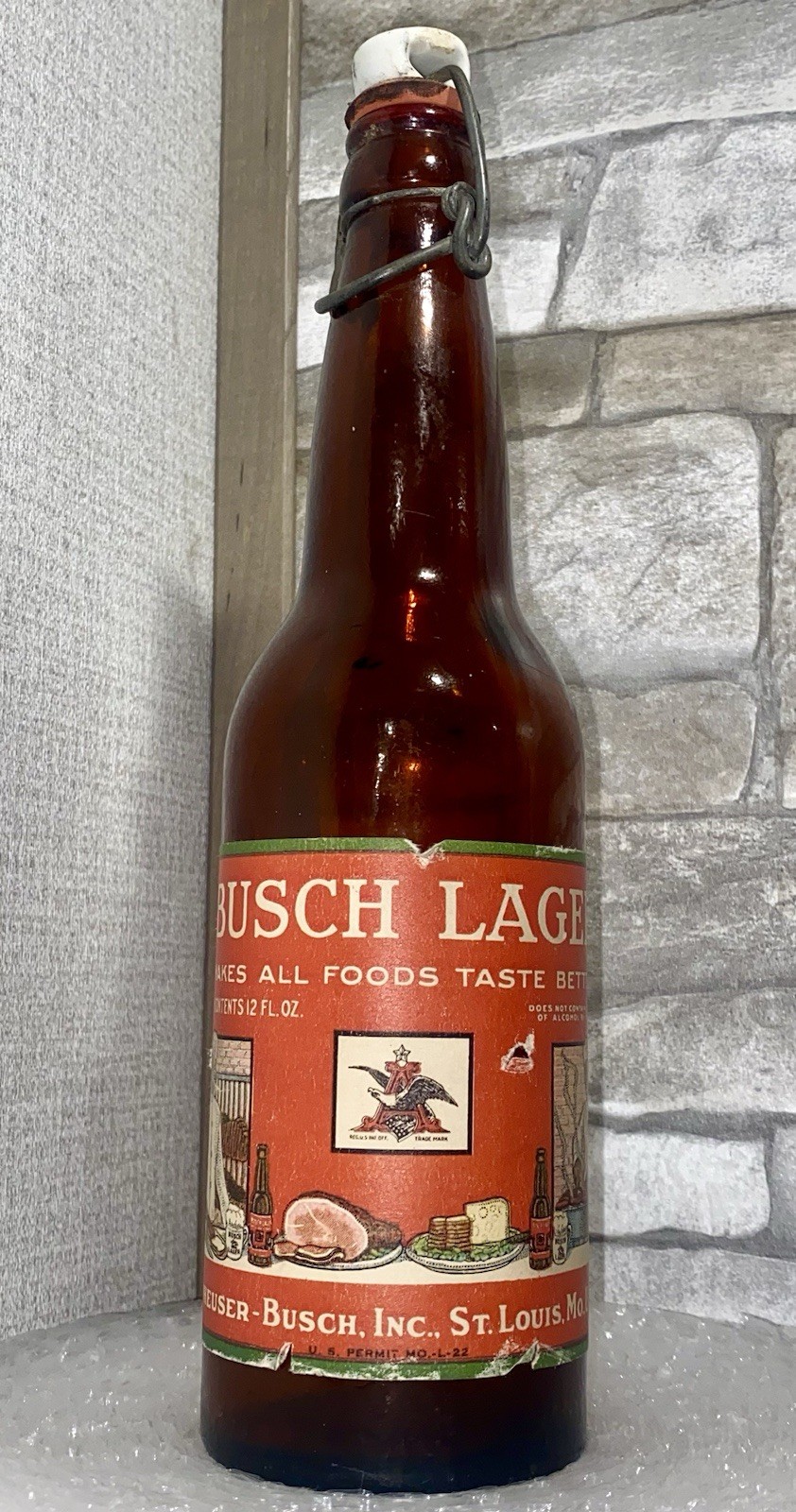
Featured is a scarce Busch Lager Beer bottle from Anheuser-Busch, Inc. (St. Louis, Mo.) dating from the 1919 / 1920’s Prohibition era.
Key Details from the Bottle Label:
• Product: Busch Lager Beer ("Makes All Foods Taste Better")
• Contents & Alcohol Statement: Minimum contents 12 fl. oz., stating "Does not contain 1/2 of 1% of alcohol by volume" as a cereal/near-beer beverage produced during early Prohibition.
• Imagery: Features the classic Anheuser-Busch eagle-in-A logo flanked by two chefs/servers preparing food with bottles of Busch Lager.
This specific Prohibition-era label would have been placed on a standard 12-ounce amber (brown) glass "export" style beer bottle with a crown cap finish.
Collector listings and historical archives of intact specimens from WorthPoint reveal several specific physical traits of the bottle used for this exact "near beer" run:
• The Glass Type: Made of thick, heavy amber glass designed to protect the non-alcoholic cereal beverage from light spoilage.
• The Bottle Shape: It featured a classic export style profile (roughly 9⅜ inches tall)—characterized by a distinct bulbed neck, a sloping shoulder, and a cylindrical body. This is very similar to the longneck profiles seen today but made with significantly thicker, heavier glass typical of early machine-made production.
• The Closure: It used a crown top (the crimped metal cap still standard on glass beer bottles today), which had largely replaced older loop-seal and "blob top" configurations by the time national Prohibition took effect in 1920.
• Embossing: The base or the heel of the glass itself would often be a plain unmarked base or embossed with a conjoined AB alphanumeric mold codes and production marks linked to Anheuser-Busch's regular bottle suppliers.