When you click on links to various merchants on this site and make a purchase, this can result in this site earning a commission. Affiliate programs and affiliations include, but are not limited to, the eBay Partner Network.
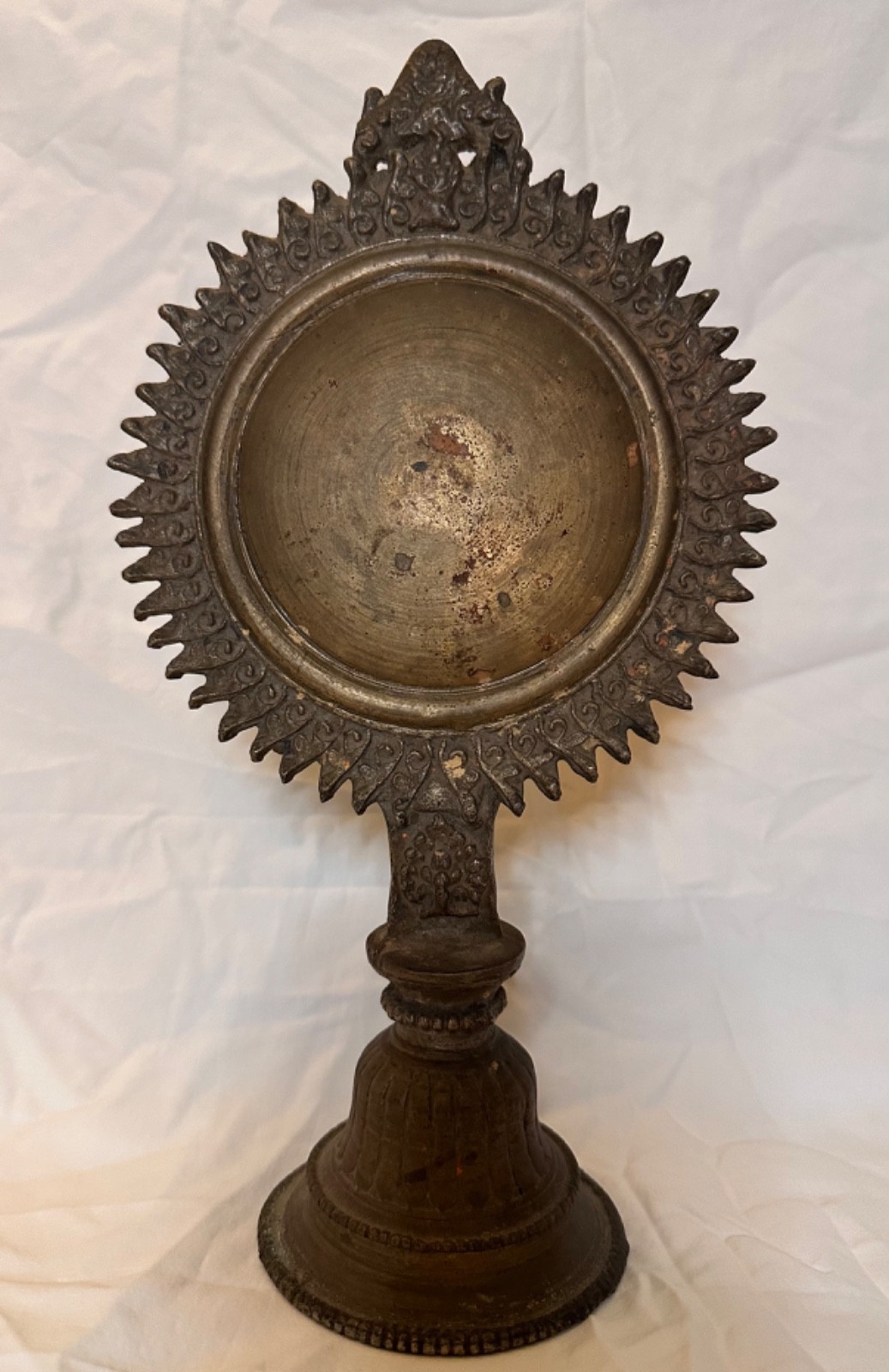
Beautiful, authentic 18th to 19th century Nepalese (Newari) or Tibetan bronze altar mirrorknown as a melong or "mirror of emptiness"- - traditionally used to reflect true thoughts. 12.25" high.
The central disc is framed by intricate flaming patterns and stands on a pedestal base.Made from bronze using sand-casting or lost-wax casting.
At 12.25” high, this item matches the standard scale of a medium sized Himalayan ritual alter mirror. Alter mirrors of this size were generally commissioned for monastery altars or wealthy family shrines in Tibet and Nepal The relative height compared to the width of the central disc suggests it was designed specifically to sit prominently alongside statues of deities.
The top finial - 3 tiered crown - features a stylized, stepped flame design commonly found on Newari-style ritual pieces from the Kathnamdu valley. The outer flaming halo ring displays stylized scrollwork representing the fires of pristine awareness….designed to burn away ignorance. The softening and rounding of the crisp edges on the scrollwork indicate decades of handled wear, ritual cleaning and natural age.
The reverse reveals a solid, unsealed cast back without a separate bottom base plate, confirming this piece was cast using traditional lost-wax method (cire peru). The rough texture and dark, uneven oxidation on the back math the expected wear pattern of an older ritual bronze.
The identical circulare shape on both sides indicates the entire upper section was cast as a single integrated unit with the stylized lotus-and-bead pedestal.
The underside shows a completely hollow, open bottom pedestal, confirming a traditional heavy sand-cast or lost-wax technique. The distinct central opening leads directly up into the stem - which was typically done to allow a support rod or to vent gases during the casting process. The interior cavity displays coarse, unpolished textures with deep oxidation and mineral crusting consistent with significant age.
MC 112