When you click on links to various merchants on this site and make a purchase, this can result in this site earning a commission. Affiliate programs and affiliations include, but are not limited to, the eBay Partner Network.
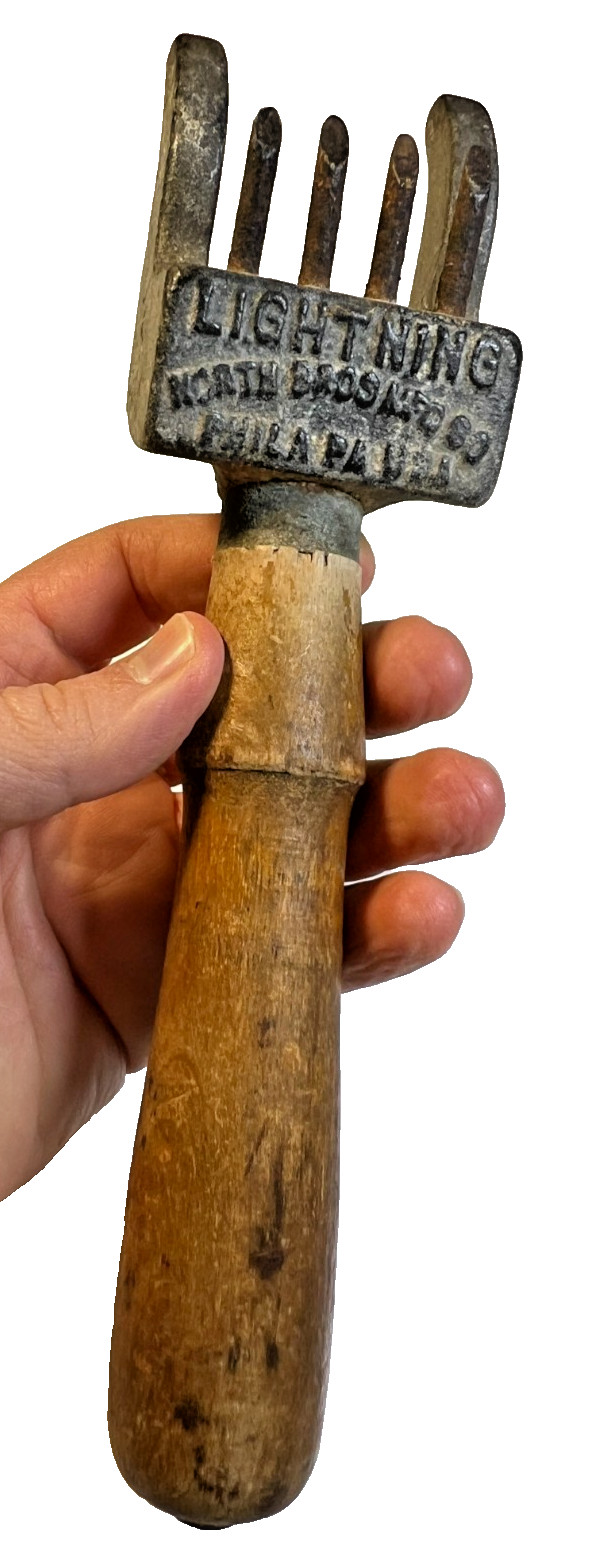
Antique c1895–1910 Lightning Cattle Dehorner North Bros Phila PA Cast Iron Farm Tool
Before tractors, before antibiotics, before anything resembling a “gentle” solution—this was lightning in the farmer’s hand. A brutally efficient, beautifully made cattle dehorner from North Bros. of Philadelphia, built in an era when survival on the farm depended on tools that simply worked… no matter what.
Precise Date
Circa 1895–1910
This date range lines up with:
- The “PHILADA PA” casting style (common late 19th–early 20th century)
- North Bros.’ expansion into broader tool manufacturing before their later absorption into larger firms
- The heavy cast + turned wood construction typical of that exact window
About the Company
North Bros. Manufacturing Co., Philadelphia, Pennsylvania
Founded in the late 1800s, North Bros. became famous for their “Yankee” push screwdrivers, but they didn’t stop there. They produced a wide range of rugged, no-nonsense tools—both for mechanics and agriculture.
- Known for innovation + durability
- Based in Philadelphia, one of America’s industrial powerhouses at the time
- Eventually acquired by Stanley in the early 20th century
This “Lightning” line reflects their push into farm and livestock tools, where reliability mattered more than anything else.
Life on the Farm (1895–1910)
This tool comes straight out of a time when:
- Farms were horse-powered, not tractor-driven
- Labor was manual, daily, and relentless
- Families were largely self-sufficient—food, repairs, livestock management all done on-site
- Tools like this weren’t optional—they were essential
Cattle weren’t just animals—they were assets, and managing them safely (especially in close quarters) mattered.
Medicine, Technology & Politics of the EraMedicine
- Pre-antibiotic era — infections were dangerous and common
- Veterinary care was basic; farmers handled most procedures themselves
- Dehorning was done early to reduce injury risk in herds and handlers
Technology
- Transition period: hand tools → early mechanization
- Railroads expanding rapidly—moving livestock and goods
- Electricity existed, but not on most farms yet
- Cast iron + hardwood = the gold standard of toolmaking
Politics & Society
- America in the Progressive Era
- Industrial growth booming in cities like Philadelphia
- Rural America still dominant, but slowly changing
- Farmers were navigating shifting markets, rail pricing, and early regulation
How This Tool Was Used
This is a manual cattle dehorner / horn cutter.
- The forked/pronged side was positioned around the horn base
- The curved jaws acted as a crushing/cutting surface
- The user would twist and lever to remove or trim horns—typically on younger cattle
Purpose:
- Prevent cattle from injuring each other
- Make handling safer in tight barns and pens
It’s a tool that required strength, precision, and a steady hand—no shortcuts.
A compact, honest piece of working farm history—equal parts ingenuity and toughness. Whether you’re a collector, decorator, or someone who appreciates tools that didn’t need instructions… this one tells a story the second you pick it up.