When you click on links to various merchants on this site and make a purchase, this can result in this site earning a commission. Affiliate programs and affiliations include, but are not limited to, the eBay Partner Network.
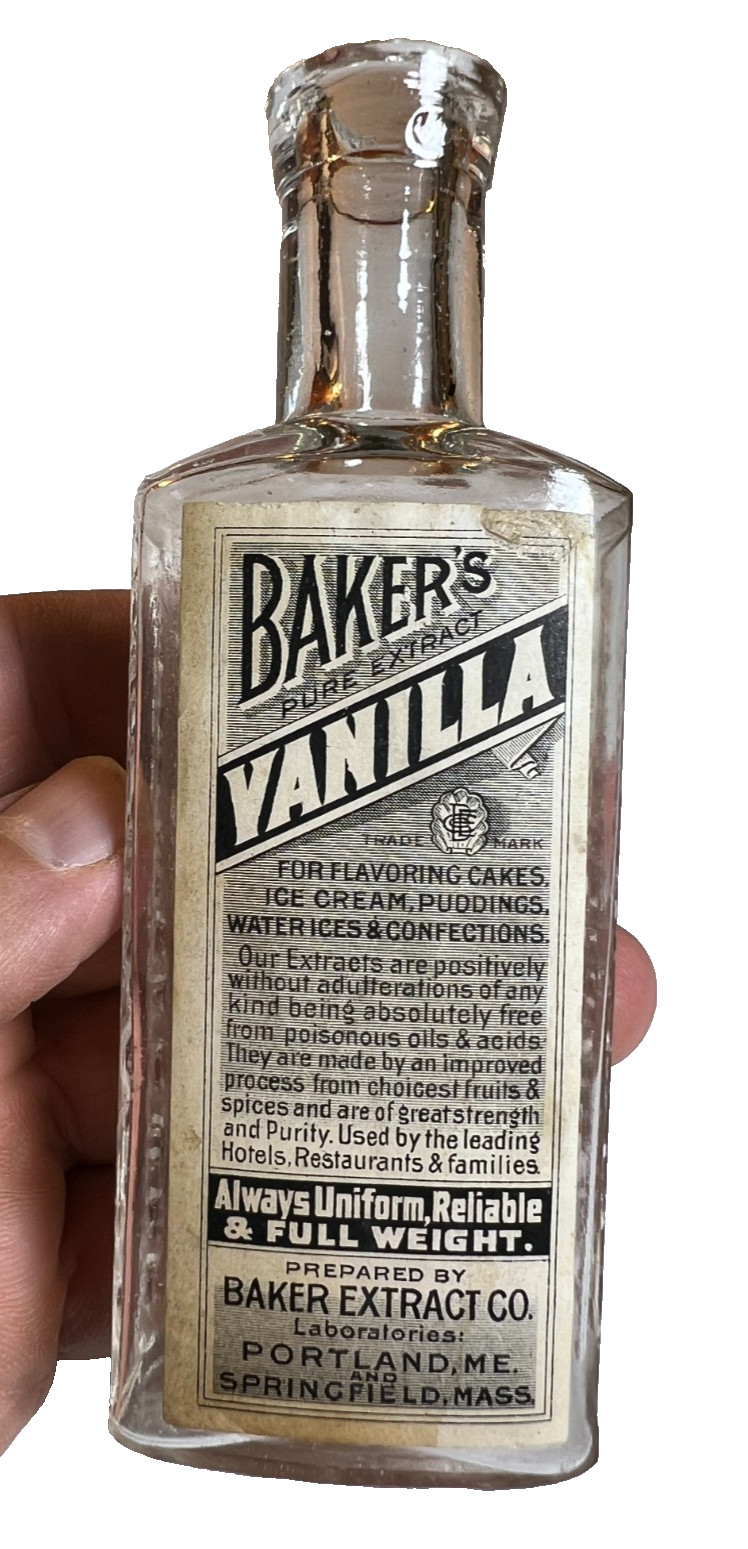
Antique “Baker’s Pure Extract Vanilla” bottle, early 1900s (circa 1910–1925), prepared by the Baker Extract Co., with laboratories in Portland, Maine and Springfield, Massachusetts.
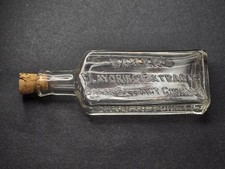
This square-shouldered clear glass bottle features bold embossing on the sides:
“FULL MEASURE” on one panel
“STRENGTH & PURITY” on the other
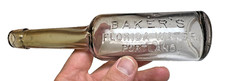
“BAKER’S FLAVORING EXTRACTS BAKER EXTRACT CO.” across the back
The original paper label remains beautifully preserved, reading:
“Always Uniform, Reliable & Full Weight. Prepared by Baker Extract Co. Laboratories: Portland, ME and Springfield, MASS.”
These bottles were used in New England kitchens and bakeries during the early 20th century, when Baker Extract was a trusted household name. Each bottle once held rich, alcohol-based vanilla extract used for cakes, puddings, ice creams, and confections.
Details:
Maker: Baker Extract Co.
Circa: 1910–1925
Origin: Portland, Maine & Springfield, Massachusetts
Height: Approx. 5\"
Color: Clear glass
Embossed: “FULL MEASURE,” “STRENGTH & PURITY,” “Baker’s Flavoring Extracts Baker Extract Co.”
Label: Original paper label intact and legible
Condition: Excellent for age; light surface wear, no chips or cracks
Historical Note:
Baker Extract Co. was one of the earliest Maine companies to advertise under the new Pure Food and Drug Laws of the early 1900s, proudly promoting unadulterated flavorings. The embossed slogans were both a marketing claim and a legal assurance that customers received genuine “full measure” quality.
A wonderful example of early 20th-century packaging design and New England manufacturing history — ideal for antique bottle collectors, advertising enthusiasts, or vintage kitchen displays.
Scene: A New England Kitchen, circa 1915
It’s late afternoon in Portland, Maine. The low winter sun spills through a frosted window onto the worktable, where a woman in a long apron is creaming butter and sugar in a thick ceramic bowl. Her daughter, hair pinned with a ribbon, leans over the counter, spooning flour from a wooden barrel. The air smells like wood smoke, cinnamon, and—sharpest of all—vanilla.
On the shelf above the stove, the small rectangular Baker’s Extract Co. bottle glints in the light, its label promising “Always Uniform, Reliable, and Full Weight.” The words are more than advertising—they’re an oath of trust. This was the age when a grocer’s handshake still mattered, and the Pure Food and Drug Act of 1906 was just beginning to restore faith in what Americans ate.
The mother uncorks the bottle. The scent bursts out—rich, almost boozy, with the faintest note of tobacco leaf. The vanilla is cut with 35–40% alcohol, as all pure extracts were, so it warms the air like a tiny exhale of brandy. She tips in a teaspoon, her hand steady; this is the good stuff, not the cheap synthetic vanillin the corner store sells for half the price.
Outside, a Model T rattles past, tires crunching the last of the season’s snow. The kitchen hums with technology both old and new: a hand-cranked egg beater, a cast-iron cookstove, and a brand-new icebox with a slab of river ice sweating on the floor beneath.
The radio hasn’t quite entered this home yet—but the family reads The Ladies’ Home Journal and clips recipes for sponge cake, blancmange, and “modern” Boston cream pie. Each one calls for “one teaspoon Baker’s Vanilla.”
As the oven door creaks open, the scent thickens—sugar caramelizing, butter melting into flour, and that deep vanilla warmth that, for the first time, doesn’t smell like exotic luxury but like home.
When the cake cools, the bottle is wiped clean and set neatly beside its brothers: lemon, almond, and peppermint extracts, all in square-shouldered bottles embossed “FULL MEASURE.” A promise from another age, glass-etched and honest.
Cultural Footnote
By 1915, Baker Extract Co. was one of New England’s most trusted producers, advertising purity and scientific precision in an era when “adulteration” (adding fake or unsafe ingredients) was still a dirty secret of the food industry. The embossed slogans—“Strength & Purity” and “Full Measure”—were their public stand against the corner-cutters.
This bottle would have lived on a kitchen shelf beside Clabber Girl baking powder, Arm & Hammer soda, and Royal gelatin, part of the quiet revolution of standardized, branded, trustworthy food.