When you click on links to various merchants on this site and make a purchase, this can result in this site earning a commission. Affiliate programs and affiliations include, but are not limited to, the eBay Partner Network.
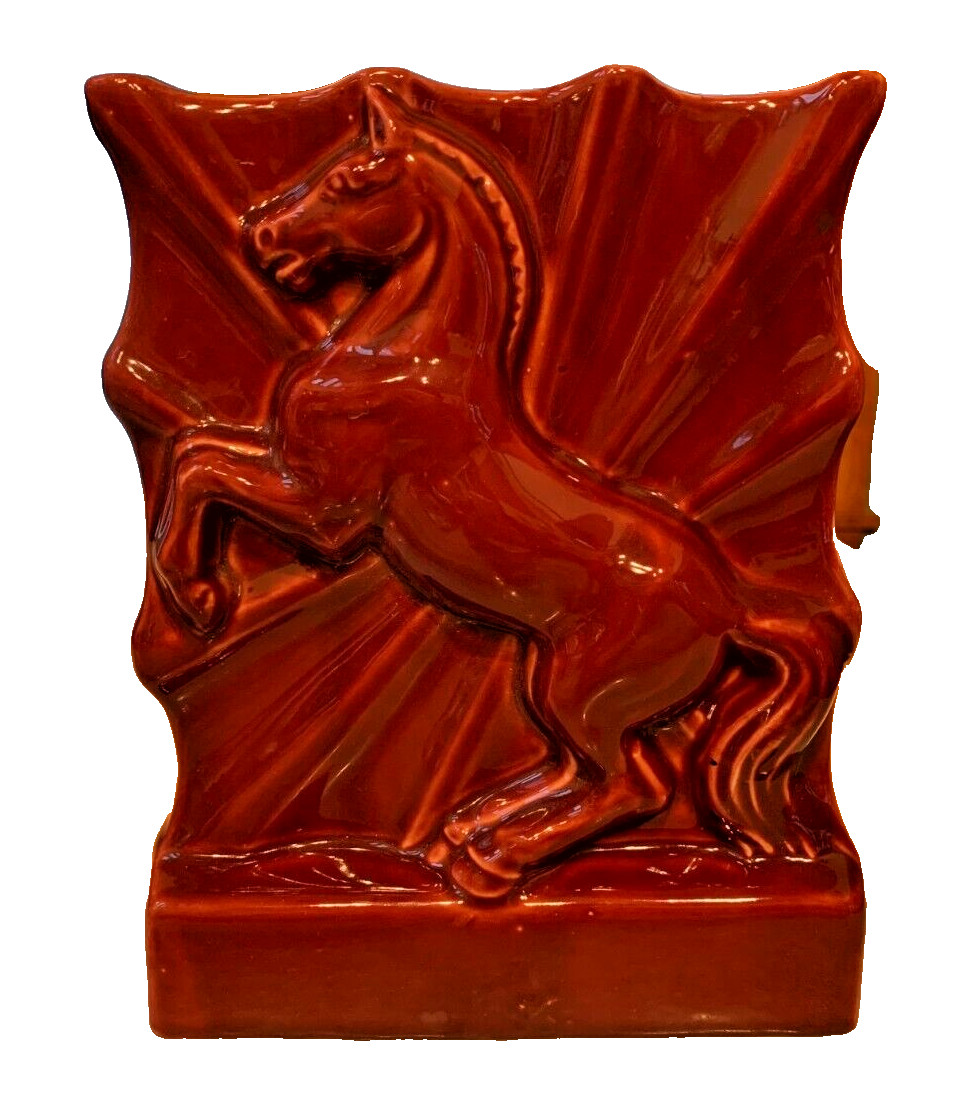
- Antique, 1930s-40s
- Art Deco Style
- Ceramic
- No chips or cracks here! Excellent condition, but please note the original, missing color-glaze at the lower, side, edge, on one side
- Original vintage bulb!
- Looks like someone recorded/rewired it at some point as this is a newer plug
- 6.25" W x 4" D x 8.5"T
- I package well and ship out daily!
“Set the Scene” Story
It’s a crisp evening in the early 1940s, just before World War II fully overtakes the headlines. In a modest suburban living room in upstate New York, pastel walls and polished wood floors make the space feel surprisingly modern. A patterned rug lies beneath a louvered radio cabinet, and floral curtains are drawn against the night chill.
Eleanor Matthews, dressed in a cotton house dress with a modest floral print, is sitting in a streamlined armchair by the window. Across from her, perched on a side table, is her new horse-shaped TV lamp — a curious fusion of traditional and future. The ceramic horse has a stylized “screen” illuminated from within, its soft glow casting Art Deco shadows on the wall.
Just earlier that evening, Eleanor’s husband brought home their first console television set—a bulky wooden box with cathode ray tubes, a world-changing appliance in itself. The lamp beside it echoes that fascination: a decorative nod to what many hoped would become commonplace in every home.
On the glass coffee table, a freshly printed issue of Look magazine lies open, its pages showing glamorous movie stars, war updates, and ads boasting “radio + television capabilities coming soon!” The family’s tube radio sits on a low shelf, still the hearth of nightly news broadcasts.
Outside, the Matthews’ 1938 Chevrolet Master Deluxe gleams under the garage light—rounded fenders, chrome trim, and all-metal body. Eleanor often takes the children for drives on Sunday afternoons, the radio tuned to swing music stations that transmit across miles of wire and vacuum tubes.
Electric light bulbs overhead hum softly. A ceiling fan stirs the air in the thick summer night. Lamps like the horse TV lamp offer both function and charm, part of a transition era when households were embracing modernity but still treasured decorative whimsy. The lamp throws its warm glow, the living room seems to breathe with the optimism of progress, and the Matthews family sits, bathed in layered light, comforted by both utility and imagination.