When you click on links to various merchants on this site and make a purchase, this can result in this site earning a commission. Affiliate programs and affiliations include, but are not limited to, the eBay Partner Network.
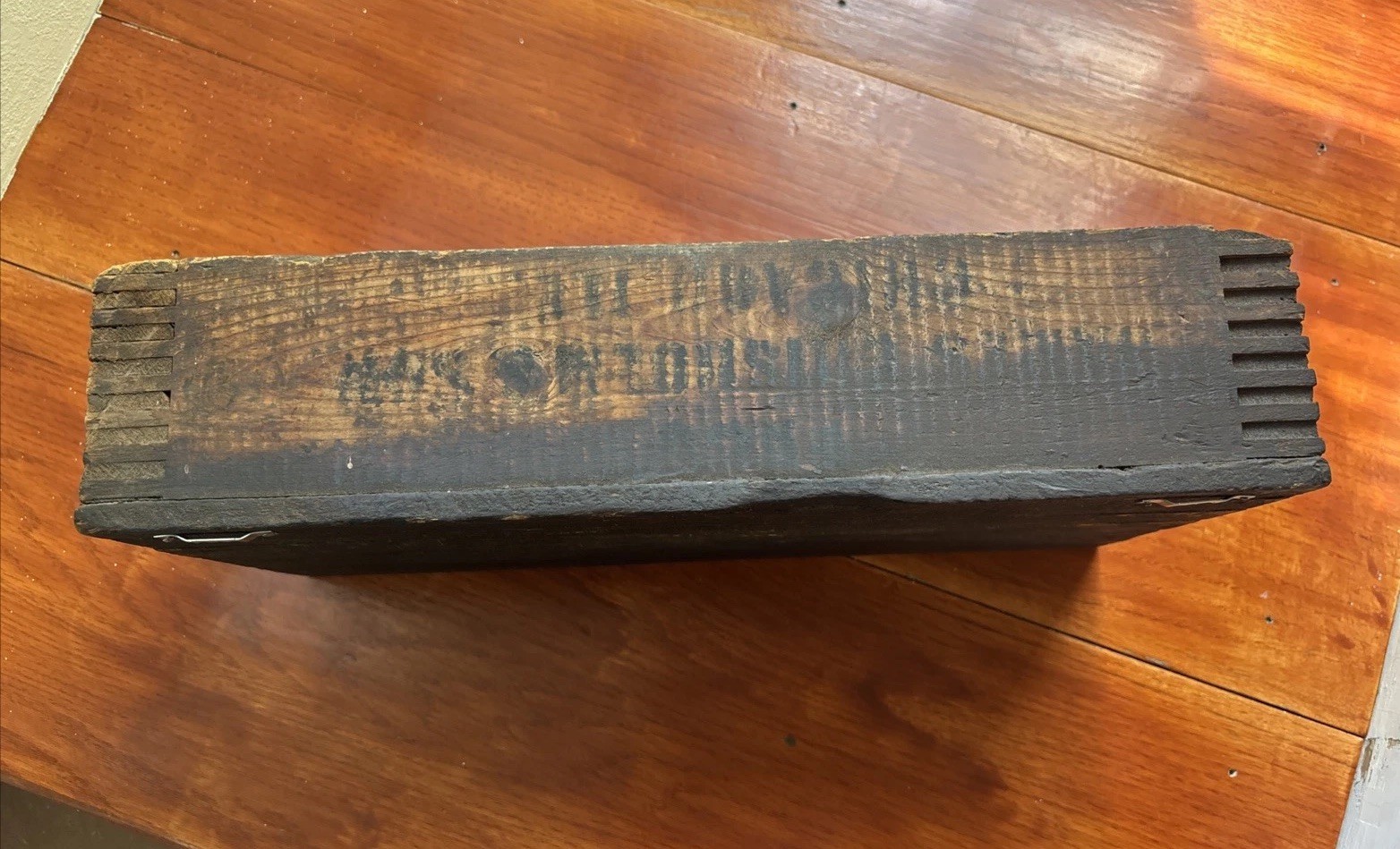
Up for sale is an authentic piece of early American milling history. This shallow, elongated rustic wooden tray features the original stacked black ink corporate stamp reading "THE WASHBURN-CROSBY CO." running down the raw pine side panel.Given its specific dimensions (17" x 9" x 4"), this piece originally served as an industrial general store counter drawer insert from the pre-General Mills era. It showcases gorgeous, heavy machine-cut finger joints at the corners, highlighting turn-of-the-century craftsmanship.Ready to Hang: The back (bottom) of the tray has been fitted with two metal sawtooth hangers, allowing it to easily double as a unique wall-mounted primitive shadow box shelf or country kitchen display piece.Condition:Good antique primitive condition. The wood displays a beautiful, dark rich patina built up over a century of age with an attractive natural knot in the grain on the back. Structurally solid with tight joints. The original factory ink stamp on the side is heavily weathered and faded but remains visible and legible in the right light (see photos). The added wall hangers are secure. Shows authentic wear, minor scuffs, and historic character lines as expected of genuine utilitarian store salvage. Sold exactly as found.
Antique Pre-1928 Washburn-Crosby Co. Wooden General Store Tray / Wall Shadow Box DisplayManufacturer: The Washburn-Crosby Company (Minneapolis, MN — later became General Mills in 1928)Era: Late 19th to Early 20th Century (Circa 1890s–1920s)Construction: Machine-cut interlocking box/finger jointsDimensions:Length: 17 inchesWidth: 9 inchesHeight/Depth: 4 inches
1. The Corporate Origins (1877–1928)The box stems directly from the golden age of American milling. In 1866, Cadwallader C. Washburn built his first flour mill along the Mississippi River at Saint Anthony Falls in Minneapolis, Minnesota. In 1877, he partnered with John Crosby to officially form the Washburn-Crosby Company.The company pioneered breakthrough milling technologies, creating a high-quality product they branded Gold Medal Flour. By the early 1900s, Washburn-Crosby was the single largest flour producer in the world. In 1928, the company consolidated with several other regional mills to form General Mills. Because your tray carries the original Washburn-Crosby Co. branding without mention of General Mills, it was manufactured strictly during this industrial boom period (circa 1890s–1920s).2. The Original Industrial Purpose (circa 1900)During the late 19th and early 20th centuries, grocery stores did not feature long aisles of self-serve cardboard boxes. Instead, customers walked up to a massive wooden service counter managed by a store clerk.Your piece’s shallow, elongated dimensions (17" x 9" x 4") are the standard measurements for an industrial general store counter drawer.The Counter System: Large wooden grain, seed, and baking-supply cabinets sat behind or under the main storefront counter.The Brand Placement: Washburn-Crosby provided branded cabinets or replacement drawers to general stores to ensure prominent merchant visibility. The company stamp was purposefully applied to the raw side panel; every time the grocer pulled the drawer out to scoop flour, package coarse bran, or grab promotional baking booklets, the corporate logo was fully visible.3. Structural CraftsmanshipThe corner construction anchors the piece firmly to the turn of the century. The crisp, tightly interlocking comb fingers are machine-cut box joints. While handmade dovetails dominated the 1800s, specialized industrial machinery was introduced around the 1890s to rapidly stamp out incredibly sturdy, interlocking joints for factory and utility containers. This allowed the drawer to withstand decades of being pulled open and slammed shut while heavily loaded.