When you click on links to various merchants on this site and make a purchase, this can result in this site earning a commission. Affiliate programs and affiliations include, but are not limited to, the eBay Partner Network.
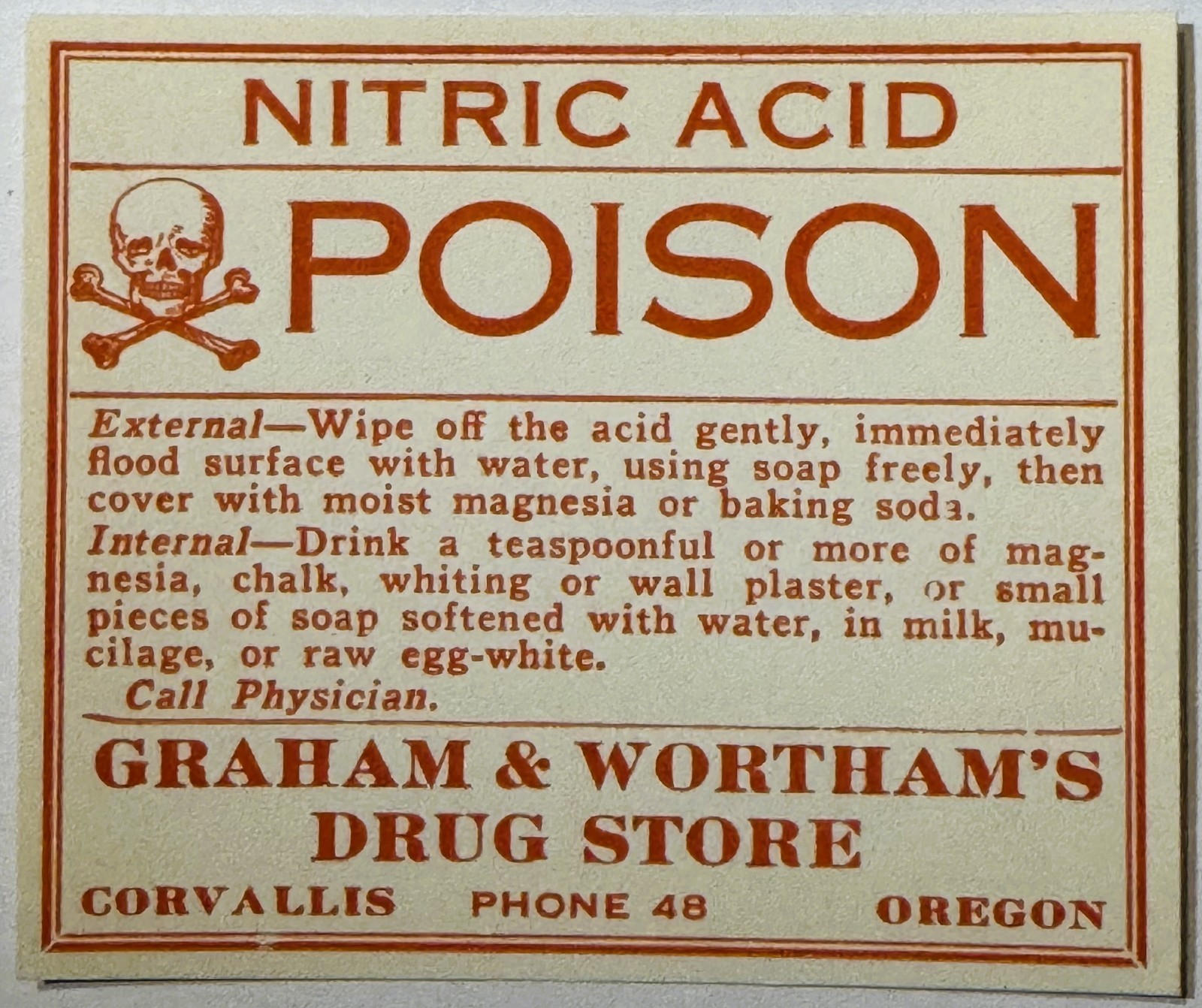
☠️ This is an original 1910s nitric acid poison label from Graham & Wortham’s Drug Store in Corvallis, Oregon — and it’s one of those pieces people stop and read because they can’t believe what it says.
Printed in bold red with a skull‑and‑crossbones warning, the label doesn’t just say POISON. It explains what to do if someone is exposed — including instructions to drink chalk, wall plaster, softened soap, or raw egg whites. It’s a blunt, unsettling reminder of how experimental and improvised medical treatment could be in the early 20th century.
This example is New Old Stock (NOS) with no wear, unused and preserved exactly as it left the printer. Approximate size is 2½″ × 2½″. It was meant to be pasted onto a bottle sitting behind a neighborhood drugstore counter, where pharmacists mixed and bottled powerful chemicals by hand.
Graham & Wortham’s Drug Store was a familiar part of daily life in early‑1900s Corvallis — a place for remedies, advice, conversation, and community. Like many pharmacies of the era, it produced its own proprietary products, and labels like this were essential for communicating danger in a world before standardized packaging and modern regulation.
Nitric acid was historically used in controlled medical and dental applications, including cauterization and other treatments that today feel shocking but were once routine. This label captures that moment in time — when medicine, chemistry, and risk lived side by side on the same shelf.
A small piece of paper with a lot to say — strange, honest, and impossible to ignore.